dailynewsnblog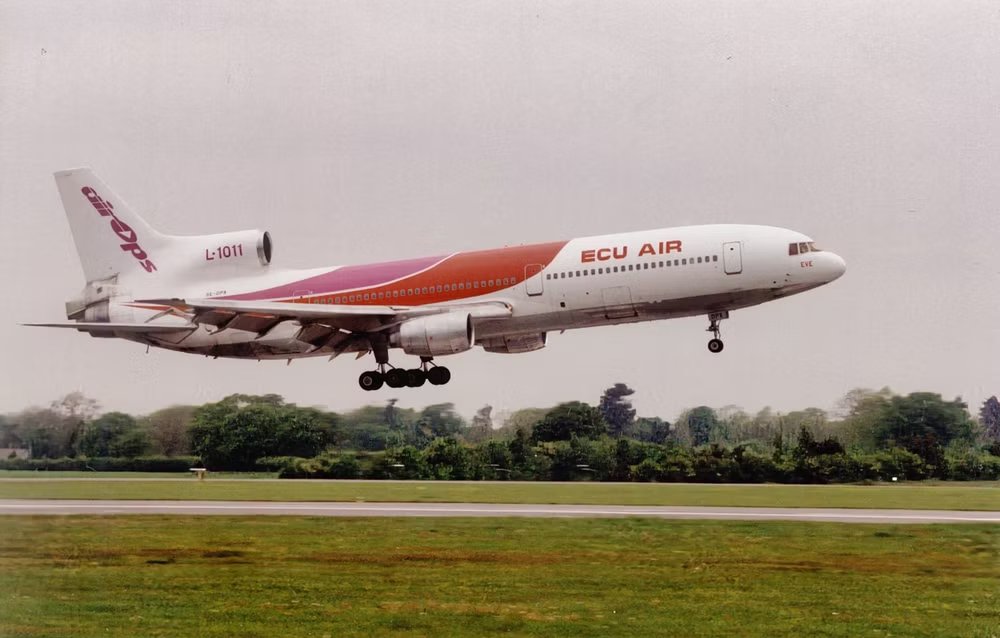
Lockheed Martin is a military contractor that has long since left the commercial aviation market, at least with designing and manufacturing airliners. It was once one of the major US-based aerospace companies designing and building commercial aircraft, with the others being Boeing and Douglas (later McDonnell Douglas).
Today, Lockheed’s influence can be found all through modern Boeing, Airbus, and Embraer aircraft, stemming from both its commercial innovations (particularly through its L-1011 TriStar) and through its military aircraft. Lockheed Martin is a product of multiple mergers and acquisitions, including the merger of Lockheed Corporation and Martin Marietta in 1995, Sikorsky Aircraft in 2015, and others. For the purposes of this article, ‘Lockheed’ innovations include the companies it acquired along the way.
However, it does not include the early F-16 Fighting Falcons. The F-16 was the first fighter jet to use fly-by-wire controls, and while it is part of Lockheed today, it was developed by General Dynamics. Lockheed acquired the F-16 program in 1993, but not General Dynamics. Here are some Lockheed Martin engineering decisions that quietly impacted modern airliners from both its aircraft and space divisions and forerunners.
Ring Laser Gyroscope
Entered service in early 1980s

One of Martin Marietta’s greatest contributions to modern aviation is the ring laser gyroscope. These were developed for military aircraft and missiles in the 1970s and 1980s and replaced the older spinning mechanical gyroscopes. Martin Marietta did not invent the ring laser gyroscope, but it did industrialize it and worked out many of its manufacturing problems.
These offered no spinning rotors, no gimbal lock, almost no mechanical wear, extremely high accuracy, better reliability, and were able to make use of the Sagnac effect. The older systems relied on mechanical inertial navigation and were heavy, expensive, needed careful calibrations, were less accurate, and suffered from bearing wear.
The development of the RLG technology played a role in ETOPS operations, ocean navigation, reduced crew workload, and more. Its systems were soon found in many commercial aircraft, like the Boeing 757, 767, 747-400, 777, MD-11, A320, A330, and A340, as well as military aircraft.
After the merger with Lockheed, the company continued to be a leader in the 1990s and 2000s with Interital Navigation Systems, Inertial reference units, and Interial Measurement Units. Today, Honeywell is arguably the world leader in commercial inertial reference systems, with Collins, Safran, and Thales being among the other companies. Lockheed Martin no longer focuses on avionics, but its influence on their development is noticeable.
Advanced Composite Structures
The Boeing 787-8 Dreamliner entered service in 2011

When Lockheed developed aircraft such as the Electra and later the L-1011 TriStar, commercial airliner fuselages were almost entirely aluminum. At the same time, the US Air Force was pushing for more advanced materials for its next-generation military aircraft like the Have Blue program, the Lockheed F-117 Nighthawk, and later F-22 Raptor.
In developing these advanced and stealthy aircraft, Lockheed helped pioneer advanced composite airframe structures for stealth aircraft. The Raptor today uses around 24% composites by weight, while the newer F-35 has over 35% composites by weight. The first military aircraft to extensively adopt composites were the AV-8B Harrier, the F/A-18 Hornet, the B-2 Spirit, and the F-117.
Modern commercial aircraft using advanced composite materials followed military aircraft, starting with the A310, Boeing 777, and A340. One of the greatest aspects of the next-generation Boeing 787 Dreamliner when it debuted in 2011 was its use of around 50% composites by weight.
The Dreamliner was quickly followed by the A350 and its extensive use of composites. The A330neo and 777X have been updated from their legacy counterparts with composite materials where possible (including the wings). Advanced composite materials allow the aircraft to be lighter and thereby increase its fuel efficiency and range. They are also more durable and enable the aircraft’s cabin to sustain a higher cabin pressure and greater humidity, increasing comfort for passengers on long flights.
Cockpit Design & Automation
First L-1011 TriStar flight in 1970

One of the influences of the Lockheed L-1011 TriStar on modern commercial aircraft was its cockpit. At the time, the cockpit was praised for being a pioneer in several areas of automation and integration while also being ergonomic for the crew. With that being said, it retained a more traditional ‘steam gauge’ analog-heavy layout, but it did influence the industry.
The TriStar offered one of the first sophisticated Flight Management Systems on a widebody airliner and had features like Mach/IAS cruise control, automatic turbulence mode, optimal descent profile calculation, and more. These helped reduce crew workload while improving fuel efficiency. Lockheed says that “it was the TriStar’s pilots who had access to its most thrilling feature: an advanced fly-by-wire automatic flight control system.”
Notable Lockheed commercial aircraft (per Lockheed Martin) | First flight |
|---|---|
Lockheed Vega | 1927 |
Lockheed Model Electra series | 1934, 1936, 1937 |
Lockheed Constellation | 1943 |
Lockheed L-188 Electra | 1957 |
Lockheed L-100 Hercules (commercial variant of C-130) | 1964 |
Lockheed L-1011 TriStar | 1970 |
In 1972, a TriStar flew from Palmdale, California to Dulles Airport in Washington with the TriStar’s AFCS feature engaged from takeoff roll to landing. Lockheed claims that “it was a groundbreaking moment: the first cross-country flight without the need for human hands on the controls. Fly-by-wire technology was here to stay.” Many of the crew-centred cockpit features and automation became standard across the industry.
Eventually, these evolved into today’s glass cockpits, electronic checklists, and initituative warnings systems. The influence of Lockheed’s 1970s-era commercial airliners can be seen on the carefully designed flight decks of the Boeing 787 and Airbus A350. The L-1011 TriStar was the only commercial passenger jet ever made by Lockheed. It did try to market commercial variants of the massive military Lockheed C-5 Galaxy, but these failed.
Glare-Resistant Windows & Passenger Comforts
The L-1011 TriStar Entered service in 1972

The Lockheed L-10111 was designed to compete with the Boeing 747 and the McDonnell Douglas DC-10. In order to effectively do that, Lockheed turned to improved passenger comfort as a major selling point. TriStar’s list of things where it was genuinely the first may be limited, but it did develop many things and help set a new standard.
For example, Lockheed says that “the L-1011 boasted unheard-of luxuries, including glare-resistant windows, full-sized hideaway closets for coats and a below-deck galley.” Often there is not so much a ‘first’ as there are new aircraft modifying and improving older ideas and making them more practical. The aircraft was also noted for its unique engine configuration that helped to reduce sound in the cabin, while flight crews enjoyed its extra-wide aisles and overhead bins.
The TriStar was one of the first airlines to used glare-resistance passenger windows and was likely the first production airliner to market them. Today, the Boeing 787 Dreamliner is famous for being the first to take this to a new level with automatically dimming windows. Gentex Aerospace is a contractor for dimmable windows: it initially developed the technology for dimming mirrors in automobiles.
The firm says that “Gentex electronically dimmable windows present aircraft operators, designers, passengers and crew members with a window of opportunity to experience air travel in a new and innovative way: as an experience at their fingertips.” Following the 787, new production models of the A350 also offer dimmable windows, as will the Boeing 777X when it enters service. The 777X is now expected to enter service in 2027.
Global Positioning System
First commercial Special Category 1 augmented GPS approach in 1998

Since the conflict erupted in Ukraine with Russia in 2022 and the ensuing conflicts in the Middle East, commercial GPS (GNSS) jamming for airliners has become increasingly in the news. GPS was initially developed by the United States military for military applications. In 1983, the Soviet Union downed Korean Air Lines Flight 007 after it had drifted hundreds of miles off course into Soviet airspace.
In response to the tragedy, the US announced it would make the previously restricted GPS freely available for civilian aviation to prevent similar navigational mistakes. Martin Marietta had a substantial role in the development and deployment of GPS, particularly in building key satellites that allowed its operational adoption. Martin Marietta did not invent GPS, but it was part of a much larger US military effort to do so, and it was one of the major contractors.
Martin Marietta became one of the most important industrial partners in the GPS program, manufacturing several generations of NAVSTAR satellites that helped bring the system into operational service. It was one of the leading aerospace contractors that was selected to build early GPS spacecraft and produced multiple generations of Navstar GPS satellites. Before 1993, Martin Marietta, and since the merger, Lockheed Martin, has remained involved in the space infrastructure that underpins modern aviation navigation.
Meanwhile, commercial avionics companies integrate GPS receivers and flight management systems into aircraft like the 777, 787, A320, and A350. Today, Lockheed Martin remains one of the primary contractors for maintaining and upgrading GPS. It says that “as part of the U.S. Space Force’s effort to modernize today’s GPS network with new technology and advanced capabilities, Lockheed Martin is building up to 32 next-generation GPS III/IIIF satellites.”