dailynewsnblog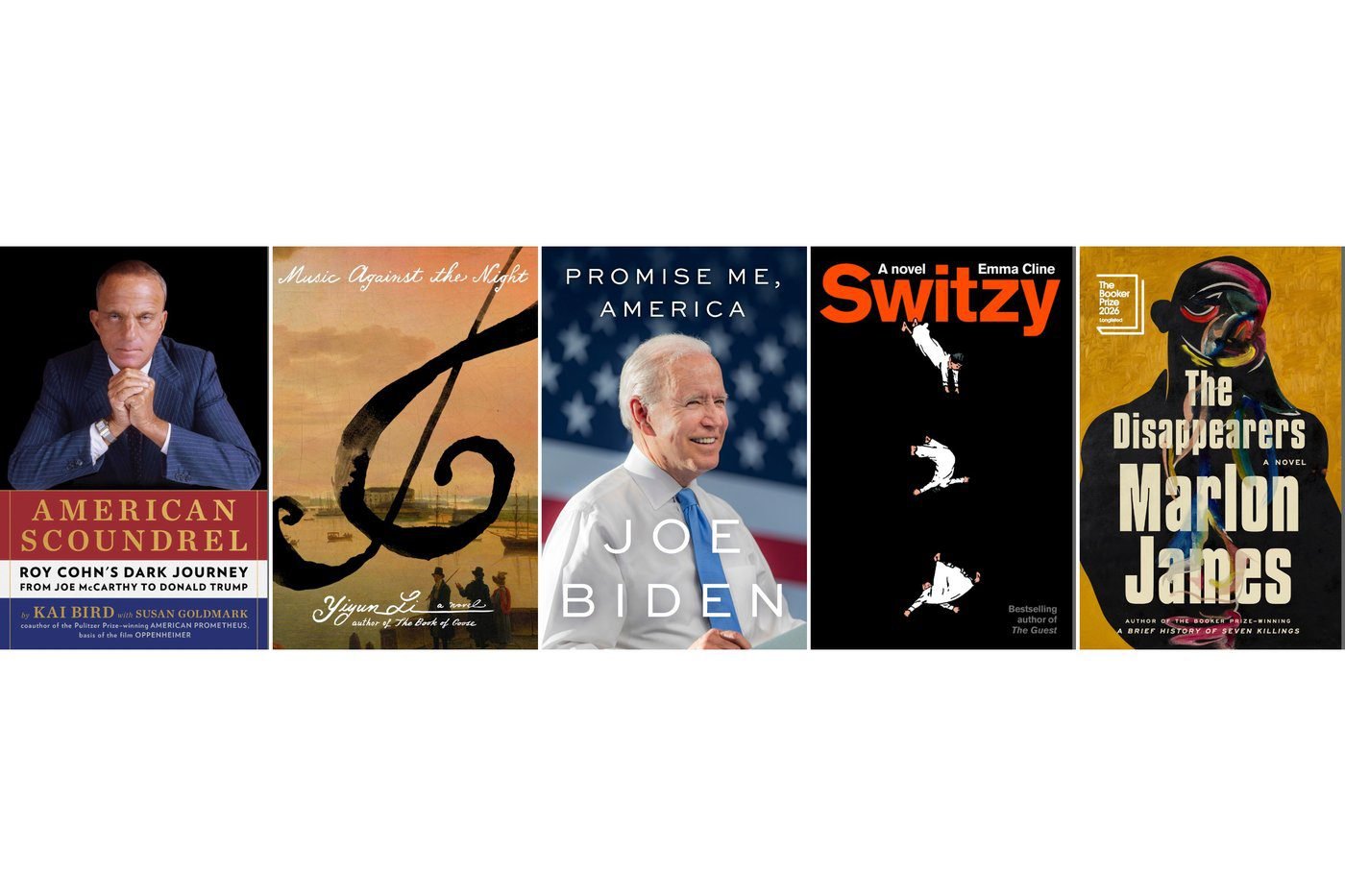
NEW YORK (AP) — Book lovers this fall can look forward to a wealth of fiction, biographies, memoirs, poetry collections and topical nonfiction. Here are five upcoming works you’ll likely be hearing about.
“The Disappearers,” Marlon James
Marlon James’ fantasy series “Dark Star” was a showcase for his extraordinary and boundless imagination. In “The Disappearers,” he returns to his native Jamaica and to the murderous reality of his Booker Prize-winning “A Brief History of Seven Killings.” The new novel, longlisted for the Booker, is framed around the horrifying beating in 1988 of eight gay men who had been rehearsing for a play. James weaves together humor, popular culture, compassion and some very hard experience. “I refuse to believe there is any lesson to be learned from suffering an atrocity,” James writes, “other than always be on guard for the ways people turn on you.” (Sept. 1)
“American Scoundrel,” Kai Bird and Susan Goldmark
Kai Bird is best known as the co-author with Martin J. Sherwin of “American Prometheus,” the biography of nuclear scientist J. Robert Oppenheimer that became the basis for Christopher Nolan’s Oscar winner “Oppenheimer.” In “American Scoundrel,” he and Susan Goldmark (his wife) trace the influence of the late political operator Roy Cohn, from his early years as the top aide to Sen. Joseph McCarthy to his mentorship of a young Donald Trump. “American Scoundrel” draws upon government documents, archival material and dozens of interviews, including, to the authors’ surprise, Trump, who “answered our cold calls on his personal cell on several occasions,” Bird writes in the acknowledgments section. Trump was “gracious, if not exactly forthcoming about his memories” and declined to meet in person, because, he told them, “I’m the president. I’m very busy. I have China calling. I have Russia calling. I cannot do it.” (Sept. 1)
“Switzy,” Emma Cline
Emma Cline has well established her mastery of inhabiting the alienated mind, of dramatizing youthful transience, aspiration and deception, most famously in her celebrated debut, “The Girls.” In “Switzy,” longlisted for the Booker Prize, Cline gives us a retired businessman with failing mental capacity, en route to an assisted dying facility in Zurich. Cline breaks up the story into brief, affectless passages as a once-“Valuable Person” reckons with his memories and concludes that “He had always stayed on the surface. His whole life.” (Sept. 8)
“Music Against the Night,” Yiyun Li
“Music Against the Night” is Yiyun Li’s sixth novel, and first book since last year’s Pulitzer Prize-winning “Things in Nature Merely Grow,” her unsparing memoir about the suicides of her two sons. Li this time appears to have written a very different narrative — about a late 18th-century piano prodigy whose fame barely outlasted his lifetime and the orphaned wanderer-musician who makes the ill-fated decision to marry him. The novel is a story of music, but also a meditation on “the night,” death — parents, friends, children, everybody. “It is despair that one must not submit to,” Li writes late in the book, adding a dark, Shakespearean warning: “A child’s death can never feel neutral to a parent; a child’s death is a negation of time, which no longer has now and then, now and again, now and later, only now and now and now and now and now.” (Oct. 13)
“Promise Me, America,” former President Joe Biden
Memoirs are often presidents’ best chance to define their legacy, although readers and critics may have different priorities, whether Richard Nixon and Watergate or Bill Clinton and Monica Lewinsky. Joe Biden will understandably want to focus on his defeat of Donald Trump in 2020, the passage of landmark legislation on green energy and the appointment of the first Black woman to the Supreme Court, Ketanji Brown Jackson, among other achievements. But the public will likely be seeking answers to more unwanted questions, notably the state of Biden’s health while he was in the White House, the backstory to his disastrous debate against Trump and his decision soon after to call off his reelection campaign. (Nov. 17)
Hillel Italie, The Associated Press