dailynewsnblog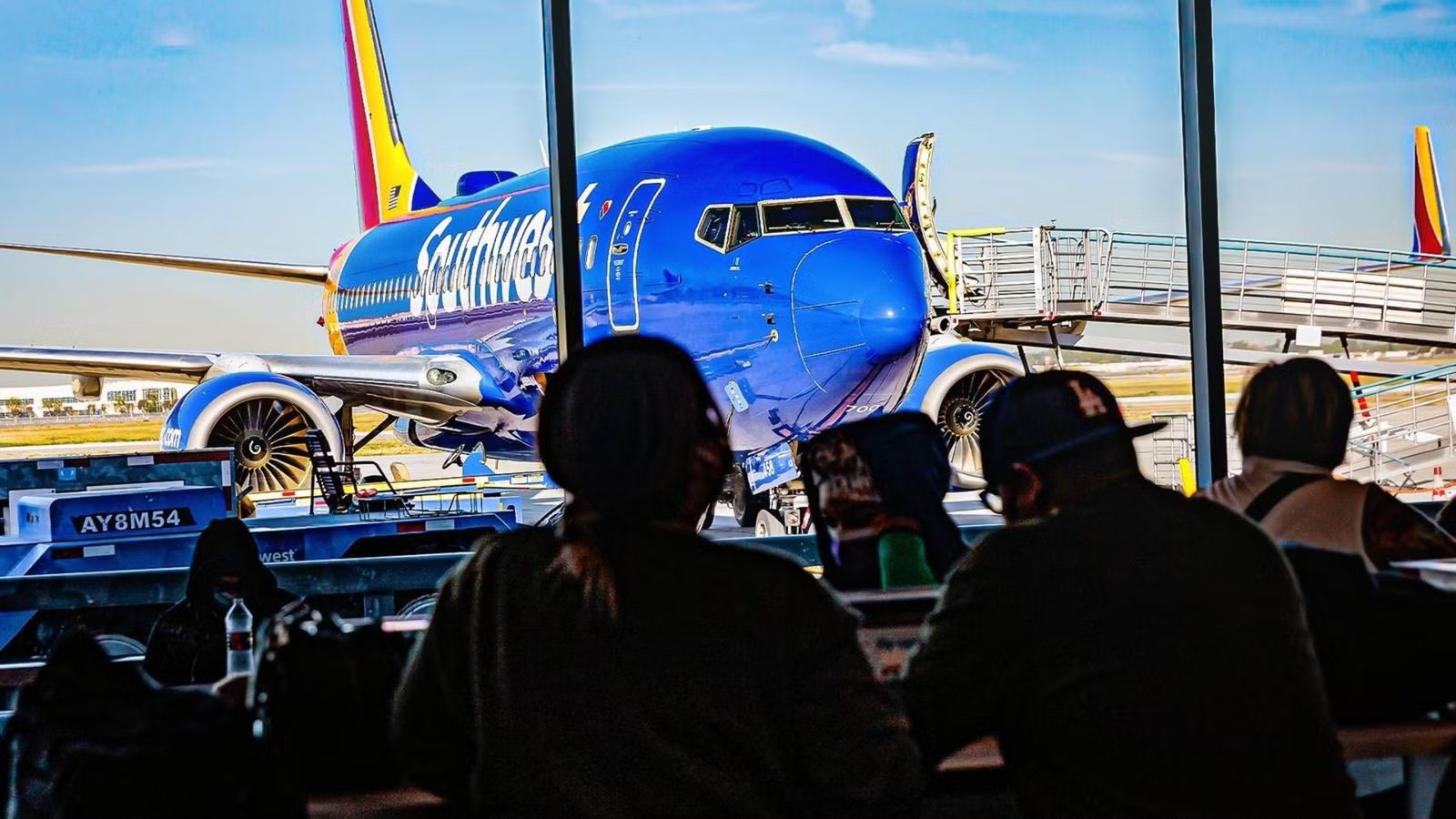
Boarding is not everyone’s favorite part of the airline experience. After booking a flight, checking in, and getting to the airport, passengers still have to deal with the final step before the journey can actually begin. And sometimes, that step takes far longer than it should. Long queues, unclear announcements, and passengers taking their time to find their seats can all make boarding a frustrating part of the travel experience. Airlines don’t like slow boarding either.
Every minute an aircraft spends on the ground is time that an expensive asset isn’t flying. Therefore, most airlines, especially the low-cost carriers, want to get as many flights as possible out of the same aircraft each day. As a result, they have been looking for ways to speed up boarding for years. Some have introduced different boarding procedures, while others have built their entire operating model around quick turnarounds. So, which airlines are particularly good at getting passengers onboard quickly?
Ryanair
15 to 20 minutes

Ireland-based low-cost carrier Ryanair is one of the airlines frequently cited for its quick boarding process. That shouldn’t come as a surprise given how tightly the airline manages the time its aircraft spend on the ground. The low-cost carrier targets turnarounds of around 25 minutes, which allows its aircraft to operate four to six flights each day. For almost four decades, Ryanair operated an unassigned, free-for-all seating model. This could speed up boarding because passengers could simply take the first available seat rather than looking for a specific row.
However, the resulting scramble created passenger anxiety, arguments, and occasional injuries, which eventually became a problem for the airline’s brand. Therefore, in 2014, Ryanair introduced allocated seating. The change made the boarding process more orderly, but it also meant passengers could no longer simply rush onboard and take any available seat. The budget carrier therefore developed an unusual operational practice, colloquially described as “boarding not boarding,” which it continues to use.
This means the airline begins the boarding process for the next flight before passengers on the previous service have finished deboarding. Ryanair also has a strict cabin baggage policy. Passengers traveling on the basic fare can bring one small bag measuring up to 40 x 30 x 20 cm, which must fit underneath the seat. Those who purchase Priority can bring an additional 10 kg cabin bag measuring up to 55 x 40 x 20 cm.
Limiting the amount of cabin baggage helps reduce the time passengers spend putting bags into the overhead bins during boarding. All of these measures help Ryanair keep its boarding and turnaround processes moving quickly. The airline can therefore board an aircraft in around 15 to 20 minutes on some services, although the exact time can vary depending on the airport, aircraft and operating conditions.
Southwest Airlines
Approximately 20 minutes

 Southwest Airlines is another carrier historically known for getting passengers onboard quickly, although much of what made its boarding process so efficient has changed this year. As we know, the airline is known for its quick turnaround times, and this goes all the way back to 1972. At the time, Southwest was struggling financially and needed to raise money for payroll and other expenses. It sold one of its four aircraft, leaving the airline with just three. However, the carrier still wanted to maintain the same schedule with those three aircraft.
The answer was to cut the time each aircraft spent on the ground. Therefore, Southwest introduced the “10-minute turn,” reducing the turnaround time from around 25 minutes to just ten. One factor that helped the airline achieve this was its approach to boarding. The Dallas-based airline used a “boarding not boarding” system and open-seating policy, which helped speed things up. The carrier continued using open seating for more than 50 years. Earlier this year, it ended the system and began generating revenue through Extra Legroom and Preferred seating options.
Southwest now assigns passengers a seat before they board and has adopted the WILMA boarding method, which stands for window, middle, and aisle. Under the system, passengers seated by the window board first, followed by those in the middle seats and then those seated in the aisle. The idea is to reduce the number of passengers crossing paths in the cabin and speed up the boarding process. Testing found the method reduced boarding times by up to two minutes.
However, the changes have also brought a new challenge. Southwest began charging many passengers for checked bags in May 2025 after years of offering two free checked bags. Some passengers who previously checked their luggage may now choose to bring it into the cabin instead. That can slow boarding as passengers look for space in the overhead bins and spend more time stowing their bags.
easyJet
Around 14 minutes

Furthermore, the UK-based low-cost carrier easyJet also puts a lot of emphasis on keeping its aircraft in the air and turnaround times short. The airline targets ground times of around 25 to 30 minutes for many of its short-haul flights, although the actual time can be longer at busy airports such as London Gatwick. Like Ryanair and Southwest, it once used an open-seating system, but that changed in 2012. easyJet began trialing allocated seating in April that year.
The trial covered nearly two million passengers across 12,500 flights. The results showed that allocated seating could be introduced without affecting the airline’s punctuality or adding costs, so easyJet rolled it out across its entire network in November that year. It also meant the budget carrier could charge passengers to choose their seats, including seats with extra legroom or those towards the front of the aircraft. The airline has also experimented with different ways of getting passengers onboard faster.
At London Gatwick in 2019, the low-cost carrier worked with the airport on a trial that included a window-to-aisle boarding sequence. Passengers were called in a set order, with those seated towards the back and by the window boarding first, followed by middle-seat passengers and then those in aisle seats. The method got 158 passengers onto an Airbus A320 in just 14 minutes, around two to three minutes faster than the usual process. Despite the promising results, easyJet did not go on to introduce the system across its network.
Today, the carrier uses a priority-based pre-boarding system to organize passengers before they board. The process starts with passengers who require special assistance and those with Speedy Boarding, followed by families and then general boarding. When conditions allow, it also boards passengers through both the front and rear doors of the aircraft. Splitting passengers between two doors helps reduce the bottleneck that normally forms at the front and speeds up boarding.
All Nippon Airways & Japan Airlines
Under 20 minutes (for widebody domestic operations)

Japanese carriers such as All Nippon Airways (ANA) and Japan Airlines (JAL) are also good examples of airlines that have put a lot of thought into boarding quickly. Both carriers operate large widebody aircraft on Japan’s busy domestic network, including the Boeing 777, 787, and Airbus A350. Even so, they can often get passengers onboard in under 20 minutes. One of the things that helps is the use of the Window-Middle-Aisle (WILMA) boarding method.
In fact, ANA worked with the Nishinari Laboratory at the University of Tokyo to find a boarding sequence that would reduce crowding in the cabin. The research found that boarding window-seat passengers first, followed by those in middle seats and then those in aisle seats, could make the process smoother. The airline subsequently introduced this order on its flights, dividing passengers into groups by seat location after priority boarding.
JAL has also carried out similar research in collaboration with Tokyo Institute of Technology. The airline used a 360-degree camera inside an Airbus A350-900 to track how passengers moved through the cabin and then ran around 1,000 simulations to test different boarding methods. It used the findings to make changes to the boarding process for its domestic widebody operations in 2024.
United Airlines
Around 30 to 35 minutes for long-haul operations

Besides, it is clear that low-cost carriers tend to have some of the shortest boarding times because their business models depend heavily on quick turnarounds. Long-haul operations are a different story. Widebody aircraft such as the Boeing 777 and Airbus A350 can carry between 250 and 450 passengers, so getting everyone onboard naturally takes longer.
While a budget airline can sometimes complete boarding in around 15 minutes, boarding a long-haul flight can take 35 to 50 minutes. However, some of the world’s major airlines have found ways to keep those times down. They have adapted the same ideas used by low-cost carriers and combined them with more structured boarding systems and better airport infrastructure.  United Airlines is one example. The US carrier introduced its WILMA boarding system across its network in October 2023.
Notably, according to AFAR, United had used a similar boarding method until 2017. The airline scrapped it after introducing Basic Economy. Boarding times increased after the change; United said its average boarding time rose by two minutes. The airline therefore brought back the window-middle-aisle approach. Its rivals,  American Airlines and
  Delta Air Lines use multi-group or multi-zone boarding systems that prioritize passengers based on factors such as cabin class, elite status, credit-card benefits, and fare type.