dailynewsnblog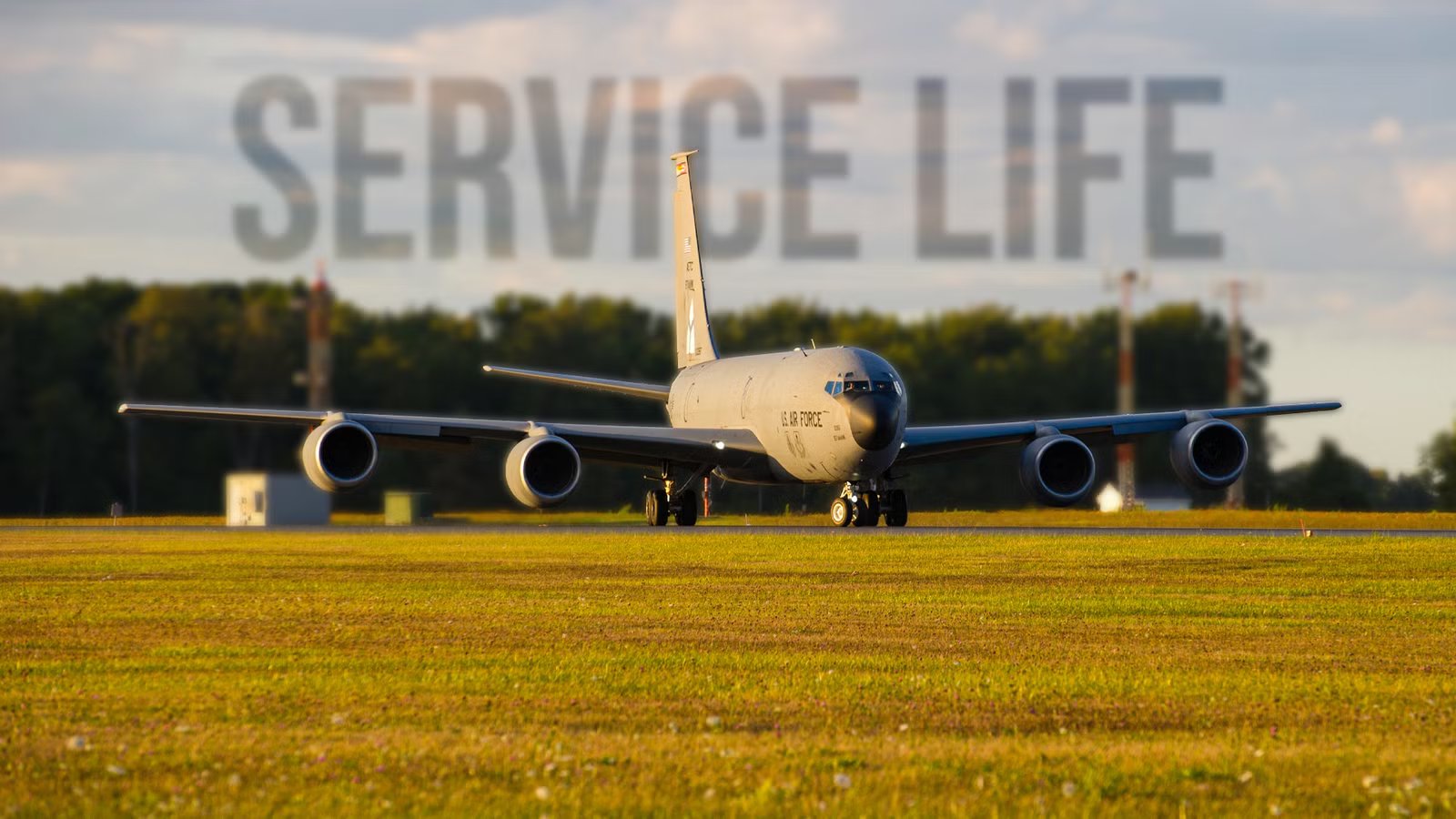
military aviation is often defined by rapid innovation, with aircraft typically becoming obsolete within a few decades as new technologies render older designs ineffective. However, a few designs have defied this pattern, remaining operational for over half a century. Aircraft like the Boeing B-52 Stratofortress and Lockheed C-130 Hercules continue to serve long after their contemporaries have been retired, bridging generations of technology and conflict.
In many cases, these aircraft have far exceeded their original design life: early B-52 airframes, for example, were expected to last around 20–30 years, yet some are projected to approach 100 years of service. Similarly, the C-130 has accumulated millions of flight hours globally, proving its reliability across combat zones, humanitarian missions, and extreme environments.
What unites these aircraft is a shared design philosophy: prioritize durability, flexibility, and upgrade potential over short-term performance gains. Rather than being replaced, they have been continuously modernized with new engines, avionics, radar systems, and mission equipment, often multiple times over their lifespan. In some cases, only the airframe remains original, while nearly every onboard system has been replaced or upgraded.
This ability to evolve, combined with roles that remain essential, such as transport, aerial refueling, reconnaissance, and pilot training, has enabled them to outlast multiple generations of newer aircraft. The result is a group of warplanes that, while rooted in the Cold War, remain vital assets in 21st-century operations, with some expected to continue flying well into the 2030s, 2040s, and beyond.
5
Northrop T-38 Talon
In service since 1961

The T-38 Talon was a groundbreaking aircraft at the time of its introduction, becoming the world’s first supersonic trainer and setting a new standard for pilot instruction. Developed by Northrop in the late 1950s, it first flew in 1959 and entered service in 1961. Capable of speeds around Mach 1.08 (812 mph), it gave trainee pilots their first exposure to true high-performance jet flight. Its lightweight design, thin wings, and twin General Electric J85 engines made it both agile and relatively economical to operate compared to frontline fighters.
What makes the T-38 particularly significant is its unparalleled role in pilot training. Since the 1960s, tens of thousands of pilots have trained in the aircraft, including nearly every US Air Force fast-jet pilot. It has also been extensively used by NASA, where astronauts rely on it to maintain proficiency in high-performance flight: astronauts collectively log thousands of hours in the Talon to simulate the workload and decision-making required in space missions.
The aircraft’s demanding handling characteristics, especially during landing, force pilots to develop precision and discipline, qualities essential for advanced combat aircraft. Despite its age, the T-38 has undergone several modernization programs, including structural reinforcements and the T-38C upgrade, which added glass cockpits, GPS navigation, and modern avionics.
However, fatigue on aging airframes and increasing maintenance demands have made replacement inevitable. The Boeing T-7A Red Hawk is intended to take over, though delays have extended the Talon’s service life into the late 2020s. By the time it retires, the T-38 will have served for nearly 70 years, an extraordinary lifespan for a supersonic jet trainer.
4
Lockheed U-2
In service since 1956

The U-2 ‘Dragon Lady’ was designed for one purpose: to see what no one else could. Developed in extreme secrecy by Lockheed Martin’s Skunk Works division under Clarence ‘Kelly’ Johnson, it first flew in 1955 and entered service in 1956. Its defining feature is its ability to operate at altitudes above 70,000 feet (21,000 meters), far beyond the reach of most enemy aircraft and early surface-to-air missiles. This capability allowed it to capture high-resolution imagery of adversary territory, fundamentally changing intelligence gathering during the Cold War.
The aircraft became globally famous during events like the Cuban Missile Crisis, when U-2 photographs confirmed the presence of Soviet nuclear missiles in Cuba. It also played a central role in the 1960 U-2 incident, when pilot Gary Powers was shot down over the Soviet Union, triggering a major diplomatic crisis. Despite such risks, the intelligence it gathered was invaluable, providing insights into military capabilities, missile deployments, and nuclear infrastructure that could not be obtained by any other means at the time.
Over the decades, the U-2 has been continuously upgraded with advanced sensors, including electro-optical cameras, radar imaging systems, and signals intelligence equipment. Modern variants can transmit data in near real time, something satellites cannot always do with the same flexibility. Even in the age of drones and space-based surveillance, the U-2 remains relevant because it can be rapidly deployed and re-tasked mid-mission. However, with plans to retire it this year, its nearly 70-year career will soon end.

What Is The Oldest US Military Aircraft Still Flying?
A KC-135 tanker is the oldest jet aircraft currently in Air Force service, an accolade it has held for over a decade.
3
Boeing KC-135 Stratotanker
In service since 1957

The KC-135 Stratotanker revolutionized aerial warfare by making long-range air operations routine. Entering service in 1957, it was derived from the prototype that led to the Boeing 707, the first successful American jet airliner. Equipped with a flying boom refueling system, the KC-135 allowed bombers and fighters to refuel midair, dramatically extending their range and endurance. This capability became a cornerstone of US military strategy, particularly during the Cold War, when nuclear deterrence required global reach.
More than 700 KC-135s were built, and while many have been retired, hundreds remain in service after extensive upgrades. Modernized variants feature more efficient CFM International F108 turbofan engines, which significantly reduced fuel consumption, noise, and operating costs compared to the original engines. The aircraft can transfer up to 200,000 pounds (90,700 kg) of fuel per mission, supporting everything from fighter jets to large bombers and cargo aircraft.
Despite the introduction of the Boeing KC-46 Pegasus, the KC-135 remains indispensable due to its proven performance and the slower-than-expected rollout of its replacement. It continues to support global operations, from combat missions to humanitarian aid. Expected to remain active into the 2030s, the KC-135 demonstrates how a well-designed support aircraft can remain relevant for generations, especially when its mission, extending the reach of air power, remains unchanged.
2
Lockheed C-130 Hercules
In service since 1956

The Lockheed C-130 Hercules is widely regarded as one of the most successful and versatile aircraft ever built. First flown in 1954 and entering service in 1956, it was designed as a tactical transport capable of operating from rough, short airstrips. Its high-mounted wings, rugged landing gear, and four turboprop engines allow it to take off and land in environments where most aircraft cannot operate, including dirt runways and remote disaster zones.
What truly sets the C-130 apart is its adaptability. Over the decades, it has been modified into dozens of specialized roles, including gunships (AC-130), weather reconnaissance, aerial firefighting, medical evacuation, and special operations support. Its cargo bay can carry up to 42,000 pounds (19,000 kg) of equipment or troops, and it can be rapidly reconfigured depending on mission needs. This flexibility has made it the backbone of military logistics as well as humanitarian operations worldwide.
Perhaps most remarkably, the Hercules has remained in continuous production since 1956. The modern C-130J Super Hercules includes advanced avionics, digital cockpits, and Rolls-Royce AE 2100D3 engines, offering improved performance and fuel efficiency. With over 2,500 aircraft built and in service in more than 60 countries, the C-130’s longevity is unmatched globally. Its ability to evolve without losing its core strengths ensures it will likely remain in service for decades to come.
1
Boeing B-52 Stratofortress
In service since 1955

The B-52 Stratofortress is the ultimate example of longevity in military aviation. First flown on April 15, 1952, and entering service in 1955, it was originally designed as a high-altitude nuclear bomber capable of delivering weapons deep into Soviet territory. With a wingspan of 185 feet (56 meters) and a maximum takeoff weight of over 488,000 pounds (221,000 kg), it remains one of the largest and most powerful bombers ever built.
Over time, the B-52 has adapted to changing warfare requirements. It transitioned from a nuclear deterrent platform to a versatile conventional bomber, capable of carrying precision-guided munitions, cruise missiles, and even hypersonic weapons under development. Its range exceeds 8,800 miles (14,000 km) without refueling, and when paired with aerial refueling, it can conduct missions lasting over 30 hours. This endurance has made it a key asset in conflicts from Vietnam to the Middle East.
What truly sets the B-52 apart is its continuous modernization. The latest upgrade program includes new engines from Rolls-Royce, expected to improve fuel efficiency by up to 30% and significantly reduce maintenance costs. Additional upgrades include modern radar systems, digital avionics, and expanded weapons capabilities. With plans to keep it in service until around 2060, nearly 100 years after its first flight, the B-52 stands as a testament to robust engineering and adaptability, securing its place as the longest-serving military aircraft in history.