dailynewsnblog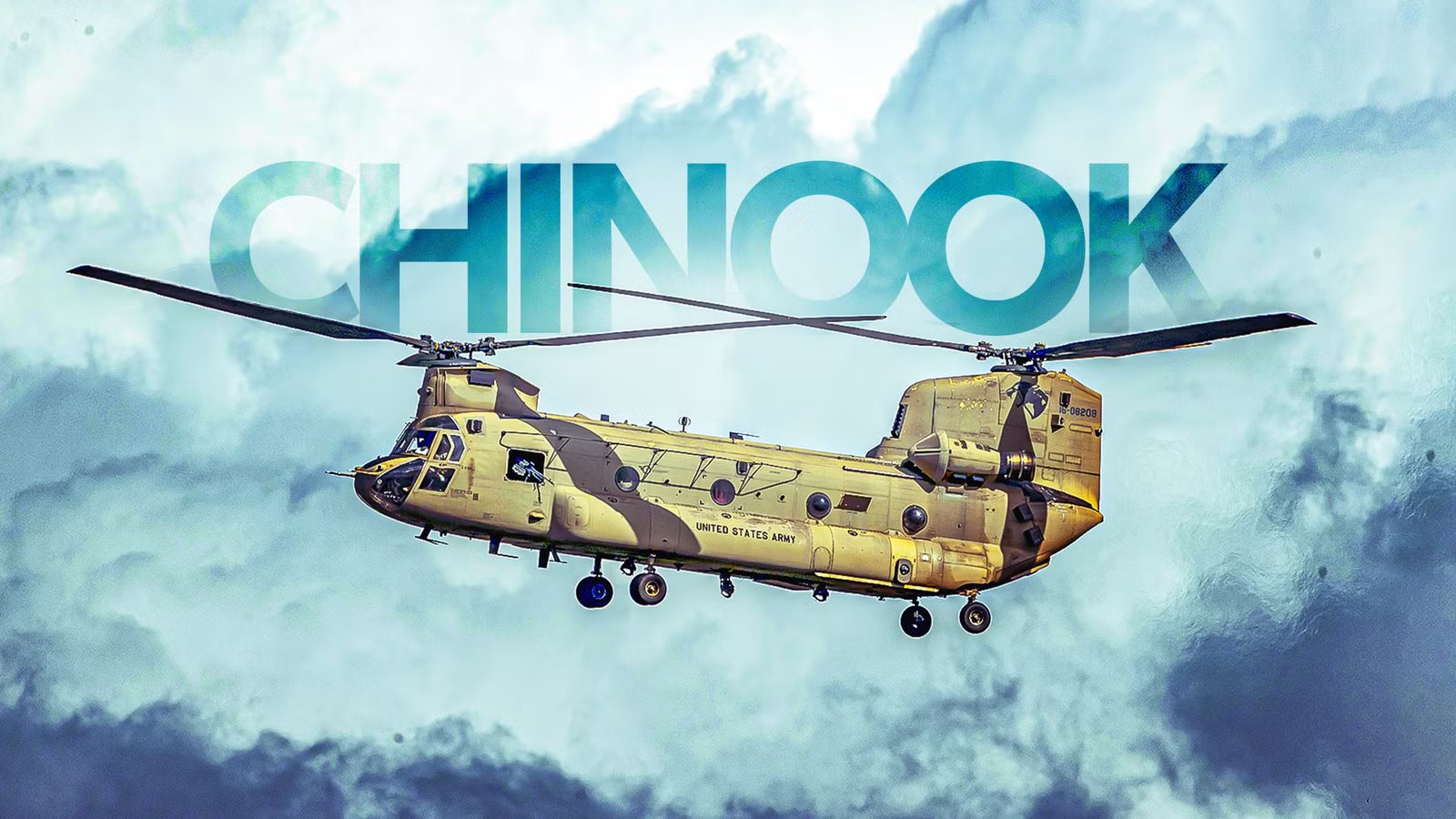
The US Army’s decision to continue investing in the  Boeing CH-47 Chinook more than six decades after its first flight reflects a broader shift in how modern militaries approach capability, cost, and risk. As operational demands evolve, particularly in environments where logistics can no longer rely on secure supply lines, the value of proven, adaptable platforms has only increased. In that context, the Chinook’s continued relevance is not just a matter of legacy, but of necessity.
In April 2026, the United States Army awarded Boeing a $324 million contract for six additional C H-47 Chinook F Block II helicopters, bringing the total under contract to 24. This article examines what that Lot 6 award actually means, how the Block II upgrade reshapes the aircraft’s performance, and why both the Army and its allies continue to prioritize a platform that remains unique in its role despite its age.
The $324 Million Buy: What Lot 6 Actually Means

The Lot 6 contract is the third Chinook award in less than eighteen months, continuing a clear pattern of incremental procurement rather than large, singular buys. In December 2024, the Army awarded a Lot 3 contract for three aircraft valued at $135 million. October 2025 brought two further awards, Lots 4 and 5, worth a combined $461 million for nine aircraft, as The Aviationist reported at the time, shortly after the Army’s September 2025 Rapid Fielding production decision, which authorized procurement using both FY25 and FY26 funds and committed the service to outfitting two Combat Aviation Brigades with the Block II standard.
Lot 6, signed on April 15, 2026, adds six more aircraft and brings the total number of Block II Chinooks under contract to 24. As Heather McBryan, Boeing’s vice president and program manager for Cargo Programs, stated in the related Boeing News Release:
“Consistent production awards reflect the Army’s confidence in the CH-47F Block II as a critical capability for handling logistics in challenging environments across different domains and in varying operations.”
Rather than committing to a large multi-year procurement block, the Army is deliberately adjusting orders to build a stable production rhythm at Boeing’s Ridley Park facility in Pennsylvania. This approach also preserves flexibility, allowing the service to adjust quantities in response to budget cycles, operational demand, and evolving global requirements.
The broader significance of this procurement strategy becomes clearer when placed against the Army’s Future Vertical Lift (FVL) timeline. The Bell MV-75 Cheyenne II, developed by BellTextron under the Future Long-Range Assault Aircraft program, will eventually reshape assault aviation, but it is not designed to replace heavy-lift capability, nor will it be fielded at scale in the near term.
However, this procurement path is no longer viewed as open-ended. On the very same day of the contract approval, Rep. Mary Gay Scanlon, the representative of Boeing’s facility in Pennsylvania, said the Army’s fiscal 2027 budget does not include any funding for the Block II program, as reported by Aviation Week. This “decision space” approach signals a deliberate pause in large-scale procurement planning rather than a cancellation, allowing real-world feedback from deployed units to shape the program’s future trajectory.
Six Decades Of Relevance: Why The Chinook Endures

As previously documented by Simple Flying, the Chinook’s adaptability has driven nations to keep their fleets flying rather than moving on to a replacement, with early A, B, and C models designed for Vietnam’s jungle warfare evolving through D and F variants into workhorses in Iraq and Afghanistan. In contrast, specialized MH-47 variants for the US Army Special Operations demonstrated the platform’s reach into covert, high-risk missions.
That evolutionary arc is the result of a tandem-rotor design so fundamentally sound that the Army has chosen to keep modernizing the airframe rather than replacing it. At the core of this longevity is a design that remains fundamentally unchanged: a tandem-rotor configuration with two counter-rotating rotors mounted fore and aft. This eliminates the need for a tail rotor and allows engine power to be fully directed toward lift.
The result is a helicopter capable of lifting approximately 26,000 pounds (11,800 kg) at sea level — enough to transport armored vehicles, artillery systems such as the M777 howitzer, or large troop formations in a single sortie. No other US Army helicopter comes close to its characteristics with a comparable cost.
Equally important is the industrial base supporting the aircraft. Boeing has continuously produced Chinooks at Ridley Park since the early 1960s. Over time, this production line has accumulated deep institutional knowledge across engineering, manufacturing, and sustainment. That ecosystem extends beyond Boeing itself to training pipelines, maintenance organizations, and allied operators worldwide.
The Army’s current fleet of roughly 465 aircraft reflects this legacy. Many are relatively modern CH-47F Block I variants or remanufactured airframes with upgraded avionics and structural improvements. However, they were designed before the emergence of what the Army now describes as “contested logistics” — an operational environment where supply lines, rear areas, and logistics aircraft themselves are within range of enemy sensors and fires. In that context, incremental upgrades alone are no longer sufficient.

The World’s Largest Air Forces By Number Of Fighter Jets
This guide ranks the world’s largest fighter forces in 2026
Built From Scratch: What A New-Build Block II Actually Delivers

The six aircraft in Lot 6 will be new-build CH-47F Block IIs, meaning they are produced from the ground up with the full upgraded specification integrated at every stage of construction. This distinction matters operationally. A new-build aircraft enters service with zero accumulated flight hours, a full structural lifespan, and no requirement for early depot-level structural resets. It also accelerates fielding timelines compared to recapitalized airframes, which must be rebuilt from existing structures.
The Block II configuration introduces several fundamental changes. The fuel system is redesigned around a single integrated fuel cell, replacing the three-tank system used in Block I aircraft. This reduces weight, simplifies fuel management, and increases available payload margin. As Boeing explains, the drivetrain has been strengthened to accommodate higher torque loads, while the airframe itself has been reinforced to support a maximum gross weight of 54,000 pounds (24,500 kg).
These structural redesigns redefine the aircraft’s performance envelope. In practical terms, the Block II increases lift capacity across nearly all mission profiles. It enables the transport of fully armored vehicles such as the Joint Light Tactical Vehicle (JLTV) and improves performance in high-altitude, high-temperature environments commonly referred to as “hot and high” conditions. At 6,000 feet (1,829 meters) altitude and 95°F (35°C), the Block II is expected to lift approximately 22,000 pounds (9,980 kg), with growth potential of 26,000 pounds as the program matures.
This reflects a broader trend in US military aviation: extending proven platforms through deep structural modernization rather than pursuing entirely new airframes. The same philosophy is evident in long-term upgrades to aircraft such as the Boeing C-17 Globemaster III, which is expected to remain in service into the 2070s.
Contested Logistics And The Indo-Pacific Problem

The Army’s Rapid Fielding decision explicitly links the Block II buy to the demands of large-scale combat operations, due to the service’s planning construct for a potential conflict with a peer adversary, most likely in the Indo-Pacific. In that environment, the logistics problem is fundamentally different from the counterinsurgency campaigns that defined the previous two decades. Contested logistics means that rear areas are not safe, that supply convoys are targetable, and that the ability to move fuel, ammunition, and troops without road dependency becomes a genuine force multiplier.
The Chinook has always excelled at exactly this mission, but the Block I’s range limitations mean that, against an adversary capable of pushing air defenses forward, it sometimes cannot reach the standoff distances commanders need. The Block II addresses these constraints directly through improved fuel efficiency, reduced weight, and increased structural capacity.
The redesigned fuel system increases mission radius across most payload configurations, while structural enhancements allow heavier loads to be transported in fewer sorties. This becomes particularly important when moving artillery systems, armored vehicles, or bulk supplies under time-sensitive conditions.
The open-architecture avionics standard baked into Block II also matters for the long game. Earlier Super Hornets and Block I Chinooks both required significant hardware changes to insert new capabilities. The Block II’s modular design is intended to accommodate affordable future upgrades, including more powerful engines under the Army’s Future Affordable Turbine Engine (FATE) program, which is developing a 6,000 shaft horsepower-class powerplant, without requiring the aircraft to return to depot for a full structural overhaul.

What Missions Did The CH-47 Chinook Perform For The US Military?
The Chinook first entered service with the United States Army in 1962.
Global Demand And The Case For Proven Platforms

The US Army is not alone in its commitment to Block II. Germany has committed to fielding the CH-47F Block II as part of an existing program covering 60 aircraft, one of the largest Chinook orders ever placed by a NATO ally, and the Army has confirmed that several other overseas partners have expressed interest in acquiring the variant.
The UK Royal Air Force has also placed an order for 14 MH-47G Block II Chinooks, with deliveries expected to begin in 2026. Globally, the Chinook is operated by 20 countries, and its status as the world’s only widely available tandem-rotor heavy-lift helicopter gives it a monopoly in a capability class that few nations are willing to go without.
While some nations have evaluated alternatives such as the SikorskyCH-53K King Stallion, outcomes have varied. Germany selected the Chinook based on cost, interoperability, and sustainment advantages. Israel, by contrast, chose the CH-53K due to specific operational requirements.
What distinguishes the Chinook globally is not only its performance, but its support architecture. Decades of production, sustainment infrastructure, training pipelines, and multinational interoperability have created a support network unmatched by any competing platform.
Boeing still has Block II work to fulfill the US Army’s existing contracts, plus MH-47G deliveries for US Special Operations Command and the UK, and a major German order. But without a clear US long-term procurement commitment, sustaining production rates and the broader supply chain beyond the late 2020s will depend heavily on export orders and congressional appropriations. Each successive lot contract helps the preservation decision of the production line that keeps the supply chain healthy, keeps unit costs manageable, and keeps Boeing’s vertical lift workforce intact for the follow-on work that Block III will eventually require.
What Comes Next: Block III And The Chinook’s Path To 2060

Block II is not the final stage of the Chinook’s evolution. The United States Army and Boeing have outlined a potential Block III growth path, centered in part on more powerful engines under the Future Affordable Turbine Engine (FATE) initiative. These engines, expected to deliver around 6,000 shaft horsepower, would represent a significant increase over the approximately 5,000 SHP produced by the current Honeywell T55-715.
Integrating that additional power would require corresponding upgrades to the transmission and drivetrain, but it would also open the door to further increases in lift performance, particularly in high-altitude, high-temperature environments. Potential future enhancements could also include airframe modifications to expand internal volume and payload flexibility.
The US Army’s immediate next steps are operational: field the 24 Block IIs, gather structured feedback from frontline units, and then decide whether to convert the rapid fielding buys into a larger production run. That decision will be shaped by the evaluation results, the FY2027 and subsequent budgets, and congressional actions.
To sum up, the Chinook’s trajectory suggests not the winding down of a legacy platform, but the continued expansion of one of the most enduring designs in military aviation. Its defining strength has never been singular technological leapfrogging, but continuous adaptation across generations of warfare, from Vietnam to the era of contested logistics. In that sense, a service life approaching, and potentially surpassing, one hundred years could be a plausible outcome, as outlined by the US army.