dailynewsnblog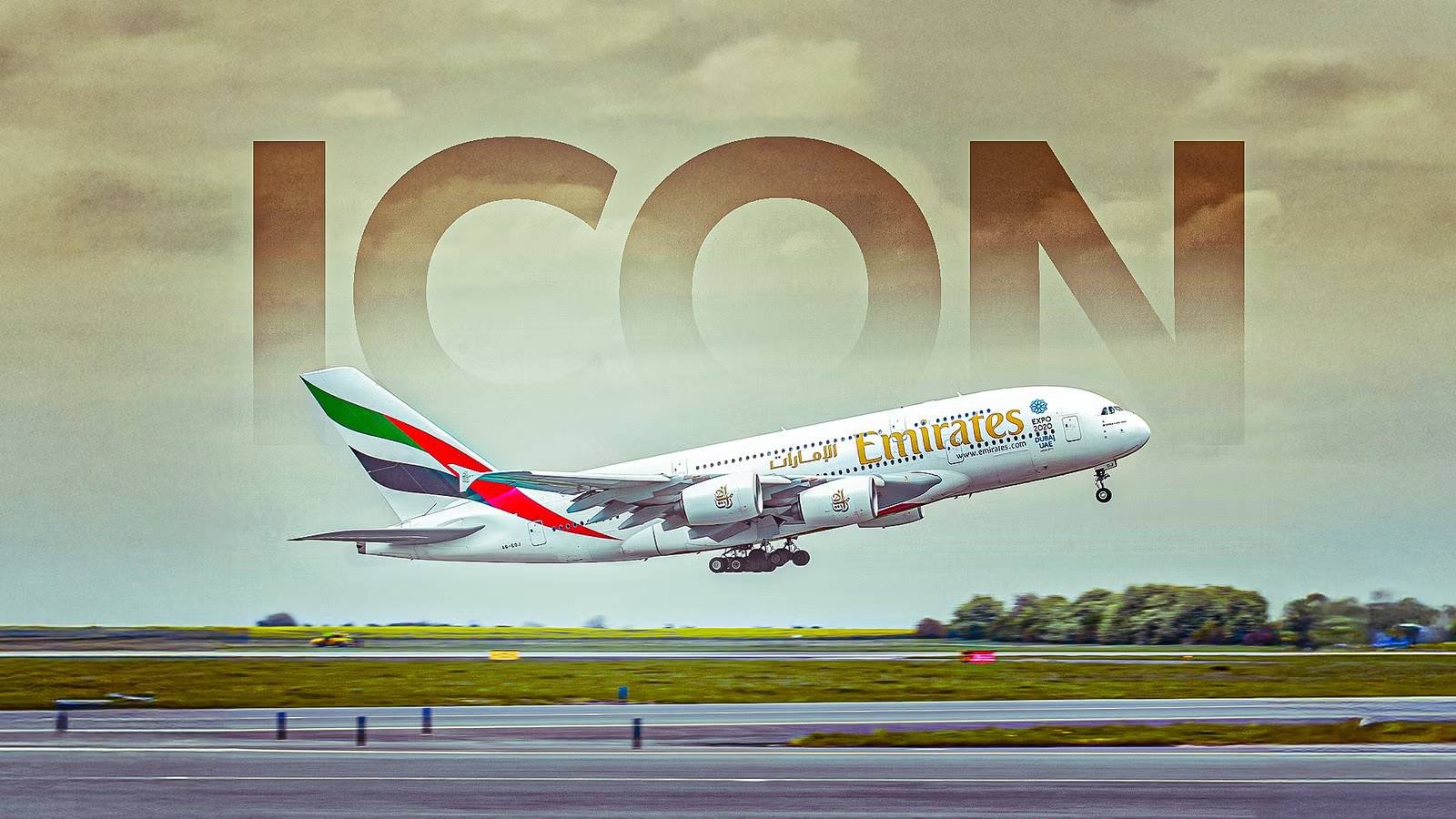
A quarter-century into the era of ultra-long-haul aviation, few aircraft have shaped a single airline’s identity as profoundly as the Airbus A380 has for Emirates. Since the airline inducted its first superjumbo in 2008, the aircraft has evolved from a bold fleet addition into the backbone of Emirates’ global operation. With more than 100 A380s delivered, far exceeding any other carrier, the airline accounts for roughly half of all A380s ever built, making its commitment unparalleled in commercial aviation. At its peak, Emirates’ A380 fleet alone represented the largest concentration of passenger capacity tied to a single aircraft type anywhere in the world.
Today, despite industry shifts toward smaller, more fuel-efficient aircraft, the A380 remains central to Emirates’ long-haul network. At its peak, the carrier deployed the aircraft to more than 50 destinations across six continents, carrying hundreds of millions of travellers over the years. While many competitors have stepped away from the type, Emirates continues to invest billions of dollars into maintaining and upgrading its fleet, an unmistakable signal that the A380 still plays a vital role in its long-term strategy and is far from being phased out.
The Strategic Bet That Changed Global Aviation

When  Emirates committed to the A380 in the early 2000s, it placed one of the largest orders in aviation history. Ultimately, the airline ordered 123 aircraft, all of which were delivered before production ended in 2021. This scale of investment dwarfed that of any other airline and effectively anchored the A380 program’s commercial success, ensuring its longevity well beyond what many analysts initially predicted.
 Dubai International Airport (DXB)’s geographic advantage made this bet logical. Within an eight-hour flight radius of Dubai lies a population of over five billion people, giving Emirates access to one of the largest potential customer bases in aviation. By funneling passengers through this central hub, the airline could connect city pairs that would otherwise struggle to sustain direct long-haul service. The A380’s capacity, typically between 489 and 615 seats in Emirates’ configurations, allowed the airline to consolidate this demand efficiently.
The results have been dramatic. Emirates grew from carrying roughly ten million passengers annually in the early 2000s to more than 50 million passengers per year before the pandemic. This fivefold increase was not solely due to the A380, but the aircraft played a crucial role in enabling that scale, allowing Emirates to grow capacity faster as it expanded its route network.
Engineering Scale: Why The A380 Fits Emirates’ Model

The A380 is the largest passenger aircraft ever built, with a wingspan of about 262 feet (80 meters) and a maximum takeoff weight exceeding 1.27 million pounds (575 tonnes). For Emirates, this immense scale translates directly into economic efficiency, particularly on high-demand long-haul routes where load factors frequently exceed 75–80%, and often climb higher during peak travel seasons.
Although the aircraft burns more fuel overall than smaller jets, its cost per seat can be significantly lower when operating near capacity. Emirates has consistently leveraged this advantage on trunk routes, where filling hundreds of seats per flight is not only achievable but routine. The ability to spread operating costs across such a large number of passengers gives the airline a competitive edge in key global markets.
Infrastructure constraints further reinforce the A380’s value. Airports like  London Heathrow Airport (LHR) operate at or near full capacity, with limited room for additional flights. By deploying A380s, capable of carrying 100–200 more passengers than many other widebodies, Emirates maximizes the value of each slot. This strategy allows the airline to increase total passenger volume without needing to secure additional, often scarce, takeoff and landing rights.

End Of An Era: Emirates’ Final 12 Routes On Massive 615-Seat Airbus A380 Revealed
The end looms for Emirates’ 615-seat A380s, with these 12 routes to see the world’s highest-capacity double-decker this year.
Reinventing The Passenger Experience

The A380 provided Emirates with an unprecedented opportunity to rethink the in-flight experience. Its double-deck layout and expansive cabin space allowed the airline to introduce features that had never been seen before in commercial aviation, setting new benchmarks for luxury and comfort on long-haul flights. With significantly more usable floor area than traditional widebodies, Emirates was able to move beyond incremental upgrades and instead reimagine what passengers could expect from journeys lasting well over half a day.
Among the most notable innovations are the First Class shower spas and the onboard lounge, often referred to as the A380 “bar”, located at the rear of the upper deck. This space, available to Business and First Class passengers, creates a social environment at cruising altitude where travelers can stand, stretch, and interact, breaking up the monotony of ultra-long-haul flying. These features are not merely symbolic; they have become central to Emirates’ brand identity and are consistently highlighted as defining elements of the airline’s premium offering.
From a financial perspective, this focus on premium travel is critical. Premium cabins, while smaller in seat count, can generate a disproportionately large share of revenue, often between 30% and 40% on long-haul flights. At the same time, Economy passengers benefit from the A380’s quieter cabin, wider seats, and improved air pressure and humidity levels, all of which contribute to higher customer satisfaction and repeat business. In combining high-yield premium experiences with strong economy demand, Emirates has used the A380 to maximize both revenue potential and overall passenger appeal.
Surviving The Industry’s Shift Away From Quadjets

In recent years, the aviation industry has shifted decisively toward twin-engine airframes such as the Boeing 787 Dreamliner and Airbus A350. These aircraft typically offer fuel savings of 20–30% per flight compared to older four-engine jets, making them more attractive for airlines operating a wider variety of routes, including lower-demand city pairs.
This transition led many carriers to retire their A380 fleets earlier than expected. Air France, for example, permanently withdrew its A380s by 2020, while other operators scaled back significantly. Today, fewer than 200 A380s remain in active service worldwide, a notable decline from the program’s peak years.
Emirates, however, continues to defy this trend. By concentrating its operations on high-density routes where demand can support such a large aircraft, the airline has maintained the economic viability of the A380. On some routes, daily passenger volumes exceed 1,000 travelers each way, making the aircraft not just viable, but highly efficient in Emirates’ specific operating context.

After 20 Years, The Airbus A380 Still Shapes Airport Design
A closer look at some of the upgrades that airports had to make in order to accommodate the superjumbo.
Post-Pandemic Recovery And Fleet Renewal

The aviation downturn triggered by the COVID-19 pandemic posed a significant challenge for large aircraft like the A380. At the height of the crisis in 2020, Emirates had grounded more than 80% of its fleet, including the majority of its superjumbos, as global travel demand collapsed overnight. Yet the recovery phase told a different story. By 2023, Emirates had restored most of its A380 operations, bringing the aircraft back into service at a faster pace than many competitors. This rapid reactivation demonstrated not only the airline’s operational agility but also the continued demand for high-capacity long-haul travel as markets reopened.
In many cases, the A380 proved particularly well-suited to post-pandemic travel patterns, where constrained airport slots and resurging demand on key international routes favored larger aircraft. Emirates capitalized on this by redeploying the A380 to high-density hubs, reinforcing its hub-and-spoke model through Dubai. The aircraft’s spacious cabin and premium offerings also aligned with a renewed passenger preference for comfort on long-haul journeys, further strengthening its role in the airline’s recovery strategy.
To support this resurgence, the airline invested $5 billion (up from an initial $2 billion estimate). This extensive project covered both Airbus A380s and Boeing 777s. These upgrades included refreshed cabins and the addition of Premium Economy seating, a segment that has seen growing demand in recent years. This investment ensures that the A380 remains competitive and relevant well into the next decade.
The Future Of The A380 In Emirates’ Network

Looking ahead, Emirates expects the Airbus A380 to remain a core part of its fleet for years to come. Many aircraft are projected to stay in service until the late 2030s, supported by ongoing maintenance programs and cabin enhancements that extend their operational lifespan and passenger appeal. With significant investment already committed to retrofits and upgrades, the airline is clearly positioning the A380 as a long-term asset rather than a short-term solution.
At the same time, the airline is diversifying its fleet with newer, more flexible aircraft. Orders for the Airbus A350, Boeing 787 Dreamliner, and the next-generation Boeing 777X will allow Emirates to expand into thinner routes that cannot support the A380’s capacity, while also modernizing its existing operations. The 777X in particular, expected to seat over 400 passengers in typical configurations and feature folding wingtips spanning around 235 feet (71.8 meters) on the ground, will play a crucial role as a high-capacity twin-engine complement to the A380, offering improved fuel efficiency and range.
Even in this evolving landscape, the A380 continues to dominate key high-demand routes. Flights between major global hubs regularly justify aircraft with over 500 seats. In these markets, the A380 remains unmatched in both capacity and passenger experience, while aircraft like the 777X will provide Emirates with additional flexibility to fine-tune capacity and frequency. Together, this mix ensures the airline can maintain its scale advantage while adapting to shifting demand, keeping the A380 firmly at the center of its long-haul strategy for years to come.