dailynewsnblog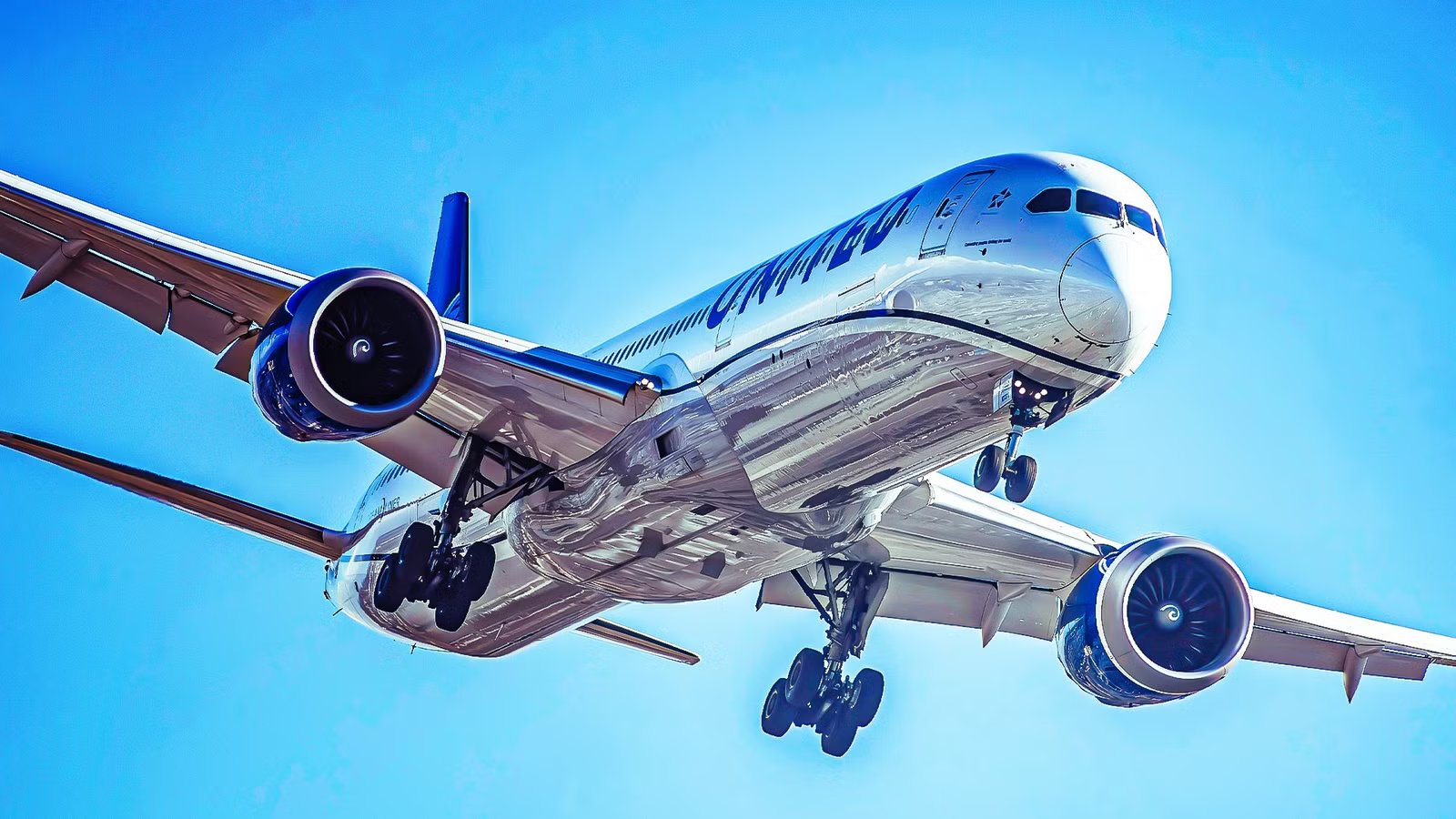
 United Airlines has 89 Boeing 787s. According to ch-aviation, the subfleet consists of 56 787-9s, 21 787-10s, and 12 787-8s. The
  Star Alliance member is one of only three carriers worldwide to fly all three variants. United’s Dreamliners, to use the
  Boeing moniker, constitute 37% of the airline’s widebody fleet.
The type averages 7.2 years. While N20904 was the first 787 to be delivered to United (in September 2012), the first of the carrier’s 787s off the production line was actually N27901. With a fleet number of 0901, this frame was the 45th aircraft to emerge from assembly.
United’s 13 Longest 787 Routes

As usual with such analysis, the maximum block time was used to determine United’s longest 787 services. This is measured as chocks-off-to-chocks-on, or gate-to-gate. It includes taxiing at both ends of a route, the flight time, and a period for short delays.
United’s nonstop and one-stop flights between August 2026 and March 2027 were explored using OAG data. However, some may prefer only nonstop services to be examined, as it’s more of a like-for-like comparison. To qualify, the 787 must operate all legs of stopping services with the same flight number.
Including one-stop flights means the top two entries are, of course, dominated by such operations. Both are from  Los Angeles International Airport (LAX) and far outpace the first nonstop offering, which is from
  San Francisco International Airport (SFO). Most of the nonstop links are all within ultra-long-haul territory, which is usually defined as being 16 hours or more. They include SFO back to Adelaide, which is a brand-new route but which only had a 53% load factor in the first season.
Max. Block Time (August 2026 to March 2027)* | Direction Of Route With That Time | United’s 787 Operations (August 2026 to March 2027)** |
|---|---|---|
21 hours and 40 minutes | LAX to Bangkok via | Daily 787-9 |
20 hours and 45 minutes | LAX to Ho Chi Minh City via Hong Kong (resumed in 2025) | Daily 787-9 |
17 hours and 40 minutes | SFO to Singapore | Twice-daily 787-9 |
17 hours and 35 minutes |
| Daily 787-9 (winter only) |
17 hours and 05 minutes | Delhi back to | Daily 787-9 |
16 hours and 25 minutes | Johannesburg back to EWR | Up to daily 787-9 |
16 hours and 20 minutes | SFO to Adelaide (began in 2025) | Three weekly 787-9 |
16 hours and 05 minutes | Cape Town back to Washington Dulles International Airport (IAD) | Three weekly 787-9 |
16 hours and 00 minutes | Cape Town back to EWR | Up to four weekly 787-9 |
16 hours and 55 minutes | LAX to Melbourne | Up to daily 787-9 |
15 hours and 55 minutes | SFO to Melbourne | Daily 787-9 |
15 hours and 55 minutes | EWR to Seoul Incheon | Up to daily 787-9 |
15 hours and 30 minutes | LAX to Sydney | Daily 787-9 |
* Known as of July 29, and subject to change | ** Known as of July 29, and subject to change |
 Hong Kong International Airport
 Houston George Bush Intercontinental Airport
 Newark Liberty International Airport
United To Bangkok & Ho Chi Minh City Via Hong Kong

The carrier has a history of flying to both Bangkok and Ho Chi Minh City. Service to the Thai capital existed until 2014, when flights operated via the now-resurgent Tokyo Narita hub. The Vietnamese city is different, as United flew via HKG until 2016. United returned to both places in Southeast Asia in October 2025, with fifth freedom traffic rights available via the Pearl of the Orient.
It is true that United certainly wanted to capture some of the huge amount of traffic flowing from the mainland US to both Bangkok and Ho Chi Minh. Rather than launching ultra-long-haul flights at great expense in what are very popular but fairly low-yielding markets, extending its then-twice-daily terminator service to HKG was a way of reducing risk and expenses considerably. However, a two-stop offering, flying from some US airport to LAX and then HKG, is not necessarily very competitive.
The extension was likely to help improve the fortunes of United between LAX and HKG. US Department of Transportation (DOT) data for the 12 months to September 2025 (a month before flights began to Bangkok/Ho Chi Minh City) shows that only 63.4% of seats were filled on the carrier’s twice-daily operation. Did extending flights help improve United’s load factor? See the next section.
In June 2026,  Delta Air Lines launched a daily nonstop service from LAX-HKG, which meant that many more seats for sale entered the market. It is, therefore, somewhat odd that United felt the need to comment on Delta’s likely performance on the route, when United barely filled six out of ten seats. However, Delta is probably going to face the same fate as United, although it has half as many flights to fill. Data on Delta’s performance will be available later this year.
Simple Flying Quiz
Think you really know United Airlines?
Answer 10 questions and put your knowledge to the test
Think you really know United Airlines?
Answer 10 questions and put your knowledge to the test
Easy (15s)Medium (10s)Hard (5s)
How United’s LAX-HKG Load Factor Has Changed

Recall that United filled 63.4% of seats between LAX and HKG in the 12 months to September 2025. Flights were extended to Bangkok and Ho Chi Minh City the following month. As you’d expect, many more passengers joined the services, with an immediate impact. Capacity on flights to/from LAX did not increase.
In November 2025, the DOT shows that the load factor jumped to 85.5%. 26,144 round-trip passengers were carried, up by 44.2% compared to November 2024. The load jumped to 95.4% in March 2026, on the back of traffic rising by 75.7% to 30,385 passengers.
The load factor is just one performance measure, and should not be considered in isolation. Nonetheless, the improvement was considerable. Perhaps that is why United was so vocal about Delta’s likely performance. Of course, the increase says nothing about the fares and yields needed to achieve it. If any reductions in United’s offering materialize, we will know the answer.