dailynewsnblog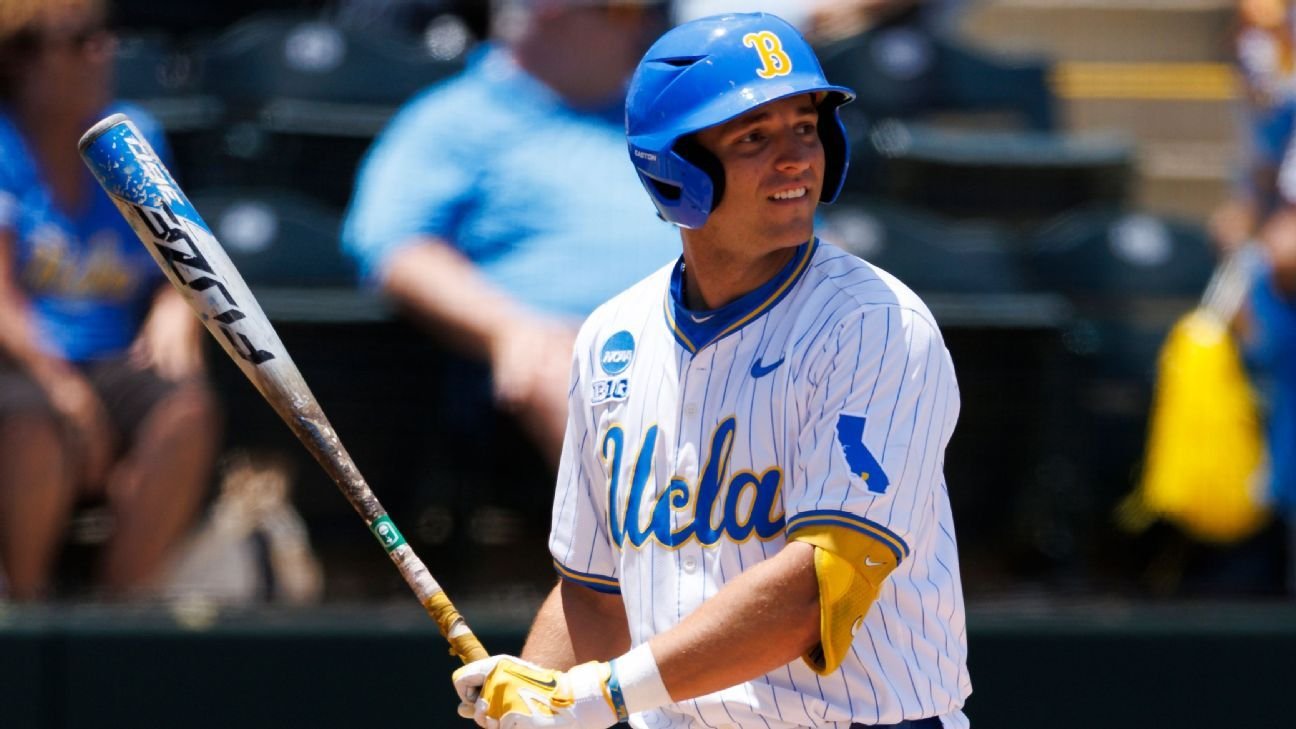
The 2026 MLB draft has begun, with the Chicago White Sox taking UCLA’s Roch Cholowsky with the first overall pick.
With the second pick, the Tampa Bay Rays selected another shortstop in Texas prep Grady Emerson and the Minnesota Twins followed that with Georgia Tech star Vahn Lackey. The San Francisco Giants grabbed right-hander Jackson Flora with the fourth pick and the Pittsburgh Pirates rounded out the top five with outfielder Derek Curiel.
What will the teams that follow do? And who will be the biggest steals — and stretches — of Day 1?
Follow along for pick-by-pick coverage, with ESPN MLB experts David Schoenfield and Dan Mullen breaking down everything you need to know about who your favorite team took in the first round as the picks come off the board.
Final mock draft | Top 250 | Big question for all 30 teams | Latest buzz
Day 1 results, analysis

Draft ranking: 1
Who is Cholowsky? The consensus top prospect heading into the 2026 season, Cholowsky more or less maintained that position even though his numbers were down slightly from his sophomore season with the Bruins (from a 1.190 OPS to 1.088). A 6-foot-2 right-handed batter, Cholowsky has plus tools across the board other than his speed and was regarded by some as the best college shortstop since Troy Tulowitzki. With his defense, raw power and good approach at the plate, he should move quickly to the majors, with his on-base skills amplified by a Craig Biggio-like ability to get hit by pitches (25 times this season in 299 plate appearances).
Why the White Sox took him here: Cholowsky has been the wire-to-wire top prospect in this class and, despite late buzz about Grady Emerson and Vahn Lackey closing the cap, Chicago took the consensus No. 1 player on the board. While the knock is he might not have the superstar upside teams expect at the top of the draft, Cholowsky comes with a high floor and an All-Star ceiling with the bonus of being a potentially fast-mover for a surprise contender suddenly focused on now as much as the future. — Mullen

2. Tampa Bay Rays: Grady Emerson, SS, Fort Worth Christian HS (Texas)
Draft ranking: 2
Who is Emerson? Emerson emerged as the top high school position player, jockeying with Cholowsky for the top slot on draft boards. A left-handed batter, Emerson was the Gatorade National Player of the Year, playing his senior season under former Rangers outfielder Rusty Greer, who also helped mentor Bobby Witt Jr. in high school. Emerson may not have Witt’s loud tools (who does?), but he’s a skilled hitter with projectable power and is viewed as a lock to stick at shortstop. Compared to other top high school shortstops in recent drafts – Eli Willits, Ethan Holliday, Konnor Griffin, Bryce Rainer – Emerson rates higher, although that doesn’t guarantee he’s going to explode like Griffin did.
Why the Rays took him here: Many scouts view Emerson as the top player in the draft, and while teams don’t draft for positional need, it’s convenient that Emerson fits a need for Tampa Bay. Carson Williams was supposed to be the shortstop of the present and future for the Rays, but he continues to struggle with strikeouts. The Rays also don’t shy away from high school players, with their top two prospects, Theo Gillen and Nathan Flewelling, coming out of high school in the 2024 draft, and Daniel Pierce, last year’s first-round pick, also a high school selection. — Schoenfield

3. Minnesota Twins: Vahn Lackey, C, Georgia Tech
Draft ranking: 3
Who is Lackey? The latest in a long line of first-round catchers from Georgia Tech going back to Jason Varitek and including Matt Wieters, Joey Bart and Kevin Parada, Lackey exploded at the plate for the Yellow Jackets in 2026, hitting .397/.519/.772 with 20 home runs and more walks than strikeouts as he climbed from a late first-round talent to the top of the first round. He’s agile behind the plate with above-average arm strength and a quick release and even has above-average speed that would have allowed him to play other positions if he wasn’t so good behind the plate. His power upside is the biggest question, although he improved from six home runs as a sophomore. He’s also young for a college junior, not turning 21 until July 7.
Why the Twins took him here: Lackey powered his way into the conversation for the No. 1 overall pick with a huge season at Georgia Tech, making this an easy choice when the top of the board played out as expected. Lackey is a potential star at a premium position who has the ability to move relatively quickly through the minors. It’s a perfect fit for the franchise that had Hall of Famer Joe Mauer behind the plate not too long ago. — Mullen

4. San Francisco Giants: Jackson Flora, RHP, UC Santa Barbara
Draft ranking: 4
Who is Flora? The clear top pitching prospect in an overall weak class for moundsmen, Flora has hit triple digits with his fastball, sitting 95-97 with the high spin rate that teams like to see. With a classic pitcher’s build at 6-5 and 205 pounds, Flora dominated for the Gauchos, going 12-0 with a 1.06 ERA and 133 strikeouts in 102 innings while allowing just 55 hits. He’s not quite as polished as former teammate Tyler Bremner, who went second overall in last year’s draft to the Angels, as Flora was mostly just a fastball//slider guy before this season. A kick-changeup that he used mostly against lefties has good downward action and could be a plus offering.
Why the Giants took him here: This is pretty much the chalk pick here as Flora was the top pitcher in the draft after a dominant season with stuff to match, starting with a fastball that hits 100 mph. It does fit a need for the Giants as they rank 23rd in the majors in ERA, so the hope is Flora will move quickly. He’s the first college pitcher the Giants have drafted in the first round since Will Bednar in 2021 and just the second since 2015 (not counting two-way player Reggie Crawford in 2022). — Schoenfield

Draft ranking: 10
Who is Curiel? A draft-eligible sophomore after starring for two years in Baton Rouge, where he hit .345 as a freshman and then .353, with the ability to hit upper-end velocity. While his speed is only a tick above average, he has excellent instincts in center field and should be able to stick there. The question is how much upside there is in the power department. He hit 13 home runs across his two seasons for LSU and was way down the OPS leaderboard in conference play in the SEC. He’s 6-2 and lean, so there is projectable power.
Why the Pirates took him here: There was a lot of talk about upside high schoolers Jacob Lombard and Eric Booth Jr. here, but the Pirates opted for the high floor of SEC performer Curiel. As an outfielder who should make it to Pittsburgh quickly, the Bucs landed a player who should help at a position of need. The ultimate question is if Curiel will hit with enough pop at such an early pick, but the ingredients for a productive major league starter are there. — Mullen

Draft ranking: 18
Who is Rose? A catcher coming out of high school, Louisville moved Rose to the outfield to take advantage of his speed and athleticism. He hit over .300 during his first two seasons. Despite an ankle injury this year and playing just 36 games, he hit .417/.491/.646, including a .390 batting average during ACC play, with six home runs and 24 steals. He has elite contact skills, striking out just 15 times in 173 plate appearances, and improved his exit velocities this year, giving him power potential if he can pull the ball more. He played left for Louisville, but could get a chance to play center in the pros.
Why the Royals took him here: This may look like a surprise selection given Rose’s draft ranking, but he has been a productive college hitter with elite contact skills, with the Royals no doubt leaning on that contact ability as a good bet that Rose can turn into a quality major league hitter. It doesn’t hurt that he could be a potential solution to the Royals’ long-running woes of offensive production in the outfield. — Schoenfield

7. Baltimore Orioles: Eric Booth Jr., CF, Oak Grove HS (Mississippi)
Draft ranking: 5
Who is Booth? The son of former Southern Mississippi football star Eric Booth Sr., Booth is a dynamic athlete with top-of-the-charts speed along with plus raw power. He is one of the younger prospects in this draft class, having just turned 18 on July 4, and he put up strong numbers as a high school senior — .481 average, .669 on-base percentage and .922 slugging percentage — despite a setup that will likely need to be tweaked in the pros.
Why the Orioles took him here: Booth is an elite runner with standout athleticism and some of the highest upside in this draft. Yes, he likely needs some tweaks to his setup and action at the plate, but if Baltimore can help him figure those things out (and the O’s have a pretty good track record of this kind of thing), he has true star potential in a draft that doesn’t have a whole lot of that type of player, outside of the first three selected today. — Mullen

8. Athletics: Drew Burress, CF, Georgia Tech
Draft ranking: 7
Who is Burress? Listed at just 5-foot-9, Burress’ stock has cooled a bit since he was in conversations as a potential top pick in this draft ahead of the season. He has ranked among the most productive hitters in college baseball over his three seasons at Georgia Tech, posting a 1.204 OPS and batting .357 for his career, though his sophomore and junior production was slightly down from his first season with the Yellow Jackets when he hit .381 with 25 home runs and a 1.333 OPS on his way to National Freshman of the Year honors.
Why the Athletics took him here: An undersized right-handed-hitting outfielder is an odd profile for a top-10 pick, but Burress can flat-out hit, packing surprising power into his 5-foot-9 frame and raking throughout his college career. It’s worth noting that the A’s have drafted as well as any team in recent years, with Nick Kurtz, Jacob Wilson, Tyler Soderstrom and Max Muncy all first-round picks since 2020 and 2024 second-round pick Gage Jump also already in the majors. Like Kurtz and Wilson, Burress could move quickly to the majors. — Schoenfield

Draft ranking: 24
Who is Gracia? One of the most consistent hitters in college baseball, Gracia starred at Duke for two years before transferring to Virginia for the 2026 season. He put up a .317/.459/.583 career slash line and belted 43 home runs while posting a career-best 1.121 OPS for the Cavaliers this season. The left-handed-hitting Gracia played through shoulder pain this season, and that, combined with questions about his ultimate fit in center field vs. a move to a corner spot, impacted his spot on some draft boards.
Why the Braves took him here: Another player with more floor than ceiling, Gracia has done nothing but perform in a premium collegiate league for three seasons. His power isn’t quite there yet, and it remains to be seen how much of it will come as a pro — but this is a hitter who puts the bat on the ball about as well as anyone in the draft, and that plays at any level. — Mullen

Draft ranking: 9
Who is Bell? Bell chose to go to college rather than signing with the Tampa Bay Rays after going No. 66 overall in the 2024 MLB draft. Now sophomore-eligible after two strong years at Kentucky, Bell was one of the biggest risers up draft boards throughout the 2026 season. A switch-hitter who batted .343 with nine home runs, Bell missed nearly a month after tearing the labrum in his non-throwing arm during Kentucky’s season opener.
Why the Rockies took him here: Drafting in the top 10 for the seventh consecutive year, the Rockies go with Bell, who surged up draft boards late in the process. A 6-foot-1 switch-hitter with good swing decisions, he overcame a shoulder injury suffered in the first game of 2026 to prove he can handle shortstop with good actions and a strong arm. In the first draft under the new front office, it looks like a safer pick than many of the Rockies’ boom-or-bust selections of the past. — Schoenfield

Draft ranking: 13
Who is Hacopian? A two-year starter at Maryland before transferring to A&M, Hacopian’s bat is his calling card. The right-handed batter hit over .300 all three years in college, including .319/.405/.578 for the Aggies with 11 home runs in 166 at-bats and more walks than strikeouts. He owns a career strikeout rate under 10% and punishes fastballs. He missed the start of the season with a lower back injury and while he played shortstop in 2025, he eventually ended up second base for the Aggies. His lack of speed and range could eventually push him to third base or the outfield.
Why the Nationals took him here: The son of a former ACC Player of the Year, Hacopian starred at Maryland before transferring to Texas A&M and now goes back to his home area. Hacopian had more walks than strikeouts this season in the SEC, demonstrating why he is another hitter in this draft with a high floor whose ceiling will be decided by how much power he adds to his game. — Mullen

12. Los Angeles Angels: Jared Grindlinger, RF/LHP, Huntington Beach HS (California)
Draft ranking: 11
Who is Grindlinger? The best two-way prospect in the draft, Grindlinger is a left-handed pitcher and lefty-hitting outfielder who reclassified from the 2027 draft and will be just a few months past his 17th birthday on draft day. For teams that rely heavily on draft models, his youth is a big consideration. As a pitcher, he’s more projection at this point, sitting in the low 90s with his fastball. He has displayed excellent contact skills and a nice feel for hitting, but needs to get stronger, with his speed likely limiting to a corner outfield or first base.
Why the Angels took him here: This is maybe the most interesting pick so far for a couple of reasons. First, Grindlinger is a two-way player who is still just 17 years old, although the Angels announced him as an outfielder, believing in his contact ability. Second, with John Mozeliak just recently taking over as the interim GM, it’s a big change of pace for the Angels, who hadn’t taken a high school player in the first round since Jordyn Adams in 2018. — Schoenfield

13. St. Louis Cardinals: Trevor Condon, CF, Etowah HS (Georgia)
Draft ranking: 16
Who is Condon? The Gatorade Player of the Year in Georgia, Condon’s grade 70 or 80 speed and all-out intensity are his calling cards, the kind of player who scouts — and fans — love to watch. He also shows bat speed and contact skills, although his swing is a little unusual with a high setup from a left-handed stance before dropping his hands. He’s made it work, although he’ll need to pull the ball in the air more often to get to power that projects as below average for now.
Why the Cardinals took him here: A strong bet to stick in center field with standout speed, Condon is a hard-nosed player who backs it up with his bat and glove. One of ESPN MLB draft analyst Kiley McDaniel’s favorite players in this class, Condon invokes some comparisons to Tigers rookie star Kevin McGonigle, so there is plenty to like here. But, to be clear, that is the “absolutely-everything-clicks” version of Condon’s future and it’s much more likely he ends up as more of a McGonigle-lite type at the plate while playing center field. — Mullen

14. Miami Marlins: Jacob Lombard, SS, Gulliver Prep HS (Florida)
Draft ranking: 6
Who is Lombard? The younger brother of Yankees prospect George Lombard Jr., who went 26th overall in the 2023 draft and has turned into a top shortstop prospect, and the son of Tigers bench coach George Sr., Jacob rates higher than his brother at the same age due to more dynamic athleticism in terms of power and speed. A right-handed batter, the 6-3 Lombard is also viewed as a polished shortstop, displaying the high baseball IQ you would expect from the son of a major league coach. The big concern is his hit tool, as Jacob struggled with swing-and-miss against elite velocity on the showcase circuit.
Why the Marlins took him here: The Marlins go with the hometown kid, but that’s not why they took him. Lombard is one of the most dynamic players in the draft with perhaps the best set of tools and the highest upside — better tools, in fact, than his older brother, George Jr., who is in Triple-A with the Yankees and one of the top prospects in the minors. For Jacob, the big “if” explains why he fell to 14th: Will he make enough contact? If he does, this could end up as the steal of the draft. — Schoenfield

Draft ranking: 14
Who is Helfrick? A California high school product who found his way to Arkansas, Helfrick profiles as a defense-and-power backstop. His defense is ahead of his offense, with a strong arm plus he called his own games at Arkansas, unlike a lot of collegiate catchers. He has impressive bat speed and raw power and hit .283 with 18 home runs for the Razorbacks, but while he cut down on his whiff rate in 2026, his hit tool currently projects as below average.
Why the Diamondbacks took him here: Helfrick has as much power as just about anyone in this draft and proved he can get to it in games in the best conference in college baseball this season. There is no doubt about his ability to punish fastballs, but he does have a tendency to chase breaking stuff out of the zone — and that issue could be heightened against better pitching in the pros. Behind the plate, he’s already advanced and seems like a safe bet to stick at the position for Arizona. — Mullen

16. Texas Rangers: Gio Rojas, LHP, Stoneman Douglas HS (Florida)
Draft ranking: 21
Who is Rojas? Rojas is from the high school that produced Roman Anthony, Coby Mayo, Jesus Luzardo and Anthony Rizzo — although none of them were first-round picks. Rojas is a 6-4 lefty who is regarded as the top high school pitching prospect in this class, possessing a high-spin fastball that has been up to 98 mph, although sitting more 92 to 95. He throws from a low, three-quarters delivery with a wipeout slider/sweeper, and he has feel for a changeup. He has a low-effort delivery and commands his fastball to both sides of the plate.
Why the Rangers took him here: Finally, we get another pitcher — and the first high school pitcher. The Rangers have to be happy Rojas fell to them, as his ability to throw strikes and command his pitches should allow him to move quickly. He’ll have to throw his changeup more than he did in high school, but if that pitch comes along, he could be the long-term replacement for Nathan Eovaldi and Jacob deGrom in the Texas rotation. — Schoenfield

17. Houston Astros: Logan Hughes, LF, Texas Tech
Draft ranking: 29
Who is Hughes? One of the best hitters during the past two seasons in the Big 12, Hughes hit .375/.510/.735 with 18 home runs and had more walks (50) than strikeouts (33) for the Red Raiders in 2026. The left-handed hitter is an analytics favorite, rarely chasing out of the zone, hitting top-level velocity and making good swing decisions. Though it’s easy to project his bat, that’s not the case with his defense, as he has below-average speed and a fringy arm. At 5-11, he’s also short for a first baseman if that becomes his position.
Why the Astros took him here: This pick is all about production as Hughes flat-out raked at Texas Tech this season, posting a ridiculous .375/.510/.735 slash line (1.245 OPS) in the Big 12. While those eye-popping numbers tell you all you need to know about Hughes’ bat, there isn’t a lot of room for growth in his game and he isn’t a threat on the basepaths or a strong defender. So, he is going to have to hit his way to being an every-day corner outfielder. — Mullen

18. Cincinnati Reds: Justin Lebron, SS, Alabama
Draft ranking: 8
Who is Lebron? Lebron had some 1-1 talk at the start of the collegiate season due to his flashy tools and position, but he struggled at the plate, hitting .277/.386/.534, a drop from his sophomore numbers, and he also struggled in the field with 19 errors. His numbers dropped even more in SEC play, where he hit just .229, and he finished with twice as many strikeouts as walks. His speed, power, arm and makeup all rate as above average, giving him a superstar ceiling, but his hit tool is a huge question.
Why the Reds took him here: The Reds have shown no consistent philosophy in their recent draft history, going with both high school and college players, sometimes going for ceiling, sometimes with a high floor. Lebron fits into the category of just taking the best player left on the board, although he’s one of the most polarizing players in the draft due to the gap between his tools (among the best in the draft) and his production at Alabama (low average, strikeouts and errors). — Schoenfield

Draft ranking: 12
Who is Peterson? A three-year starter for the Gators, Peterson has some of the best stuff in the draft, although not necessarily the results to match that. He went 3-6 with a 4.59 ERA for the Gators, striking out 111 in 84 innings, but allowing 84 hits, 36 walks and 11 home runs – including four to Troy in a 16-11 loss in the NCAA regionals. His fastball averages 96 and he has three secondary offerings in a slider, curveball and changeup that all could be plus pitches. He needs to improve his command and stop grooving too many fastballs.
Why the Guardians took him here: It’s time for the Guardians to do what they do best with a pitcher who was a highly-touted player but struggled to find results on the mound at Florida. Peterson posted a 5.40 ERA over three seasons with the Gators, including a 4.59 mark this spring — but he also averaged nearly 12 strikeouts per nine innings for his college career. It’s that type of swing-and-miss stuff that lands him here, and if anyone can coax the best out of a player like this, it’s Cleveland. — Mullen

20. Boston Red Sox: Jake Schaffner, SS, North Carolina
Draft ranking: 51
First round
21. San Diego Padres
22. Detroit Tigers
23. Chicago Cubs
24. Seattle Mariners
25. Milwaukee Brewers
Note: The Mets, Blue Jays, Yankees, Phillies and Dodgers all received a 10-pick penalty on their first pick for exceeding the second surcharge threshold of MLB’s competitive balance tax.
Prospect Promotion Incentive picks
26. Atlanta Braves (For Drake Baldwin NL ROY win)
27. New York Mets (10-pick CBT penalty)
28. Houston Astros (For Hunter Brown top-three Cy Young finish)
Competitive Balance Round A
29. San Francisco Giants (Acquired from CLE)
30. Kansas City Royals
31. Arizona Diamondbacks
32. St. Louis Cardinals
33. Tampa Bay Rays (Acquired from BAL)
34. Chicago White Sox (Acquired from PIT)
35. New York Yankees (10-pick CBT penalty)
36. Philadelphia Phillies (10-pick CBT penalty)
37. Colorado Rockies
Second round
38. Colorado Rockies
39. Toronto Blue Jays (10-pick CBT penalty)
40. Los Angeles Dodgers (10-pick CBT penalty)
41. Chicago White Sox
42. Washington Nationals
43. Minnesota Twins
44. Pittsburgh Pirates
45. Los Angeles Angels
46. Baltimore Orioles
47. Athletics
48. Atlanta Braves
49. Tampa Bay Rays
50. St. Louis Cardinals
51. Pittsburgh Pirates
52. Miami Marlins
53. Arizona Diamondbacks
54. Texas Rangers
55. San Francisco Giants
56. Kansas City Royals
57. Houston Astros
58. Cincinnati Reds
59. Cleveland Guardians
60. San Diego Padres
61. Detroit Tigers
62. Chicago Cubs
63. New York Yankees
64. Philadelphia Phillies
65. Seattle Mariners
66. Milwaukee Brewers
Competitive Balance Round B
67. Boston Red Sox
68. St. Louis Cardinals
69. Detroit Tigers
70. Cincinnati Reds
71. Miami Marlins
72. St. Louis Cardinals
73. Athletics
74. Minnesota Twins
Compensation picks
75. Chicago Cubs (For Kyle Tucker)
Third round
76. Colorado Rockies
77. Chicago White Sox
78. Washington Nationals
79. Minnesota Twins
80. Pittsburgh Pirates
81. Los Angeles Angels
82. Baltimore Orioles
83. Athletics
84. Atlanta Braves
85. Tampa Bay Rays
86. St. Louis Cardinals
87. Miami Marlins
88. Arizona Diamondbacks
89. Texas Rangers
90. San Francisco Giants
91. Kansas City Royals
92. New York Mets
93. Houston Astros
94. Cincinnati Reds
95. Cleveland Guardians
96. Boston Red Sox
97. San Diego Padres
98. Chicago Cubs
99. New York Yankees
100. Philadelphia Phillies
101. Seattle Mariners
102. Milwaukee Brewers
103. Toronto Blue Jays
Fourth round
104. Colorado Rockies
105. Chicago White Sox
106. Washington Nationals
107. Minnesota Twins
108. Pittsburgh Pirates
109. Los Angeles Angels
110. Baltimore Orioles
111. Athletics
112. Atlanta Braves
113. Tampa Bay Rays
114. St. Louis Cardinals
115. Miami Marlins
116. Arizona Diamondbacks
117. Texas Rangers
118. San Francisco Giants
119. Kansas City Royals
120. New York Mets
121. Houston Astros
122. Cincinnati Reds
123. Cleveland Guardians
124. San Diego Padres
125. Detroit Tigers
126. Chicago Cubs
127. New York Yankees
128. Philadelphia Phillies
129. Seattle Mariners
130. Milwaukee Brewers
131. Toronto Blue Jays
132. Los Angeles Dodgers
Comp picks
133. Houston Astros
134. San Diego Padres
135. Philadelphia Phillies