dailynewsnblog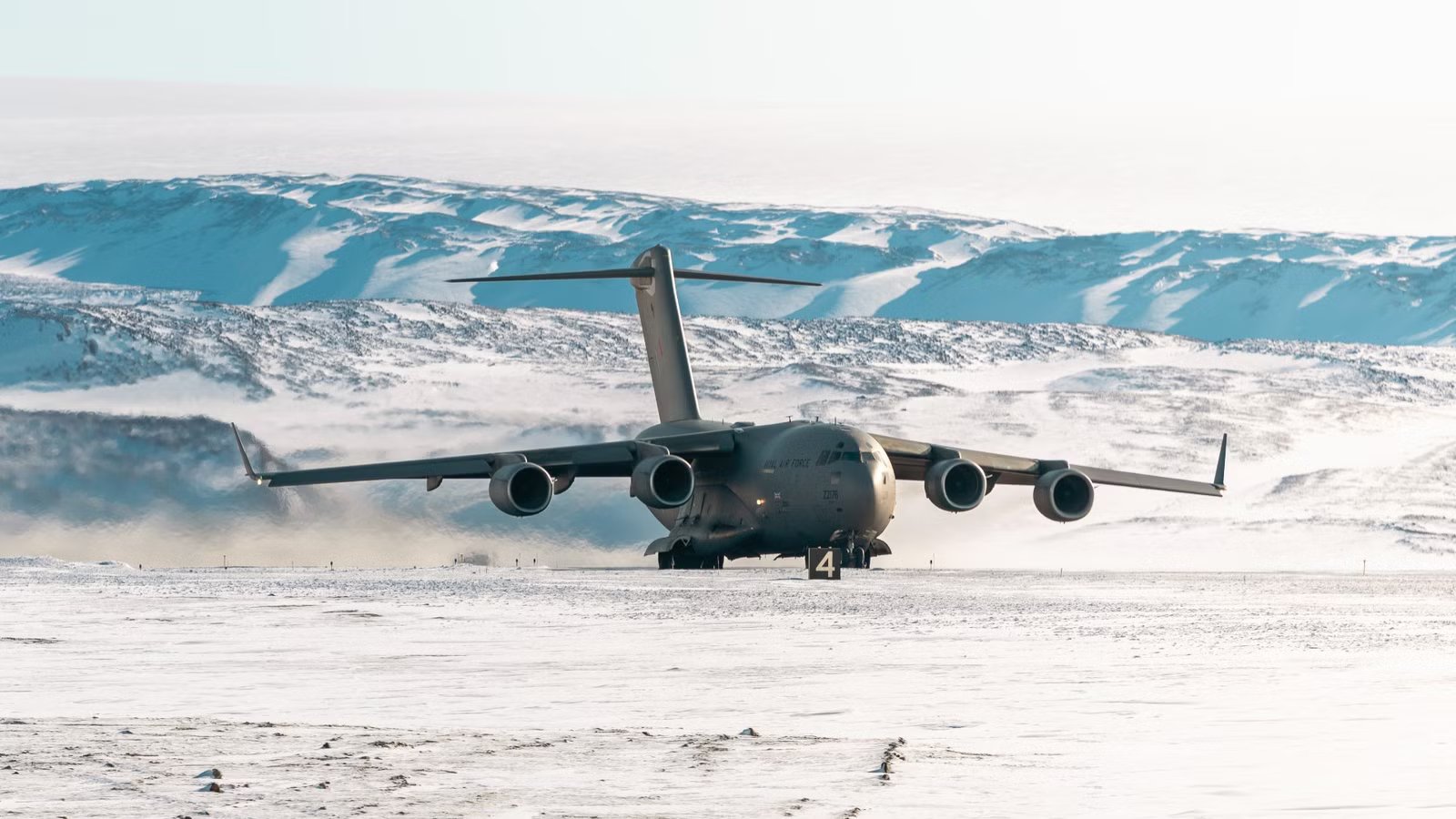
A Royal Air Force Boeing C-17 Globemaster III military transport aircraft has returned to the United Kingdom after conducting multiple supply missions to the northernmost permanently inhabited settlement in the world. Canadian Forces Station Alert (YLT) is located more than 82 degrees north in the territory of Nunavut, some 1,100 miles (1,770 km) into the Arctic Circle, and the C-17 flew there eight times from Pituffik (THU) in Greenland.
These missions were a perfect showcase for the C-17’s famous short takeoff and landing capabilities, with the runway at CFS Alert being, as the RAF puts it, “less than half the length of a normal airport strip,” as well as not featuring a typical runway surface. Let’s take a closer look at what made these missions special.
A Very Special Delivery

CFS Alert is a signals intelligence facility, and it also plays host to research into climate change. As the world’s northernmost permanently inhabited settlement, it relies on air supplies to remain operational, with the presence of the Arctic ice sheet making boat deliveries impossible. Instead, military transport aircraft like the Boeing C-17 Globemaster III have to land “on a semi-prepared runway made of gravel and compacted snow” at Alert.
This is exactly what one of the RAF’s examples of the STOL-capable quadjet spent the best part of last week doing, as detailed in a statement released over the weekend by the British military. These flights were part of Operation Boxtop, and ran alongside a similar mission by the Canadian military known as Exercise Polar Puma. Despite the extreme conditions, these flights are vital, as Mike Chandler, a pilot from 99 Squadron, explained:
“Flying into the High Arctic is demanding, especially when the weather can change on a dime, but that’s exactly why this activity is so important.”
Eight Round Trips

While the Royal Canadian Air Force operates such missions twice a year, last week’s flights represented the first time that a Royal Air Force C-17 had made the long journey north. This time around, British forces were responsible for delivering nearly 300,000 liters of jet fuel to CFS Alert, with the RAF explaining that “the station needs [fuel] to run everything from heaters to radios.” All in all, a 17-year-old C-17A (ZZ176) made eight round trips.
According to tracking data made available by Flightradar24, the first leg of the jet’s mission saw it fly from RAF Brize Norton (BZZ) to Pituffik via Reykjavík Keflavík International Airport (KEF) in Iceland on April 10, with each of these legs taking just under three hours. Three days after its arrival in Greenland, the supply drops to CFS Alert began, with the eight round-trip flights being carried out between Monday, April 13, and Friday, April 17.
Unlike the outbound leg of the mission, which stopped en route in Iceland, the return leg from Pittufik back to RAF Brize Norton operated on a nonstop basis. Indeed, it took off from Greenland at 6:44 pm local time on Friday, April 17, and touched back down in Oxfordshire at 4:26 am the next morning, almost six hours later. The RAF concluded that “99 Squadron is now leading the way in developing the UK’s aerial capabilities in the High North.”

Is The Boeing C-17 Globemaster Bigger Than The Airbus A380?
A closer look into the true size, design, and mission role of the legendary C-17 Globemaster.
The C-17 Has Also Flown To Southern Extremes

As it happens, the  Boeing C-17 Globemaster III is more than used to operating missions in unforgiving conditions at extreme latitudes. Indeed, as detailed in the video below, at the other end of the globe, the United States Air Force has also flown its C-17s to Antarctica. A notable example of such a mission came in November 2016, when “a C-17 from Joint Base Lewis-McChord made the first landing on [the] newly-constructed Phoenix Airfield.”
As the US military explained at the time, this base, which is located near the McMurdo research station, has a runway made of compacted snow (15 meters in depth), and it was designed to replace the 1990s-era glacial ice runway at Pegasus Airfield. Whether north or south, the C-17 can fly just about anywhere!