dailynewsnblog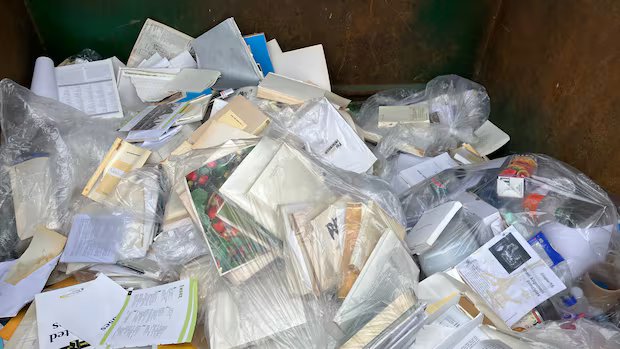

Listen to this article
Estimated 5 minutes
The audio version of this article is generated by AI-based technology. Mispronunciations can occur. We are working with our partners to continually review and improve the results.
Some archivists and librarians say there are ways to preserve old and outdated books, amid controversy about a London high school’s decision to purge thousands of titles from its library.
As first reported by the London Free Press, more than 10,000 books were tossed from the shelves at H.B. Beal Secondary School between January and March last year.
CBC News spoke with former Beal librarian Larry Farquharson, who said he was invited to participate in the book cull but declined. He has since retired.
“It is a fundamental attack on the freedom to choose what to read. When someone else is deciding what to remove, they are unilaterally deciding what you can and cannot read,” Farquharson told CBC’s London Morning on Friday.
LISTEN: Why this London high school tossed 10,000 books
London Morning7:47Why did Beal Secondary School dump half of their books?
About 10-thousand books were removed from Beal Secondary School’s library last year. That move prompted longtime teacher and librarian Larry Farquharson to resign from the school board. He told London Morning about his stance on the library removing so many books.
In an email statement, the Thames Valley District School Board (TVDSB) said library collection reviews are standard practice across the province and that Beal’s review was part of an inclusive libraries project.
“Most items at H.B. Beal were withdrawn due to age, condition and lack of circulation. Some specifics include physical damage (such as mold), or harmful and outdated content such as racist imagery (blackface) or stereotypical depictions of Indigenous people,” the statement said.
Some books were removed if newer editions or more “appropriate resources” were available, the TVDSB said.
“They are not being censored, nor have they been ‘banned’ by the TVDSB.”

Following the news about Beal’s library purge, Ontario’s Ministry of Education said it is halting further school library reviews.
“The Minister has directed that all current and future library collection reviews be paused, pending further evaluation. The decision regarding library collection reviews at H.B. Beal Secondary School was made prior to the board being placed under supervision by the previous board leadership,” said Education Minister Paul Calandra’s press secretary, Emma Testani.
In 2023, former Education Minister Stephen Lecce put forth a provincial directive to end the practice of book weeding.
What do other libraries do with old books?
Farquharson provided CBC News photos of old Beal books with their covers ripped off in large plastic bags. The TVDSB said all of the books were recycled.
However, some librarians say there are ways to save books when they reach the end of their shelf life.

“Over time, if you’re looking for a new home for them, there’s many different options about donating them – depending on what kind of books they are – to different academic institutions or museums if they have value, or to other charities if they’re just regular books that might not belong in a special collection,” said Western University’s rare books librarian Deborah Meert-Williston.

“Do you want to go back to erase history and what came before? I think we are a much more knowledgeable population if we can have the whole story, and not just a piece of the story,” she said.
London Public Library (LPL) public service manager Anne O’Sullivan said book weeding is a standard practice that happens constantly throughout the year. In order to bring in 80,000 new books every year, she said the library is always looking to purge books that are severely damaged or no longer being checked out by Londoners.

“Any library system will eventually have to recycle some items. If you think about children’s picture books, like when a toddler is reading Goodnight Moon, some of our books can be used in a very hard way and just fall into disrepair,” she said.
Otherwise, O’Sullivan said most of LPL’s end-of-life books go to the nearby Friends of the Library used bookstore for discounted sale.
‘They’re history, they’re artifacts’
There are some books that stay at LPL regardless of condition, O’Sullivan said, including items that contribute to understanding the city’s history, which are kept in the Central Branch’s London Room.
O’Sullivan said it’s rare that LPL considers discarding books because of outdated or potentially offensive themes.
“We don’t make any judgements related to content,” she said, adding that very few Londoners try to challenge the content of books in circulation.
Meert-Williston said she sometimes puts warnings on books with sensitive, violent or racist content, but said it is still important to keep those books around.
“You could ask a similar question about why history is important, because that’s really what these rare book and archival collections are: they’re history, they’re artifacts,” she said.