dailynewsnblog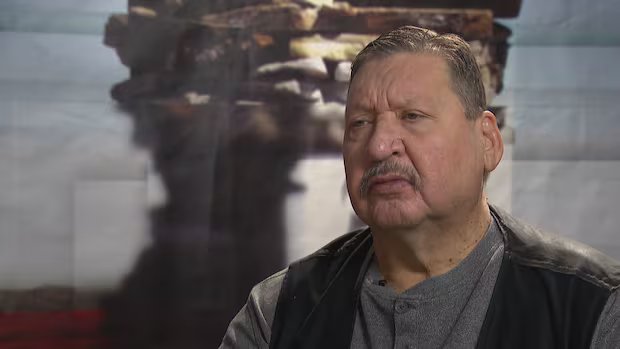
For most of Bill Enge’s time as president of the North Slave Métis Alliance in the N.W.T., he knew what it was like to be turned away at the federal government’s door when trying to raise issues or initiate a land claim.
“The door was locked,” he said.
Enge, who led the North Slave Métis Alliance until 2021, thought things would change after the Supreme Court of Canada found in a landmark ruling a decade ago that tens of thousands of Métis and non-status Indians were now under the jurisdiction of the federal government.
Enge had travelled to Ottawa in 2016 to hear that decision, and he was elated.
“Now, the federal government has to open the door for us,” he recalled thinking.
Ten years later, many Métis leaders in the Northwest Territories and across Canada are less optimistic, saying little has happened since then to materially improve access to rights, programs and services for Métis people.
The decision
The Daniels decision in 2016 found that Métis and non-status Indigenous people were “Indians” under section 91(24) of the Constitution, meaning they fell under federal jurisdiction, like First Nations and Inuit.
The name refers to the late Métis leader Harry Daniels, who was among those who initiated the case in 1999 against a federal department that has since split into Crown-Indigenous Relations and Northern Affairs Canada and Indigenous Services Canada.

Northwest Territory Métis Nation president Garry Bailey remembers what went through his mind after the decision came down.
“I thought, right on, we’re going to be treated like the First Nations,” he recalled.
Bailey, whose organization represents Métis communities in the South Slave region of the Northwest Territories, expected the decision would mean better access to federal programs and services, as well as core funding for local Métis governments.
“And here we are, 10 years later,” he said. “Nothing, not a clause drafted yet.”

Bailey said he has been asking Ottawa for years how it plans to implement the decision, but has not yet been able to get a “straight answer.”
Crown-Indigenous Relations Minister Rebecca Alty, who’s also the N.W.T.’s MP, declined an interview with CBC News.
In an emailed statement, a spokesperson for the federal department wrote that “Canada continues to work with Métis and Non-Status Indians across Canada and in the North to help shape policies and programs.”
“This has included engaging directly with Métis and Non-Status organizations through bilateral discussions, intergovernmental forums, and agreements to identify gaps in federal programs and find better, more responsive solutions.”
Waiting for implementation
Bailey said a number of federal programs and benefits have yet to see the light of day in Métis communities, from post-secondary education supports to income assistance programs and health benefits.
He also highlighted that not having access to Jordan’s Principle funding for Métis students has left some without the extra help they need at school.

For Victoria Pruden, the president of the Ottawa-based Métis National Council, the possibilities that could come from implementing the Daniels decision are personal.
“I really thought, when I engaged in Métis politics 28 years ago, that something would be in place for my Métis family members as they aged,” she said.
Pruden said she wants to see the gap closed on extended health benefits, including prescription coverage and medical transportation.
“The risks of houseless-ness and homelessness, for example, are acute,” she said. “Especially for our most vulnerable people.”

Still, the Daniels decision has not been without impact, though progress has been slower than many have wished.
In December, the North Slave Métis Alliance received long-awaited political recognition from the federal government of its rights under section 35 of the Constitution, which recognizes Aboriginal rights.
For Bill Enge, that recognition stems from the Daniels decision, and it opens the door for self-government negotiations and a potential land claim for the North Slave Métis Alliance.
For Garth Wallbridge, the responsibility for the lack of advancement on implementing the Daniels decision also falls on national Métis leadership. Wallbridge is a Métis lawyer originally from Manitoba, now living in Yellowknife.
He said he’s been disappointed by a lack of pressure being put on Ottawa — and he does not exempt the government from responsibility either.
“I will blame the feds for not putting their own feet to the fire and actually coming forward with some of those programs,” he said.
Pruden said advancing the implementation of the Daniels decision is something she is passionate about, and is making it “political advocacy priority number one for 2026.”
“We have a very ambitious agenda, to be doing that work on the ground here in Ottawa,” she said.