dailynewsnblog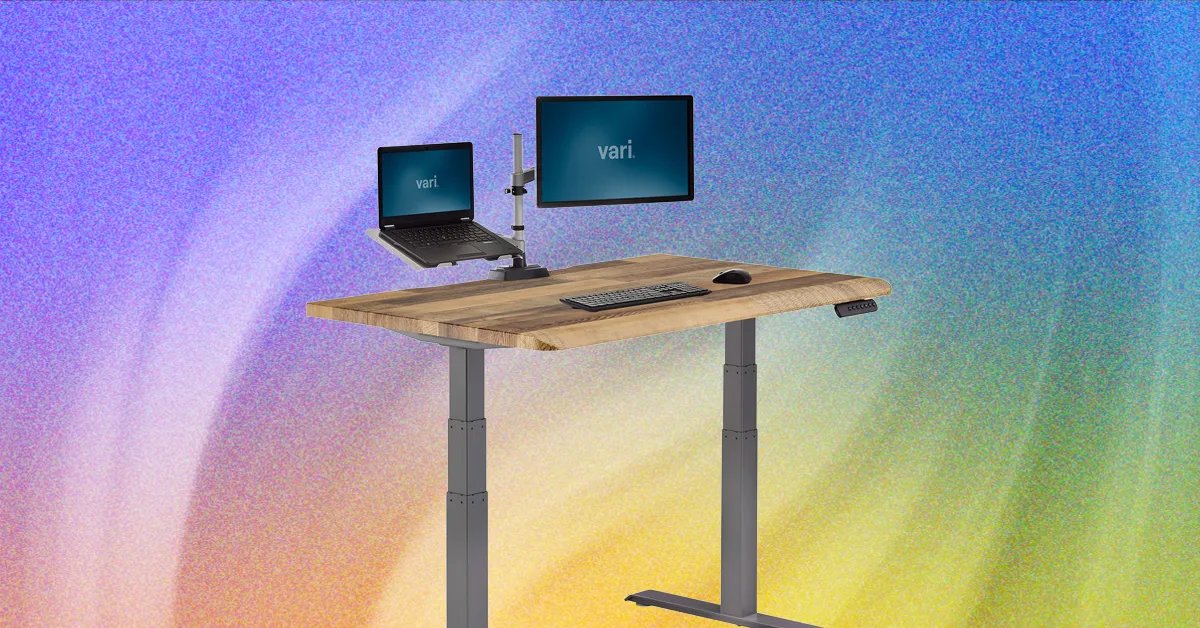
Tips and Frequently Asked Questions
Is a Standing Desk Worth It?
New research shows that while standing desks can potentially mitigate some health risks by limiting your sitting time, standing too long isn’t all that great and can increase the risk of cardiovascular disease. I reached out to Anne-Kristina Arnold, a kinesiology expert and senior lecturer in the Department of Biomedical Physiology and Kinesiology at Simon Fraser University. She says the results from this recent study “illustrate how challenging some of this epidemiological research is.”
“To say standing workstations are good for everybody in every situation all the time is never going to flow,” Arnold tells WIRED. “There are so many variables, so many varied kinds of work we do—we’re varied in our body sizes, in our fitness, in the shoes we wear. It’s really hard to be able to say definitively that standing workstations are good. The research is mixed.”
Switching from sitting to standing doesn’t solve all problems, and standing too long can cause its own problems. If you want to work with a standing workstation, Arnold recommends to use it in the standing position for 20 minutes per hour. If you have a normal desk, get up and move every 15 to 20 minutes. However, there’s no definitive guideline. “The standing workstation isn’t necessarily the answer—getting up and walking is better,” Arnold concludes. —Julian Chokkattu
Electric vs. Manual Standing Desks
Our guide here focuses largely on electric standing desks, which have motors in the legs to smoothly move the table up and down. However, we have a few manual standing desk recommendations, too. If you’re planning on switching up how you work a few times every day, an electric desk will simply be more convenient. However, if you just want to be able to adjust the height of your desk and won’t be changing it all that often, then maybe look at manual standing desks. They’re often cheaper.
How to Properly Stand and Sit With a Standing Desk
The same ergonomic rules you follow when sitting at a workstation apply when you’re standing. When your elbows are at a 90-degree position, you want the desk keyboard to be elbow height. Your monitor should be at eye level (a good rule of thumb is the top of your monitor should meet your eye), and if you’re using a laptop, you should keep it angled with a laptop stand for a more ergonomic typing position. Be sure to adjust your office chair appropriately to the floor before adjusting the height of your desk.
Cable management is exceptionally important when it comes to standing desks. After setting up your standing desk, make sure you keep an eye on every single wire that’s connected to something on the desk when you start raising the desktop. Otherwise, funny things start to happen: wires come undone, or scoot light objects off the desk.
WIRED reviewer Julian Chokkattu has unboxed and set up many desks over the years, and yet he still made a rookie move. As he was raising a desk, he didn’t realize his Ethernet cable was taut, and it broke cleanly off the back of his PC when the desk reached a certain height. Welp. As for me, I’m a naturally distracted person, and so I need to tack my cables down or suffer grievous consequences on the regular.
Keep an eye on the wires. Keep an eye on stuff near the wires. If you’re not careful, you can even accidentally knock art off your wall. —Matthew Korfhage
I and other members of WIRED’s Reviews team test standing desks in our own homes and in our own home offices. We use desks for months at a time (even years, in some cases), jotting down every flaw we see over the course of that time and noting any highlights. We look at building materials, motor noise, motor speed, preset options, cable management, and ease of use—and of course, the simple intangibles like aesthetics.
We gauge the difficulty of the assembly and setup, as well as the difficulty of disassembling or moving each desk. Desks are a solid investment, and so we expect a desk to be with us for years, perhaps longer than we live in a city. And so we also look at both the length of the warranty and the service reputation of each company.
Sometimes a small detail can take on outsized importance when using a desk over long periods, whether the existence or nonexistence of a grommet, a rounded edge, or a bolt that gets a little wobbly over time. That’s why WIRED’s Reviews team believes in the value of long-term testing, and why we do so in our own home offices.
This long-term testing also means it’s not easy for our small team to test every single desk out there, as these are bulky, big pieces of furniture and the setup is fairly involved. This means you may see a few missing brands in this guide, but we’re always testing and adding more desks. —Matthew Korfhage
Other Standing Desks to Consider

Photograph: Nicole Kinning
Ergodriven Tempo Automatic Standing Desk for $629: It was only a matter of time before desks got “smart,” right? This Tempo from new-ish company Ergodriven is designed to automate the process of standing or sitting, with a Cruise Control function that will encourage you to change position during the day by, well, automatically doing so. A “wiggle” will alert you when the desk wants to change position, which you can override manually if you’re eating lunch or in a meeting. A sensor will register your presence, so the desk won’t move when you’re away. WIRED contributor Nicole Kinning found that this all works as promised—as does a little app that registers “achievements” like standing time. But note the desk, while sturdy, is also a bit heavy, and a slight cosmetic crack formed early on the rounded edge. The 16-year warranty provides a bit of assurance.

Photograph: Nicole Kinning
Luxor Compact Electric Standing Desk for $200: The Luxor is a no-nonsense standing desk that does exactly what you expect and takes up minimal space. It’s perfect for students, small apartments, and anyone who needs a compact, budget-friendly setup. At 23.5 inches deep, the tabletop is shallow enough to fit into tight corners or shared spaces. The electric lift moves steadily at an inch per second, whisper-quiet, and the 154-pound weight capacity can handle a laptop, monitor, and a few textbooks with no sweat. The lift mechanism is exposed underneath, so you’ll want to leave some legroom when at sitting height. —Nicole Kinning
Simple Height Adjustable Desk for $850: The Simple Height Adjustable Desk lives up to its name. Assembly is straightforward and cable routing is tidy thanks to an integrated channel that keeps everything corralled. The T-shaped legs slide into a bracket instead of screwing or locking into place, which feels a little ambiguous, but once it’s upright, the desk is solid and sturdy. In practice, the desk became everything I needed. It’s smooth, quiet, and spacious, with four height presets. The laminate top is durable and forgiving—ideal if you’re like me and regularly forget that coasters exist. There are no fancy gimmicks, which is exactly the point. It’s a dependable, fuss-free desk that prioritizes function over flashy. —Nicole Kinning

Photograph: Nicole Kinning
Eureka Ergonomic Opal Standing Desk for $2,250: WIRED contributor Nicole Kinning was a big fan of the, well, opaline looks of the Eureka Ergonomic Opal standing desk. It’s a sturdy, milky-toned, downright fancy-looking pillar of vaguely art-deco luxe: beaded cabinets on each leg, gold hardware, marbled top, integrated drawer, hooooooey! It all makes for a quite distinctive aesthetic, and setup is a bit tricky given the heft of the desk. But unlike most standing desks, this one is outfitted quite beautifully as a full workstation, with roomy cabinets in each leg and a drawer offering ample storage. Just be sure to put grips on the bottom; it slid around on Kinning’s hard floors like a curling stone, she noted. Once it’s in place, bask in the stateliness. It’s the rare standing desk where she could see herself writing a Great American Novel.
Autonomous Desk Pro for $600: The standout feature here is the new Desk AI, a separate control attachment that tracks your standing habits along with environmental factors like air pressure and quality, temperature, humidity, and noise. In theory, it’s meant to help you work smarter, but in practice, it mostly flags things you can’t control from the desk itself. If it came with an air purifier or fan to manage these conditions, then we’d be talkin’. Still, it’s a fun and techy bonus on an otherwise reliable desk.

Photograph: Nicole Kinning
Vari Solid Wood Electric Standing Desk for $829: Even though it’s solid wood, this desk never felt too precious for everyday use. Made from FSC-certified lumber, the desk is heavy and stable, even at standing height on carpet, and the motor is impressively quiet and subtle when adjusting. The ComfortEdge feature turned out to be more helpful than reviewer Nicole Kinning expected; over long typing sessions, it noticeably softened where my wrists meet the desk, a nice upgrade to a standard desk’s hard, squared-off edges. Yes, the solid wood Vari is on the pricier side, but it feels justified if solid wood and long-term durability matter to you. If they don’t, consider the traditional version.
Boulies Magvida for $760: The Boulies Magvida advertises its best feature in the name itself. This midsize desk (55 x 28 inches) is known for its EMO system, a magnetic organization setup built beneath the desktop. Instead of drilling holes or fiddling with brackets, you just snap accessories, like a cable tray, hooks, and silicone straps, into place. The add-ons feel premium and the magnets don’t budge, and there’s an optional magnetic drawer that’s also handy. Add in memory presets, a child lock, anti-collision detection, and simple color options and you’ve got a clean, clever setup.
Herman Miller Jarvis Bamboo Standing Desk for $1,325: As someone who spent years hunching over keyboards, obsessive research led WIRED reviewer Simon Hill to the Jarvis Standing Desk (now owned by Herman Miller), which has served him well for six years. With a contoured bamboo top, handy optional extras to tuck wires out of sight, and a responsive control panel for easy height adjustment (including presets), this is an excellent standing desk. The only weakness is that it wobbles slightly at higher levels. The newer touchscreen OLED control unit is not as reliable as the original, so opt for the programmable controls.
Room & Board Lincoln Desk for $5,399: Few standing desks can lay claim to true elegance. But Room & Board’s Lincoln desk—designed in collaboration with design firm Gensler—is an exception. This is a dignified, sturdy, wobble-free electric standing desk that’d fit in with an executive office or a well-appointed home, made with solid wood and available in walnut, maple, cherry, ash, or oak (with a rye, salt, or charcoal stain). You can configure the desk to have integrated drawers on the left, right, or on both sides if you choose the larger 72-inch size. There’s even a drawer in the center! This is what privilege looks like, where standing desks are concerned. The price is commensurately high, though take note this included white glove delivery and assembly. Also take note that the thickness of the desktop means only some clamps will mount onto its girth. This monitor arm mount will work, but for some mounts, you might have to directly screw it to the desktop. All in all, this is a gorgeous standing desk that doesn’t look anything like a standing desk, but with a few quirks and a high price.
Staples Union & Scale Electric Standing Desk With Micro Movements (UN62092) for $513: Staples’ house brand, Union & Scale, makes some of WIRED reviewer Julian Chokkattu’s favorite affordable office furniture, and its standing desk is no exception—though at this middle price range, it didn’t keep pace with Branch’s reasonably priced desks. Still, this was easy to put together, and while the white desktop is not much to look at, the dual motors do the job. He liked the control panel, which has dedicated buttons for moving the desk up and down, as well as two height presets. He also didn’t see any wobble, though the collision sensor could stand to be more sensitive. There’s a cable tray at the bottom back of the desk to route cables, but there’s sadly no grommet to pull them through. The Micro Movement mode moves the desk up and down over time to reduce fatigue and encourage movement, but it might be more distracting than useful.
Beflo Tenon Premium for $3,998: While incredibly expensive (and heavy!), WIRED contributor Henri Robbins found the hardwood smart desk both sturdy and well-designed. Assembly was straightforward, and once the desk was up and running, Robbins found all of the features (touchscreen controls, a built-in power strip, audio passthrough, and LED lighting) to work well, and in convenient locations. The touchscreen controls are intuitive (iOS-like), and features like a sit/stand timer and phone connectivity provide additional functionality. The desk supports over 200 pounds of stuff even when moving, and the height-adjustment motors will temporarily disable if they overheat, instead of risking damage to the desk. The table also looks fantastic, and a multitude of first-party accessories let you customize the desk to your specific needs. The largest issue with this table is the noise. While in no way loud, it was certainly more audible than the “whisper-quiet” descriptor Beflo uses in its marketing. Besides that, the lighting color adjustment had some difficulties creating specific colors using the built-in touchscreen, and the audio cable was too short to reach a desktop computer on the floor, even at the lowest height. However, the Tenon is still a great, if pricey, option to consider.
Herman Miller Spout Sit-to-Stand Table for $3,275: Herman Miller’s Spout Sit-To-Stand Table is lovely to look at. Like the Branch Four-Legged Desk, it looks like a normal desk with four legs, giving it a luxe look. Those motors in the legs rise smoothly, and it’s easy to raise and lower the desktop to my preferences with the button on the right. The motor does have a high hum to it, and WIRED reviewer Nena Farrell found it loud enough that she’d hesitate to use it when her husband is on a call in the same room, but not so loud it would disturb her son if he were sleeping a room away. Bizarrely, it doesn’t have memory presets, but it’s pretty easy to just adjust the desk each time to sitting and standing heights. You can add a cable tray underneath the desk each time to organize cords, but it costs extra. The only other item built into the desk is a single slim center drawer perfect for pens and notebooks. It comes in three desktop sizes and three finishes: laminate white, veneer walnut, and veneer ash. You can also customize the base color, with seven different colors ranging from your classic black and white to a gentle blue and olive green. While it’s gorgeous to look at and works well, Farrell found it disappointing that such a high-priced desk doesn’t have presets and uses veneers rather than real wood.
FlexiSpot E7 Pro for $400+: Standing desks can get pricey, but FlexiSpot routinely offers similar functionality at a lower price. At first glance, the E7 Pro looks much like the Herman Miller Jarvis, but look closer, and you discover the entry-level option has a shallow 23-inch desktop, the control unit feels a bit cheap, and it emits a high-pitched whine in operation. WIRED reviewer Simon Hill had some issues fitting larger power adapters in the cable tidily, and the desk can get wobbly when fully extended. But, even when fully configured, the E7 Pro is cheaper than many rivals. Minor flaws aside, it is a perfectly decent standing desk.
Inbox Zero 47-inch Adjustable Electric Standing Desk for $196: This desk has every feature you’d expect to need at the price range less than $200, wrote former WIRED reviewer Martin Cizmar. There are rolling casters so you can not only move the desk up and down, but also shake it all around. The desk’s electric controls have presets but also allow you to fine-tune the height for typing or Zooming. The split top that makes it easier and cheaper to ship doesn’t hurt the performance, but is less pleasant visually, and the little motor works audibly hard (tshunk, tschunk, tshunk) while raising the desktop. Based on three months of testing, it’s a decent budget standing desk with casters, but if you can spend a little more, you’ll probably be happier with something else.
Standing Desk Accessories
-front-Reviewer-Photo-SOURCE-Julian-Chokkattu-(no-border).jpg)
Branch Clamp-on Power for $89: This simple and elegant clamp attaches to your desktop and adds three AC outlets, a USB-C, and a USB-A, so you don’t have so many wires running down to the ground.
LumeCube EdgeLight 2.0 for $150: Why have a lamp take up valuable desk space when you can clamp the lamp to your desk? These task lights from LumeCube are great for illuminating the desktop and even your face during late-night Zoom calls. You can adjust the color temperature and the brightness.
-(no-border)-SOURCE-Julian-Chokkattu.jpg)
BenQ ScreenBar Lamp for $139: Alternatively, you can place these ScreenBar lamps over your computer monitor, and it will light up your desktop, no clamping required. The ScreenBar Pro also has a motion sensor, so when you leave your desk, the lamp will turn off, and it will light up when you’re back. You can adjust the brightness and color temperature, and an automatic setting makes it adjust these controls based on the room’s ambient lighting.
Secretlab Premium Footrest for $89: WIRED reviewer Julian Chokkattu been using this footrest for several years, and it’s excellent. The plush memory foam is cushy and a nice respite for Chokkattu’s feet, and it’s easy to clean with a vacuum and a damp cloth. It hasn’t shown much wear despite years of use.
Monoprice Single Monitor Adjustable Gas Spring Desk Mount for $84: WIRED reviewer Julian Chokkattu has tested a few of these WorkStream arm mounts for years, and they’ve reliably done the job. You can adjust the tension with a hex key and move the monitor around to your desired position. Just make sure you don’t go over the recommended weight load with a big and heavy screen.
Mount-It! Dual Monitor Arm for $280: This heavy-duty monitor arm holds up my ultrawide monitor and my vertical monitor, both of which have BenQ Screenbar lamps on top, along with my webcam. It handles the weight with no effort, and the clamp is accommodating enough to even work with the 5-inch Room & Board standing desk. There’s RGB lighting throughout, but it’s not bright enough to splash onto the wall, so it’s a little pointless, noted WIRED Reviewer Julian Chokkattu.
Harber London Professional Desk Mat for $239: Keep your desktop protected with a large desk mat like this one. I’ve used several mats from Harber London over the years, and this latest model is the favorite of WIRED reviewer Julian Chokkattu. The pebbled leather is supple and soft, and the mat stays put. It’s easy to clean as well.
Avoid These Standing Desks
.jpg)
Corsair Platform:6 Desk for $1,400: Where do I start? I liked Corsair’s standing desk because it’s spacious, has a fun pegboard design to mount your tchotchkes, and even has an interesting rail system that lets you mount and slide things across the desktop, like your monitors. Unfortunately, several months after mounting two monitors on the included dual-monitor arms, this rail system has tilted forward due to the weight. (I’m also not the only one to experience this.) It doesn’t help that I never really found this rail to be all that useful. The standing function works well, and you get two presets, but sometimes the little screen would throw me an error message “rE5.” Pressing and holding the down button resolved it, but none of these are issues anyone should deal with considering the crazy-high price. That’s the real problem. It’s just so expensive, and the five-year warranty feels like a slap in the face. This model is still listed for sale, but as out of stock last time we checked. —Julian Chokkattu
Marinamantra ‘Flow’ Sit-to-Stand Desk for $1,149: I had high hopes for this one. A desk that lets me sit crisscross applesauce while I work?! Sold. But the reality didn’t live up to the pitch. When I unboxed the desk, several screws were scattered loose in the box. That set the tone for a desk that eventually worked, but often misbehaved, sometimes refusing to move up and down. That said, I do like the cord management lip and the clever Velcro covers that keep cables and hardware neatly tucked out of sight. Unfortunately, none of that matters much if I’m spending more time flipping it over and poking around underneath the hood than actually using it. —Nicole Kinning
Power up with unlimited access to WIRED. Get best-in-class reporting and exclusive subscriber content that’s too important to ignore. Subscribe Today.