dailynewsnblog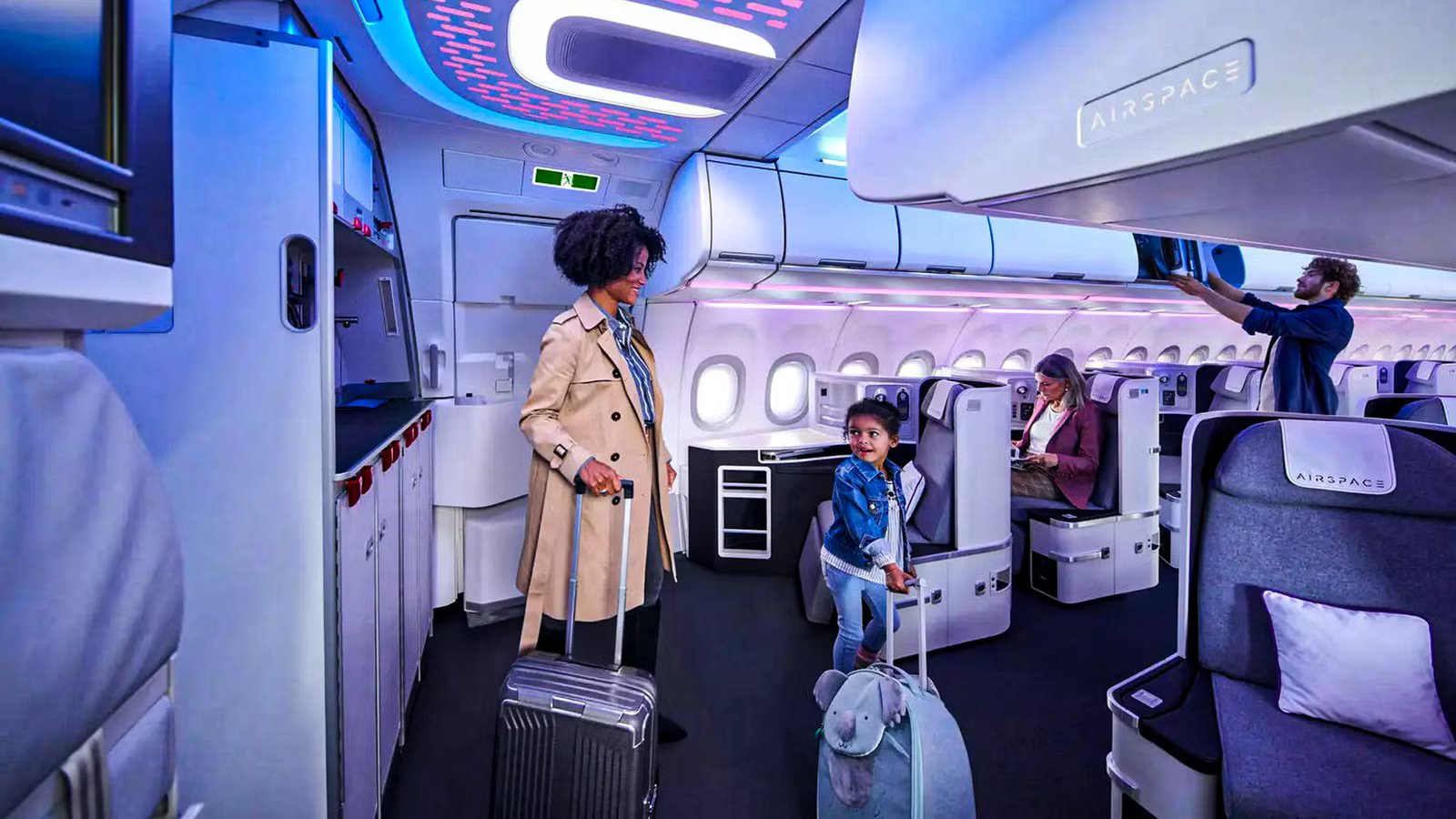
The arrival of the Airbus A321XLR marks a pivotal moment in aviation history, blurring the lines between narrowbody efficiency and widebody reach in a different way than any prior aircraft. Massive twin-aisle jets have been the norm, but this new variant of the A321 family changes the calculus for network planners worldwide. With a range of approximately 4,700 nautical miles (8,704 km), the XLR allows airlines to connect secondary cities on different continents non-stop, avoiding the traditional hub-and-spoke congestion. This guide explores how three different continents, South America, North America, and Europe, are tailoring this specific airframe to meet radically different passenger expectations and geographic demands.
The importance of this aircraft lies not just in its range, but in the cabin density and luxury trade-offs each carrier must make. A carrier in South America might prioritize ultra-premium suites to compete with widebodies on eight-hour flights, while a North American operator might favor a higher-density layout for shorter transatlantic hops. By analyzing the strategies of LATAM,  American Airlines, and
  Iberia, we can see how a single engineering marvel is being repurposed into three distinct tools for global connectivity.
South American Revolution

LATAM Airlines Group is positioning itself as a pioneer in the South American market by becoming the first in the region to offer a true widebody experience on a narrowbody jet. Their strategy for the A321XLR is centered on a high-end, two-class configuration that challenges the traditional discomfort associated with long-haul single-aisle flying. By selecting the Thompson Aero VantageSOLO seating platform, LATAM is providing 12 dedicated premium business suites in a 1-1 configuration, ensuring that every premium passenger enjoys a fully lie-flat bed and a privacy door. This move is a direct signal to the market that the XLR will be used for flagship routes, not just regional overflow.
The choice of the VantageSOLO seat is particularly significant because it addresses the inherent narrowness of the A321 cabin by angling the seats toward the window. This layout maximizes the living area for each of the 12 business class passengers while maintaining a manageable footprint for the rest of the aircraft. LATAM has partnered with the London-based design firm PriestmanGoode to ensure the cabin aesthetic reflects South American landscapes and materials. This holistic approach aims to reduce the claustrophobia factor often cited by passengers who are accustomed to the airy, high ceilings of a Boeing 787 or Airbus A350.
For the remaining passengers, the aircraft will feature a 3-3 economy cabin equipped with Recaro R3 seats, bringing the total capacity to over 170 passengers. To maintain a premium feel across the entire jet, LATAM is installing seatback entertainment screens, high-speed Wi-Fi, and Bluetooth audio connectivity for every traveler. This level of consistency is crucial as the airline plans to fulfil the 4,700-nautical mile (8,704 km) range to open new point-to-point routes from hubs like Lima and Fortaleza to North America and potentially Europe. By 2027, when deliveries begin, the XLR will allow LATAM to bypass major hubs, offering direct flights that were previously economically unfeasible with larger aircraft.
Upping The Premium Offerings

In contrast to the bespoke luxury of South American configurations, North American carriers like American Airlines and  Air Canada are viewing the A321XLR as a high-utilization replacement for aging Boeing 757 fleets. These airlines have largely opted for the Collins Aerospace Aurora seating platform, which is specifically engineered to maximize density without sacrificing the lie-flat requirement. For a carrier like American Airlines, the goal is to create a seamless transition for passengers moving between domestic transcon routes and transatlantic missions. This means the interior must be durable, efficient, and capable of quick turnarounds in busy hubs like New York or Philadelphia.
The North American strategy often involves a higher count of premium seats compared to South American counterparts, but with a slightly different focus on cabin flow. By using the Aurora platform, these airlines can fit more suites into the front of the cabin while still offering features like privacy doors and direct aisle access. The versatility of the XLR allows these carriers to fly deep into Europe from the East Coast or reach deep into South America from Miami. This flexibility is the special trick for US majors, who need an aircraft that can pivot from a six-hour domestic flight to an eight-hour international leg without appearing out of place in either market.
|
Feature |
Thompson VantageSOLO (LATAM/Iberia) |
Collins Aerospace Aurora (AA/Air Canada) |
|
Configuration |
1-1 Herringbone |
1-1 Inward Facing |
|
Primary Focus |
Maximum Privacy + Individual Space |
Optimized Density + Cabin Integration |
|
Aisle Access |
Direct for all |
Direct for all |
|
Unique Selling Point |
Widebody-style suite feel |
Lightweight + Seamless Fleet Uniformity |
|
Privacy Feature |
Full-height sliding doors |
Integrated privacy screens/doors |
Building out a fleet with the XLR allows North American airlines to right-size their capacity on routes that have high demand for premium seats but perhaps not enough total volume to fill a 300-seat widebody. Doing so is essential for maintaining profitability on year-round service to secondary European cities like Nice, Venice, or Prague. The passenger might miss the walk-around space of a larger jet; the trade-off is often a more convenient schedule and a direct flight that saves hours of connecting time in a crowded hub.

LATAM’s Airbus A321XLR Order: Everything We Know So Far
A look at how LATAM will use the A321XLR, and what we can expect from the aircraft.
The Blueprint Project

As the global launch customer for the A321XLR, Iberia is setting the standard for how European flag carriers will utilize the aircraft to dominate the North Atlantic. Based in Madrid, Iberia is using the XLR to reach the East Coast of the United States with a level of efficiency that was previously impossible. Like LATAM, Iberia chose the VantageSOLO seats for its business class, ensuring a premium door-protected experience for its high-value passengers. This choice reflects a European preference for high-quality, specialized products on routes that are often fiercely competitive with other European and American majors.
The European strategy is uniquely shaped by the geography of the North Atlantic, where the XLR can easily reach cities like Washington D.C., Boston, and even parts of Canada from Western Europe. Iberia’s configuration is designed to feel like a boutique hotel in the sky, bridging the gap between its regional short-haul fleet and its long-haul widebodies. By offering a consistent lie-flat product on the A321XLR, they can ensure that a passenger connecting from a smaller Spanish city to the US through Madrid enjoys a high-end experience for the duration of the long-haul leg.
|
Route Example |
Distance |
Estimated Flight Time |
|
Madrid to Boston |
2,950 nm (5,463 km) |
7 hours 30 mins |
|
Madrid to Washington D.C. |
3,300 nm (6,111 km) |
8 hours 15 mins |
|
Madrid to New York (JFK) |
3,120 nm (5,778 km) |
8 hours |
|
Madrid to Fortaleza |
3,000 nm (5,556 km) |
7 hours 45 mins |
The significance of Iberia being the first to fly the XLR cannot be overstated, as it provides a real-world test case for narrowbody transatlantic comfort. Their success, or failure, in maintaining high passenger satisfaction scores will likely dictate how other European carriers, such as  Aer Lingus or TAP Air Portugal, configure their own fleets. The European model prioritizes the premium point-to-point traveler who wants the shortest possible travel time between regional centers and major global financial hubs.
A Fine Balance Of Range And Experience

To achieve its remarkable range, the A321XLR features a permanent rear center tank (RCT) that can hold up to 3,400 gallons (12,900 liters) of fuel. This engineering choice was not without controversy, as regulators and safety experts spent years debating the fire-protection requirements for a fuel tank integrated directly into the fuselage structure. The result is a jet that is significantly heavier than the standard A321neo, requiring reinforced landing gear and upgraded braking systems to handle the increased maximum takeoff weight (MTOW). These technical shifts directly impact the cabin configuration, as every kilogram of interior weight must be balanced against the fuel required for a 4,700-nautical mile (8,704 km) journey.
This weight-to-range ratio is why we see such varied strategies in cabin design across the three continents. For a carrier like LATAM, every heavy lie-flat suite added to the front of the aircraft eats into the potential range or the number of economy passengers that can be carried. This is the fundamental tension of the XLR: if you make it too comfortable, it may not fly far enough; if you make it too dense, passengers may refuse to fly in it for eight hours. Airlines must carefully calculate the sweet spot where the revenue from 12 to 24 premium suites offsets the loss of total passenger volume.
The XLR operates at the very edge of narrowbody capability, and so the internal environmental systems have also seen upgrades. To keep passengers comfortable for nearly nine hours in a very small space, Airbus has improved cabin air filtration and insulation to reduce noise from the engines and the slipstream. These invisible technical upgrades are what truly enable the strategies of LATAM and Iberia, providing a cabin quietness that mimics the larger, more stable widebody jets that passengers are used to on these routes.

How Far Can The Airbus A321XLR Fly?
Unprecedented range meets efficient design.
Where Will The A321XLR Fly To?

With all the promise that the aircraft provides, it is key to look closer at which cities will benefit most from the A321XLR’s unique capabilities. In South America, LATAM has identified Lima and Fortaleza as the key beneficiaries of this new range. Fortaleza, located on the northeastern tip of Brazil, is perfectly positioned as a bridge to both the US East Coast and Western Europe. With the XLR, LATAM can bypass the traditional, congested hubs of São Paulo or Rio de Janeiro, offering travelers a much faster path to the northern hemisphere.
This shift toward secondary hubs is a hallmark of the XLR strategy across all three continents. In North America, we expect to see more long and thin routes that connect cities like Raleigh-Durham or Nashville directly to London or Paris. This decentralization of the hub-and-spoke model is great for the consumer but challenging for the airlines, which must maintain ground staff and premium lounges in a larger number of smaller cities. The XLR almost acts as a low-risk route opener, allowing an airline to test a new market with 170 seats before committing to a 300-seat widebody.
For LATAM, adding this new capability means securing a larger share of the upper-middle market for travelers who want a direct flight and a lie-flat bed but aren’t flying between the world’s absolute largest financial capitals. By providing a high-end product in these secondary markets, LATAM can build brand loyalty in regions where there was previously no direct presence.
A Mini-Widebody?

The success of these three strategies will determine whether the narrowbody long-haul becomes the new industry standard or remains a specialized niche. On a widebody, there is usually enough space to escape the metal tube feeling, but on the A321XLR, your seat is your entire world for eight hours. If LATAM’s premium-heavy strategy proves successful, we may see more airlines moving away from high-density layouts in favor of the specialized suites that make the single-aisle cabin feel more spacious.
The future outlook also includes the potential for even longer flights as engine technology continues to improve. While 4,700 nautical miles (8,704 km) is the current limit, the lessons learned from the XLR will undoubtedly inform the design of the next generation of small, ultra-efficient aircraft. We may eventually see mini-widebodies that offer two aisles but the fuel burn of a narrowbody, further revolutionizing how we travel between continents. For now, the A321XLR stands as the ultimate test of passenger endurance and airline ingenuity.
Expert input suggests that the real battleground will be the economy cabin. Business class passengers will undoubtedly love the lie-flat suites with doors, but the 150+ people sitting in 3-3 economy will be the ones who truly feel the length of an eight-hour flight on a narrowbody. The inclusion of high-speed Wi-Fi, large seatback screens, and better catering will be essential for keeping these passengers from returning to the widebody hub-and-spoke routes. As the A321XLR enters service across these three continents, it will be fascinating to see which strategy, the premium luxury of the South, the efficiency of the North, or the pioneer spirit of Europe, wins the hearts of the global traveler.