dailynewsnblog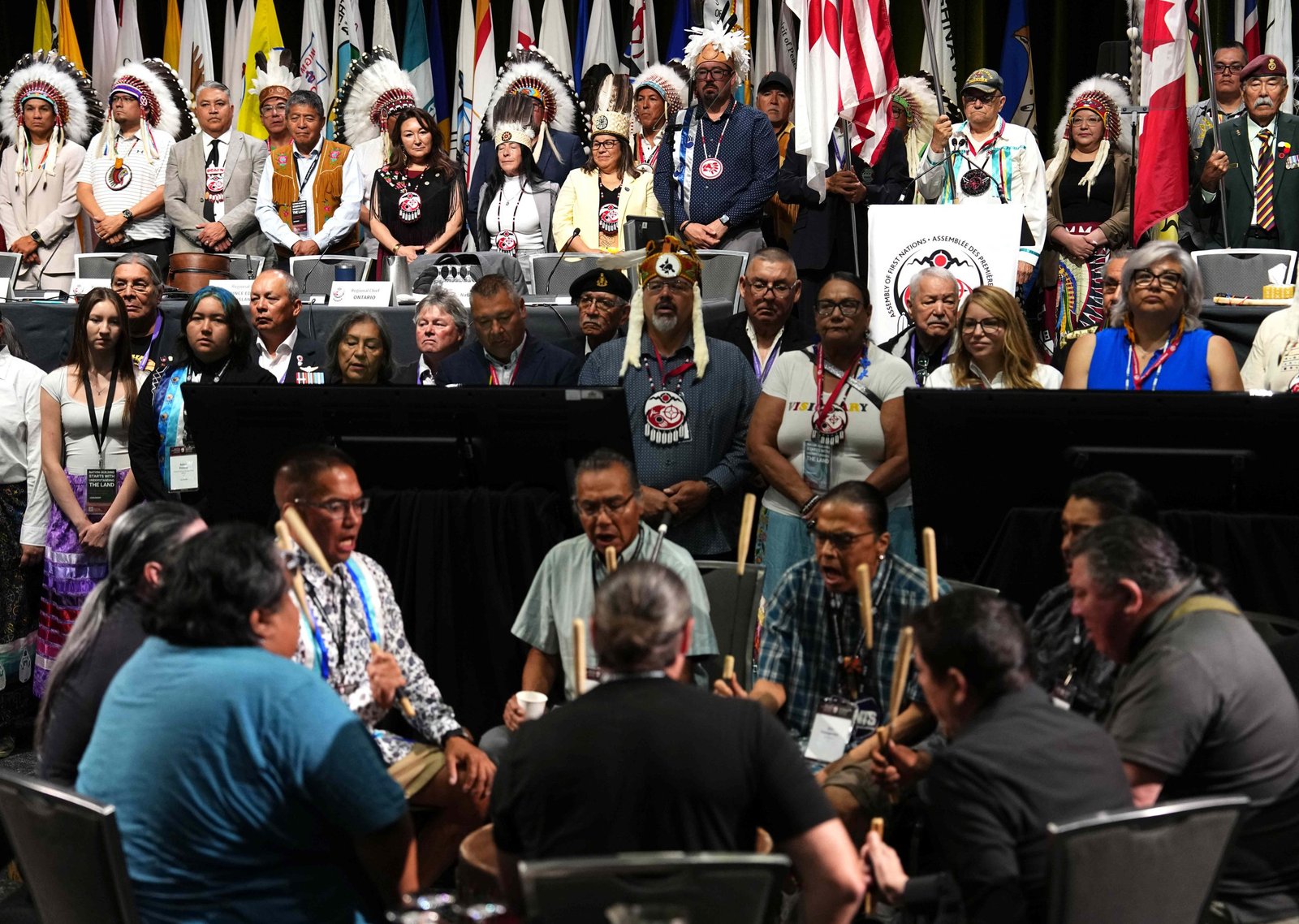
Welcome to Economic Insights, your twice-weekly deep dive into the major projects and policy shifts shaping the Canadian economy.
Stories we are following:
– Roberts Bank Terminal 2 goes straight to potential ‘national interest’ listing.
The federal government is moving to accelerate a major expansion of Canada’s largest port, referring the Port of Vancouver Gateway Strategy to the Major Projects Office (MPO) on Thursday and taking the first steps toward designating the long-delayed Roberts Bank Terminal 2 project as one of national interest under the Building Canada Act.
Roberts Bank Terminal 2 is a proposed three-berth terminal that would increase the port’s container capacity by 50 per cent, just as Canada seeks to diversify its trading partners away from the United States.
Under the Building Canada Act, projects with national interest status get a single conditions document instead of multiple federal permits, a shift that could carry the terminal expansion past its final regulatory hurdles.
We have that story.

– Major projects on the agenda.
Major projects were front and centre at the Assembly of First Nations’ annual gathering in Ottawa this week, where three cabinet ministers — Dominic LeBlanc, Tim Hodgson, and Rebecca Alty — addressed chiefs on Thursday about regulatory overhaul, Indigenous equity, and the duty to consult.
If there was friction in the room, it was over what Ottawa is offering versus what some chiefs are asking for. Hodgson’s pitch was ownership. He quoted Maureen Nyce, elected chief councillor of the Haisla Nation, whose community just announced an equity option in LNG Canada operations, saying Indigenous equity in energy infrastructure should become “the norm, not the exception.”
The pitch landed unevenly. On Tuesday, Drew Lafond, a partner at MLT Aikins who advises the AFN chiefs office, told the assembly that some communities are poised to capitalize on economic development while others aren’t in a position to do so — or hold different views on it altogether — a divide he warned carries “tremendous risk” for unity as Ottawa’s assessment reforms take shape.
“The reality is that we’re being pitted against each other,” said Chief Jeffrey Copenace of the Ojibways of Onigaming First Nation in Northwestern Ontario the same day.
Find our story on that here.

– We finally have (more) details on the Pathways deal.
The last piece of the Alberta-Ottawa energy framework became public Monday, when the governments released their non-binding agreement with five oil sands giants on the scaled-back Pathways carbon capture project.
At the AFN, Chief Kelsey Jacko of Cold Lake First Nations told ministers his community has spent three years asking for transparency on the projects and getting deflections. He rejected the prospect of Cold Lake bearing all the long-term risk to its water table while holding none of the equity, and questioned why billions in taxpayer subsidies should flow to infrastructure the oil sands consortium won’t fund itself.
Responding to Jacko, Alty offered an explanation for why formal consultation on Pathways hasn’t yet begun: until now, it wasn’t clear the project would go ahead at all. “There was a question on whether they wanted to—” she said of the oil sands companies, before quickly rewording, “whether they were going to proceed or they weren’t going to proceed.” Now that the proponent is looking to move forward, she told the assembly, “the duty to consult does begin.”
Read our breakdown.
By the numbers:
50 per cent: The increase in container capacity at Canada’s largest port if Roberts Bank Terminal 2 goes ahead.
Up to $1 billion: The majority equity stake five First Nations signed for this week in storage tanks tied to LNG Canada Phase Two — potentially one of the largest Indigenous positions in energy infrastructure in Canadian history.
16 megatonnes: The annual carbon storage now targeted by 2045 under the Pathways agreement — down from the 40 megatonnes by 2050 once promised, and only six of which must come from the Pathways project itself.
Major projects watch:
– Canada’s lengthy mine development process is putting billions of dollars in potential critical minerals investment at risk as competing jurisdictions move projects into production years faster, a new study suggests.Canada takes about 20 years to permit and build a mine compared with 14 years in Australia, according to S&P Global Market Intelligence data cited in PwC Canada’s Mine 2026 report. More from Mining.com.
– The province has issued an Environmental Assessment Certificate to B.C.-based Vitreo Minerals for its proposed silica sand mine north of Prince George. Called the Angus project, the $300 million silica sand mine will be located about 60 kilometres north of the city, near Bear Lake. It would produce silica sand used in hydraulic fracturing, or fracking, to open the fractures that are created during crude oil and natural gas extraction.
– Speaking of Roberts Bank Terminal 2, on Monday the The Port of Vancouver picked its preferred contractor to build the central part of the massive project. TerraMarine was named as “the preferred proponent” to build the new 1.3-square-kilometre artificial island and wharf components of the Terminal 2 project.
– On the recent electricity strategy, a crucial piece of the puzzle has been overlooked, argue researchers Martin Boucher and Tamara Krawcheko for Policy Options. The strategy rightly focuses on provincial governments, utilities and industry, they write, but it pays comparatively little attention to the role that communities, municipalities, co-operatives and citizens can play in shaping and accelerating the energy transition. More here.
– Manitobans cranking up their air conditioners for a reprieve from the extreme heat pulled a record amount of electricity from the provincial power grid to start this week. Manitoba Hydro hit a peak usage of 3,751 megawatts around 5 p.m. Monday, when the temperatures in many parts of Manitoba were in the mid-30s C, spokesperson Peter Chura said Tuesday. “That’s a summer record” for peak usage, he said. The previous record, set in June 2023, was 3,529 megawatts, “so easily beating [that].” CBC has that story.
Headlines:


![Why Delta Air Lines Is Cutting This Surprising Route From The USA’s Largest City [Map]](https://dailynewsnblog.com/wp-content/uploads/2026/09/gemini_generated_image_53ezm853ezm853ez.jpg)