dailynewsnblog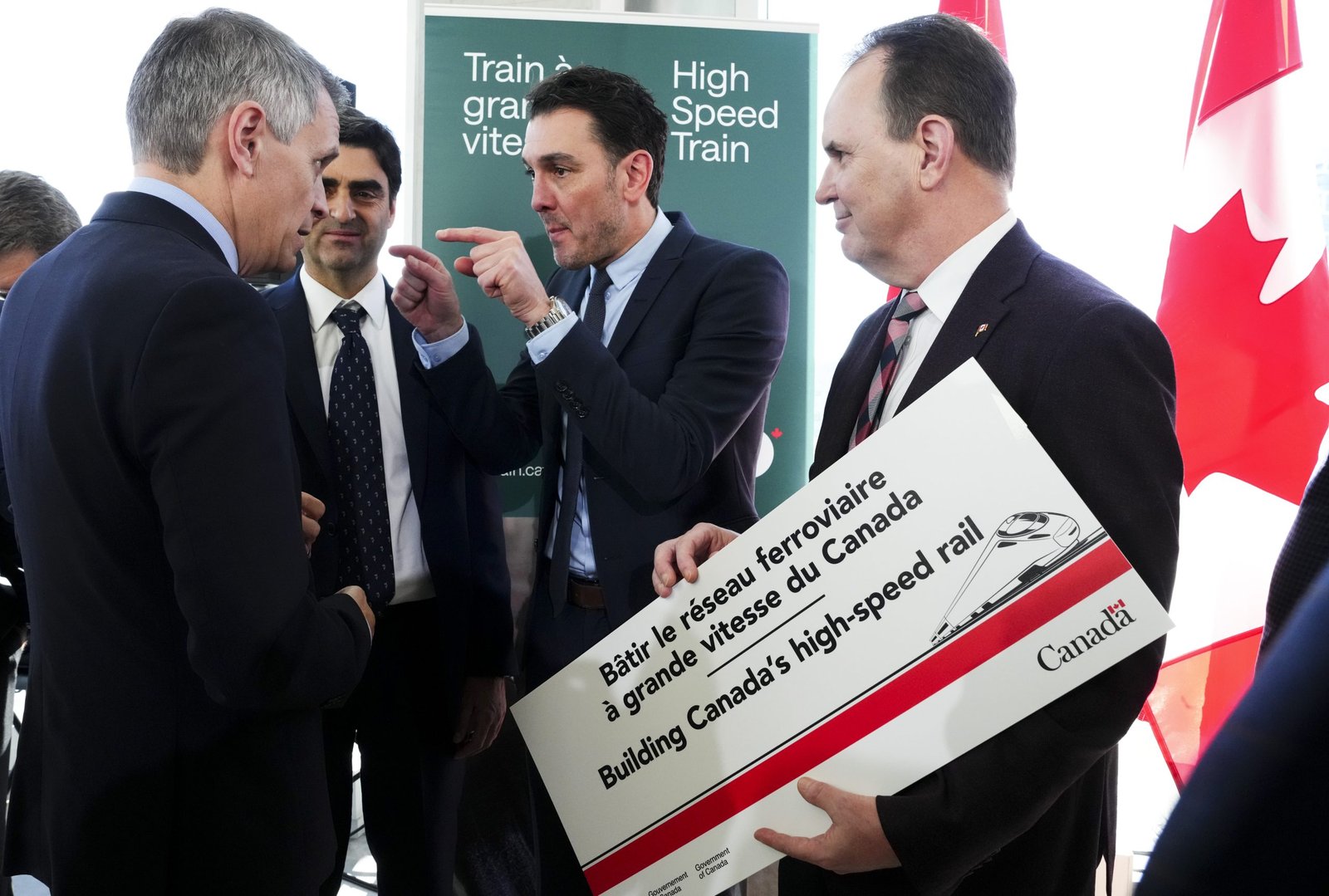
Welcome to Economic Insights, your twice-weekly deep dive into the major projects and policy shifts shaping the Canadian economy.
Stories we are following:
- Hundreds of Ontario and Quebec farmers and rural landowners descended on Parliament Hill to derail the federal government’s proposed $90-billion Alto high-speed rail project, warning that the transport corridor could carve up essential agricultural lands and trigger forced expropriations. Bloc Québécois and Conservative MPs joined the rally. Alto does not have a specific route yet and more details on the first segment between Ottawa and Montreal are expected in the fall.
- Speaking of projects that do not yet have a route, Alberta is set to propose a “general corridor” when it submits a proposal for a new bitumen pipeline to the Major Projects Office on July 1, 2026. Indigenous Relations Minister Rajan Sawhney said articulating a specific route cannot be done without Indigenous voices at the table and no community has come forward as of yet.

‘Can you imagine the stress?’: Protest against high-speed rail project hits Ottawa (CP)
Hundreds of agricultural producers and rural landowners from Ontario and Quebec marched to Parliament Hill on Wednesday to protest the Alto high-speed rail project.
- Grassroots: Chanting “No Alto!” farmers expressed that the expropriation process could sever their properties and block agricultural corridors.
- The toll: Not knowing what the route will be is driving anxiety in some regions like Mirabel and Hawkesbury. Alto promises a narrowed corridor plan for the Ottawa-Montreal leg later this year.
- The political threat: Opposition MPs were quick to join the rally. Conservative Leader Pierre Poilievre addressed the crowd, saying he would cancel the project if his party formed a government. This promise seems to have political appeal on the provincial front, too. Parti Québécois Leader Paul St-Pierre Plamondon pledged to withdraw Quebec from the project entirely if he becomes leader in the fall. Meanwhile, Transport Minister Steven MacKinnon maintained the project will press ahead on the timeline, admitting there are still budget “unknowns” but promising to handle route selections with “great sensitivity.”
- Escalating: Alto chief executive Martin Imbleau says there is some growing tension on the ground, with some field teams conducting technical and environmental analyses along the rural corridors having recently been targeted with “verbal and other threats.”
- Pollings suggest support: Abacus polling numbers show there is cross party support for the project, including up to 58 per cent among Conservative voters and 68 per cent among Bloc Québécois supporters. The Bloc is a bit softer in its position than its provincial counterpart, with leader Yves-François Blanchet previously saying he’s not necessarily against the project, but he wants it done transparently and without special expropriation rules.

Alberta to propose ‘general corridor’ for new bitumen pipeline (Bloomberg)
The Alberta government will likely be pitching a corridor rather than a fixed path for its 1-million-barrel-per-day oil pipeline to the British Columbia coast in its application to the Major Projects Office on July 1.
- The strategy: Alberta’s Minister of Indigenous Relations, Rajan Sawhney, confirmed previous CBC reporting about the province is contemplating a general corridor heading toward the northwestern coast near Prince Rupert. She says the lack of specificities is meant to leave room for ongoing, sensitive consultations with local Indigenous communities and the B.C. provincial government.
- The goal: Premier Danielle Smith hopes to secure a formal “national interest” designation under the Building Canada Act.
- Unfinanceable: This comes as Cenovus Energy Inc. CEO Jon McKenzie told the Global Energy Show crowd that Prime Minister Mark Carney’s insistence on binding the pipeline to carbon capture while maintaining carbon pricing makes the project unviable.
- Meanwhile: Alberta’s energy minister told reporters several proponents, including a Fortune 500 company, have asked to be participants or to have offtake in the pipeline.
- Talk to us: British Columbia’s Minister of Energy and Climate Solutions Adrian Dix expressed frustration that the Alberta government is studying the possibility of four different pipeline routes to the north coast of B.C., saying it’s “pretty late in the process” for the province to learn of the proposals.
By the numbers:
300 km/h: The planned operating speed of the electrified Alto trains, which requires the corridor to be in a straight line.
2029: The targeted start date for construction on the first phase of the high-speed rail link connecting Montreal and Ottawa.
28: The number of outstanding environmental impact assessment conditions that Northcliff Resources must resolve before it can launch operations at Sisson Mine.
Major projects watch:
– TD Bank committed to two carbon removal projects this week, announcing a 10-year offtake agreement with Montreal-based Deep Sky and a 10-year CDR portfolio agreement with Swiss company Climeworks. “It signals that Canada’s largest financial institutions are beginning to treat engineered carbon removal as a legitimate procurement category, not an experimental side project,” writes Todd Bush of decarbonfuse.
– As many as six in 10 Albertans don’t want taxpayer money to support a new oil pipeline, and two-thirds say their province’s economy is too dependent on oil and gas, according to new polling released by the Pembina Institute. Specifically, 61% of Albertans somewhat or strongly disagree with taxpayers paying for a new pipeline if oil companies aren’t willing to invest, compared to 25% who agree.
– The Tsetsaut Skii km Lax Ha Nation in northwest B.C. has won a court battle after a judge found the province failed to properly consult it before issuing a key decision for a major proposed gold, silver and copper mine in the region. Seabridge Gold’s KSM Mine project, located near Stewart, B.C., is one of the largest proposed mining developments in the country, and has been under review and development for more than a decade. CBC has more.
– Cheryl Nelms has been appointed President of the Roberts Bank Terminal 2 Project at the Port of Vancouver, effective July 30, 2026. This is a project that is on the radar of the Major Projects Office, although it has not been referred to the special government agency for consideration.
– The chief executive of AltaGas Ltd. says the company is in talks with customers in India, Vietnam, Taiwan and other Asian markets to supply Canadian propane and butane as it expands its export infrastructure footprint on the West Coast. Many places in Asia are “materially short” on those fuels, used widely for cooking and transport, Vern Yu said in an interview on the sidelines of the Global Energy Show this week. CP reports.
– The Impact Assessment Agency of Canada has triggered a review for FPX Nickel’s Baptiste critical minerals project. The Vancouver-based junior developer has requested a “one project, one process” joint assessment with B.C. regulators. The greenfield nickel venture already holds a “Priority Major Project” designation with Victoria’s Critical Minerals Office and is now hoping for a Detailed Project Description by mid-2027.
Headlines: