dailynewsnblog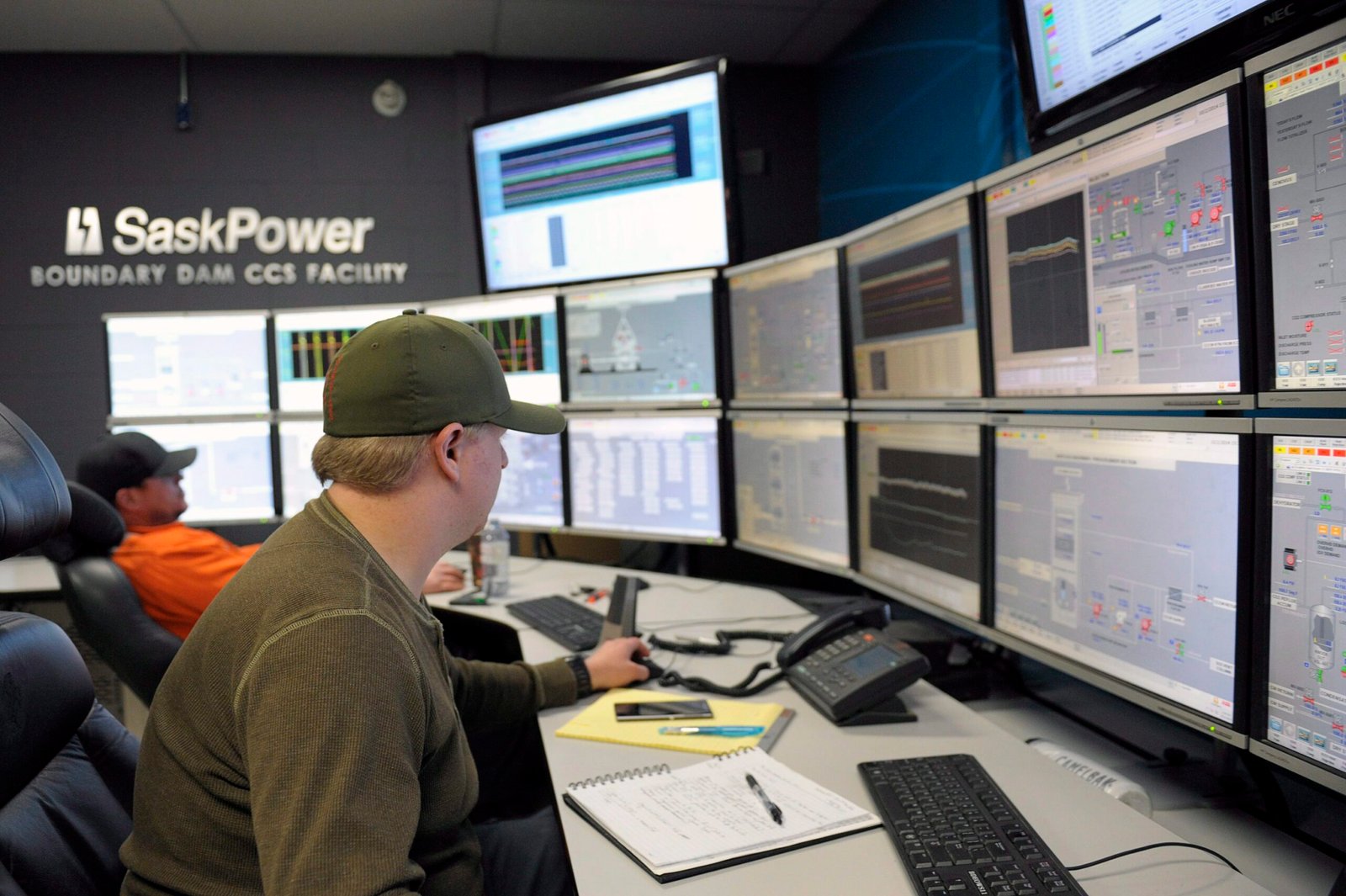
Welcome to Economic Insights, your twice-weekly deep dive into the major projects and policy shifts shaping the Canadian economy.
Stories we are following:
- Carbon capture companies warned Ottawa this week that recent federal policy changes have made their projects economically unviable. A coalition of Alberta-based companies is now lobbying for access to the clean fuel market, a system built for an entirely different industry, as a potential lifeline to keep their projects afloat.
- Meanwhile, Prime Minister Mark Carney’s promised summit with federal, provincial, territorial, and First Nations leadership is tentatively scheduled for mid-October. The summit follows a special assembly where chiefs unanimously rejected his energy deal with Alberta.

After carbon price rollback, Alberta carbon capture eyes clean fuel market as lifeline (iPolitics)
When Varme Energy set out to build a business converting waste into electricity while capturing carbon emissions, it was banking on two things: a strong carbon price and methane regulation credits. Then the federal government announced new headline prices for carbon and revised its methane regulations, wiping $265 million in anticipated revenues off the books in just a few months, according to CEO Sean Collins.
- The dilemma: Varme Energy is part of a coalition of Alberta-based carbon capture companies that travelled to Ottawa this week to warn the government their projects are “economically underwater.” The company needs carbon credits in Alberta’s TIER market to trade at $118 per tonne to break even. Right now, they are trading at around $30, and even Alberta’s planned $60 floor in 2030 leaves them in the red. Without a solution, some projects could be cancelled within months.
- The pitch: Collins is lobbying for access to the clean fuel regulations market, which was designed to reduce the carbon intensity of liquid fuels. Credits in that market are currently surging past $440 per tonne. Collins and allies like Jamie Stephen of Torchlight Bioresources argue that because carbon capture is a permanent removal from the atmosphere, allowing their credits to sell into the clean fuels market is a logical win-win that would finance these projects and redirect compliance spending back into Canada.
- The pushback: Skeptics say the clean fuel market is working as intended and shouldn’t be opened up to unrelated projects. Bob Larocque, head of the Canadian Fuels Association, says it’s hard to understand how non-fuel projects could participate. Michael Berends of Clear Blue warns that adding supply would likely put downward pressure on prices, while Fred Ghatala of Advanced Biofuels Canada argues it would weaken the regulation’s intended purpose.
- What’s next: The Pembina Institute noted that companies are scrambling for “subpar solutions” after the government weakened industrial pricing at the behest of the oil and gas industry. An industry source tells iPolitics a departmental team intends to discuss the clean fuel market proposal with various stakeholders, though Environment Minister Julie Dabrusin’s office only offered a general response about ongoing engagement.

First Nations to meet Carney amid concerns major projects could sideline other priorities (iPolitics)
When Prime Minister Mark Carney addressed a special assembly of chiefs in Ottawa last fall, he promised to host a summit bringing together First Nations, federal, provincial and territorial governments and insisted First Nations would be the ones setting the agenda. That summit is now tentatively on the calendar for mid-October, but some leaders are skeptical about what will actually be on the table.
- The concerns: Wilfred King, chief of Gull Bay (Kiashke Zaaging Anishinaabek), told the Chiefs of Ontario assembly this week that he has reservations about the process. “It’s the prime minister that calls [the meeting] and often he sets the agenda,” he said, expressing concern that the primary focus will simply be on major projects. “I’m concerned that this process is not for us.”
- The agenda: Assembly of First Nations National Chief Cindy Woodhouse Nepinak acknowledged there is “absolutely a push to talk about major projects” from the prime minister, but she reassured chiefs that other priorities, such as education, remain on the table. “We did make it clear that chiefs and the assembly will drive this agenda, and I’m going to make sure of that,” she said, noting the priority is to ensure the summit provides a roadmap for broader issues rather than being a “one and done” meeting.
- The backdrop: The push-and-pull over the agenda follows three summits Carney held with First Nations leaders over the summer of 2025, which drew a mixed reception due to the rapid passing of the Building Canada Act.
By the numbers:
$265 million: The amount of anticipated revenues Varme Energy says were wiped off its books following recent federal policy changes to carbon pricing and methane regulations.
$440: The approximate price per tonne that clean fuel market credits are currently surging past, making it an attractive target for carbon capture companies.
76 per cent: How far the number of oil and gas projects in Ottawa’s major project inventory has fallen from its 2017 peak, according to a new C.D. Howe’s piece published June 11, titled “The Building Canada Act Won’t Actually Build Anything in Canada.”
Major projects watch:
– The Canadian Nuclear Safety Commission opens Part 1 of a two-part public hearing on June 23 to consider Ontario Power Generation’s application to refurbish the Pickering Nuclear Generating Station, along with a 10-year licence renewal for both the station and its adjacent Waste Management Facility. Part 2 of the hearing is scheduled for October 2026.
– A few major projects related statements emerged from the G7 Leaders meeting this week, including a declaration on securing supply chains for critical minerals. It’s still unclear how the signal of intent will translate into investments, however. In another declaration, the G7 committed to reducing reliance on the Strait of Hormuz, and singled Canada out directly by welcoming “the potential for Canada to deliver significant additional capacity to global markets in the coming years.”
– British Columbia approved the underground expansion of the Red Chris copper and gold mine Friday, allowing Newmont’s operation 18 kilometres southwest of Iskut to extend its mine life to at least 2038. The approval, the second assessment completed under B.C.’s consent-based agreement with the Tahltan Nation, is expected to add 1,800 jobs at peak construction while protecting 1,500 positions already on site. The province billed it as the seventh major mining project approved in the past 18 months, and the project sits on both federal and provincial priority lists.
– Generation Mining’s Marathon copper-palladium project in Northwestern Ontario cleared a major financing hurdle this week, with the company announcing $424 million in senior debt credit approval from a syndicate led by Export Development Canada, ING Capital, and Société Générale. Combined with an existing $200 million streaming agreement with Wheaton Precious Metals and $145 million in equipment leasing facilities, the company has now secured roughly $769 million of the total capital needed to build the open-pit mine, located 10 kilometres north of the town of Marathon on the north shore of Lake Superior. CEO Jamie Levy called it a “landmark moment,” and said construction is expected to begin in early fall. More from Northern Ontario Business.
– Freedom of Information documents obtained by Greenpeace Quebec suggest government officials have been meeting with Marinvest Energy, the Norwegian firm behind a proposed Quebec LNG project over the past few months. Bloc Québécois MP Marilène Gill has been unable to secure a meeting, according to reporting from Le Devoir.
– Speaking to the Narwhal, Former Environment Minister Steven Guilbeault criticized Prime Minister Mark Carney’s approach to climate change, stating that Carney “thinks that the markets are going to do it”. Guilbeault departed federal politics because he believes this reliance on private sector market forces, paired with the repeal of key regulations, will cause Canada to miss its emissions targets.
Headlines: