dailynewsnblog
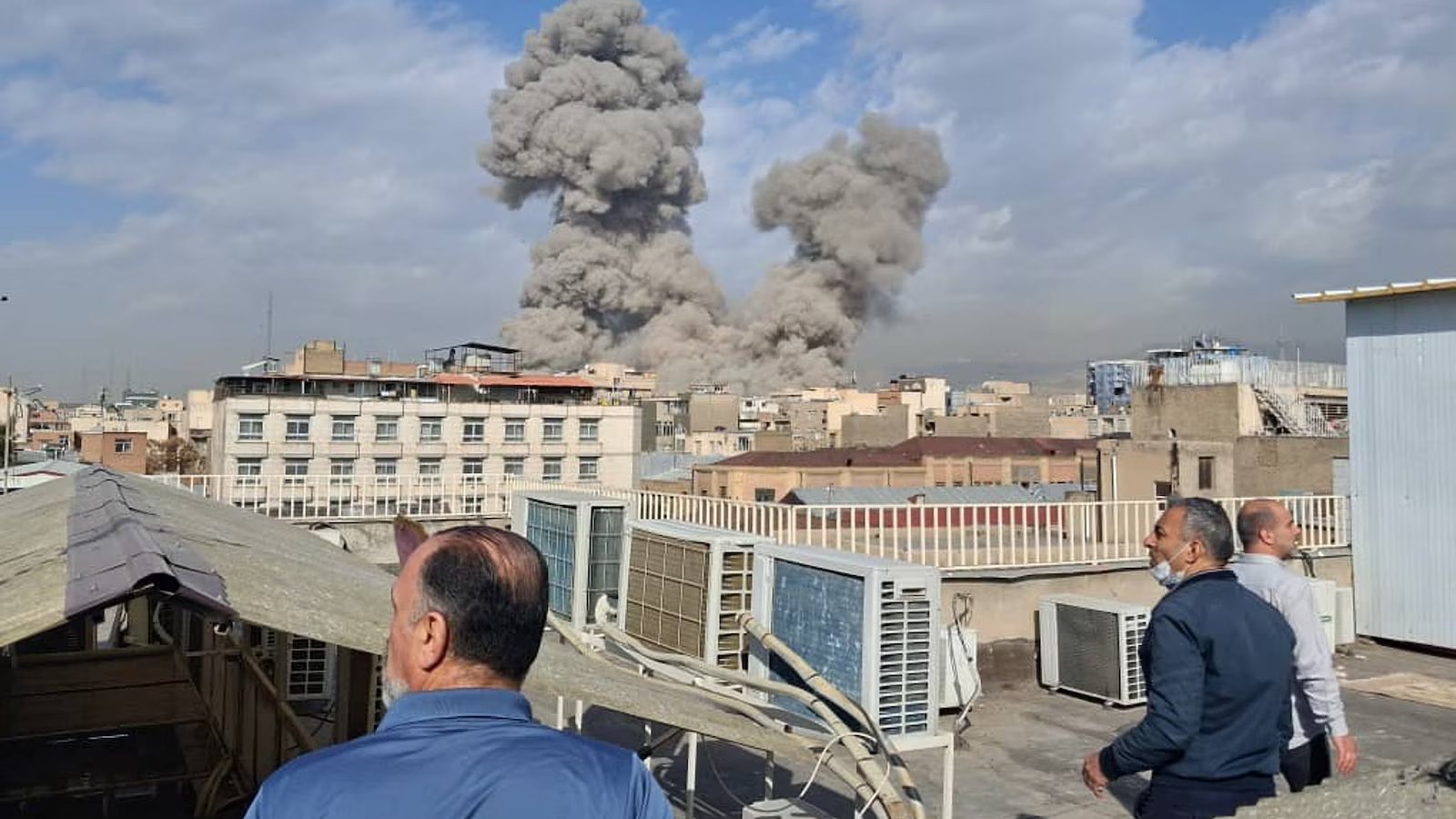
The attack mounted jointly by Israel and the US on Iran had been planned for months, but the timing, in the midst of negotiations between Iran and the US, will again raise questions about whether Washington was ever serious about striking a deal with Tehran.
In June last year, Israel, with the US later in tow, launched a 10-day attack on Iran just three days before Iran and the US were due to meet for a sixth set of talks.
So this assault, in the middle of a second negotiation process, must torpedo the chances of the Iranian regime ever taking a US offer of talks seriously. They have been stung twice. As one Iranian Telegram channel put it: “Once again the US attacked while Iran was pursuing diplomacy. Once again diplomacy does not work with the terrorist state of the US.”
Abbas Araghchi, the Iranian foreign minister, was acutely aware that Trump might jettison diplomacy, but felt it was a risk worth taking.
Clearly knowing what the US had planned, and how imminent a US military attack was, Badr Albusaidi, the foreign minister of Oman, which has been mediating the talks, made an emergency dash to Washington in a desperate attempt to put the best gloss on their progress. He even took the unusual step of going on CBS to reveal many of the secrets of the deal taking shape. A peace agreement was in reach, he said.
But Albusaidi was permitted only to meet the vice-president, JD Vance, to make the case that the talks were on the brink of a breakthrough. The deal would be far better than the 2015 agreement which Trump left in 2018, he said.
He claimed Iran had agreed to zero stockpiles of highly enriched uranium, the down-blending of its existing stockpile of highly enriched uranium inside Iran, and full verification access for the International Atomic Energy Agency. US weapons inspectors might even be allowed inside Iran alongside the inspectors from the IAEA UN body, he said. Iran would enrich only what it needed for its civil nuclear programme. A final agreement on principles could be signed this week and the details of how the verification system would work might take another three months.
There was little or nothing on offer on human rights, Iran’s ballistic missile programme or on its support for proxy forces in the region.
From Iran’s perspective, the issue of the 1,250-mile (2,000km) range of its ballistic missiles could be discussed in talks with the Gulf Cooperation Council, but the missiles were in principle part of Iran’s defences and, as the joint US-Israeli attack demonstrated, central to Iranian national security.
The previous Iranian foreign minister, Javad Zarif, had always defended the missiles by pointing out how defenceless Iran had been during the Iran-Iraq war. He suggested that if the US stopped selling arms across the Gulf, Iran would have less need for its own missile programme.
But this was neither an agenda nor a timetable that suited Trump. Indeed Steve Witkoff, his special envoy, hinted at what the president wanted when he said Trump was surprised Iran had not yet capitulated.
In justifying the attack, Trump did not delve into the progress of the talks, or the gaps that existed between the two sides. He simply declared: “Iran’s threatening activities put the US, its forces and bases abroad and our allies around the world at risk.”
Inside the US, the debate will soon start over whether Albusaidi’s assessment of the talks’ fruitfulness was justified. Needs-based enrichment at low levels and eradication of highly enriched stocks, if indeed that was offered by Iran, alongside verification would, on the surface, deprive Iran of the means to make a bomb. If so, Trump, encouraged by Israel and Republican hawks, will be accused of wilfully spurning an agreement that would have peacefully ended the threat posed by Iran’s nuclear programme for the last 30 years. Others will argue that the continuance of an irredeemable and repressive Iranian regime in itself was a threat to world security.
Either way, what is extraordinary is that Trump himself, prior to the attacks, made next to no attempt to articulate or justify to the American people, to Congress or to his allies his actions or his objectives.