dailynewsnblog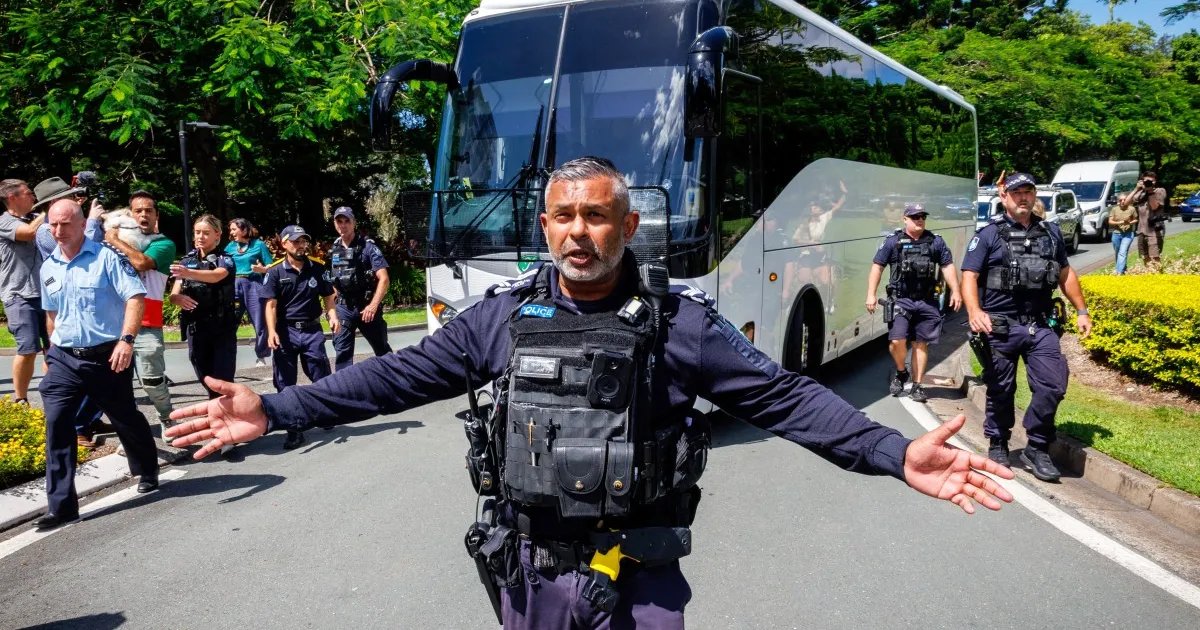
The Iranian women’s footballers returning to the country after their Asian Cup campaign in Australia will be welcomed home “with open arms”, Iran’s Ministry of Foreign Affairs has said.
Ministry spokesperson Esmaeil Baghaei urged the players to “come home” on Tuesday, hours after five members of Iran’s squad sought asylum in Australia following their team’s exit from the tournament.
Recommended Stories
list of 3 itemsend of list
“To Iran’s women’s football team: don’t worry – Iran awaits you with open arms,” Baghaei wrote on X.
His post came shortly after the office of Iran’s general prosecutor said the remaining members of the team were invited back to the country “with peace and confidence”.
“These loved ones are invited to return to their homeland with peace and confidence, and in addition to addressing the concerns of their families,” the general prosecutor’s office was quoted as saying by Iran’s Tasnim news agency.
Australia’s decision to provide visas to five players came amid uncertainty and concerns for the team’s safety following their decision to stand in silence during Iran’s anthem before their first match of the tournament on March 3.
The players sang and saluted the anthem in their remaining two matches, on Thursday and Sunday, prompting fears that they could face punishment upon their return home.
Australian Minister for Home Affairs Tony Burke told a news conference on Monday that he had informed the five members “that they are welcome to stay in Australia, that they are safe here, and they should feel at home here”.
He added that he had also offered the other team members the chance to stay in Australia.
The Department of Home Affairs named the five team members as captain Zahra Ghanbari, midfielders Fatemeh Pasandideh, Zahra Sarbali Alishah, Mona Hamoudi, and defender Atefeh Ramezanizadeh.

The players’ decision to stand in silence during Iran’s anthem before their match against South Korea was labelled as the “pinnacle of dishonour” by a commentator on Iran’s IRIB state broadcaster.
The announcement to grant the players visas came after United States President Donald Trump, who is currently waging war on Iran alongside ally Israel, said he had spoken to Australian Prime Minister Anthony Albanese about the “delicate situation” faced by the team, and that Albanese was “on it!”
Iran’s Baghaei dismissed Trump’s statement, questioning the US president’s claims of “saving” the players after new footage of a February 28 attack on an Iranian elementary girls’ school in Minab, which killed 165 students, suggested that the site of the school was likely hit by a Tomahawk missile – a weapon used by the US that Israel and Iran do not possess.
The US had previously accused Iran of the attack.
“They slaughtered more than 165 innocent Iranian schoolgirls in a double-tap Tomahawk attack in the city of Minab, and now they want to take our athletes hostage in the name of ‘saving’ them?” Baghaei said.
Following the Australian government’s decision to grant humanitarian visas to five Iranian players, they were moved to an undisclosed location under police protection, Australian officials were quoted as saying by the Reuters news agency.
Iranian media quoted Farideh Shojaei, vice president for women’s affairs at the Iranian Football Federation, as saying the team had left the hotel through the back door with the police.
“We have contacted the embassy, the football federation, the Foreign Ministry and anywhere possible to see what will happen,” she said.
“We have even spoken with the families of these five players.”
Some of the Iranian players left their hotel in the northeastern city of Gold Coast on Tuesday afternoon on a bus that was surrounded by members of the diaspora protesting against the Iranian government. They flew to Sydney airport on Tuesday evening before being transferred to the international terminal.
It was not clear how many players arrived at the airport or where they were going.

Trump initially posted on social media that Australia was “making a terrible humanitarian mistake” by allowing the team to be sent back home, apparently unaware that Australia had been in secret talks with the women for several days.
Trump said members of the team would “likely be killed” if forced to return to Iran. “The US will take them if you won’t,” he added.
In a later post, Trump said he had spoken to Albanese and that the Australian leader was “doing a very good job having to do with this rather delicate situation”.
The Iranian general prosecutor’s office said “some members of our country’s women’s football team have, unintentionally and emotionally provoked by the enemy’s conspiracy and mischief, behaved in a way that has caused the delusional excitement of the criminal leaders of the imposed American-Zionist war.”
The US and Israel attacks on Iran have killed 1,255 people in the country and left 1,200 injured after 11 days.
Tehran has responded by launching waves of missiles and drones at Israel and towards several military bases in the Middle East where US forces operate.