dailynewsnblog
The majority-women slate of candidates in the three upcoming federal byelections is an encouraging development for gender equality in politics after a troubling plateau over the past three federal elections, advocates say.
“Equity doesn’t come about because you wish it was so,” said veteran NDP strategist Anne McGrath. “It requires persistence and structures.”
Of the three upcoming byelections scheduled for April 13, nine out of the total 13 candidates nominated by the parties currently represented in the House of Commons are women.
In the Toronto riding of University–Rosedale, the Liberals’ Danielle Martin and the NDP’s Serena Purdy—the latter of whom placed third against then-Liberal MP Chrystia Freeland in the 2025 general election—will face off against Conservative Don Hodgson and the Green Party’s Andrew Massey. Former deputy prime minister and erstwhile Liberal leadership candidate Freeland resigned from Parliament on Jan. 9 to take on a new voluntary role advising the Ukrainian government.
In the Scarborough Southwest, Ont., byelection to replace former cabinet minister Bill Blair, who resigned on Feb. 2 after being appointed as Canada’s high commissioner to the United Kingdom, all four candidates are women, including the Liberals’ Doly Begum, the provincial NDP’s former deputy leader; the Conservatives’ Diana Filipova, the party’s 2025 candidate for Spadina–Harbourfront, Ont.; the NDP’s Fatima Shaban, who represented the party in the riding last election; and the Green Party’s Pooja Malhotra.
Get Today’s Headlines Newsletter
Wake up to the day’s top political and policy headlines. Weekday Mornings.
By entering your email address you consent to receive email from The Hill Times containing news, analysis, updates and offers. You may unsubscribe at any time. See our privacy policy

In Terrebonne, Que., the Liberals’ Tatiana Auguste, whose previous victory by a single vote was overturned on Feb. 13 by the Supreme Court, will once again face the Bloc Québécois’ Nathalie Sinclair-Desgagné, who placed second last year, alongside the Conservatives’ Adrienne Charles, New Democrat Maxime Beaudoin, and Green candidate Benjamin Rankin.
Lindsay Brumwell, executive director of Equal Voice, told The Hill Times that the women-dominated slate of candidates in these byelections is “obviously encouraging,” reflecting both the respective parties’ willingness to put them forward, and the progress in convincing women candidates to step forward.
Brumwell said that while her group is focused on removing the barriers to entry and dispelling the preconceptions that reduce the likelihood of women’s invitation into politics, the most consistent barrier is women’s self perception.
“Year, after year, the number-one reason women don’t consider pursuing politics as a career is a belief that they are not qualified enough, or don’t know enough about how the political system works,” Brumwell said, adding that while the strong showing of women candidates in the upcoming byelections is a positive sign, the number of women stepping forward has largely plateaued in recent campaigns.
‘Go back and ask her again’
According to Equal Voice’s tracking of federal election candidates, over the past three contests in 2019, 2021, and 2025, women have made up 29 per cent, 30.5 per cent, and 30.3 per cent, respectively, of the total number of candidates nominated by the four parties.
In the last federal election, only the NDP’s count of women candidates—51 per cent—was higher than in 2021. Of the other three parties, the Bloc Québécois had the second-highest share of women candidates at 39 per cent, followed by the Liberals with 35 per cent, and the Conservatives at 22 per cent.
Those numbers are similar to the current balance of the respective parties’ elected MPs. The Bloc has five women in its 22-member caucus, or 22 per cent; the Conservatives sit at 18 per cent, with 26 women in in its 141-member caucus; the Green Party’s sole MP is a woman; and half of the NDP’s now-six-member caucus are women. The Liberals boast the largest number of women MPs at 67 out of its 170-member team, roughly 39 per cent, which is just slightly higher than the 30 per cent across the entire House.
While the number of women entering federal politics has stalled, Brumwell said that “progress is never linear,” and noted that provincially, there are even more encouraging signs, including British Columbia’s 2024 provincial election, which saw women surpass the 50-per-cent mark among elected legislators, while the Yukon’s legislature is approaching 60 per cent women.
“Persistence is required,” Brumwell said. “And if there’s a woman out there who is even a little bit curious about getting involved in politics, we want them to know there are opportunities and support available to help them step forward. Come find us.”
McGrath, a former president and national director for the New Democrats, as well as principal secretary to then-leader Jagmeet Singh and then-Alberta premier Rachel Notley, told The Hill Times that, in her experience, the best strategy to entice more women into politics is to be more persistent than the barriers themselves.
McGrath said that, over the past decade, it has taken on average, “like six or seven times” before she could manage to convince a woman to run for office, and she could not remember a time when a man was hesitant over a lack of knowledge or experience.

“When I was working with Notley, she would send me to convince a woman and when I would come back with a ‘no’, her response was always ‘go back and ask again,’” McGrath recalled.
However, while having leaders who care about increasing women’s participation is beneficial, it requires structural changes and organizational rules to maintain progress beyond any single leader’s tenure.
As one example, McGrath pointed to the federal NDP’s ongoing leadership race, which had required potential candidates to collect 500 nomination signatures from supporters drawn from a range of regional and demographic groups. No more than half of those signatures could come from cisgender men, while at least 100 had to come from members of equity-seeking groups, including LGBTQ+, Indigenous, racialized, or Canadians living with a disability. Candidates also had to gather one-tenth of their signatures from party members under the age of 25, and 50 signatures each from five regions and provinces: Ontario, Quebec, B.C., the Prairies, Atlantic Canada, and the North.
“Some gains have been made, but they’re not enough,” McGrath said. “We need to keep pushing harder to make sure that women are recruited and supported and promoted—and that requires real leadership and concrete buy-in.”
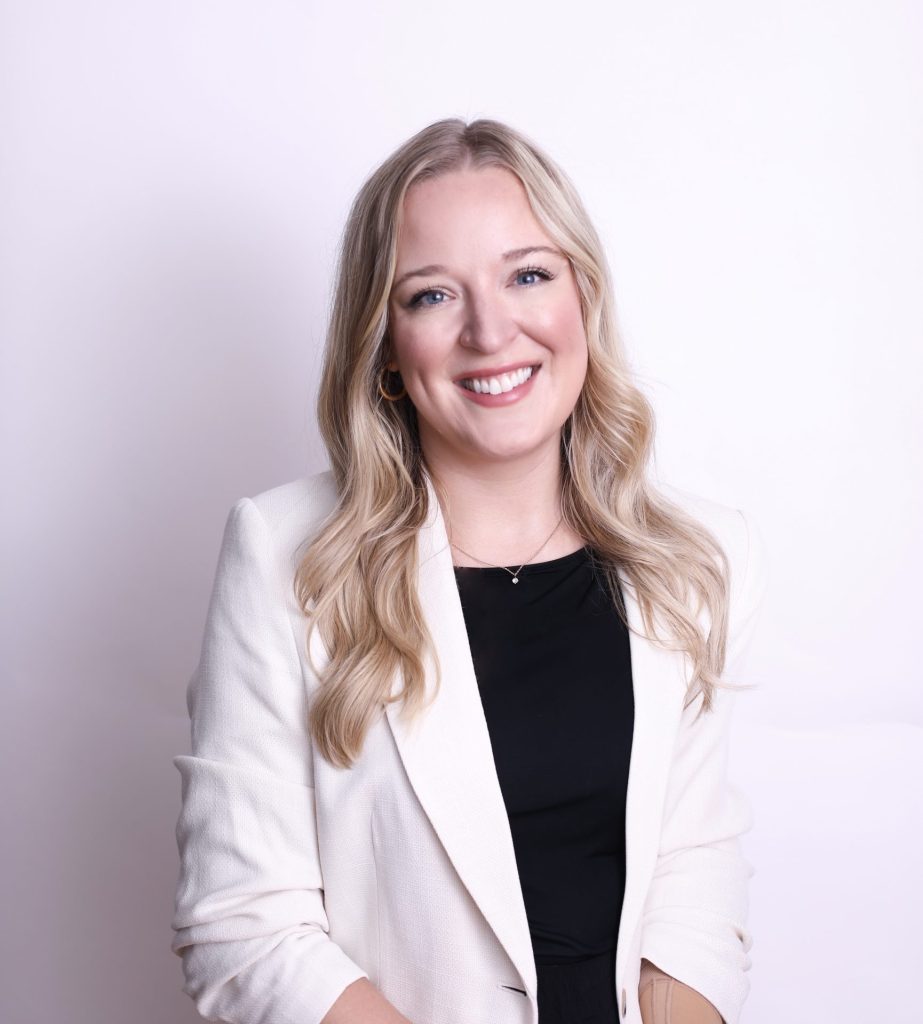
Liberal strategist Kait LaForce agreed that it would take “many, many different elections” in the future—and more work in between—before gender parity is achieved in politics, but said the ongoing byelections were an encouraging “snapshot in the evolving pipeline of women into politics.”
“What’s notable is that it reflects a broader shift in all the parties,” LaForce said, adding that, even from a cynical perspective, the decision had been made in most cases that a woman candidate was the best person to compete.
“Byelections are interesting, as well, because there’s usually more of a focus on the candidate than in a general election, so I think it’s even more telling that women have mostly been chosen to lead the charge,” LaForce continued. “I think that’s on purpose.”
The confidence gap
Conservative staffer Jordan Weston said she’s happy to see her party nominate two more women to potentially join the caucus, and hopes it will help to push back against the more entrenched perceptions of women and partisanship.
While Weston said she welcomes any increase to the community of women in federal politics, her experience as a woman in Conservative politics can be especially “ostracizing,” Weston said.
Weston said she is regularly questioned on how she reconciles being a “Conservative and a woman,” and while she personally believes that “the strongest women” are in her party—including the nine new MPs elected in the last election—the party has failed to push back against the narratives that Conservatives aren’t welcoming towards women, or aren’t “feminist.”

However, Weston added that there’s also a level of “stigma” toward the concept within her party, which can more often be viewed suspiciously as “woke Liberal” jargon rather than a call for equal access to opportunity.
That stigma is partially why Weston organized the Conservative Women in Politics group in early 2025—which she ironically thanked then-prime minister Justin Trudeau’s prorogation of Parliament for giving her the spare time to do so as one final act of unintentional allyship.
“I knew there were so many women working in Conservative politics, so I went seeking them,” Weston said, noting the lack of visibility can be a major detriment to young women contemplating a career in the field.
“We’re in the game now, but the more representation women can see in politics and leadership positions, the more likely we will be to shift the participation gap,” Weston said, but added that did not mean requiring “quotas.”
“Just because we don’t believe in quotas doesn’t mean we don’t support women—we support equal opportunity.”
However, Jordan said that women are much more likely to “self-eliminate” from political opportunities, often waiting until they feel fully qualified before stepping forward, while men may run with far less concern about the same.
Alongside the confidence gap, Weston also noted that even successful women politicians and professionals are still expected to place their career second to their family, particularly if they have or want children.
During a March 9 panel organized to mark International Women’s Day featuring Conservative MPs Sandra Cobena, Rachael Thomas, and Raquel Dancho, Weston said parliamentarians and staffers shared their experiences “juggling” work and motherhood, and the persistent expectations for both.
“If you go to an event after work as a mom with a young kid, people will still ask who’s taking care of the kids, but I’ve never heard someone ask a dad that,” Weston said. “Motherhood is a beautiful thing but at the same time, society expects the workplace to always come second to women.”
sbenson@hilltimes.com
The Hill Times