dailynewsnblog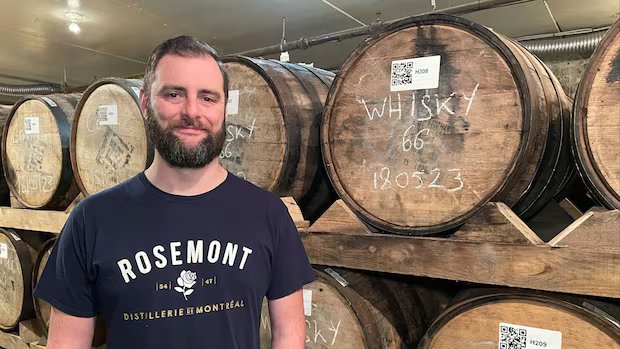

Listen to this article
Estimated 4 minutes
The audio version of this article is generated by AI-based technology. Mispronunciations can occur. We are working with our partners to continually review and improve the results.
Rows and rows of barrels line the cellar at the Distillerie de Montréal.
The alcohol inside these containers ages for years before being bottled and shipped off to Quebec’s liquor board, the Société des alcools du Québec (SAQ).
The distillery in Montreal’s Rosemont neighbourhood says demand for its spirits has been growing for years. But recently, there’s one product in particular trending among customers.
“Our whisky production has gone up majorly,” says Alex Arpin, the distillery’s production manager. “We’ve more than doubled our sales. It’s one of our best sellers.”
The recent boost has even put a spotlight on the distillery’s honey whisky liqueur, Abeille, now one of its most sold products. Distillery co-owner Lilian Wolfelsberger beams with pride when talking about the concoction.
“With the recipe for our Montreal whisky, we integrate honey, a spring honey from the Miels d’Anicet farm, and we make a Jack Daniel’s [Tennessee] Honey-style drink but with real honey and no caramel or colorants,” he explains.

He says the “international context with our American neighbours” has allowed them to have more shelf space at the SAQ.
“But I also think our clients are more conscious of how important local markets are,” he adds.
‘More room for Quebec products’
In spring 2025, the Quebec government asked the SAQ to remove all American products from its shelves and halt the supply of American alcoholic beverages to agencies, grocery stores, restaurants and bars in response to tariffs imposed by U.S. President Donald Trump.
The SAQ now says that between March 2025 and January 2026, sales of locally produced whisky increased by 114 percent, surpassing growth for products like wine, brandy and rum.
“Whisky in general has always been a strong category,” explains Éloïse Michaud, category manager for Quebec products at the SAQ.
“We’ve had big names, big products in the category. Removing the offer of important U.S. products has just given more room for Quebec products.”

Quebecers have been turning to more locally produced alcohol ever since the SAQ took American bottles off the shelves last year. The SAQ says that the spike in sales is also due to a lack of competition in the market.
The Union québécoise des microdistilleries says a lack of competition in the whisky market is also giving Quebec sellers a boost. General manager Paul Goulet explains that whisky takes a minimum of three years to age and tends to be less popular in Quebec than in other provinces.
“Whisky is a growing market but it is a small portion of the products that our members are making. That’s why the number seems very impressive,” he says.
Maintaining momentum
Goulet says the real challenge will be maintaining this momentum once American bottles eventually return to SAQ shelves. He says the organization isn’t leaving it up to chance.
“We are very active with the SAQ, doing some training with their people in the various outlets so they develop the reflex of proposing Quebec products as alternatives,” says Goulet.
“We’re hopeful that people will discover that we’re making great quality products in Quebec and once they’ve tried it, they won’t want to go back to American-made ones.”
The SAQ says the local whisky market is also expanding.
“We’ve known for the past few years that distillers are working on new products and will eventually present them to the SAQ to market,” says Michaud.
“We don’t exactly know when because they take a long time to make, so we just have to wait and see what they have to offer.”

Wolfelsberger says he’s confident boosted interest in local whisky will continue, even after U.S. products are sold at the SAQ again — though they probably won’t fully replace established brands like Maker’s Mark and Jack Daniel’s.
“[We’ve proven] that we have a place in the heart of Quebecers and at their bars,” he says.