dailynewsnblog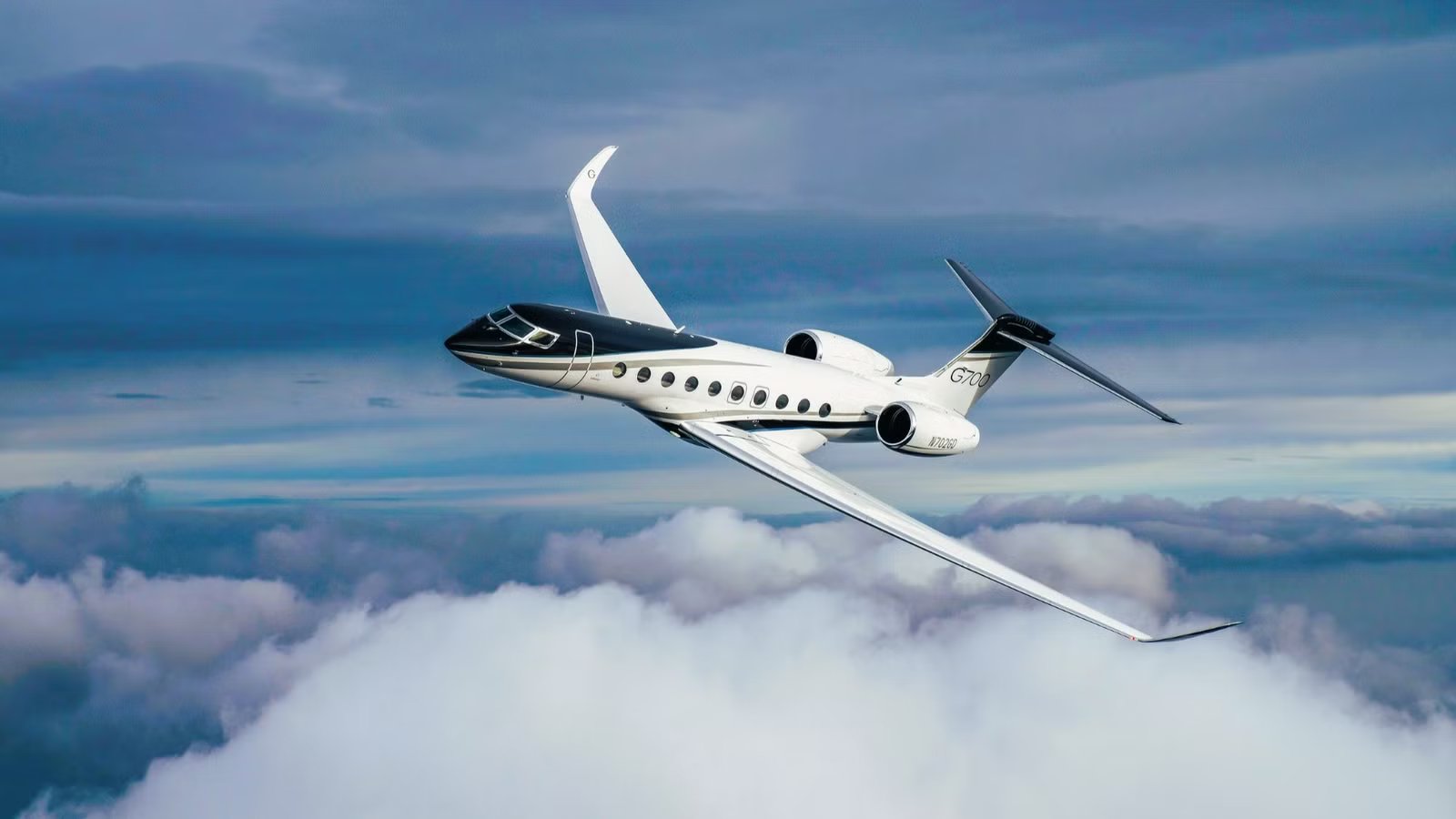
The ongoing dispute between the United States and Canada over the certification of new US-made Gulfstream aircraft has escalated further this week. The Federal Aviation Administration (FAA) has now come out in support of President Trump, saying it expects other countries’ aviation authorities to accept its certifications. This comes after Trump threatened last week to decertify “all aircraft made in Canada” and impose a 50% tariff on planes made in the country.
The uproar has sparked furious debate in aviation circles. Some argue in support of the president, saying Canada is intentionally delaying certification of the Gulfstream aircraft in order to protect locally-produced Bombardier business jets. Others say it is to be expected as the trade hostilities between the two countries continue. What almost everyone can agree upon is that politics should never be mixed into safety certifications — so could Trump’s threats break global aviation standards?
The FAA Comes Out In Support Of Trump

This issue erupted last week when Trump’s ire was sparked by perceived delays in the Canadian certification of the new Gulfstream G700 and Gulfstream G800. The FAA completed certification of both aircraft last year, but Canadian regulators have yet to do so. In response, Trump threatened Canada with a 50% tariff on its country’s planes sold in the US, along with stripping globally recognized safety permits from aircraft made in Canada.
Over 5,000 Canadian-made aircraft currently operate in the US, and a full de-certification could cause massive disruption amidst thousands of daily flight cancellations. Given that revelation, White House officials rushed to clarify that any directive would likely not apply to aircraft already in operation. However, Bloomberg now reports that FAA administrator Bryan Bedford, speaking at the sidelines of the Changi Aviation Summit in Singapore, says that the FAA expects other countries’ aviation authorities to accept its certifications. He added:
“Our concern is whether or not sufficient resources are being applied to US products equal to the resources that we’re applying to certify foreign products. We just want a level playing field.”
So What’s The Hold Up, Canada?

Type certification is the process where a civil aviation authority approves an aircraft to operate on their registry. The “big three” are the FAA, the European Union Aviation Safety Agency (EASA), and Transport Canada (TCAA). There are Bilateral Aviation Safety Agreements between the big three that aim to make certification easier for manufacturers. The process is as follows:
- Primary Certification: The manufacturer gets the Type Certificate in their home country. For Boeing, Gulfstream, Cessna, etc., this is the FAA, for Airbus or Dassault it would be EASA, and for Bombardier it’s Canada.
- Validation Process: The other authorities validate that Type Certificate as opposed to starting from scratch with a full independent certification. This could be a streamlined process (mostly paperwork) if there is minimal or no additional testing required. Or it may require technical testing where additional review of specific systems are required.
It’s the technical testing where things have got hung up, as Transport Canada has cited specific safety concerns regarding fuel-system icing with the Gulfstream G700 and G800. At high altitudes, aviation fuel naturally contains dissolved water that can precipitate and freeze. If this ice builds up, it can block fuel lines or filters, potentially causing engine power loss or even failure.
This is a known concern with the G700 and G800 because when the FAA certified the aircraft, it did so by granting a temporary exemption for this issue, valid through 2026. This exemption allows Gulfstream to deliver planes to customers while they finish the required full-scale icing tests.
While the FAA granted an exemption, Transport Canada argues that Canada’s harsher icing conditions necessitate stricter adherence to these rules without the exemptions allowed in the US. As a result, it requires full-scale, physical testing to prove the fuel system can operate safely when saturated with water at freezing temperatures.
Some might argue that Transport Canada is being pedantic about an issue with very small risks. Gulfstream points out that the fuel system is very similar to previous models that have flown over 750,000 hours without incident. Yet in the aftermath of the Boeing 737 MAX certification debacle, who can blame the Canadians for not taking a minute to “check the homework” of the FAA?

Why US Airlines Are Panicking Over Trump’s New Aircraft Threat
Canadian-built aircraft represent a considerable proportion of regional jet operations in the US.
What Is The Likely Outcome?

The bigger issue is that safety certification is now being used as a political football, and that serves nobody’s best interests other than politicians. Using certification as a bargaining chip shatters the global norm that critical safety decisions affecting the public should be isolated from political grandstanding or nonsensical trade wars. The fact that the FAA administrator has thrown his weight behind Trump creates even bigger issues. Global regulators will begin to distrust FAA certifications if they believe the agency’s decisions are being dictated by the White House rather than technical safety data.
With all that said, the supposed “de-certification” of Canadian aircraft is extremely unlikely to happen. Legal specialists have argued that the FAA cannot do it without a legitimate safety reason. And the White House has already walked back the notion of decertifying existing aircraft, now seemingly aware of the immediate and devastating blow it would have on the US travel sector that is still reeling from last year’s government shutdown and recent winter storms. Bombardier has also pointed out that it has 3,000 employees across 9 US facilities as well as 2,800 US suppliers, so the impact on American industry and jobs would be profound, and counter to the President’s campaign promises.
What remains on the table is the threat of tariffs, something Canadians have become quite accustomed to in recent times. Yet it is darkly ironic that Bedford is talking of “a level playing field,” when it was the previous Trump administration that, at the behest of  Boeing, created the most unlevel playing field possible when it slapped 300% tariffs on what was then the Bombardier C Series after
  Delta Air Lines had ordered 75 of the aircraft.
If you haven’t heard of, or have forgotten that incident, Simple Flying has a detailed article on its causes and outcomes. The short summary is that Delta came out fighting, the Trump Administration eventually backed down, but not before Airbus had swooped in and acquired the program, transforming it into the Airbus A220. Unless you work at the Airbus plant in Mobile, Alabama, the whole episode was an unmitigated disaster, but one that the current administration should be reminded of before placing its thumb on the scale once again.