dailynewsnblog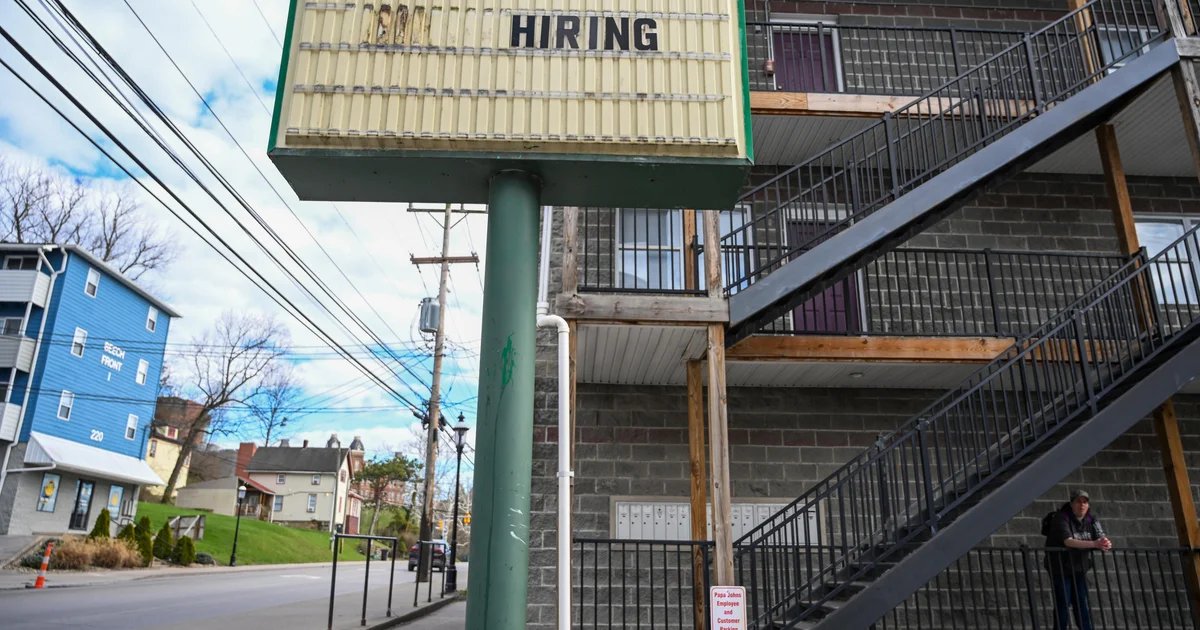
The Iran war is adding fresh pressure to a slowing U.S. labor market, with at least one major employer already freezing hiring plans.
Consumer goods giant Unilever, which owns brands such as Dove and Vaseline, told CBS News on Tuesday that it’s hitting the brakes on hiring amid an unstable economic backdrop. In a memo obtained by Reuters, a Unilever executive pointed to “macroeconomic and geopolitical realities, especially in the Middle East conflict” as the reason for the company’s three-month hiring freeze.
Even before the Iran war began, the U.S. hiring rate had slowed, with the February Job Openings and Labor Turnover Survey hitting its lowest level since 2020. Employers across the U.S. shed 92,000 jobs in February, a sharp and unexpected setback in a labor market marked by anemic job growth during the past year as businesses grappled with tariffs and economic uncertainty.
“We’re in a period of uncertainty, much like in 2025 with tariffs,” Oxford Economics senior U.S. economist Matthew Martin told CBS News. “Companies weren’t sure what the policy, what their cost structure was going to be, which led them to delay hiring.”
The Iran war’s impact on hiring may not be immediately reflected in the March jobs report, set to be released on April 3 at 8:30 a.m. ET. Employers across the U.S. likely added 60,000 jobs last month, rebounding from February’s decline, according to the average estimate of economists polled by FactSet.
“The March jobs report is likely to show modest gains due largely to the ongoing strength of healthcare employment,” said Heather Long, the chief economist at Navy Federal Credit Union, in an email. Friday’s data release will be “too early to see the impact from the war in Iran.”
Fresh economic headwinds
As the Iran war continues, businesses are facing fresh headwinds from higher transportation costs, while consumers are coping with higher fuel costs that are straining their budgets. Airlines are hiking fares, and economists expect some food prices to rise due to the war’s impact on fertilizer supplies.
Companies may delay hiring as they digest the impact of higher energy prices, said Martin of Oxford Economics. Unilever, for instance, may be “looking for ways to reduce overall spend” as it copes with higher production and distribution costs, while also facing uncertainty about how long the Iran war may continue, he added.
Soaring energy prices could also dent economic growth, which, in turn, could translate into weaker hiring, said Yelena Shulyatyeva, senior U.S. economist at The Conference Board’s Economy, Strategy and Finance Center. Still, oil prices would have to hit $140 a barrel — up from Brent crude’s current price of about $102 — for the U.S. economy to tip into a recession and negatively impact the labor market, according to her analysis.
“The slower the growth rate is, the lower the need for new employees,” she told CBS News. The Iran war “will probably exacerbate these low-churn conditions, because companies don’t know what to expect. There’s high uncertainty.”
A higher unemployment rate?
The unemployment rate could increase by 0.2 percentage points to 4.6% by the end of September, according to Goldman Sachs analysts. Higher oil prices typically “reduce job growth and raise unemployment,” they wrote, adding that the arts and entertainment and accommodation and food services industries may be most likely to scale back hiring.
That’s partly because of the financial impact on consumers, who are spending a greater share of their budgets on gasoline, leaving them with less money to spend on other goods and services. Some consumers may cut back on non-essential purchases, while others may spend more cautiously as they build their savings as a buffer, Martin said.
“Discretionary goods and services like travel and luxury items would be the hardest hit as people scale back and only spend on the essentials,” he said.