dailynewsnblog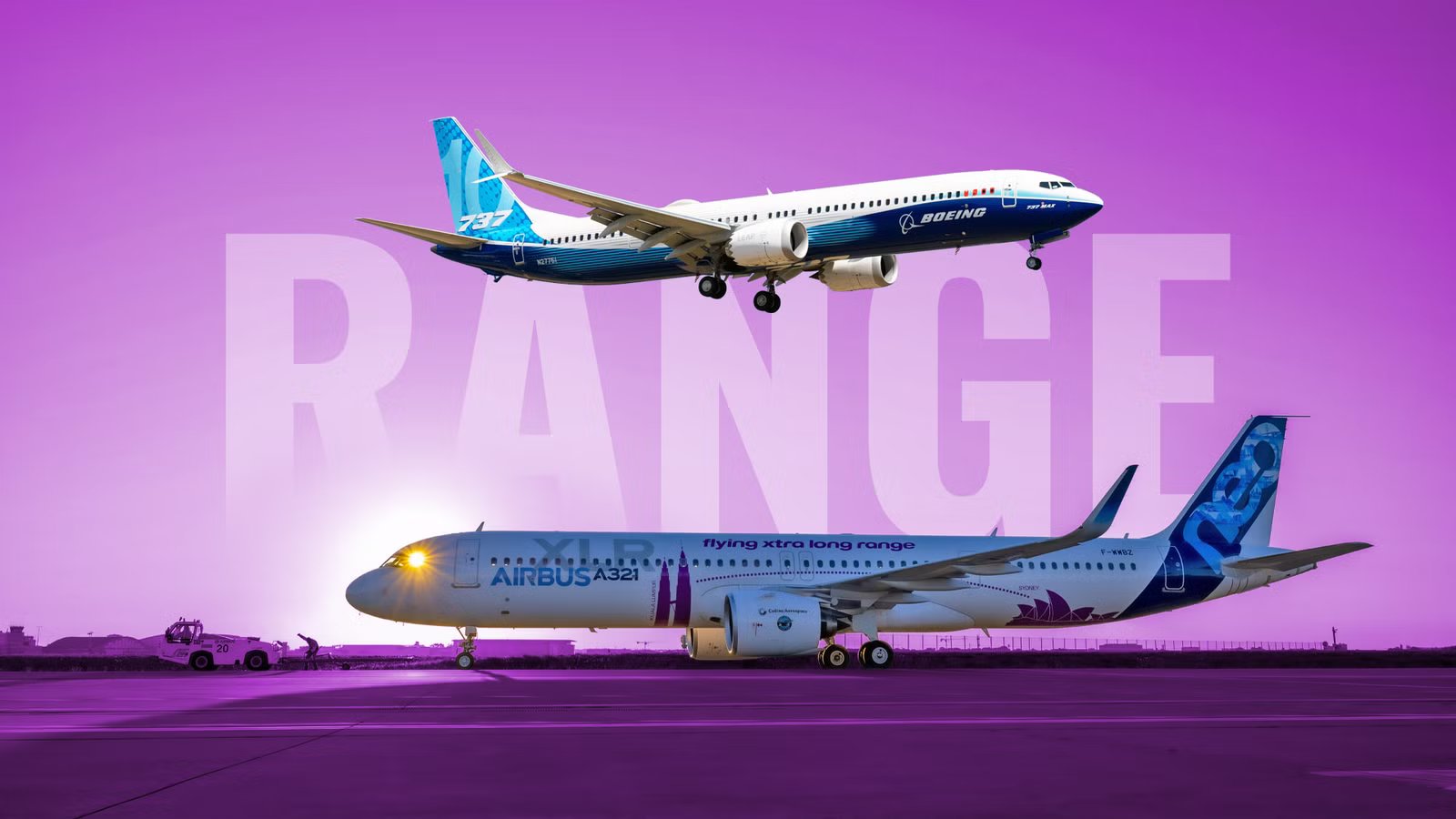
Many aviation fans often debate whether the Boeing 737 MAX 10 can beat the Airbus A321XLR by flying further. The question reflects a deeper competition between narrowbody aircraft aiming to extend into long-haul markets. As airlines increasingly seek efficient, long-range single-aisle jets, understanding which aircraft offers greater reach affects route planning, fleet decisions, and the economics of point-to-point operations.
Boeing promotes the 737 MAX 10 as its largest 737 variant, offering high seat capacity and low seat-mile costs. Airbus positions the A321XLR as the benchmark for extra-long-range single-aisle operations, capable of connecting city pairs that previously required widebodies. In this article, we will examine published performance data, consider real-world operational factors, and explore whether the 737 MAX 10 could realistically match or even exceed the A321XLR’s range.
The Range Advantage Of The Airbus A321XLR

At face value, no, the Boeing 737 MAX 10 does not fly further than the Airbus A321XLR. The A321XLR was designed from the beginning to push the limits of single-aisle aircraft, and its longer range gives it a clear, built-in advantage. Once that difference is established, everything else follows: the economics, the possible routes, and even how airlines plan to use each aircraft.
Airbus lists the A321XLR with a maximum range of 4,700 NM (8,700 kilometers) in ideal conditions. Boeing, by comparison, states that the 737 MAX 10 can reach just 3,100 NM (5,740 kilometers). That gap, roughly 1,600 NM (3,000 kilometers), is substantial. It shows that the XLR and MAX 10 were created with different missions in mind. One is tailored for long and thin routes across oceans or continents, while the other is optimized for higher-capacity medium-range flying.
Real-world applications make this clear. Airlines are already planning or operating A321XLR flights on routes such as Madrid to Miami, Lisbon to Boston, Dublin to Toronto, Milan to Abu Dhabi, or Budapest to Delhi. These are missions that traditionally required aircraft like the Boeing 757 or even smaller widebodies. The A321XLR’s ability to cover these sectors in a single-aisle configuration is a major shift in how long-haul networks can be designed.
In contrast, the 737 MAX 10, which has not yet entered widespread service, is consistently described by analysts as a medium-range, high-density aircraft rather than a long-haul platform. Boeing designed it to offer strong economics and seat count on short and mid-range services, not for transoceanic flights. Its largest active order, for now, comes from  United Airlines, followed by Pegasus,
  Delta Air Lines,
  American Airlines, Akasa Air, WestJet and Ryanair.
How Fuel Capacity, Design, And Operations Shape Real-World Range

Fuel capacity is a major factor. The A321XLR carries a rear center fuel tank and an optimized fuel system, giving it additional usable fuel. This allows longer sectors and ocean crossings. The MAX 10 uses the standard MAX fuel configuration, limiting maximum range. Structural design matters as well. The A321XLR can support a higher maximum takeoff weight to accommodate long-range fuel loads. The MAX 10 is designed for medium-range efficiency and higher passenger density, which restricts fuel capacity and long-haul payload.
Operational factors affect real-world range. Passenger load, cargo, weather, routing, fuel reserves, and airline cabin layouts all change effective range. Even the XLR’s published 4,700 NM (8,700 kilometers) may be reduced under heavy payloads or strong headwinds. The MAX 10 experiences similar effects, but because its baseline range is shorter, these operational realities limit the missions it can perform.
|
Specification |
Boeing 737 MAX 10 |
Airbus A321XLR |
|---|---|---|
|
Published maximum range |
3,100 NM / 5,740 km |
4,700 NM / 8,700 km |
|
Typical two-class seating |
188–204 (up to 230 high density) |
180–220 |
|
Fuel and design features |
Standard MAX fuel layout, no extra long-range tanks |
Rear center fuel tank, optimized long-range fuel system |
Finally, the intended role of each aircraft is critical. The MAX 10 targets high seat count on medium-range routes, such as transcontinental domestic flights or busy regional corridors. The A321XLR is built for long-thin routes where a widebody is too large, connecting distant city pairs efficiently.

How The Airbus A321XLR Could Seriously Impact Boeing’s Future
The Airbus A321XLR reshapes narrowbody aviation and threatens Boeing’s hold on long-range one-aisle routes by occupying the Boeing 757 niche.
Industry Opinion Strongly Favors The A321XLR On Long-Haul Capability

Experts and airline strategies align closely on this matter. The A321XLR is widely recognized as the long-range narrowbody leader, while the MAX 10 is a high-capacity, medium-range jet. Airbus openly markets the A321XLR as a single-aisle aircraft capable of performing routes that previously required a widebody. The company describes it as offering “single-aisle efficiency with widebody-like range,” which reflects exactly how airlines plan to use it.
The XLR is pitched as a tool for opening long-haul routes between smaller cities across the Atlantic and to connect Europe and Asia. These are long, thin markets where a widebody would be too expensive or too large, but strong demand still exists for nonstop service. Analysts have been just as direct. Aviation commentary, including reporting from The Flight Club, notes that the MAX 10 “will not be able to compete, especially in terms of flight range, with the A321LR, and even less so with the A321XLR.” Experts typically frame the MAX 10 as a continuation of the 737’s long-running role: a straightforward, efficient, medium-range workhorse optimized for high-density routes rather than long-range ones.
Taken together, the expert consensus is remarkably clear. Airlines that need to fly five to eight hour routes with narrowbody economics choose the A321XLR. Airlines that want maximum capacity and efficiency on two to five hour sectors gravitate toward the MAX 10. The range gap between the two aircraft shapes not only their design and marketing, but the real-world strategies of the airlines that buy them.
Where The MAX 10 Sits In The Broader Narrowbody Range Gap

Real-world range sometimes differs from published numbers. In light payload or favorable wind conditions, the MAX 10 might get closer to its theoretical limit, but the gap with the XLR remains. Airlines also evaluate alternatives for narrowbody and small widebody jets. Lower-capacity jets may offer better economics on thin routes. Widebodies provide seats and cargo but at higher cost. The A321LR offers a middle ground for mid-long sectors without requiring the full XLR configuration.
Airlines also consider far more than maximum range when choosing an aircraft. They look at alternatives in the narrowbody and small widebody market, each with its own pros and cons. Lower-capacity jets can offer better economics on thin routes where filling a larger aircraft is difficult.
Small widebodies offer more seats and cargo, but they raise operating costs, reduce scheduling flexibility, and increase the risk of flying at low load factors. For some missions, the A321LR, which came before the XLR, offers a good middle ground. It provides enough range for many mid-long routes without the extra fuel weight or structural changes of the XLR.
|
Aircraft |
Max Range |
Role / Typical Route Use |
Notes |
|
737 MAX 10 |
3,100 NM (5,740 kilometers) |
High-capacity medium-haul |
Strong on short and mid-haul networks, limited long-range performance. |
|
A321neo (standard) |
3,500 NM (6,480 kilometers) |
Medium-haul, flexible mid-long routes |
Lower fuel volume than the XLR but widely used for long domestic and regional international flights. |
|
A321LR |
4,000 NM (7,400 kilometers) |
Mid-long haul, thinner long-haul routes |
Enough range for many transcontinental or shorter transatlantic missions. |
|
A321XLR |
4,700 NM (8,700 kilometers) |
Long-haul narrowbody for transatlantic and long-thin markets |
The current reference point for long-range single-aisle jets. |
This comparison shows a clear pattern. The MAX 10 sits at the lower end of the long-range narrowbody spectrum, designed mainly for high-density medium-haul flying. The A321XLR sits at the upper end, offering long-haul performance that used to require a small widebody.

Why Some Airlines Are Switching From Widebodies To Narrowbodies On Long-Haul Routes
Single-aisle jets going the distance.
Operational Limits And Caveats

It’s important to note the caveats and contextual factors that might affect how this comparison plays out in real operations.
First, the published “maximum range” figures assume an ideal configuration: zero or minimal payload, favorable winds, full fuel, and possibly minimal reserves. In real airline operations, payload (passengers + luggage), cargo, weather, alternates, and regulatory reserves all reduce effective range. For the XLR, some analysts already expect real-world operational range to be lower than advertised, perhaps around 4,000 NM (7,400 km) or even less under heavy payload conditions.
Second, certification and ETOPS (twin-engine over-water) regulations, overflight permissions, and airline operational practices can limit how airlines exploit maximum range, especially for transoceanic flights. Even though the A321XLR is certified and marketed for long-haul single-aisle operations, each airline must carefully evaluate its performance.
Third, using a narrowbody long-range aircraft like the XLR involves trade-offs: fuel burn, seat density, cargo capacity, and economics of widebody vs narrowbody when volume or demand is high. For some routes, a widebody or even a Boeing 757-style aircraft (or future replacement) might still make more sense.
Two Aircraft, Two Different Missions

The Boeing 737 MAX 10 and the Airbus A321XLR serve overlapping but distinct markets. The MAX 10 offers airlines a high seat-count, medium-haul, cost-efficient option, ideal for dense short-to-medium routes where frequency, cost per seat, and capacity matter more than maximum range.
The A321XLR is a different beast: a single-aisle jet engineered for range, able to connect city pairs once the domain of widebodies, opening up thin long-haul routes with narrowbody economics. Given published data and real-world use cases, the 737 MAX 10 will not exceed, and likely never reach, the range of the A321XLR under comparable conditions. For airlines needing extra reach, the XLR (or similar long-range narrowbody) will remain the go-to solution. The MAX 10 remains a different tool: optimized for capacity and cost-efficiency rather than maximum distance.
For passengers, this means: if you’re flying a medium-distance route on a high-capacity narrowbody, you may see a MAX 10. If you board a narrowbody for a transatlantic or long-distance route, that’s likely to be an A321XLR. For airlines and route planners, the choice is about matching aircraft to route needs, demand characteristics, and economics. The 737 MAX 10 and A321XLR each have their place, but they are not interchangeable in terms of range.