dailynewsnblog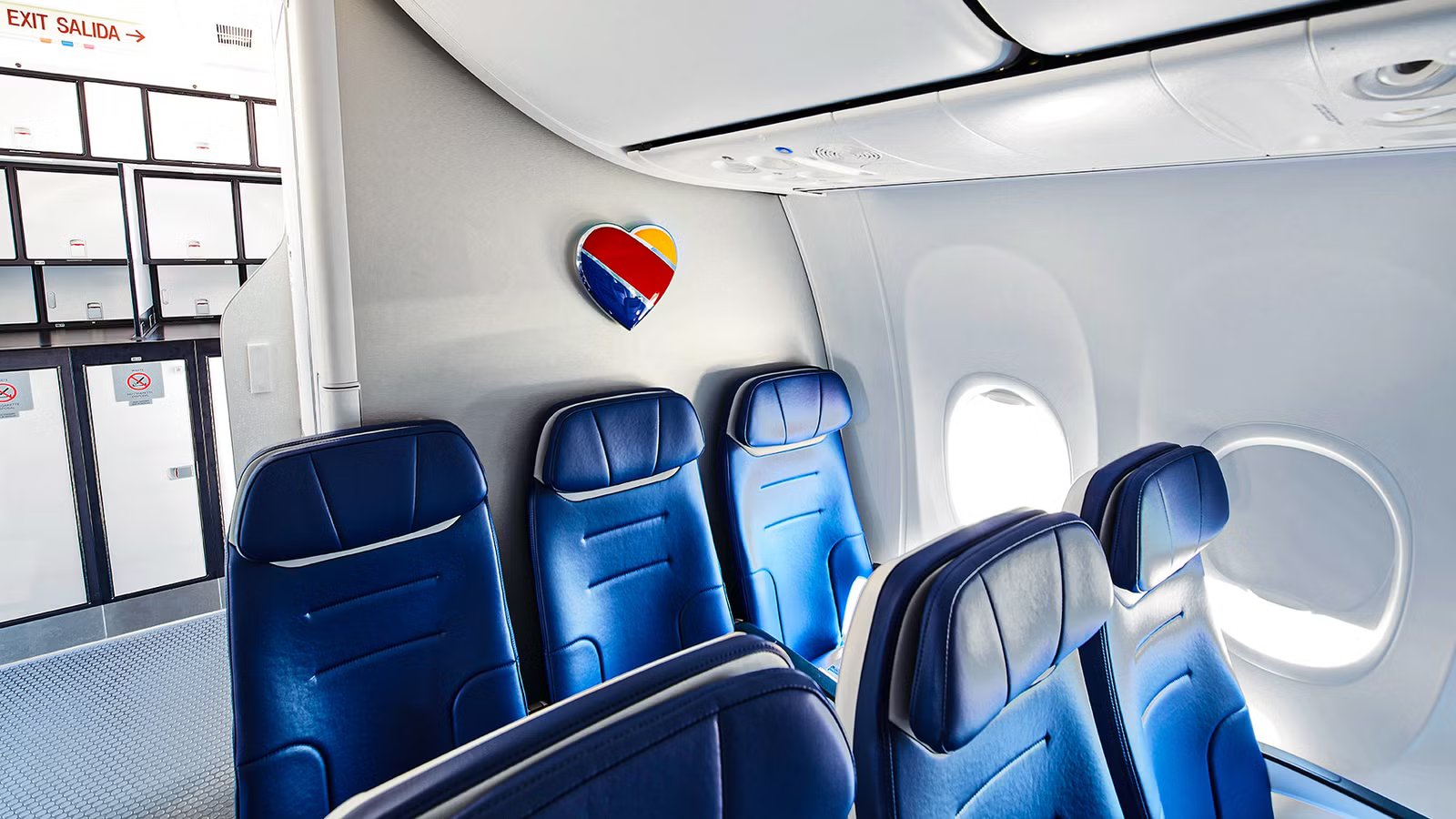
 Southwest Airlines has officially switched to using assigned seating, just like every other airline. The carrier flew its last flight with open seating on January 26, 2026, and with that, no US airline offers open seating anymore. With assigned seating, Southwest can charge customers for seat selections, and on top of that, the official launch of assigned seating was timed with the fleet-wide completion of extra legroom retrofits. This move is expected to significantly boost ancillary revenue for Southwest.
Of course, the move wouldn’t go over well with Southwest loyalists, who flew the carrier largely due to its unique attributes like open seating and two free checked bags. It would seem to be a classic example of a change that benefits the company, agitates loyalists, and then becomes accepted as the standard. But in the case of Southwest’s new assigned seating policy, the company is facing significant backlash, along with controversy for other recent changes made primarily to boost ancillary revenue.
The Move From Open Seating To Assigned Seating At Southwest

Southwest Airlines flight WN1971 was the final Southwest flight to operate with open seating. It departed Honolulu Daniel K Inouye International Airport on January 26, 2026, and flew overnight to Los Angeles International Airport. The flight number, 1971, seemingly referenced the year in which Southwest commenced operations, and the flight was also operated by a Boeing 737 MAX 8 painted in the carrier’s original “Desert Gold” livery. The flight as a whole appeared to be a tribute to the end of open seating.
With open seating, guests were sorted into one of three boarding groups (A, B, C). Your boarding position, comprised of a boarding group and number combination (ex, B10), was determined mainly by your check-in time, and earlier boarding positions were also included with higher fare classes, Early Bird Check In, or with frequent flyer status. Upon boarding, passengers could select any seat they wanted, and all seats were identical with the same amount of legroom.
|
Former Southwest Boarding Groups |
Current Southwest Boarding Groups |
Former Southwest Fare Types |
Current Southwest Fare Types |
|---|---|---|---|
|
Group A |
Group 1 |
Wanna Get Away |
Basic |
|
Group B |
Group 2 |
Wanna Get Away Plus |
Choice |
|
Group C |
Group 3 |
Anytime |
Choice Preferred |
|
Group 4 |
Business Select |
Choice Extra |
|
|
Group 5 |
|||
|
Group 6 |
|||
|
Group 7 |
|||
|
Group 8 |
With the new system, Southwest now uses eight numbered boarding groups, rather than the three lettered groups. The boarding positions are gone, and the biggest change is that seats are now assigned. Customers can select seats during the booking process, and those who do not are automatically assigned a seat upon check-in. What’s more, Southwest doesn’t allow customers with basic economy tickets to select seats and charges for assignments on other fare types.
The Controversy Behind This Change

Any change that results in customers paying more money to an airline will undoubtedly be unpopular. Although guests could pay extra for a better boarding position, you still had a choice if you didn’t pay anything, even though the available seats would be less desirable. Of course, assigning seats and charging passengers for some or all seats is standard in the airline industry, and nearly every airline that once had open seating has long switched.
What’s been causing controversy is mainly Southwest’s implementation of assigned seating. For instance, some A-List Preferred members reported being assigned to later boarding groups, despite the carrier advertising Group 2 as a new A-List Preferred benefit. The new boarding system is generally less efficient, and in a more extreme example, an X user reported being prohibited from switching his seat onboard the aircraft. This was despite the flight being nearly empty.
Many of these reports, however, are anecdotal and can be attributed to the carrier’s inexperience with new policies. Software systems will be updated to guarantee Group 2 boarding for A-List Preferred members, and staff will surely become more lenient on passengers moving to empty seats as they become accustomed to their company’s policy changes. Although boarding is generally faster with open seating, the difference is generally not enough to make a meaningful difference for airlines, and nearly every other airline also uses assigned seats, meaning that any increases in boarding time are hardly unique to Southwest.

Southwest Passengers Divided Following Turbulent Debut For Assigned Seating
Mixed reviews for the airline’s new assigned seating system.
Will Southwest Backpedal On Assigned Seating

Southwest is hardly attempting to set a new trend with assigned seating; rather, it’s simply following what has long been the industry standard. Most of the issues that are being reported are bugs in a new system that will be worked out. Southwest loyalists will adjust to assigned seating, and new customers will essentially board the same way as on other airlines. The current backlash from Southwest loyalists won’t be enough to spur the Dallas-based carrier into reversing course.
Of course, the main benefit of assigned seating is the ancillary revenue, as airlines rely heavily on revenue collected from fees, surcharges, and extra services. The open seating model left money on the table, and this change, devised under the influence of Elliott Investment Management, comes as part of a general effort to improve Southwest’s finances in large part by boosting ancillary revenue. For example, Southwest also discontinued its decades-long policy of offering two free checked bags.
The official switch to assigned seats was intended to coincide with the full roll-out of extra legroom seating, although the fleetwide retrofit project was actually completed a week early. Under the old open seating model, Southwest wouldn’t be able to properly monetize these seats, thereby defeating the purpose of the project. With assigned seating, Southwest can add additional surcharges for extra-legroom seats, which will significantly increase revenue, while the added extra-legroom options should be beneficial in attracting new customers.
The Problem Facing Southwest Airlines

Open seating has become an obsolete practice that generates little revenue for airlines and confuses passengers unfamiliar with the concept. Southwest Airlines is simply moving with the times. Except in the case of Southwest, the carrier has operated with open seating for so long that it’s become a key part of the carrier’s brand identity. Southwest’s brand, comprised of unique attributes such as open seating and two free checked bags, is what has kept loyalty high over the past 54 years.
In other industries, brands can differentiate in numerous ways and can still modernize in ways that are often poorly received by customers at first. But the airline industry is more difficult. All airlines essentially sell the same product (flights), which makes differentiation difficult and extremely important at the same time. The legacy carriers (or more accurately,  Delta Air Lines and
  United Airlines) have found success in recent years through their wide variety of onboard service levels, extensive networks, fare segmentation, and frequent flyer programs.
|
Airline |
2025 Revenue |
2025 GAAP Net Income |
2025 Net Margin |
|---|---|---|---|
|
Delta Air Lines |
$63.40 billion |
$5.005 billion |
7.9% |
|
United Airlines |
$59.07 billion |
$3.353 billion |
5.7% |
|
Southwest Airlines |
$28.10 billion |
$441 million |
1.6% |
|
American Airlines |
$54.6 billion |
$111 million |
0.2% |
|
Alaska Air Group |
$14.24 billion |
$100 million |
0.7% |
In the past, people flew Southwest Airlines because they enjoyed the passenger experience. While open seating, for example, turned away many potential guests, the policy also had strong supporters who would go out of their way to fly Southwest because of it. The justification for switching to assigned seating was that it would attract more customers, but it’s significantly more expensive to attract new customers than to retain existing ones, and this move alienates them.

Southwest Airlines Updates Policy For Plus-Size Passengers Purchasing Two Seats
Starting in January, customers of size will now face more restrictions on when and how they can receive a refund for booking two seats.
The Issues With Southwest Airlines’ Strategy

Southwest Airlines has been in a slump since the COVID-19 pandemic, as the carrier’s financials failed to recover in the way that those of the legacy carriers did. Industry trends have been favoring large airlines with extensive premium options, thorough frequent flyer programs, and large international networks. Southwest Airlines, which recorded straight profits for nearly 50 years before the pandemic, was ill-suited for the airline industry in the US today, and changes were necessary.
The problem is that many of the carrier’s moves to adapt have come under the influence of Elliott Investment, a firm that is focused on boosting Southwest’s short-term profits. The carrier is alienating its loyalists in an attempt to appeal to a wider audience, but the challenge is that Southwest isn’t bringing anything new to the table. It remains a short-haul airline that only sells economy tickets. While the switch to assigned seating is meant to make Southwest more appealing to potential customers, this isn’t enough to pull people away from the legacy carriers.
Of course, Southwest has made positive changes, too. The carrier now participates in the GDS, and it has also modernized many behind-the-scenes systems. Southwest has signed interline agreements with numerous foreign airlines, as well. However, Southwest has yet to fully address its inherent shortcomings against the legacy carriers. With many of its recent choices, the airline has had to weigh whether to prioritize appealing to new customers versus alienating its loyalists, but the issue is that new customers often won’t book Southwest anyway.