dailynewsnblog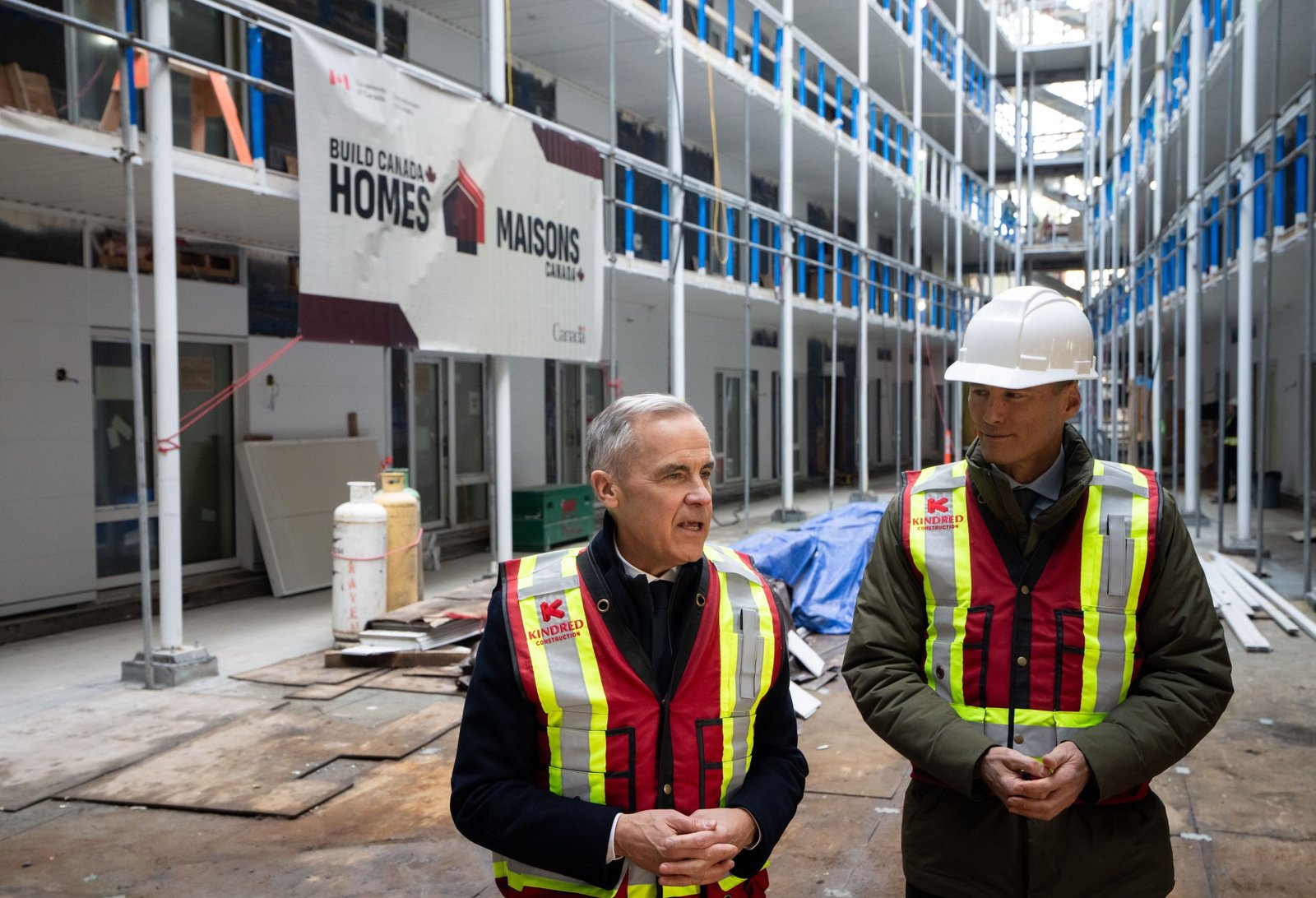
The federal government is turning to a new Crown corporation to tackle Canada’s housing shortage, but questions remain about whether it can deliver at the scale needed
Welcome back to Adjournment Proceedings, our weekly long read series. We publish a new edition every Friday. In this week’s edition, we look at whether the federal government’s new Build Canada Homes will meet the Liberals’ lofty promises for the agency and supercharge housing construction. Missed a week? Take a look through our archives here.
Canada needs to build hundreds of thousands of homes a year to restore affordability, but construction is slowing.
Now, the federal government is betting on a new Crown Corporation to help close the gap.
What is Build Canada Homes
Build Canada Homes launched as a Special Operating Agency in September.
The agency is designed to operate like a developer, by using federal land, partnering with provinces, municipalities, non-profits and private builders. Ottawa says the goal is to increase the supply of affordable housing more quickly, including through large-scale and multi developments, while also supporting modern construction methods like modular and factory-built homes.
Housing and Infrastructure Minister Gregor Robertson also said much of these homes will use mass timber, as a way to be Canada’s own “best customer,” amidst trade tensions and U.S. tariffs on steel and softwood.
The program is part of Prime Minister Mark Carney’s broader push to speed up homebuilding and scale up housing construction across the country, backed by what the government described as a $25-billion investment over five years in Budget 2025.
As part of that effort, Robertson recently introduced Bill C-20, the Build Canada Homes Act, which would establish the agency as a Crown Corporation.
The government says this structure would give BCH greater flexibility and financial tools to accelerate construction, supported by a $13 billion funding portfolio over the next five years.
While still in its early stages, the federal government has begun rolling out initial projects and partnerships across the country. The agency has identified six priority sites on federal land in cities like Ottawa, Toronto, and Edmonton for the first wave of development, and is expected to deliver up to 4,000 homes.
It has also launched a $1.5 billion Canada Rental Protection fund to help preserve existing affordable units, and $1 billion toward supportive and transitional housing. The agency is also in partnership with Nunavut, and is expected to deliver more than 700 homes.
Why it’s needed
Canada’s housing crisis is well documented.
Statistics Canada’s most recent report found that 45 per cent of Canadians reported being “very concerned” about their ability to afford housing because of rising housing costs or rising rent. More than one in five Canadian households were living in unaffordable housing.
Additionally, in a report released by the Office of Federal Housing Advocate in 2023, Canada would need 4.4 million affordable homes to end homelessness.
Budget 2025 provides the funding for Build Canada Homes, while Bill C-20 establishes it as a Crown Corporation. The Parliamentary Budget Officer suggests that, despite the new agency, overall federal housing support is set to decline and the program’s impact on supply will be modest.
A ‘Haiku’
Canada’s housing challenge doesn’t just hinge on building more homes, it’s about who builds them, what gets built, and whether those homes are affordable to the people who need them.
Some housing experts said the bill is largely positive, but like a lot of big strategies and bills the Parliament has introduced since Carney’s promise to cut red-tapes and building, it’s all up to its implementation process.

“The act itself is like a haiku, it’s really lacking in details and that’s okay,” said Carolyn Whitzman, a housing and social policy researcher at the University of Toronto.
Whitzman said there are a lot of gaps left to be addressed. She said it’s too early to tell how much this will accomplish.
“They’re hitting a lot of important points and issues, but with all these policies and programs, the question is how successful it’s going to be in implementation,” said David Amborski, director of the Centre for Urban Research and Land Development at Toronto Metropolitan University.
Amborski said the bill’s success will depend in part on whether developers and non-profits have the capacity to deliver projects at scale.
“It’s going to address part of the issue and our housing problem across the country requires all kinds of approaches—this can be a contributor to it,” he said.
While housing experts say the agency could help address gaps in affordable housing, others point to trade-offs and unanswered questions about how effective it will be in practice.
“If they’re trying to accelerate innovation, you’re going to have to use more expensive methods, so they’re not going to be able to get as much housing for every dollar spent,” said Mike Moffatt, housing expert and founding director of the Missing Middle Initiative.
Moffatt added that while the legislation is still in the early stages, the government hasn’t indicated the “quantitative” way of what it’s trying to accomplish.
“There’s no target on how many homes it’s going to build, what the rents will be… there’s a real kind of lack of transparency there,” he said.
“There’s no performance indicators and that’s a real challenge,” Moffatt said.
Office of Housing, Infrastructure and Communities Canada noted that BCH does not impose a fixed percentage of market versus non-market housing across its portfolio.
“Direct Build projects on federal lands have an imposed affordability requirement, with at least 40 per cent of units delivered at below-market levels,” the office said.
Currently, BCH projects will move at an independent timelines, but HICC said the immediate projects will “break ground in 12 months or less.”

More bureaucracy
However, Conservative MP housing critic Scott Aitchison said the plan risks creating more bureaucracy at a time of significant housing pressures.
In an interview with iPolitics, Aitchison said while there’s a need for social and supportive homes, focusing on non-market housing doesn’t actually solve the problem.
“Housing is a continuum,” he said. “There’s a wide range of homes that exist in our system and those homes are based on our needs at the time.”
Statistics Canada’s most recent data shows the national homeownership rate at 66.5 per cent, down slightly from its peak of 69 per cent in 2011. By international standards, Canada’s homeownership rate remains in the middle of the pack.
Aitchison also questioned why the federal government is creating a new housing agency when existing institutions already play a role in delivering housing programs.
“If one of their existing agencies didn’t have the right tools to focus on non-market housing, they should have just given it those tools,” he said. “Instead, they’ve spent a year building another bureaucracy, while CMHC and the Canada Lands Company are left wondering what happened.”
“There will never be enough money to produce social and supportive housing and non-market housing to solve the problem, because the longer people can’t afford to get their own place, the more need there’s going to be for that non-market housing,” Aitchison said.
As Bill C-20 makes its way through the House, Aitchison floated that the party may make some amendments to it, but he doesn’t know what it’s going to “achieve.”
Meanwhile, NDP MP housing critic Jenny Kwan pointed to the PBO’s analysis, arguing the funding behind the program falls short of what is needed.
Drawing on the PBO’s report, Kwan argued the program’s projected output of about 26,000 units over five years, including 13,000 affordable units, represents a relatively small contribution given the scale.
“Prime Minister Mark Carney and Housing Minister Gregor Robertson have set an ambitious target to double housing construction over the next decade, yet—as the PBO makes clear—they have no overall plan to achieve it,” Kwan wrote in a statement.
“Without a comprehensive national housing strategy that centres affordability, acquisition by non-profits, and the preservation of existing affordable units, Build Canada Homes risks not functioning at the scale it needs to have a substantial effect on affordability over the coming years.”

The National Housing Strategy sequel?
As the bill moves through the Parliament, it’s also important to note that the federal government has only gotten involved in housing in 2015 when the Liberal government was elected. Otherwise, they stepped back from large-scale involvement in housing in the 1990s, before re-entering the sector with the national Housing Strategy in 2017.
Under former Prime Minister Justin Trudeau, the National Housing Strategy set out to reduce homelessness by half in 10 years and reduce unaffordable or overcrowded housing.
Now, in 2026, Whitzman pointed out there hasn’t been an update on the number of people who are chronically homeless from the government. The number of homelessness has also increased by 50 per cent in 2018 and 2022.
“The second problem is that in 2022, the number of households in core housing need hasn’t budged,” Whitzman said.
The number of households in core housing was at 1.7 million in 2016 and remained the same in 2022.
“So zero impact on housing need,” she added.
Under the National Housing Strategy Act, the federal government also established the Renters’ Bill of Rights, which promised to “crack down on renovictions, introduce a nationwide standard lease agreement, and require landlords to disclose historical rent prices of apartments.”
Whitzman expressed that she’s hopeful BCH is a new approach the government is taking, after its lessons from the previous affordable housing structure.
Whether Build Canada Homes can meaningfully move the needle now depends on how quickly projects get built, and more specifically, what the 2026 fall budget entails.
“I would be crushed and angry and disappointed in all of those words if the bill of CBH was the federal government’s one statement about what it wants to do with housing policy—it can’t be, it literally can’t be,” Whitzman said.