dailynewsnblog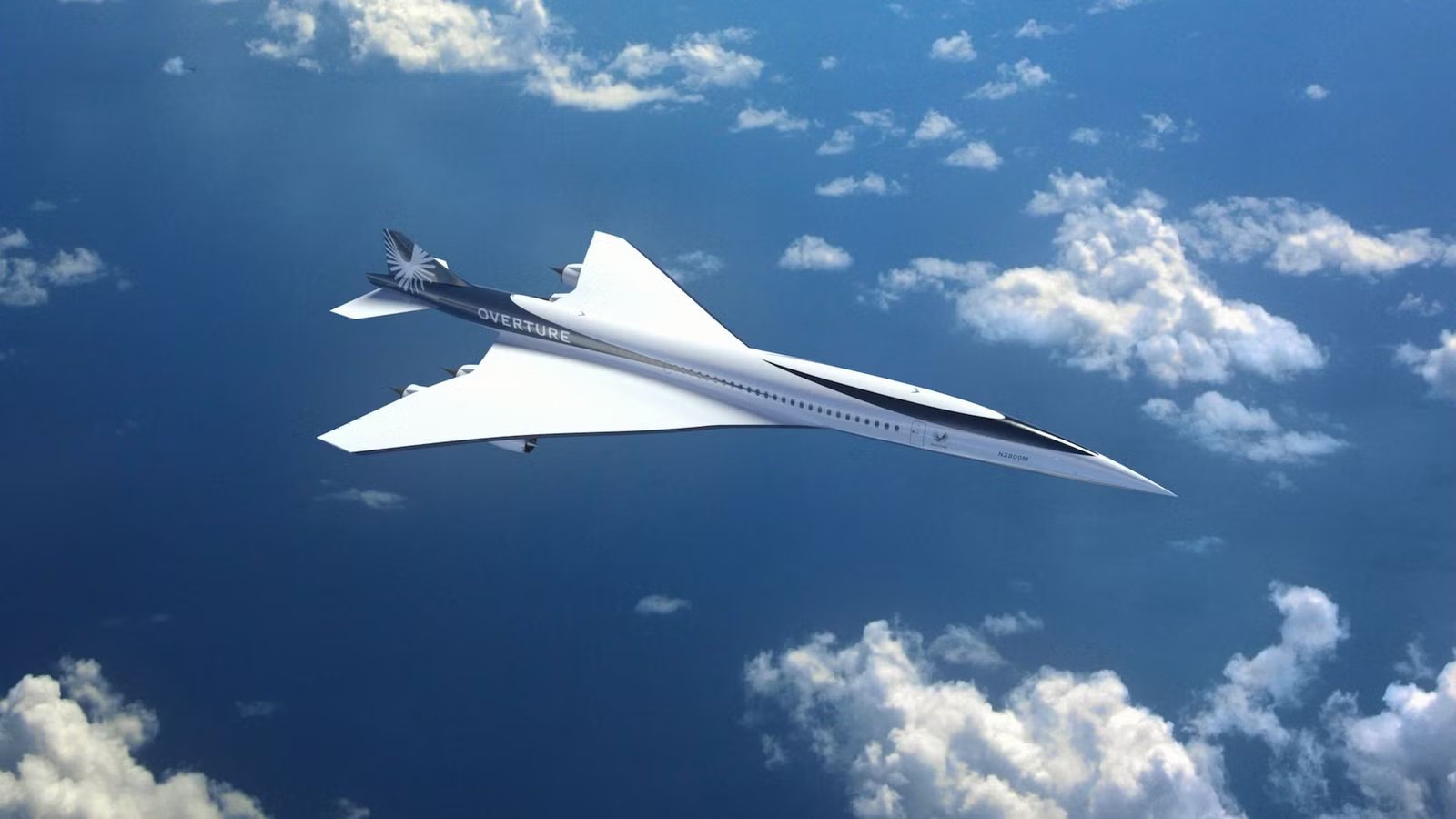
United Airlines’ CEO Scott Kirby is known for his opinions (and there sure are a lot of them). However, this month he has made a bold claim that has broad implications for how the market sees one of the industry’s most ambitious projects. Here we speak, of course, of the Boom Overture story. This program, intending to build a supersonic passenger jet, offers huge promise and equally large execution risk. Boom has real momentum, with its XB-1 demonstrator breaking the sound barrier in 2025.
Despite this promise, Scott Kirby is giving it a roughly 50-50 chance of ever entering service. United has an agreement for the type, with the carrier opting to purchase 15 Boom Overture jets, with options for 35 more if the plane can meet safety, operating, and sustainability targets. The program still has to prove that it can turn this bold concept into a certified economic airliner. The key takeaway here is that Overture is no longer science fiction, but it is still far from operational reality. The debate is now less centered on the plane’s ambitious vision and more about engineering, certification, and overall commercial viability.

Scott Kirby’s remark was most notable because it was both supportive and rather blunt in nature. When speaking at an event at Harvard University on March 5, he said that he thinks Boom is 50-50 on actually getting the Overture into service. This comes as United remains the program’s highest-profile individual airline backer. It is important to note that this order is conditional in nature, and the real upside only comes if Boom can deliver.
The airline has only committed to ordering 15 jets, and it will maintain purchase options for 35 more models, only in the case that Boom meets safety, operating, and sustainability requirements. Kirby was essentially acknowledging the gap between enthusiasm and overall execution. At the same time, he did not dismiss the program outright. He argued that Boom’s odds may improve because engine technology can be matured first in non-aviation uses, such as AI-focused data centers, before being adapted for flight.
What Do We Make Of This Statement?

There are a few different ways in which we can read Scott Kirby’s statement. Kirby is a lot like Ryanair CEO Michael O’Leary in that he tends to speak whatever is on his mind. At times, this commentary is done just to make the headlines, and, at other times, it actually is representative of United’s strategy and views on both the industry and the market.
There is an easy negative interpretation to this statement. Analysts hoping to see supersonic aircraft re-enter the market soon will likely be disappointed by the odds that Kirby put forward. After all, his estimate was not justified by all that much evidence and is not particularly consistent with the rhetoric we are getting from Boom.
The second way to interpret this statement is in a positive light. Boom Supersonic is undoubtedly an incredibly ambitious program, as it attempts to return supersonic aircraft to commercial aviation in a profitable manner. Given its incredibly lofty goals, a 50% chance of success could be seen as a vote of confidence from a major customer.

United Is Growing Its Domestic Capacity At More Than 2x The Rate Of Its Competitors
The airline continues to expand capacity on key domestic markets.
A Brief Look At The Boom Overture Program In 2026

It is now important to briefly discuss where the Boom Overture program stands in 2026. Currently, the program remains very ambitious, and it provides relatively little short-term certainty. Boom is developing the Overture as a Mach 1.7-capable, 60-80-seat supersonic airliner aimed at premium long-haul markets, according to Forbes.
The aircraft aims to offer 100% sustainable aviation fuel compatibility and a claimed network of more than 600 routes. The program’s credibility improved after the XB-1 demonstrator achieved supersonic flight in 2025. This showed that the company was on its way to building at least something that could break the sound barrier.
Boom is now pushing ahead on Symphony engine testing, manufacturing, and certification work. At the same time, major uncertainty remains around cost, certification, and execution of the program. This is why even supporters of the program, including United Airlines, frame its prospects with some hesitation.