dailynewsnblog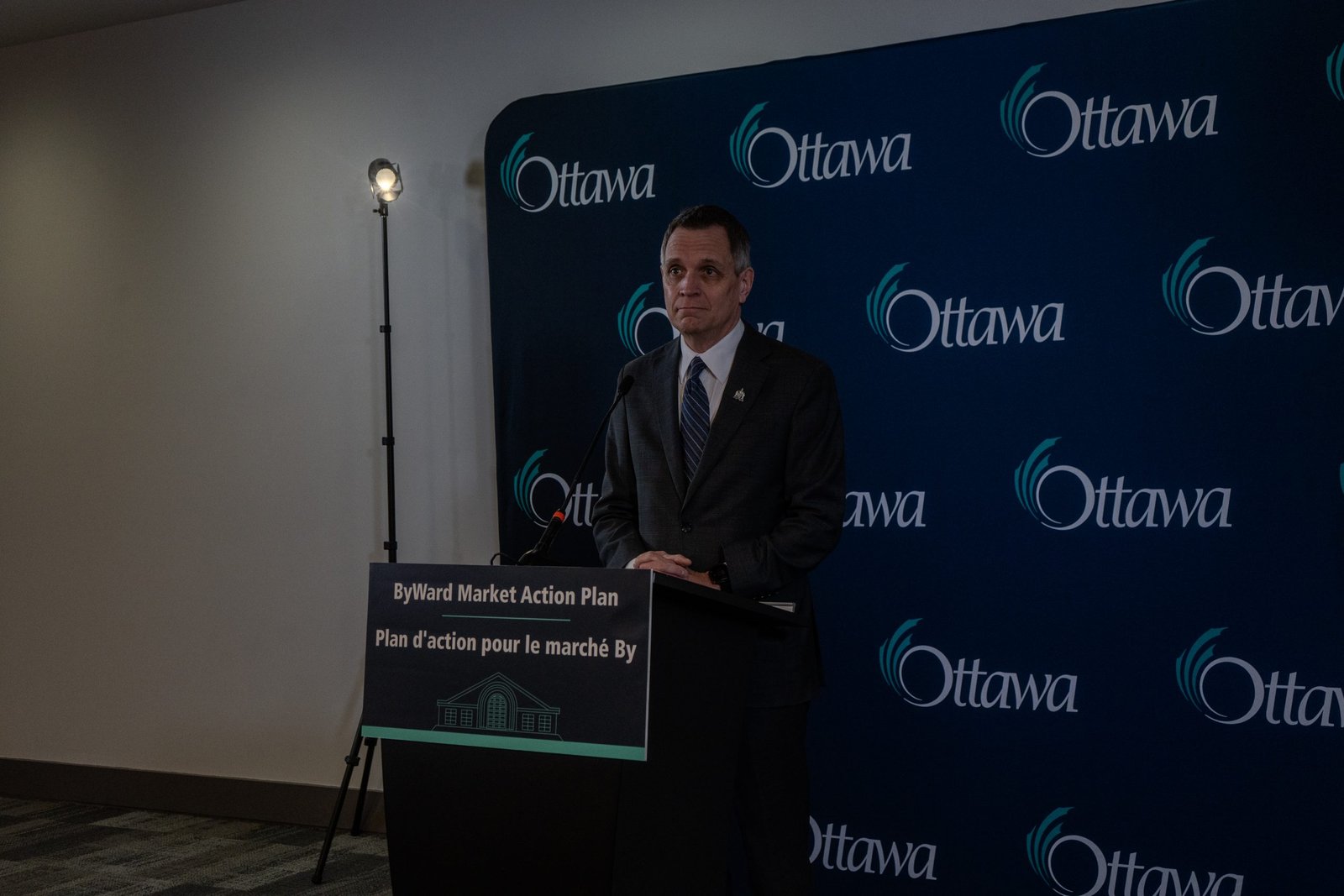
Ottawa City Mayor Mark Sutcliffe announced new action plan to revitalize ByWard Market. Councillor Stéphanie Plante says there’s a larger need to address “low barrier” services around the area.
The city of Ottawa is unveiling a new action plan to revitalize the Byward Market, a popular tourist area that lies to the east of Parliament Hill.
Ottawa Mayor Mark Sutcliffe announced the strategy at an event at the Rogers Centre on Thursday, promising investments to pedestrianize streets in the neighbourhood, revitalize public spaces and address concerns around safety.
“When people hear that we’re talking about creating new attractions, new spaces, that’s going to attract more private sector investment, and it’s going to bring more people to the market,” Sutcliffe said, adding the new plan would make sure “people are feeling safer going to the Byward Market.”
The Market, as it’s known to residents, is one of Ottawa’s busy tourist haunts, known for its produce and gift vendors in the summer and holidays, as well as its concentration of trendy restaurants and nightlife spots.
But it’s hardly immune to the challenges with crime and addictions issues seen across the country, and as the centre of the city’s nightlife, has a reputation of being rowdy on the weekends.
With the action plan, the city is looking to taking some big leap forwards on redeveloping the district in advance of its 200th anniversary in 2027.

Victoria Williston, ByWard Market District Authority executive director, said the association is already advancing plans for main thoroughfare George Street to be more pedestrian-friendly, and bringing tother social service partners, law enforcement, businesses and residents for their public safety initiative.
The city has also committed $1 million dollars over the next two years towards private security to supplement Ottawa police services.
“The goal is to create an environment where people feel comfortable staying, not just passing through,” Williston said.
Social challenges
Aside from the progress in building more businesses in the market, Sutcliffe acknowledged there are social challenges in the Market the city has yet to address.
The district is home to some of the city’s largest homeless shelters.
Sutcliffe said the city has taken steps to build more transitional housing beds in other parts of the city to “reduce the pressure on Byward Market.”
According to the city’s Point In Time Count, 2,952 people experienced homelessness in October 2024 in one night.
Sutcliffe added that ByWard Market can’t be fully revitalized until the city has provided solutions to people who are suffering from the drug crisis.
Coun. Stéphanie Plante, who represents the district at city hall, had a more measured response to the unveiling. She raised concerns about governance, transparency and the nearly $200-million capital assumptions underlying the proposal.
In an interview with iPolitics, Plante said that while she’s “happy that there’s a plan,” the city still needs an “actual strategy” to address placemaking and safety.
Specifically, Plante said the city must confront the concentration of “low barrier” services in the area, such as shelters, injection sites, and day programs. She said transitional housing alone does not address the needs of the broader population experiencing homelessness, as it typically serves people who meet specific eligibility criteria.
“Nothing will change until we spread out social services,” Plante said.
When asked how having private security could help revitalize the ByWard Market, Plante said the city needs to deal with the core issues by addressing community needs.
“We have parks, libraries, schools spread out all over the city, because there’s a need everywhere for those services. We have to look at social services in that same capacity,” she said.
In a statement emailed to iPolitics, the Ottawa Police Service said they are developing a downtown core safety plan that aims to strengthen visible policing and enhance prevention efforts.
“This plan builds on existing initiatives already underway and will bring our operational and community resources together in a focused, sustainable approach,” Ottawa Police Services spokesperson Fern John-Simon wrote.
They will be presenting the strategy to the Ottawa Police Service Board in April.
The plan for financing will move to the city’s financing committee in March before heading to the council. A financing plan will then be finalized in 2027.
A full report of the action plan will be released this Friday.