dailynewsnblog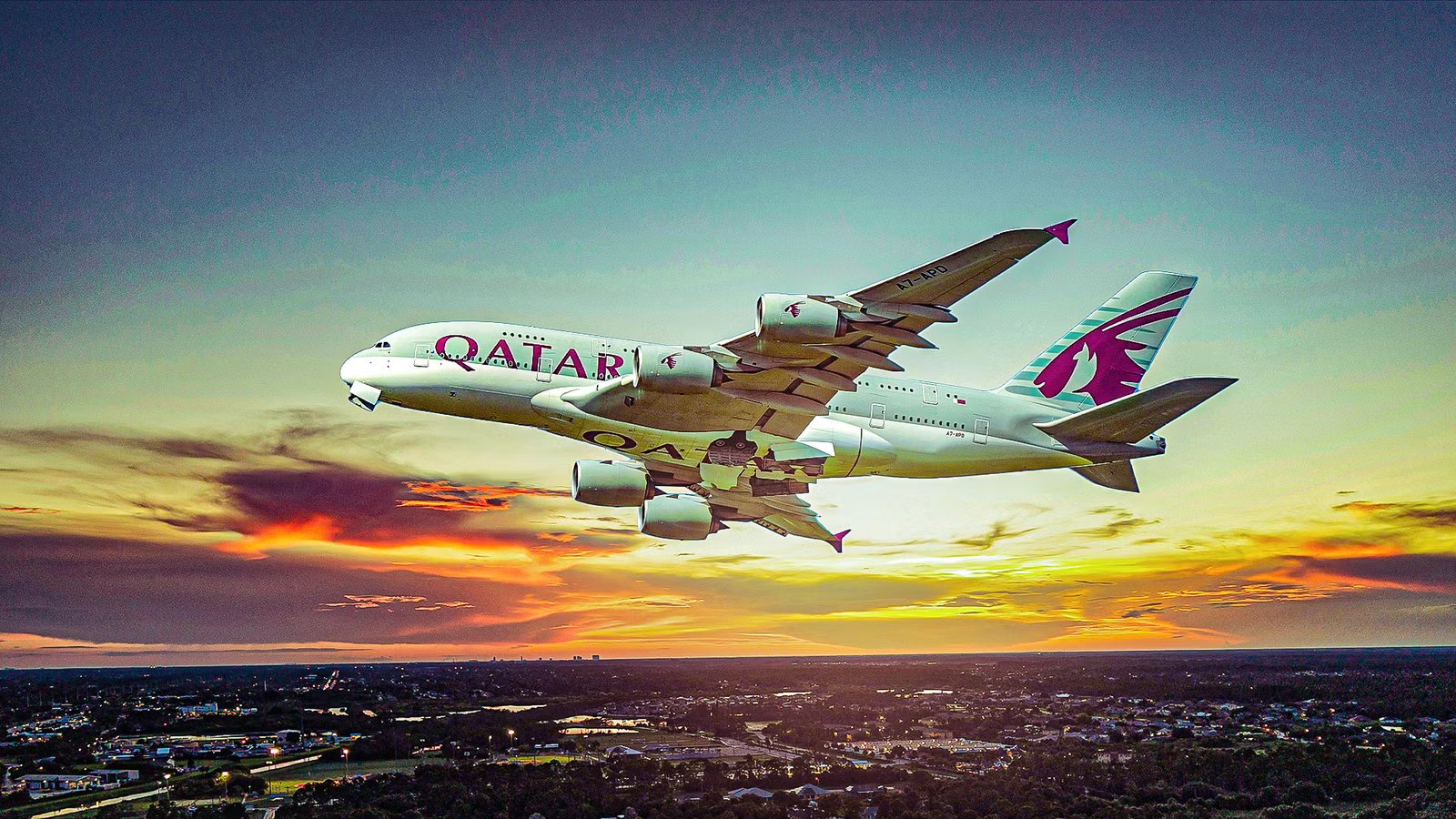
A remote airport in eastern Spain has once again become one of commercial aviation’s most unlikely strategic assets. As the conflict involving Iran continues to disrupt airspace and scramble schedules across the Middle East, airlines are sending aircraft to Teruel Airport for storage, reviving a role the facility became famous for during the pandemic.
Reuters reported that the airport was expected to receive around 20 widebody aircraft by the end of Saturday, including 17 from  Qatar Airways. That is a remarkable development for a facility that does not handle scheduled passenger flights. But Teruel is no ordinary outstation: it has spent years building a niche as a specialist site for aircraft storage, maintenance, and related aerospace work, while its dry, salt-free climate makes it especially attractive when airlines suddenly need somewhere safe to park jets.
Teruel Is Back In Demand

The immediate trigger is the operational chaos radiating out from the Middle East conflict. Airlines are dealing with timetables that have been thrown into disarray and concerns over jet fuel supply risks. Teruel’s management says that as carriers are scaling back fleet operations and routes, they are increasingly searching for safe places to park aircraft, preferably far away from the conflict zone.
That pressure is already visible on the ground in Spain. On Wednesday morning, four Qatar Airways Airbus A330 widebodies departed Doha in quick succession, headed for the Tarmac Aerosave facility in Teruel. Reuters is now reporting that a further 10 widebody aircraft were due to arrive on Friday alone, most of them operated by Qatar Airways, including an Airbus A380, two Airbus A350s, and a Boeing 787.
For an airport that normally receives only around two aircraft a day, that is an extraordinary swing. But for Teruel, this is not its first rodeo.
The airport came to prominence during the COVID-19 pandemic when airlines scrambled to find suitable storage facilities for aircraft that were surplus to requirements. At the time, it hosted around 140 planes in long-term storage over a two-year period, but as Alejandro Ibrahim, general manager of the airfield says, this sudden influx of aircraft is not their normal course of business:
“It’s not normal. But companies are revising their fleets and routes and looking for safer places to park their planes, and Europe fits the bill.”
Why Teruel Is Europe’s Widebody Parking Lot

Teruel makes sense because it is built for exactly this kind of moment. The former military base in Spain’s Aragon region has become one of Europe’s largest aircraft maintenance and storage hubs, and because it does not handle passenger traffic, aircraft can sit on the apron without the gate, slot, and terminal constraints seen at commercial airports.
Teruel’s infrastructure is a big part of why it keeps reappearing in moments of aviation disruption. The airport is not built around passenger convenience, but around space, with 120 hectares of parking area which gives it capacity for 250 widebody aircraft and up to 400 narrowbodies. Add to that the specialist handling and long-term aircraft care that goes with a large MRO facility, and it all adds up to a facility that is unusually useful when airlines suddenly need to ground jets.
|
Teruel Airport At A Glance |
|
|---|---|
|
Category |
Detail |
|
Airport name |
Teruel Airport / Aeropuerto de Teruel |
|
Commercial name |
PLATA (Plataforma Aeroportuaria de Teruel) |
|
Location |
Aragon, Spain |
|
Type |
Public airport focused on aircraft storage and maintenance; no scheduled passenger traffic |
|
Opening |
February 2013 |
|
Former site |
Built on the former Caudé military airfield |
|
Runway |
18/36 |
|
Runway length |
2,825 meters / 9,268 feet |
|
Parking area |
120 hectares |
|
Storage capacity |
Up to 250 widebodies and 400 narrowbodies |
Teruel’s climate is also ideal for aircraft storage. Much like the famous aircraft boneyards in New Mexico and Arizona , Teruel sits in semi-desert conditions with more than 250 days of sun per year. Combined with its elevation of more than 1,000 meters above sea level, this ensures a climate that is dry, sunny, and relatively free of the moisture and salt that accelerate corrosion, making it especially well suited to long-term preservation of aircraft.

Teruel: Why Has The Spanish Airport Become So Synonymous With The Airbus A380?
There are currently eight Airbus A380s stored at the airport.
When Might The Qatar Airways Jets Return?

 Doha Hamad International Airport, once a hyper-connected heart of global transit, has fallen eerily silent. Since the effective closure of Qatari airspace on February 28 following the outbreak of hostilities, Qatar Airways has seen its primary business model — linking East and West through its Doha hub — effectively paralyzed.
For a “super-connector” built on seamless global mobility, the conflict has transformed one of the world’s busiest aviation arteries into a strategic dead end. The scale of the disruption was laid bare yesterday, as the airline managed a meager 16 arrivals into Doha, with departures similarly throttled. Currently restricted to just a handful of authorized flights within a limited safe corridor, the carrier remains at the mercy of regional regulators, and the timeline for a return to the skies seems further away than ever.
For Qatar Airways, the evacuation of aircraft to long-term storage in Europe suggests that it doesn’t expect a resumption of normal service any time soon. After all, it’s not like the Middle East carriers don’t have access to dry, sunny, semi-desert conditions to store aircraft long-term, with Gulf Air having evacuated its fleet to nearby Saudi Arabia just last week. The fact that Qatar Airways is making long-term plans in Spain indicates that while Teruel’s infrastructure and climate are big advantages, perhaps the biggest is that it is more than 3,000 miles from the ongoing conflict.