dailynewsnblog
Humanity is about to get its first in-person, up-close look at the Moon in more than half a century.
Four astronauts will spend about seven hours on Monday observing the far side of the Moon, the half that constantly points away from Earth. At their closest approach on board their Orion spacecraft Integrity, Reid Wiseman, Victor Glover, and Christina Koch of NASA and Jeremy Hansen with the Canadian Space Agency will be about 4,000 miles (6,400 km) above the surface. The last time any person came that close was during the Apollo 17 mission in 1972.
You can tune into the webcast here, starting at 1 pm ET.
Although the primary purpose of the Artemis II crew’s observations will be to advance scientists’ understanding of lunar geology, there is no doubt a spectator and inspirational interest in this as well. The flyby of the Moon is expected to be watched by millions of people on Earth, and while any view will be impressive, it may also leave many wanting more.
“We will be getting SAW [solar array wing] camera video streaming during the flyby, except, of course, during the loss of signal when they go behind the Moon,” said Kelsey Young, NASA’s Artemis science flight operations lead, during a pre-flyby press conference. “They’ll be recording the rest on board.”
The SAW cameras are four specialized, modified GoPro cameras. One is mounted on each of four solar array wings that extend out from Orion’s service module.
“For parts of the flyby, we’ll actually be able to go on board with [the astronauts],” said Young, referring to a camera inside Integrity‘s crew cabin.
“Don’t expect high-res video,” added Judd Frieling, Artemis II ascent flight director, “but you will have, as Kelsey mentioned, the SAW cameras through our nominal low-rate video.”
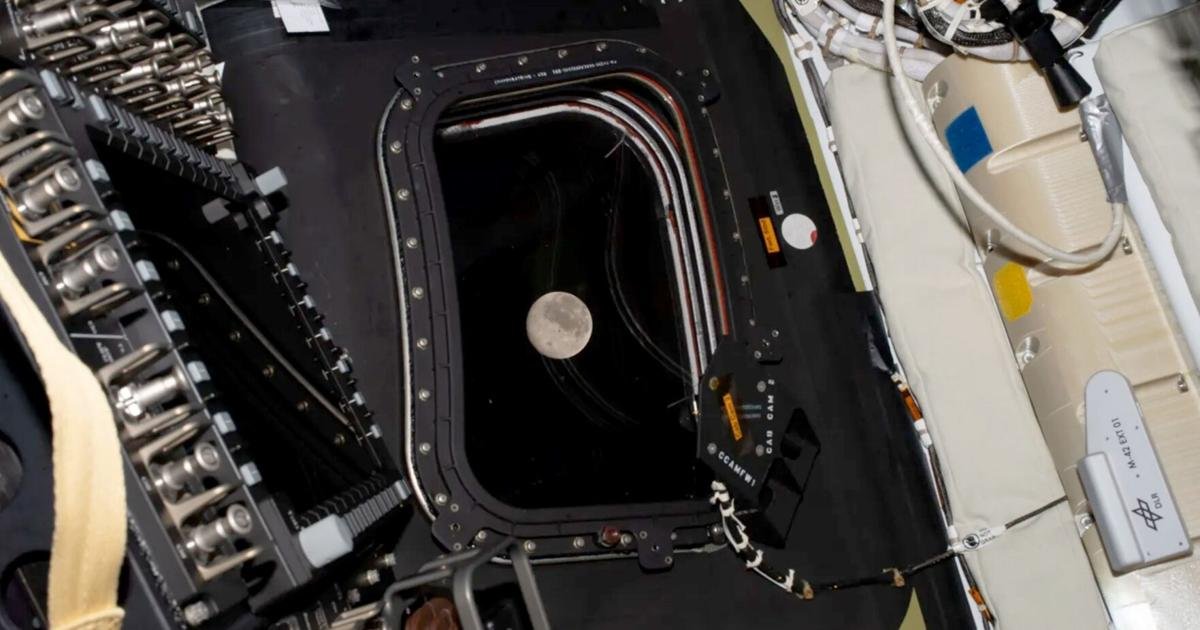
Since 2017, NASA has been broadcasting in 4K from the International Space Station, so why can they not do the same from the Moon almost a decade later?