dailynewsnblog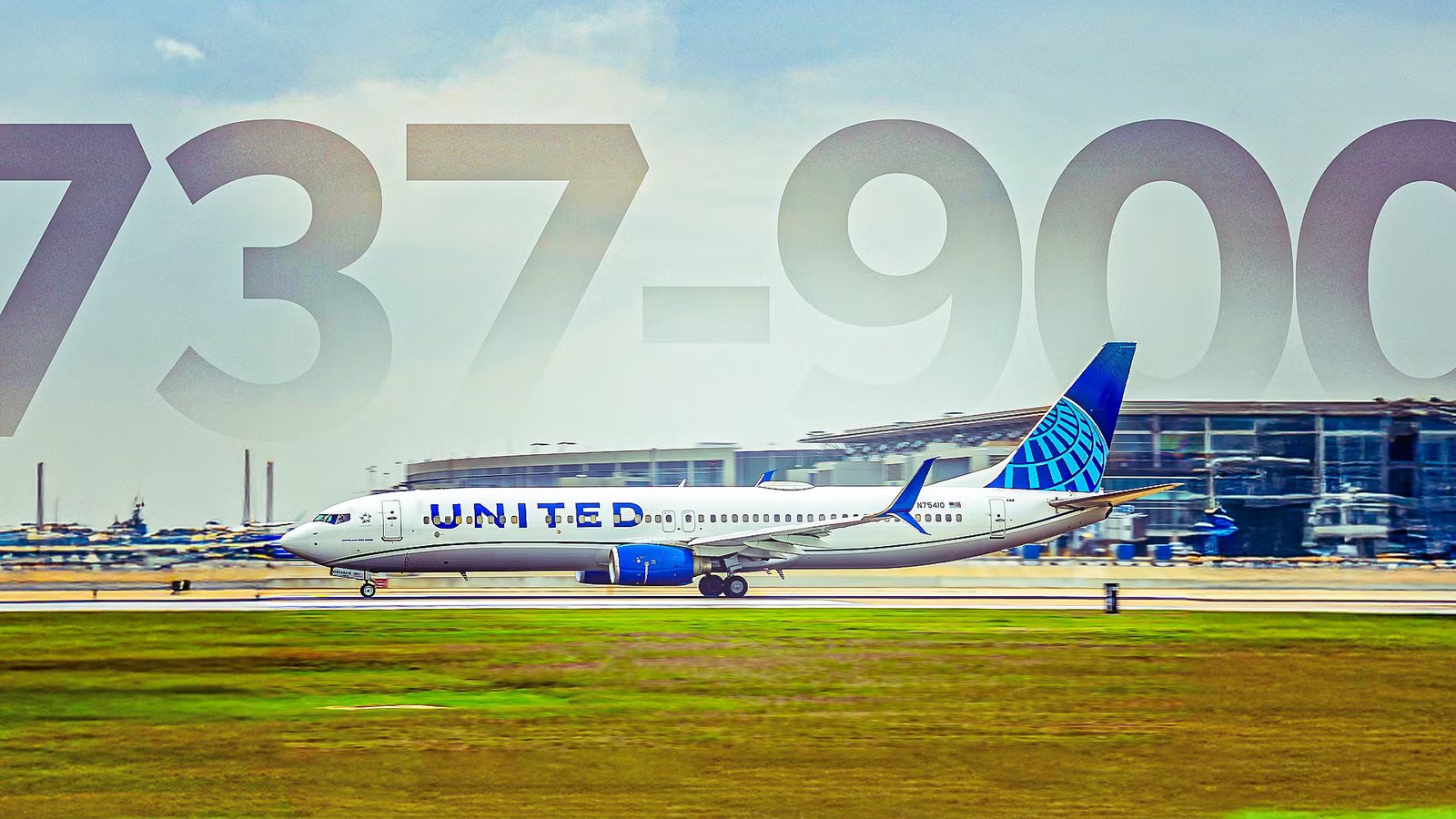
The Boeing 737 was, until recently, the most delivered jet-powered airliner of all time. It was developed into four distinct generations, and the third-generation 737NG is the most common of the four, with deliveries of the even more popular 737 MAX still ongoing. The 737NG was designed to go head-to-head against the Airbus A320 family, and for the most part, it succeeded, as, year over year, 737NG sales routinely matched those of the A320.
With that being said, while the 737NG as a whole was a successful program, sales between the variants of the 737NG were not evenly distributed. The 737-800 was tremendously successful, and the 737-700 put up an even fight against the Airbus A319. However, the 737-600 proved to be unpopular, and the Boeing 737-900, rival to the Airbus A321, was a sales flop.
The Origin Of The Boeing 737NG

The Boeing 737 first entered service in 1968 as the 737-100, and  Boeing soon followed it up with the improved 737-200. Together, these two and their subvariants are known as the 737 Original. In the 1980s, Boeing saw fit to improve the series in response to the McDonnell Douglas MD-80 (a refresh of the competing DC-9). As such, Boeing created the 737-300, 737-400, and 737-500 as part of the 737 Classic family.
With aerodynamic refinements, airframe stretches, a partial glass cockpit, and new CFM56-3 engines, the 737 Classic proved to be a competent aircraft family, selling almost twice as many units as its predecessor. The 737-300 debuted in 1984 and was the most popular variant, followed by the larger 737-400, and then the 737-500, which was the direct replacement for the 737-200. Despite being introduced four years later, the 737 Classic also outsold the competing MD-80.
In 1988, the Airbus A320 entered service. Boeing was initially confident in the 737 Classic’s ability to fend off the A320, but then, the A320 began winning multiple orders in the United States. As the A320 became popular on Boeing’s home turf, Boeing took the 737 and modernized it again. This time, the type received a full glass cockpit, another fuselage stretch across all variants, a new wing design, and CFM56-7 engines to create the 737NG (Next Generation).
Creating The Boeing 737-900

The Boeing 737-700 was the first variant of the 737NG family to enter service in 1997, and was developed as a successor to the 737-300. The 737-800, by far the most popular model, entered service the following year as a replacement for the 737-400, and the 737-600 entered service later in 1998 to replace the 737-500. However, in 1995, at the request of Alaska Airlines, Boeing stretched the 737 once again to create the 737-900 for entry into service in 2001.
The 737-900 was a simple stretch of the 737-800, and it was meant to complement Boeing’s slow-selling 757-200 while competing against the Airbus A321. However, it was the smallest of these three aircraft, being sized between the 737-800 and the A321 / 757. In the A320 family, it was the A320-200 that was by far the most popular model, not the A321, and the passenger 757-200 sold fewer than 1,000 units. As such, the 737-900 was never expected to become the star of the 737NG family.
|
Aircraft |
Sales |
Aircraft |
Sales |
|---|---|---|---|
|
Airbus A318 |
80 |
Boeing 757-200 (Passenger) |
913 |
|
Airbus A319 |
1,486 |
Boeing 757-300 |
55 |
|
Airbus A320 |
4,756 |
||
|
Airbus A321 |
1,784 |
 Alaska Airlines would end up taking delivery of 12 737-900s, and this model would also be purchased in the US by Continental Airlines, which also flew 12 737-900s. Alaska Airlines recently retired its last example, while United Airlines (which merged with Continental in 2010) continues to fly all of its 737-900s. Worldwide, 29 examples of the 737-900 remain in service, with the type’s other operators including Jin Air, KLM, and Korean Air.
Why The 737-900 Was A Sales Flop

The Boeing 757-200 sold 913 units configured for passenger service across 23 years of production. The Airbus A321, while not nearly as popular as the A320, still sold over 1,700 units, with sales increasing later in the A321’s production life. The Boeing 737-900, the largest 737 variant and de facto replacement for the 757 after it ended production in 2004, meanwhile, only sold 52 units. This made it the second least popular 737 model of all time, ahead of only the 737-100.
In theory, the primary benefit of the 737-900 was its size. The increased fuselage length over the 737-800 allowed for more passengers and created an aircraft with lower per-seat costs. However, the 737-900 retained the same exit configuration as the 737-800, and thereby had the same exit limit at 189 seats. For legacy carriers, this wasn’t an issue, but budget airlines that already configured 737-800s with 189 seats gained little to no benefit from flying the 737-900.
|
Airline (Per aeroLOPA) |
Boeing 737-800 Capacity |
Boeing 737-900 Capacity |
|---|---|---|
|
Alaska Airlines |
159 / 162 |
178 |
|
United Airlines |
166 |
179 |
|
Southwest Airlines |
175 |
N/A |
|
Ryanair |
189 |
N/A |
The 737-900 retained the same fuel capacity and Maximum Takeoff Weight as the 737-800, meaning that it directly traded range for payload. However, this limited the 737-900’s range to such an extent that airlines found it inflexible. With the A321, Airbus invested continuously into improving the aircraft’s range, increasing its MTOW, and lowering fuel burn, transforming it from a short-haul people mover to an aircraft capable of US transcontinental flights and routes from the US West Coast to Hawaii.
Fixing The Issues With The 737-900ER

In 2005, Boeing launched the 737-900ER, with the first deliveries occurring in 2007. Size-wise, it was identical to the 737-900, but inside, Boeing added two optional emergency exits along with a new rear pressure bulkhead design. As such, the 737-900ER was rated for an exit limit of 215 passengers, greatly improving the 737-900ER’s appeal to low-cost carriers such as the launch customer Lion Air. Full-service carriers, meanwhile, could opt to plug the new exits.
The ‘ER’ stands for Extended Range, and to achieve this, Boeing increased the aircraft’s MTOW to over 85 tonnes. Standard winglets (which were optional on early 737NGs) reduced fuel burn on longer flights, while two optional fuel tanks dramatically increased the plane’s range. The 737-900ER is routinely used for transcontinental routes and has a range comparable to the Airbus A321, making it far more versatile than the 737-900.
|
Aircraft |
Passenger Sales |
|---|---|
|
Boeing 737-900 |
52 |
|
Boeing 737-900ER |
505 |
|
Boeing 757-200 |
913 |
|
Airbus A321 |
1,784 |
Boeing ended up selling 505 Boeing 737-900ERs, which is still significantly lower than the sales figures of the A321. Although the 737-900ER addressed most of the shortcomings with the 737-900, its main flaw was that, despite burning less overall fuel than an A321, it burned more fuel per seat on account of its smaller size. As such, the 737-900ER mainly sold to airlines already flying 737s, such as Alaska Airlines and Continental, but was limited in overall success.
Will The 737 MAX 10 Even Out The Fight?

The 737-900ER was disadvantaged against the A321 because it burned more fuel per seat on account of its smaller size. This dynamic has continued with the 737 MAX 9 and the Airbus A321neo, where the 737 MAX 9 has sold fewer than 500 units, while the A321neo has sold more units on its own than the entire 737 MAX family. Boeing’s response was to stretch the 737 yet again to create the Boeing 737 MAX 10.
The 737 MAX 10’s certification has been delayed by years, but despite this, it’s received over 1,200 orders. While this pales in comparison to the A321neo, the 737 MAX 10 was launched in 2017, years after the A321neo, and it’s received more orders than the 737-900, 737-900ER, and 737 MAX 9 combined before even being certified.
With its stretched fuselage, Boeing is promising that the 737 MAX 10 will have the lowest per-seat costs of any single-aisle plane. This will not only address the primary flaw with previous large 737s, but could also give it a material advantage over the A321neo. An A321neo with optional fuel tanks has a longer range, but the 737 MAX 10 remains plenty capable on its own. When it finally becomes certified, the 737 MAX 10 will likely be the A321neo’s biggest threat yet.
The Bottom Line

The Boeing 737 is one of the most popular commercial aircraft of all time. Ever since the 737NG debuted in 1997, it’s been engaged in a relatively even battle against the equally ubiquitous Airbus A320. However, the A320 family’s success is split more evenly between variants than the 737 family. The A318 was a failure, while the A319 and A321 had similar sales figures, and the A320 was by far the most popular variant.
In contrast, the 737-600 was also a dud, while the 737-700 had comparable success to the A319, and the 737-800 outsold the A320, becoming the world’s most widely used narrowbody. However, when competing against the A321, Boeing came up short and then continued to come up short until the 737 MAX 10, which promises to truly rival the A321neo in operating economics once it finally enters service.