dailynewsnblog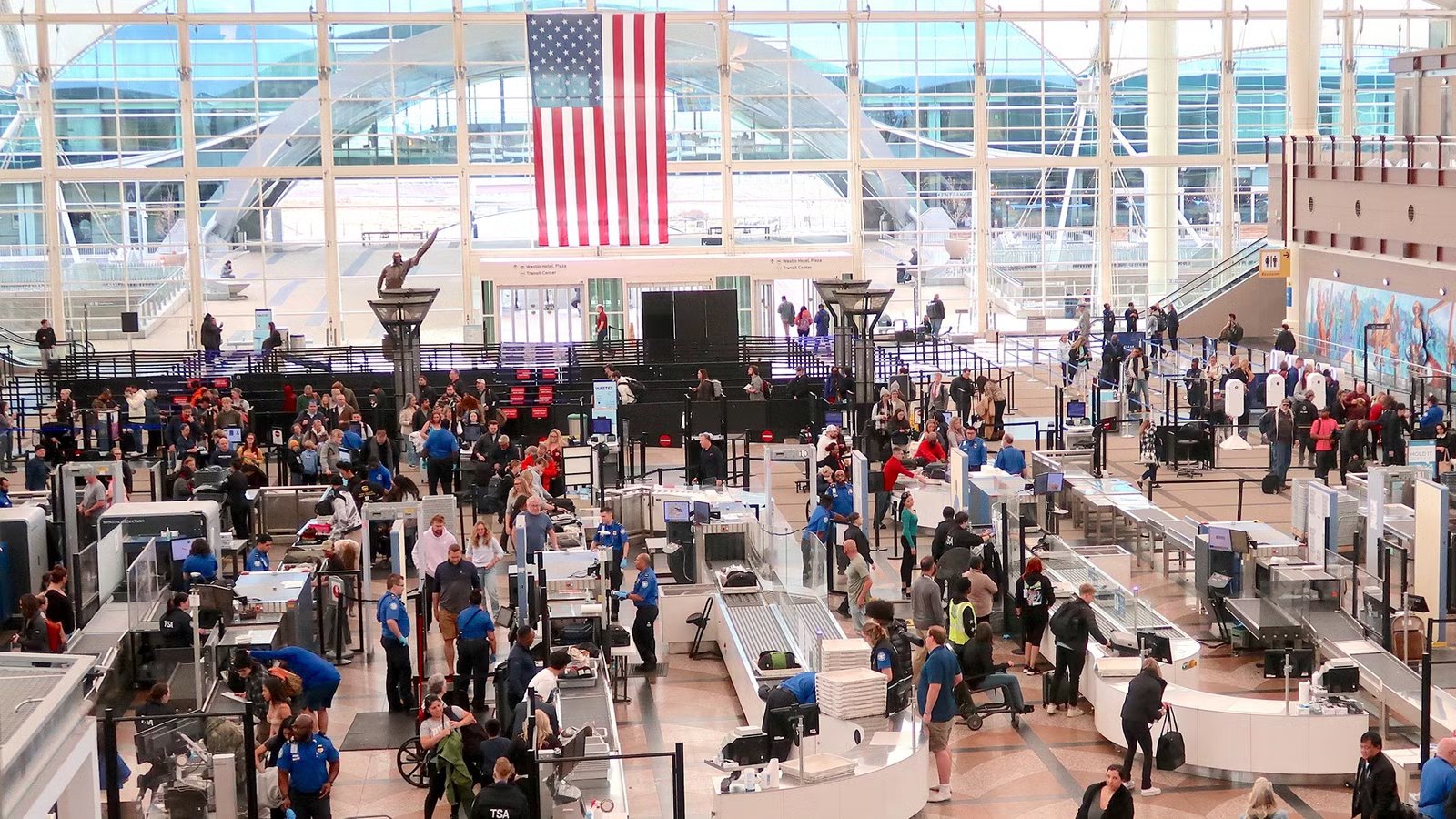
The ongoing gridlock at US airports shows little sign of easing, even after President Donald Trump issued an urgent order to pay Transportation Security Administration ( TSA) workers. The directive, announced on March 27, 2026, aims to temporarily stabilize airport security operations amid a prolonged Department of Homeland Security (DHS) shutdown. However, with Congress deadlocked and funding unresolved, disruptions are expected to persist well into the coming weeks.
The crisis stems from a political standoff in Washington that has left large parts of DHS unfunded for over a month. While Trump’s order attempts to bypass Congress and restore pay for roughly 60,000 TSA employees, it does not address the broader structural issues behind the shutdown. As a result, long security lines, staffing shortages, and operational strain at US airports are likely to remain a defining feature of the spring travel season.
Congressional Deadlock Leaves TSA And Airports In Crisis

At the heart of the issue is a deepening divide between the House and Senate over how to fund DHS. A bipartisan Senate deal to reopen the agency was rejected by House Republicans, who instead passed a short-term funding measure that is unlikely to gain approval when the Senate returns from its two-week recess. This legislative impasse has effectively prolonged the shutdown, leaving critical agencies in limbo and directly impacting airport operations.
In response, Trump issued a memorandum directing DHS and the Office of Management and Budget to use existing funds with a “reasonable and logical nexus” to TSA operations to compensate employees. The administration framed the move as necessary to address an “emergency situation” in which airport security had reached a breaking point, with wait times reportedly exceeding three hours at some locations.
The President said in the memorandum that the situation was a national security concern:
“Security wait times at some airports have reached untenable lengths of three or more hours.”

Despite its urgency, the executive order is not an immediate fix. Redirecting funds within federal agencies requires administrative coordination, legal review, and logistical implementation, so TSA workers may not see their pay restored immediately. Furthermore, weeks without wages have already led to significant attrition, with hundreds of officers leaving their posts and thousands more calling in sick at elevated rates.
This workforce instability has compounded operational challenges across major US Airports. Airlines and industry groups have warned that inconsistent staffing levels are creating unpredictable screening times, missed flights, and cascading delays throughout the aviation network. The Independent reported that the staffing crisis is not only about pay but also about morale and long-term retention risks, which cannot be reversed overnight, with many TSA agents beyond frustrated and disappointed with the system. In an interview with the Independent, Carlos Rodriguez, a TSA agent, said that working for the government is “not honorable or stable” anymore, while commenting on the situation of working without pay, which led many agents to struggle to pay bills and even cover basic needs like transportation and food.
Even if payments resume quickly, rebuilding the TSA workforce will take time. Hiring and training new officers is a lengthy process, and experienced staff who have already left may not return. This creates a lag effect where airport performance continues to suffer even after financial issues are partially resolved.

“The Country Is At Stake”: TSA Absences Are So Bad That Some Airports Could Just Shut Down
Even at larger hubs, absences are are high as 38%.
Shutdown Stalemate Means More Disruption Ahead For Travelers

The political outlook suggests further disruption is highly likely. The House-approved funding bill, which extends DHS financing only until late May, is expected to be rejected by the Senate, where Democrats have already signaled opposition. With lawmakers now on recess, no immediate resolution is in sight, raising the possibility that the current chaos could repeat itself in just a few weeks.
More broadly, the situation highlights the vulnerability of the US aviation system to political shocks. Unlike Airlines or airports, which operate with commercial flexibility, the TSA depends entirely on federal funding. When that funding is interrupted, the effects ripple quickly through the entire travel process, from security checkpoints to flight schedules.
In the longer term, the recurring shutdowns could erode passenger confidence and strain airline operations during peak travel periods. While Trump’s order may provide short-term relief, it does not resolve the underlying funding dispute, meaning airport gridlock could become a recurring issue.
Overall, the combination of political uncertainty, operational disruption, and workforce instability means that US airport congestion is, unfortunately, unlikely to disappear anytime soon. Even with emergency measures in place, the system remains fragile, and travelers are likely to feel the impact for weeks, if not months, potentially ruining spring holiday plans, until the government finds a consensus to break the vicious cycle.