dailynewsnblog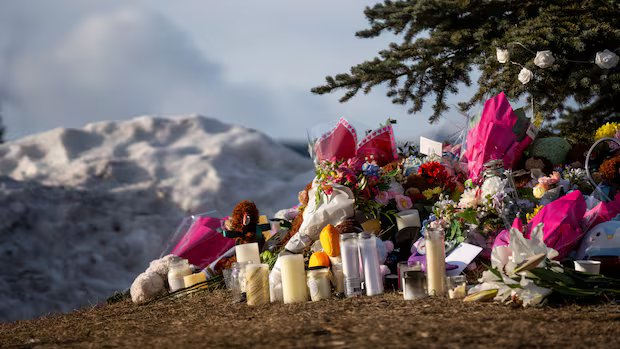

Listen to this article
Estimated 4 minutes
The audio version of this article is generated by AI-based technology. Mispronunciations can occur. We are working with our partners to continually review and improve the results.
Tumbler Ridge is easy to miss.
Nestled in the northern foothills of the Rocky Mountains near the Alberta border, to get there you have to travel about 100 kilometres off of Highway 97, one the main arteries connecting B.C.’s north to south. Those who arrive in the community do so deliberately.
It’s the sort of place where internet service can be lost due to a beaver chewing through a single cable. Cell service cuts in and out on the way into the community. In an ever-more connected world, it can still feel isolated for those not used to the experience.
But throughout this week, residents have used different words to describe their home. One of them is “tight-knit.” Mayor Darryl Krakowka has repeatedly made the point that he thinks of the residents he serves as family.

Another phrase that’s come up again and again is “resilient.”
It was used by Coun. Chris Norbury in his interviews with media to describe the community of about 2,400. It’s also the name of a fund set up by the Northeast B.C. Community Foundation to support Tumbler Ridge in the wake of this week’s deadly shooting. And a case study prepared for the B.C. government on the history of Tumbler Ridge is subtitled “birth of a resilient community.”

And resilient is a term loaded with meaning for a place that sprang up practically overnight and then, nearly just as quickly, collapsed, seemingly destined to be an industry ghost town.
The fact that Tumbler Ridge continues to survive and grow is viewed as a triumph for those who live there, and not one they take for granted.
A planned community
Tumbler Ridge as it stands today is just 45 years old, officially coming into existence in 1981.
It’s widely viewed as the last example of a planned community in B.C., with homes, infrastructure and public buildings built over the course of three years all in support of the nascent coal industry that would power it through the next decade.
Things took a turn in the 1990s, though, as global coal prices dipped and the mines shut down.
By the year 2000, the district was selling off roughly 1,000 abandoned homes for as little as $20,000 for a house or $10,000 a condo. To outsiders, it seemed doomed to disappear.
But having fallen in love with life in the area, many residents held onto their homes, believing their town still had a future. Around the same time, a pair of local boys discovered dinosaur footprints and some dedicated individuals pivoted to marketing the region as a tourism destination, attracting paleontologists and the Tumbler Ridge Museum and Dinosaur Discovery Gallery.
WATCH | CBC’s Still Standing celebrates Tumbler Ridge’s dino discoveries in a 2017 segment:
Aided by the presence of more than a dozen waterfalls, mountain hikes and caving, the region was recognized as a UNESCO Global Geopark in 2015.
In 2019, HBO chose Tumbler Ridge as one of six locations worldwide to hide a real-life throne to promote the final season of Game of Thrones.
Metallurgical coal mines returned in 2017 and, today, the community is a mix of resource development, scientific research and tourism, with wind mills lining its highways and a new scientific interpretive centre set to open downtown.

But it still hasn’t been easy.
In 2023, the entire community was evacuated due to wildfire, and it’s faced alerts every year since, including a closed highway this past summer.
Prior to this week’s shooting, a top concern in Tumbler Ridge was a lack of emergency health care on evenings and weekends and the need for more robust ambulance service. Hundreds have rallied for these resources, a sign of their dedication to making their community a place where they can continue to live and welcome visitors.
It was all of this background that went into Norbury’s words when he called Tumbler Ridge “resilient” in the wake of unimaginable tragedy.
“We’ve always come together, to stand together, to survive,” he said. “And I hope we can fall back on that experience.”
Subscribe to CBC’s Fort St. John Weekly for a round-up of the best news and stories from B.C.’s Peace and Northern Rockies.