dailynewsnblog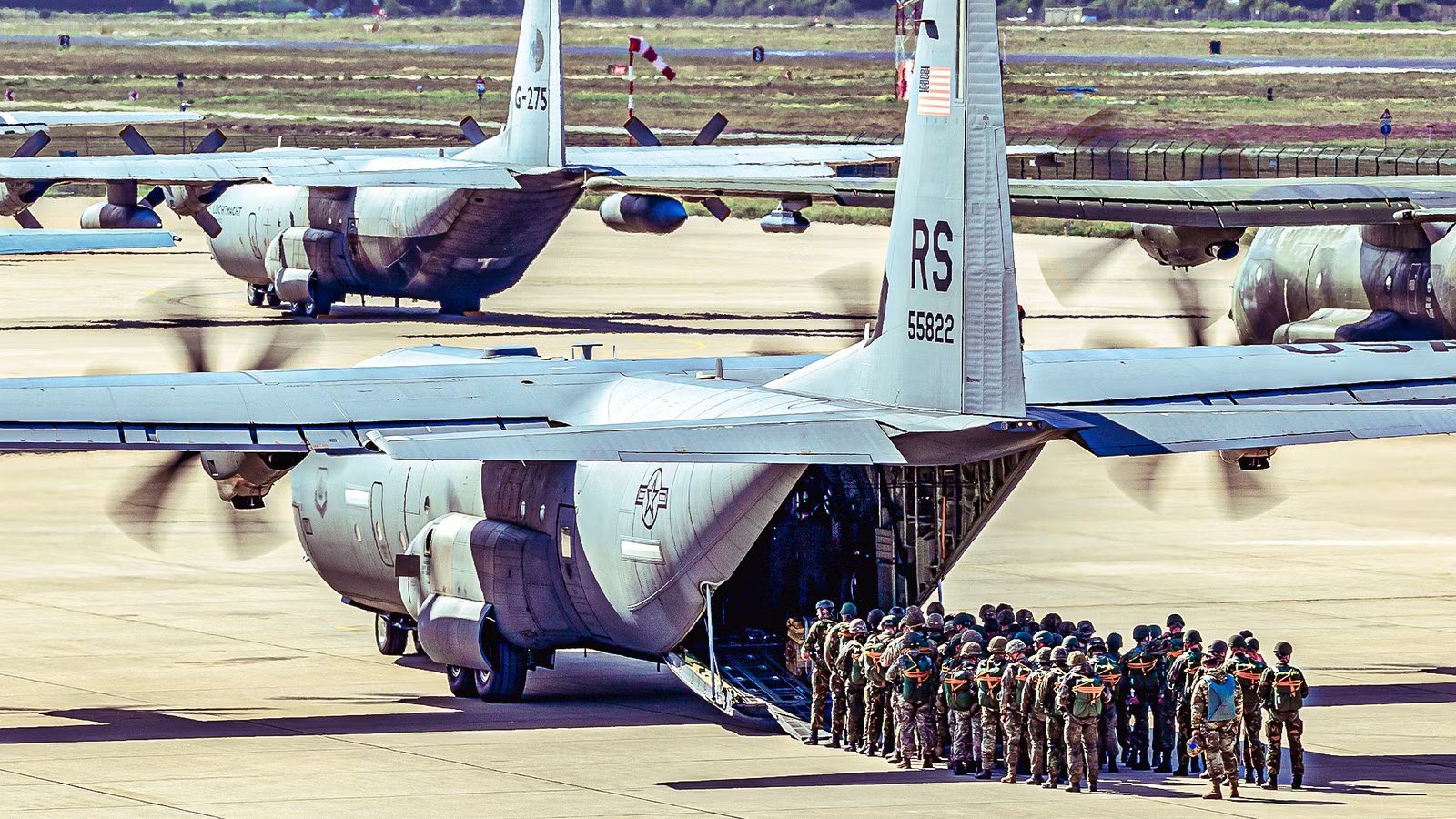
Established in 1951, Ramstein Air Base in Germany has been one of the most important military air bases in the alliance since the early years of the North Atlantic Treaty Organization (NATO). Since it first stood up in the post-WWII years when the Berlin Wall was a cold divider between East and West, Ramstein has continued to evolve and remains the most strategically significant concentration of air power in NATO. It is also the largest American Air Base on the continent.
As the central pillar of the American and NATO chain of bases across Europe, it is home to the US Air Forces in Europe and Air Forces Africa commands. Ramstein serves as a major airlift hub and also has numerous major command centers, including those for drones and other communication networks.
Among its most important strategic and tactical missions, one of the most vital is its role in the preservation of life. The base is home to the largest US Air Force medical facility outside of the continental United States and serves as one of the most critical links in the medical evacuation network for US troops around the world. Without this linchpin to support expeditionary forces, the casualties of US troops from all service branches would be significantly higher in virtually every theater overseas.
The Home Of Allied Air Command

Co-located on the grounds of Ramstein with the US Air Force European and Africa commands (USAFE-AFAFRICA) is the NATO Allied Air Command (AIRCOM). This is the single headquarters for all joint NATO air and space operations. The command integrates all air defense responses to any threat from Norway to Turkey.
Thanks to the US Air Force’s 603rd Air Operations Center, the facility provides 24/7 watch and is always ready for command and control, no matter when it is called upon. This command is charged with a 32-million-square-mile region as its area of responsibility (AOR). The 603rd coordinates air space and cyber operations, as well as diplomatic clearances for aircraft flying over 127 countries.
Ramstein is a massive hub for the US Transportation Command (USTRANSCOM) with the capacity to land a colossal Lockheed C-5 Galaxy airlifter, unload attack helicopters or main battle tanks, and then load them onto trucks or trains to be delivered to the front line of any ‘hotspot’ on the European continent. The 86th Airlift Wing provides tactical airlift to virtually any patch of dirt on Earth thanks to its squadrons of Lockheed Martin C-130J Super Hercules.
The Golden Hour Link: Aeromedical Evacuation

The most crucial mission for the individual soldier, whether they are American or wear the uniform of any of the 32 member countries of NATO, is Ramstein’s role in the aeromedical evacuation (AE) chain. When a service member is wounded in a conflict zone, they are flown directly to Ramstein. The base operates a specialized flight line where patients are transferred from long-haul aircraft to high-tech ambulances that drive them the short distance to Landstuhl Regional Medical Center.
The Golden Hour link is the foundational principle of modern military medicine, stating that a trauma patient’s chances of survival increase significantly if they receive definitive surgical care within 60 minutes of injury. Ramstein Air Base is the indispensable bridge in this chain, connecting frontline combat medics to the world-class surgical teams at Landstuhl Regional Medical Center (LRMC).
Ramstein’s role is not just about landing planes. It is a high-speed medical processing system. Critical Care Air Transport Teams (CCATT) are three-person teams (physician, intensive care nurse, and respiratory therapist) that turn standard cargo aircraft, like the C-130J or C-17, into flying ICUs. They provide continuous advanced life support, allowing even the most critically wounded to survive the long flight from a conflict zone to Ramstein.
Once a MEDEVAC mission lands at Ramstein, patients are immediately transferred to specialized medical buses. Because LRMC is only minutes away, this link ensures that the Golden Hour of stabilization achieved in the field is seamlessly transitioned into long-term definitive care. For patients who are stable but awaiting further transport back to the United States, Ramstein’s CASF provides temporary high-level monitoring, keeping beds at LRMC open for new, more critical arrivals.

The US Air Force Base In Greenland & Its Strategic Role
An outpost in the vast, cold wilderness.
NATO’s Peace Promise: The Great Alliance Of Powers

To create a lasting peace after the devastation of WWII, NATO was organized not just as a traditional military alliance, but as a transatlantic political-military framework designed to tie the security of North America to that of Western Europe. The foundational ‘glue’ of the organization is Article 5 of the North Atlantic Treaty (signed April 4, 1949). It established that an attack against one member is an attack against all.
Article 5 and NATO created a credible deterrence by ensuring that a Soviet move against a small European nation would trigger a full-scale military response from the United States and all allies under the banner of NATO. Unlike previous alliances that only coordinated during wartime, NATO created a permanent, integrated command structure in peacetime. By creating a unified ‘Iron Curtain’ of defense, they prevented piecemeal Soviet expansion.
The Supreme Allied Commander Europe is always a US General, and the Secretary General is always a European, ensuring the American military’s vast resources remain committed to European defense, while also maintaining a partnership and not just a form of military hegemony.
As the Cold War progressed, NATO organized its deterrence around the Nuclear Umbrella. NATO organized a unique ‘sharing’ agreement where the US maintained control of nuclear warheads, while allied nations, like West Germany, Italy, and the Netherlands, provided the aircraft to deliver them.
List of NATO member countries, current as of 2026:
|
Year of Membership |
Nations |
|
1949 |
Founding Members: Belgium, Canada, Denmark, France, Iceland, Italy, Luxembourg, Netherlands, Norway, Portugal, United Kingdom, United States |
|
1952 |
Greece, Turkey |
|
1955 |
Germany |
|
1982 |
Spain |
|
1999 |
Czech Republic, Hungary, Poland |
|
2004 |
Bulgaria, Estonia, Latvia, Lithuania, Romania, Slovakia, Slovenia |
|
2009 |
Albania, Croatia |
|
2017 |
Montenegro |
|
2020 |
North Macedonia |
|
2023 |
Finland |
|
2024 |
Sweden |
The United States is the only member in NATO’s 77-year history to have its allies invoke Article 5 on its behalf. This occurred on September 12, 2001, less than 24 hours after the 9/11 terrorist attacks. All NATO members supported the US-led mission in Afghanistan. Allies suffered 1,160 deaths during the conflict, or roughly a third of total coalition fatalities, with the United Kingdom (457 deaths) and Canada (158 deaths) taking particularly heavy losses, as DW news covered.

Top 5: The Largest International US Air Force Bases By Area
The United States Air Force operates many sprawling air force bases in allied nations and external territories of the United States.
Link In The Chain: Ramstein’s Drone Control Bridge

The base hosts a major satellite relay facility used to transmit signals between operators in the United States and Remotely Piloted Aircraft (drones) operating over Africa and the Middle East. Without this high-speed data link, the lag in satellite communication would make remote operations nearly impossible. Ramstein also houses a large analysis center for intelligence and military situational awareness.
Because of the earth’s curvature, drone pilots sitting in the American Southwest cannot send direct signals to aircraft thousands of miles away on operations in areas like Yemen, Somalia, or Afghanistan. Signals from the US travel via high-speed fiber-optic cables to Ramstein, where they are transmitted up to satellites and then down to the drones in real-time. This relay is so fast that it eliminates the crucial tenth of a second lag that would exist if signals were routed through the US directly, which is vital for steering armed aircraft.
While Ramstein Air Base is the central coordination hub for drone operations, the specific drones managed from the base are typically not physically stationed there on a permanent basis. On the other hand, one of the rarest aircraft in the US Air Force, the EA-37B Compass Call, was recently deployed to Ramstein to support Operation Epic Fury against Iran. This ‘exquisite’ electronic warfare (EW) platform is one of the newest and most capable platforms the US Air Force has for complex EW operations with unmanned platforms.

The US Air Force’s 5 Major Bases In Europe & Their Strategic Roles
Discover five of the bases that ensure US air dominance over two continents.
The Rise Of MK Air Base

Ramstein is likely to remain the most important facility in the NATO network. However, a new base in Romania is currently undergoing a massive expansion that will transform it into the largest single installation in all of NATO. The alliance has invested nearly $3 billion to modernize and upgrade Mihail Kogălniceanu (MK) Air Base to the point that it is expected to exceed the sheer size and footprint of Ramstein by 2040.
NATO has begun building a military city in a direct response to the Russian aggression following the 2022 invasion of Ukraine under the orders of Vladimir Putin. MK is less than 100 miles from the Ukrainian border and sits directly on the Black Sea, making it the frontline hub for monitoring Russian maritime and air activity. Strategic leaders, including former NATO Supreme Allied Commander Philip Breedlove, describe MK as the logistical cornerstone for any future peacekeeping or stabilization missions in a post-conflict Ukraine.
Last year, Breedlove wrote this statement emphasizing the importance of MK Air Base in a National Interest story:
“If Europe, backed by the United States, moves forward, one thing is clear: America must rely on its NATO ally, Romania, as a backstop to ensure peacekeeping in Ukraine is a success.”
The facility will have over 3,000 hectares of area and a 30-kilometer perimeter when it is completed. Inside this enormous boundary will be a host of new runways, maintenance hangars, fuel depots, ammunition storage, and advanced flight simulators. MK Air Base is being modernized and enhanced to accommodate at least 10,000 NATO troops and their families permanently with long-term facilities, including schools, stores, and hospitals that will rival Ramstein’s Kaiserslautern Military Community (KMC).