dailynewsnblog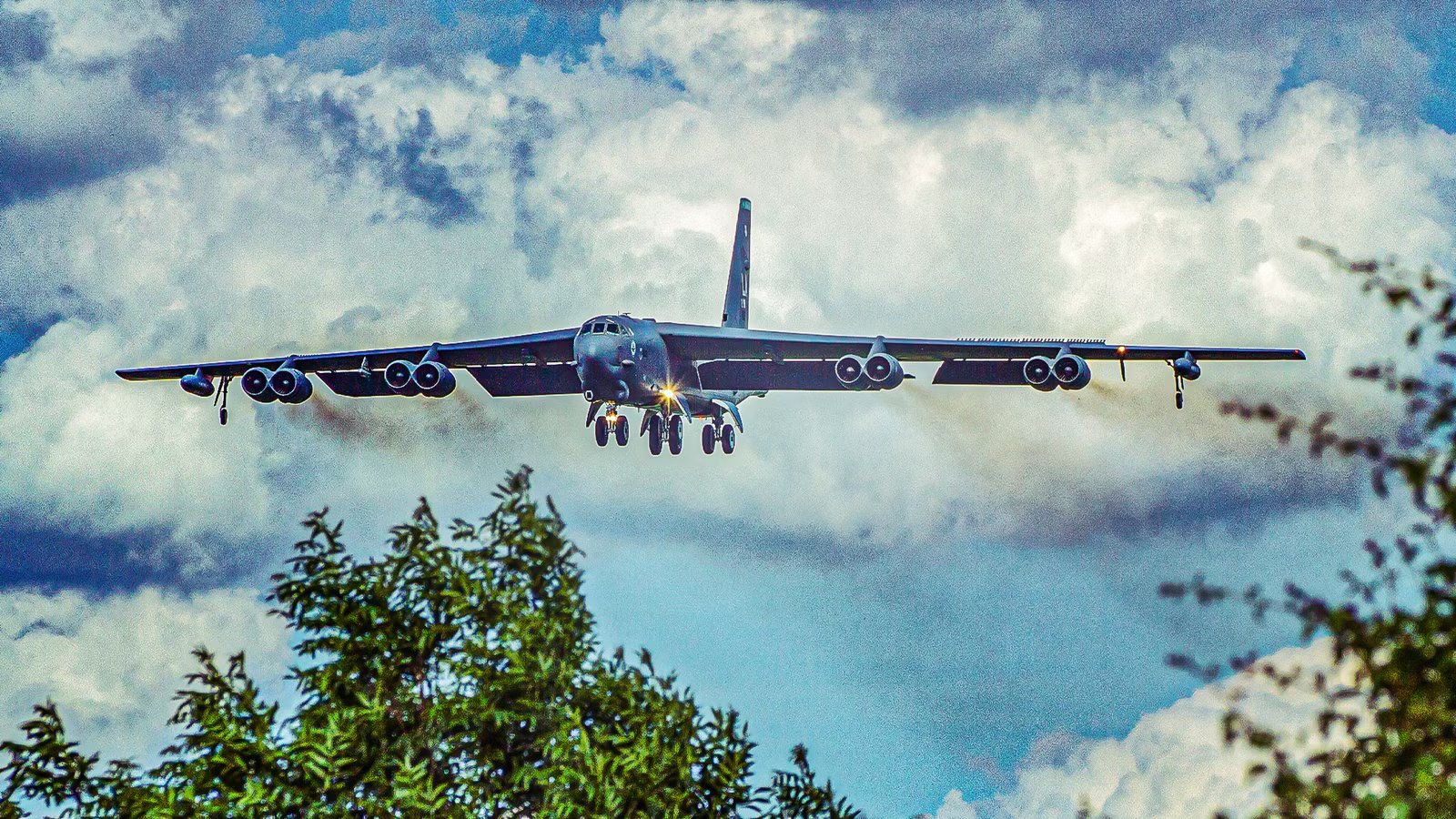
There are a few aircraft in aviation history that have transcended their original purpose to become enduring icons of capability and adaptability.  Boeing’sB-52 Stratofortress, a jet bomber that first flew in 1952 and entered service in 1955, is one of them. If modernization continues and policy/funding permits, the B-52 could approach 100 years from its first flight, a longevity unprecedented among jet-powered military aircraft.
Let’s explore the bomber’s remarkable journey, from Cold War deterrent to 21st-century multi-mission workhorse, and explain why recent upgrades to the B-52J version are securing its future even further. While many modern aircraft are retired after a few decades, the B-52 continues to fly because it was built not just for a specific mission, but for flexibility. Its long service life reflects strategic doctrine, engineering foresight, and continuous modernization.
From Cold War Concept To Strategic Cornerstone

The B-52 was born out of geopolitical necessity during the early Cold War. After WWII, the US faced the daunting challenge of projecting nuclear power across vast distances, particularly in response to the rise of the UUSR and its nuclear program. This requirement drove the development of a bomber capable of striking distant targets with heavy payloads while evading or enduring enemy defenses. Boeing’s design ultimately met this need with unprecedented scale and capability.
Early concepts envisioned turboprop propulsion, but jet engines became increasingly popular and came to symbolize progress, powering both big passenger aircraft like the de Havilland Comet and light fighters like the F-86 Sabre. By the time the B-52 prototype took to the skies in 1952, the design had shifted to eight turbojet engines mounted on swept wings. This configuration emphasized range and lift over speed.
Its entry into operational service in 1955 gave the Strategic Air Command true global reach at a time when forward basing might not have been feasible and long-range intercontinental ballistic missiles did not yet exist. According to The National Interest, the bomber’s engineering was deliberately conservative, with robust structural margins built into the airframe because engineers could not predict future technologies.
Instead of optimizing solely for weight savings and cutting-edge performance, Boeing chose reliability and growth capacity, attributes that would prove decisive decades later. These early design decisions set the stage for a platform that could evolve rather than become obsolete.
Decades Of Combat And Campaign Success

Unlike many strategic bombers that served primarily as symbols of deterrence, the B-52 established a rich operational history spanning over nearly seven decades. Even though (and luckily!) no B-52 has ever dropped a live nuclear weapon in combat (except by accident without detonation, and in the iconic movie ‘Dr Strangelove’), it has participated in numerous conflicts as a conventional bomber, often redefining bombing techniques.
Its roles have ranged from saturation bombing to precision strikes, demonstrating operational relevance across eras of changing warfare. The Vietnam War marked the Stratofortress’s first major combat employment, where Arc Light missions saw B-52s unloading massive payloads of conventional bombs over enemy territory. These missions tested the aircraft’s endurance and its ability to deliver sustained firepower.
These attributes became hallmarks of its reputation. Despite losses to anti-aircraft fire and surface-to-air missiles, the aircraft’s resilience and operational impact were unquestioned. The bomber’s effectiveness carried into the Gulf War, where B-52s dropped a significant portion of coalition munitions, often from standoff ranges to minimize risk.
In Afghanistan and Iraq, the platform shifted toward precision engagements, carrying GPS-guided bombs and networked targeting data used in coordination with ground forces. This evolution from strategic carpet bombing to precise tactical effects is a bright example of the bomber’s adaptability.

How The US Air Force’s B-52 Fleet Maintains Global Strategic Presence
After six decades of vigilance, the US’s mighty fleet of B-52 Stratofortress’ endure to provide deterrence and ensure global security.
Structural Design And Long-Term Sustainability

The secret of the B-52’s longevity is in its structural design philosophy, which emphasizes endurance and serviceability over marginal performance gains. Unlike fighters designed for high agility or modern bombers optimized for stealth, the Stratofortress prioritized a rugged frame and mission continuity. This approach would pay dividends as missions and technologies changed dramatically over subsequent decades.
The aircraft’s massive wings and robust fuselage accumulated flight hours at a surprisingly slow rate of stress fatigue, far lower than many other contemporary aircraft. Regular depot maintenance and structural inspections made it possible to extend airframe life before components reached critical limits. Some analyses even suggest that wing skins and spars could endure far more flight hours than initially projected, further expanding the bomber’s usable life.
Equally pivotal was the separation of mission systems from physical structure. As digital avionics, sensors, and weapons matured, they were replaced with newer systems without altering the underlying mechanical architecture. This modularity allowed the B-52 to be upgraded rather than replaced, preserving a heritage airframe while equipping it with cutting-edge capability. In essence, the aging aircraft became a flight-worthy chassis for generations of technological innovation.
Major Engine Modernization

If structural durability enabled longevity, it is recent modernization programs that ensure the B-52’s relevance in the 21st-century battlespace. As reported in another National Interest article, two of the most consequential of these upgrades are its engines and radar systems, both of which are entering transformational stages that push the bomber’s capability far beyond its 1950s origins. Together, these upgrades address mobility, sustainability, and situational awareness.
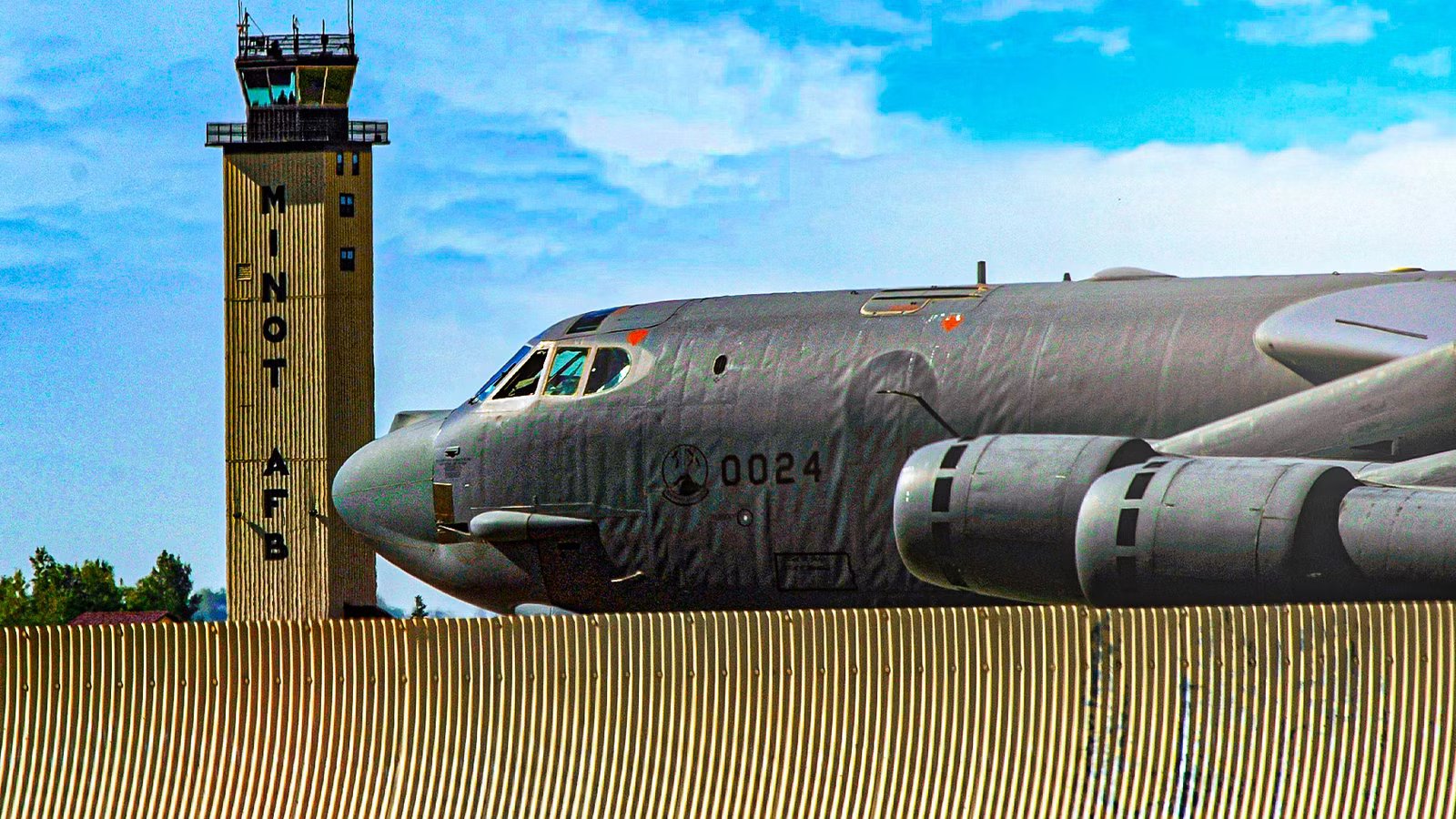
The original Pratt & Whitney TF33 turbofan engines, reliable in their day, are increasingly outdated and expensive to support, given modern performance expectations. To address this, the US Air Force initiated the Commercial Engine Replacement Program for the B-52. Under this program, the bomber is being re-engined with Rolls-Royce F130 turbofans, modern commercial derivatives that deliver significantly better fuel efficiency, reliability, and lower maintenance costs than legacy engines.
These new engines not only improve range and loiter time but also increase electrical power available for onboard systems, laying the groundwork for future upgrades without requiring further propulsion changes. The F130 and its integration have undergone rigorous engineering validation, including wind tunnel tests to refine inlet design and ensure optimal airflow at operational altitudes.
These tests have confirmed that airflow characteristics, previously a concern because of the unique B-52 engine installation geometry, can support consistent thrust performance across flight regimes. With this validation complete, the re-engining effort is expected to progress further through development and into production later in the decade. It is probably one of the most important steps toward guaranteeing the bomber’s service into the 2050s.
Radar And Digital Battlefields

While new engines keep the aircraft aloft efficiently, sensor upgrades ensure it can operate effectively in contested airspace. Late in 2025, a B-52 equipped with a new Active Electronically Scanned Array radar completed a significant ferry flight from Boeing’s San Antonio facility to Edwards Air Force Base for advanced testing. This new sensor system, derived from mature fighter-class technology, provides the bomber with benefits like high-resolution ground mapping and improved target detection.
The AESA installation represents a major leap, not just in detection performance but also in multi-role adaptability. Though the program has faced cost scrutiny and schedule pressure from funding authorities, ongoing testing will determine how and when it is fielded across the B-52 fleet. If fully implemented, the radar will bring a heavy bomber into a sensor paradigm once exclusive to advanced fighters and surveillance platforms.
Additionally, Boeing is considering installing a fully glass cockpit on this legendary bomber, making the aircraft perfectly adapted to 21st-century realities, according to Air and Space Forces magazine. Together, all these upgrades redefine how the Stratofortress can contribute to future conflicts. More efficient engines reduce logistic strain and fuel costs while improving endurance, and advanced sensors make the aircraft more autonomous and survivable in contested airspace.

Why Is The B-52J Bomber Becoming A Nightmare For The US Air Force In 2025?
The B-52J upgrade is running late and costing more—making the US Air Force’s strategy to keep the bomber flying into the 2050s a potential nightmare.
Why No Other Aircraft Is Likely To Match This Longevity

But are there any other aircraft that might match or even outlive the B-52? The question naturally arises when reflecting on the B-52’s remarkable run. Of course, some historical aircraft, like the DC-3 and warbirds from private collections, have been flying for almost a century. However, we are talking about aircraft in active service. So far, no jets have reached a milestone like the B-52. Typically, passenger jets are retired after 30 or, at most, 40 years of active service.
Most military jets, meanwhile, including fighters and bombers, are retired within a few decades due to obsolescence, changing mission requirements, and escalating maintenance costs. The B-52’s blend of adaptability, structural resilience, and modernization support makes it unique, but is it truly alone in this regard? There is one aircraft that comes close to the B-52’s record. In fact, it is its nemesis, the Soviet-designed Tupolev Tu-95 Bear.
First flown in the same era as the B-52, the Tu-95 remains operational today, thanks to its distinctive turboprop engines, which give it exceptional range and endurance. But the Bear remained in production until 1992, meaning that most airframes flying today are significantly younger than the Stratofortresses, which were produced until 1962.
Russia’s Long-Range Aviation has explicitly acknowledged the need to maintain and modernize the Tu-95 alongside other bombers into the 2035–2045 timeframe. This is a testament to its continued strategic value, identical to that of the B-52, given the similar roles they perform.
Beyond bombers, few combat jets have ever approached such longevity. Fighters, interceptors, and even strategic aircraft are often replaced, leaving only museum pieces behind. The B-52’s ability to integrate new technology, adapt to shifting doctrines, and support emerging weapons systems sets a higher bar, one that most aircraft cannot reach due to design constraints or programmatic limits. There is even a joke circulating online that the B-52 will likely outlive the B-2!
A Living Legacy With A Defined Future

As the Stratofortress approaches its eighth decade of service and looks ahead to a potential century of continuous flying, it represents a singular achievement in military aviation. Its survival is possible due to the deliberate choices made by engineers, planners, and policymakers across generations. Sustained investment in modernization, structural maintenance, and mission relevance has kept the B-52 in the fight, and not as a relic or a museum piece, but as an effective combat platform.
With advanced engines, modern AESA radar systems, enhanced weapon interfaces, and a networked combat role, the B-52 is a platform capable of tackling the challenges of future conflict. It is no longer just a symbol of the Cold War. Its adaptability, supported by an industrial base capable of sustaining upgrades, makes it uniquely positioned to meet strategic demands far into the 21st century.
If current modernization efforts continue as planned into the 2030s and beyond, it is realistic to expect the B-52 Stratofortress built in the early 1960s to be still flying combat missions in the 2050s. Such an achievement would not only break records but would also redefine what longevity means for jet aircraft. In doing so, the Stratofortress will stand as a testament to enduring engineering and the power of adaptability in military aviation.