dailynewsnblog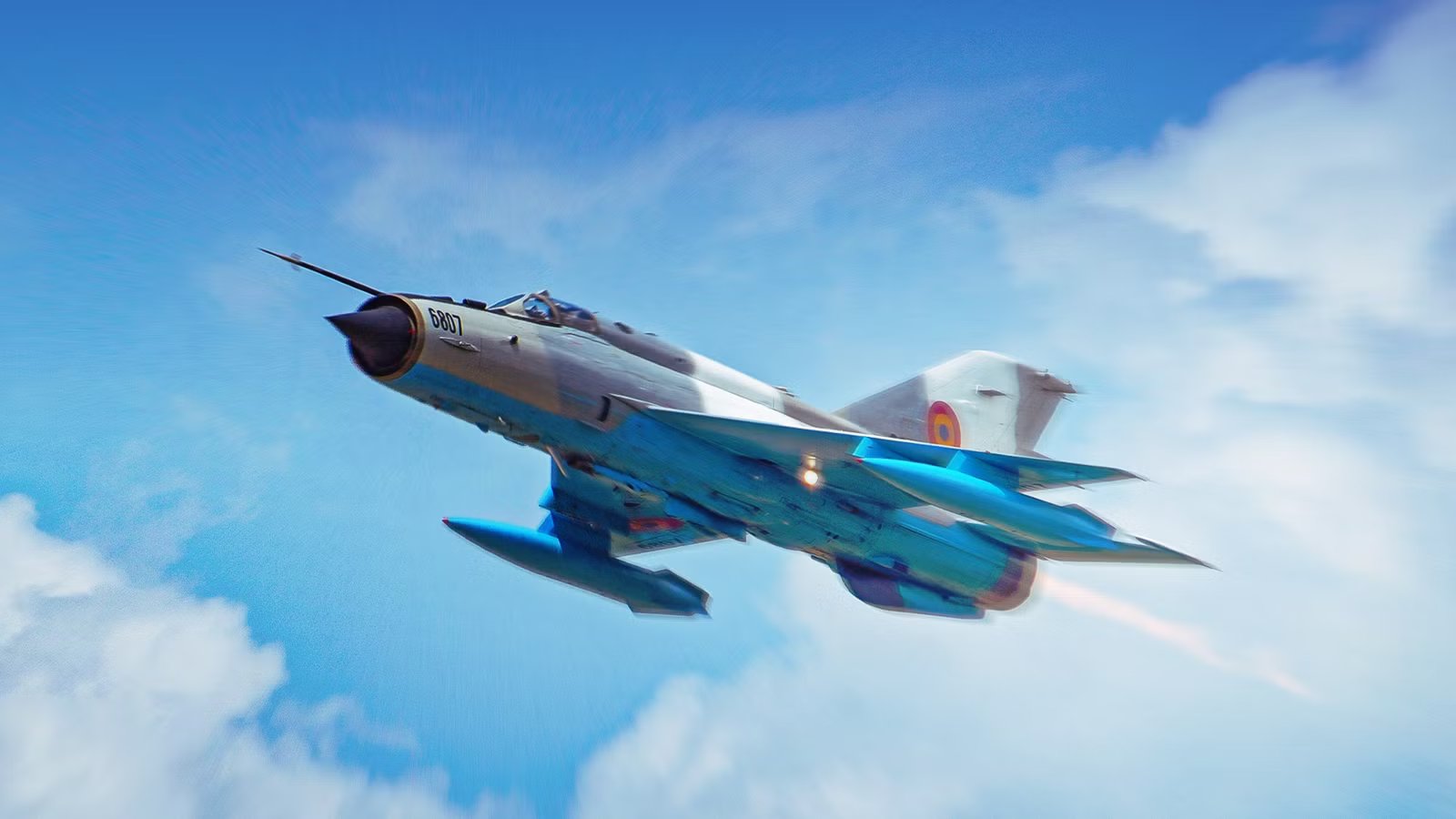
The Soviet Mikoyan-Gurevich MiG-21 is famously the most produced jet fighter in history. The MiG-21 Fishbed is a supersonic jet fighter and interceptor aircraft that first flew in 1955 and entered service in 1959. An impressive 11,496 examples were built, mostly in the USSR, but also under license in India and Czechoslovakia. The aircraft competed with the more durable Northrop F-5 as an affordable light fighter.
But as of 2026, the MiG-21 has largely disappeared from the skies, while hundreds of Northrop F-5s remain in service. This article will argue that the MiG-21 has already been de facto retired, while the related Chinese J-6/F-7/J-8 remain in limited service for now. A major caveat is that air forces like North Korea’s are highly secretive, and there is frequently very poor reporting to go on.
Going Out With A Whimper

As a rule, fighter jets do not make a major splash when they enter service, and they do not go out with a bang as they retire. New fighter jets are immature as they enter service, and air forces will typically use them carefully at first, assigning them increasing roles and riskier missions as they mature. The reverse is true as aircraft phase out. Older models are gradually retired, with the pool of aircraft shrinking over time.
The range of mission sets that older aircraft are given contracts, often until they are no longer assigned front-line roles and are instead used for support and patrol roles. This is what is happening in Russia. Around half of its combat fleet, including the MiG-29s, Su-25s, Su-27s, and Su-24s, is now old and rarely seen on the frontline.
In the end, an aircraft like the once ubiquitous MiG-21 Fishbed goes out with a whimper, and few people even notice. As stated, it is very difficult to name a date when this happens. Helpfully, open countries like India announce their official retirement dates, but many, like North Korea, do not. It can be many years after a country like North Korea stops flying the type before it’s confirmed. It is possible that North Korea still has flying MiG-21s in service that it plans to use in future combat, but it’s hard to know.
A Wave Of Retirements

When the USSR collapsed, Russia was left with an impossible number of fighter jets, and it quickly moved to retire the oldest examples. Russia retired its MiG-21s in the mid-1990s, although the type remained in service with many export air forces for many years. More recently, Croatia became the final country in Europe to retire its MiG-21s in November 2024 as it dramatically upgraded with Dassault Rafales.
This followed Romania’s retirement of its MiG-21 LanceRs in 2023 as it transitioned to ex-Norwegian F-16s and has placed orders for the 5th-generation F-35. Most importantly, India retired the last of its Indian-made MiG-21 Bison in September 2025. India was the final major operator of the MiG-21. With the retirement of these MiG-21s, it’s now an open question if the type remains in service in the world in a combat-worthy capacity.
Several countries are still listed as operating MiG-21s. However, many of these may be little more than rotting hulks parked at air bases and counted by open-source accounts as they look through satellite imagery. It is important to note that while some countries, like the United States, openly list how many aircraft it has in service, most air forces do not. Experts then have to estimate how many aircraft an air force has and if the airframes it does have are still serviceable or not.

Top 5: The World’s Most Popular Fighter Jets By Numbers In 2025
These legendary fighters remain unrivaled, their dominance in the skies redefining air dominance.
101 MiG-21s Remain On The Books

According to Cirium fleet data, a total of 101 MiG-21s are listed in service around the world across seven air forces. This is only around 0.9% of the MiG-21s produced. These include 26 in service with North Korea, 23 with Angola, 19 with Yemen, 12 with Libya, nine with Mali, eight with Mozambique, and four with Sudan. Cuba and Guinea’s MiG-21s have now been removed from the list.
In reality, most or all of these 101 Fishbeds are now likely effectively rust buckets that are stored, cannibalized, or just parked relics present at airbases or on official books for bureaucratic or propaganda reasons. It is common for OSINT accounts to see these sorts of aircraft parked in the same place at an airbase, not moving for years.
|
2026 MiG-21 Fishbeds listed in service (per Cirium) |
|
|---|---|
|
North Korea |
26 |
|
Angola |
23 |
|
Yemen |
19 |
|
Libya |
12 |
|
Mali |
9 |
|
Mozambique |
8 |
|
Sudan |
4 |
Of these countries, Yemen, Libya, Sudan, and Mali are in a state of civil conflict, and they have not been observed to be used for years in those conflicts. Mali has relied on Russian-supplied Su-25s (both examples were lost) and other aircraft. Most are now focusing on drones or purchasing low-cost, low-end Sino-Pakistani JF-17s. There are conflicting reports that Angola phased them out by 2007, although they still appear on the list. Mozambique is reported to have stored most of them in the early 1990s.
Final Libyan MiG-21s Flew In 2022

It is unclear if there has been any confirmed North Korean usage of the MiG-21s since the 2000s. It should be noted that while North Korea sometimes appears on lists as having one of the largest air forces in the world by number of combat aircraft, these are little more than a museum collection of obsolete hulks from the early Cold War. It does have some aircraft in service, but even its newest aircraft, the MiG-29s and Su-25s, are also obsolete at this point, given that its most likely opponents would be South Korea and the US.
As stated, Angola appears to have phased its aircraft out by around 2007 due to obsolescence and training issues. In Yemen, there has not been any recorded use since the 2000s or early 2010s despite the country’s civil war. It’s hard to find any confirmed Mali usage of the aircraft since the mid-2000s. They likely haven’t flown in Mozambique since the 1990s. Syria had a fleet of questionable MiG-21s, but these were destroyed by Israel following the fall of Assad in December 2024.
Finally, of the countries on this list, it appears Libya and Syria were the final confirmed operators. Eastern Order of Battle writes, “Then, during the civil wars, Libyan MiG-21s fighting and continued to fly until 2022 [sic].” The last Libyan Air Force MiG-21 crash was recorded in 2021 during a parade at Benina military base in Benghazi, claiming the life of the pilot. Following the fall of Assad in December 2024, videos showed MiG-21s with bombs attached under their wings, demonstrating they remained in combat use.

Explained: The 6 Generations Of Fighter Jets
There are six generally accepted generations of fighter jets, with each leap frogging the previous generation.
Chinese Chengdu J-7 Remain In Service

The Chinese Chengdu J-7 (NATO “Fishcan”) is a Chinese license-built derivative of the MiG-21, and it does remain in service in dwindling numbers. So, while the Soviet version of the MiG-21 may have gone out in 2025, history is not yet over for its J-7 sister aircraft. The last of these Chinese aircraft was built in 2013 for the Bangladeshi Air Force, and the writer of this article saw them flying in Bangladesh in 2024.
A total of 100–120 F-7s (the export version of the J-7) are recorded to be in service around the world, with Bangladesh now the primary operator with around 44 examples in service. Myanmar is estimated to have perhaps 36 in inventory, including trainers, while North Korea is also reported to have some in its museum park that passes for an air force. Iran is also known to have J-7/F-7s in inventory, but as of the time of writing, these are being heavily targeted and destroyed on the ground by Israel and/or the US. Various other countries, particularly in Africa, continue to operate F-7s.
China has either phased these old aircraft out or is rapidly phasing them out. On paper, China is recorded to have at least 387 examples in service plus at least 98 related J-8s, but these are not likely assigned for combat roles anymore. Interestingly, China is believed to be retrofitting its old J-6, J-7s, and J-8s as one-way kamikaze attack drones. This article will leave it to the reader to decide if J-7s converted to cruise missiles still count as J-7 fighters “in service” or not.
Most Recent MiG-21 Crash In 2023

While some Chinese versions of the MiG-21 appear to be in service in their twilight years, the USSR+Indian+Czechoslovak-built MiG-21s appear to be out of service. The final combat missions of the MiG-21 may have been flown by Syria in 2024 before the Assad regime. The final combat-worthy MiG-21s appear to have been retired by India in September 2025. What may be the final MiG-21 crash occurred in May 2023, when an Indian Air Force MiG-21 came down in Rajasthan.
Aviation Safety Network records a Nigerian F-7 crash in July 2023, a Zimbabwe F-7 crash in May 2025, a Myanmar F-4 crash in June 2025, and a Bangladesh F-7 crash in July 2025, showing the Chinese-built type remains in use in a number of air forces. It seems likely this Chinese variant (along with the related J-8) will continue to fly for some years yet.
Since May 2023, the Aviation Safety Network has not listed any new MiG-21 crashes. With China reportedly converting the last of its MiG-21 family relations to one-way attack drones, the final hurrah of the Fishbed/Fishcan could be that of a cruise missile. But otherwise, its combat days appear to be over, with Syrian and Iranian aircraft destroyed on the ground and other fleets mostly abandoned at airbases with remaining F-7s used for secondary roles.