dailynewsnblog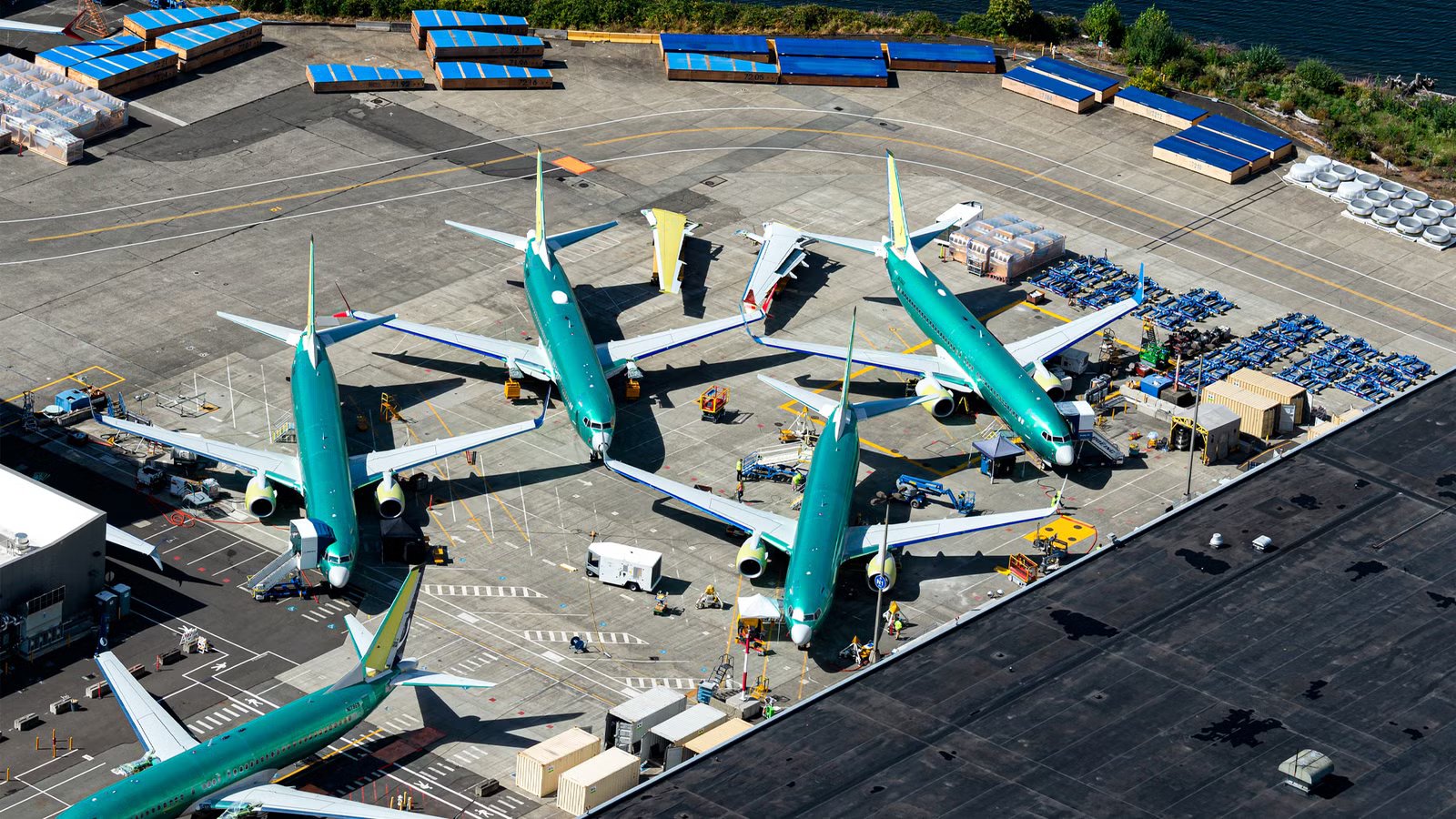
The production stability of the Boeing 737 MAX has been a major topic of discussion in the aviation industry following several years of safety crises, regulatory scrutiny, and manufacturing disruptions. Despite these challenges, analysts and policymakers in the United States are increasingly confident that Boeing can stabilize and eventually expand production of its most important narrowbody aircraft.
A combination of strong global demand, regulatory oversight, and structural changes within Boeing’s manufacturing system has contributed to this growing confidence. Much of the reassurance comes from the close supervision of the Federal Aviation Administration, which now tightly controls the pace at which Boeing can increase production.
Rather than allowing rapid expansion, regulators require the company to demonstrate consistent quality and safety improvements before each step of the ramp-up. This controlled approach, combined with Boeing’s efforts to strengthen its supply chain and manufacturing processes, has led many observers to believe that production of the 737 MAX can return to stable long-term growth.
Regulatory Oversight Is Controlling The Production Ramp

Following the crisis surrounding the Boeing 737 MAX, United States regulators imposed far tighter supervision on Boeing’s manufacturing process. The Federal Aviation Administration implemented strict controls on how quickly the company could increase output, ensuring that production growth would be tied to safety and quality improvements rather than purely commercial demand. This regulatory framework significantly reduces the risk of unstable production surges.
Instead of allowing Boeing to expand production freely, the FAA established a system in which each increase must be approved only after performance metrics are verified. The FAA capped production at 38 per month post-2024. This figure was raised to 42 per month by late 2025, with Boeing targeting 47 per month in 2026 after demonstrating stability via KPIs. This approach ensures that manufacturing stability is proven before expansion.
As a result, production growth is now highly structured and predictable, and regulators effectively act as a gatekeeper, preventing Boeing from accelerating too quickly. This level of oversight reassures investors and policymakers that any ramp-up will occur in controlled stages rather than through risky expansion.
Massive Global Demand For Narrowbody Aircraft

Shutterstock, Simple Flying
The 737 MAX remains one of the most important aircraft in global aviation and plays a central role in the fleets of many airlines. Narrowbody aircraft like the 737 MAX are designed primarily for short- and medium-haul routes, which account for the majority of global flights. As international travel continues to recover and passenger demand grows, airlines increasingly rely on fuel-efficient single-aisle aircraft to expand routes and reduce operating costs.
This strong structural demand helps reinforce confidence in the long-term stability of the production line operated by Boeing, and the scale of demand is reflected in Boeing’s large order backlog. The 737 MAX family has accumulated more than 4,700 orders as of late 2025, representing several years of production, even if manufacturing increases significantly. These aircraft offer improved fuel efficiency compared with older models, so airlines are unlikely to cancel orders even during temporary production slowdowns.
This is making the backlog a major stabilizing force for Boeing’s manufacturing system. Such sustained demand also means that  Boeing does not need to rush production. With delivery slots already sold years in advance, the company can prioritize quality improvements and supply chain stability. The result is a slower but safer ramp-up that supports long-term production reliability.

What Are The Largest Boeing 737 MAX Fleets In The World?
US carriers make up a large share of the global 737 MAX fleet.
Supply Chain Integration & Control

Another reason analysts are less concerned about production instability is Boeing’s effort to strengthen control over its supply chain. A major step involves bringing critical suppliers closer under its operational control, particularly those responsible for key structural components of the Boeing 737 MAX. One of the most significant moves is Boeing’s plan to reacquire Spirit AeroSystems, the manufacturer that produces large sections of the 737 MAX fuselage.
Spirit builds roughly 70% of the aircraft, making it one of the most important suppliers in the program. By bringing this supplier back under closer control, Boeing aims to reduce coordination issues and improve production consistency. In the past, Boeing relied heavily on independent suppliers to build large portions of aircraft structures as part of a strategy to reduce costs and distribute manufacturing across multiple partners.
However, this outsourcing model also created coordination challenges, especially when quality problems emerged in supplier-built components. Issues involving fuselage sections and assembly processes highlighted how difficult it could be to maintain consistent standards across different companies. By reintegrating key parts of the supply chain and increasing direct oversight, Boeing can improve quality control and ensure that manufacturing standards remain consistent throughout the entire production process.
Stronger supply chain control also improves production stability. When the company has more direct influence over component manufacturing and delivery schedules, it becomes easier to coordinate assembly lines. This helps prevent delays and reduces the risk of sudden disruptions in aircraft output.
Expanding Manufacturing Capacity

To support future production increases, Boeing has been investing in additional manufacturing capacity for the 737 MAX program. Expanding facilities and assembly lines allows the company to scale output gradually while maintaining flexibility. Additional capacity also reduces dependence on a single production line.
The company has been exploring ways to expand its assembly footprint, including adding more production lines and modernizing existing facilities. These upgrades are designed to accommodate higher production rates once regulators are satisfied with quality improvements. By preparing the infrastructure early, Boeing can increase output without rushing facility expansions later. More manufacturing capacity also adds resilience to the production system for Boeing.
After all, with multiple assembly lines producing the Boeing 737 MAX, the company can better manage disruptions if one line experiences delays, technical issues, or supply shortages. Additional production lines create operational redundancy, allowing other lines to maintain output while problems are addressed. This flexibility reduces the risk of major bottlenecks and helps stabilize delivery schedules, making large-scale disruptions to aircraft production and airline deliveries less likely.

The Complete Guide To The Boeing 737 MAX Family
Boeing has already built more than 1,700 aircraft from its next-generation narrowbody series.
Improvements In Manufacturing Quality

After years of intense scrutiny, Boeing has focused heavily on improving its manufacturing processes. Quality control systems for the Boeing 737 MAX have been strengthened with additional inspections, stricter documentation requirements, and expanded employee training programs across production facilities. These reforms were introduced largely in response to oversight from the FAA, which increased supervision of Boeing’s factories after several high-profile safety and manufacturing incidents.
The changes are designed to rebuild confidence among regulators, airlines, and the wider aviation industry. Boeing has also implemented stricter internal auditing processes to identify defects earlier in the production cycle. For example, it introduced additional quality checkpoints and manufacturing reviews to detect assembly issues before aircraft reach the final assembly or delivery stages. Catching defects earlier helps prevent costly delays, rework, and delivery disruptions.
Over time, these measures have begun to show results, with industry reports indicating improvements in production quality metrics and defect detection rates. This has contributed to greater confidence in the long-term reliability of the 737 MAX manufacturing system.
As quality performance improves, regulators become more comfortable allowing higher production rates for the Boeing 737 MAX. Oversight from the FAA requires Boeing to demonstrate consistent reductions in manufacturing defects, stronger quality control procedures, and improved supplier coordination before any production increase is approved.

Is The Boeing 737 Truly Made In America?
A global supply chain is essential to the best-selling aircraft program.
A Deliberately Slow & Controlled Production Strategy

Perhaps the most important factor behind confidence in production stability at Boeing is the company’s deliberate approach to ramping up output. Rather than pursuing rapid expansion, Boeing has emphasized gradual increases in production for the 737 MAX program. For example, production was effectively capped at around 38 jets per month following increased oversight from the FAA, and any future increase must be approved only after Boeing demonstrates consistent improvements in quality and safety processes.
Each step in the ramp-up is designed to ensure that manufacturing quality, supply chain readiness, and workforce capacity are fully aligned. This slower strategy represents a significant shift from earlier practices in the aerospace industry, when manufacturers sometimes accelerated production quickly to meet strong airline demand. In previous years, pressure to increase output contributed to manufacturing stress across the supply chain and assembly lines.
By prioritizing stability and process improvements over speed, Boeing is attempting to avoid repeating the conditions that contributed to earlier operational and safety crises involving the 737 MAX program. For investors, airlines, and regulators, this cautious approach provides reassurance, as a gradual production ramp reduces the likelihood of sudden disruptions while giving Boeing time to rebuild trust across the aviation sector.