dailynewsnblog
The Boeing 737 MAX was made to be the latest and greatest iteration of the most popular jet in Boeing’s long and storied history. The aircraft incorporates a host of 21st-century technology that puts it leaps and bounds ahead of its predecessors. While its initial entry into service was marred by tragedy due to shortcuts and software development, the engineering that went into the aerodynamics, power plants, and other technologies has made it one of the most successful narrowbodies in history.
To compete with the fuel-efficient Airbus A320neo, Boeing fitted larger, more fuel-efficient engines onto the existing 737 airframe. Because the 737 sits low to the ground, the new engines had to be mounted higher and further forward on the wings, which altered the aircraft’s aerodynamics.
This design change resulted in an undesirable tendency for the nose to pitch up at high angles of attack, particularly at low speeds and high thrust, which could potentially lead to an aerodynamic stall. While the aircraft was still stable in an engineering sense, it did not meet the desired handling qualities and ‘feel’ of previous 737 models, a requirement for airlines to use the same pilot type ratings and avoid costly additional simulator training.
Engine Placement: The Main Factor?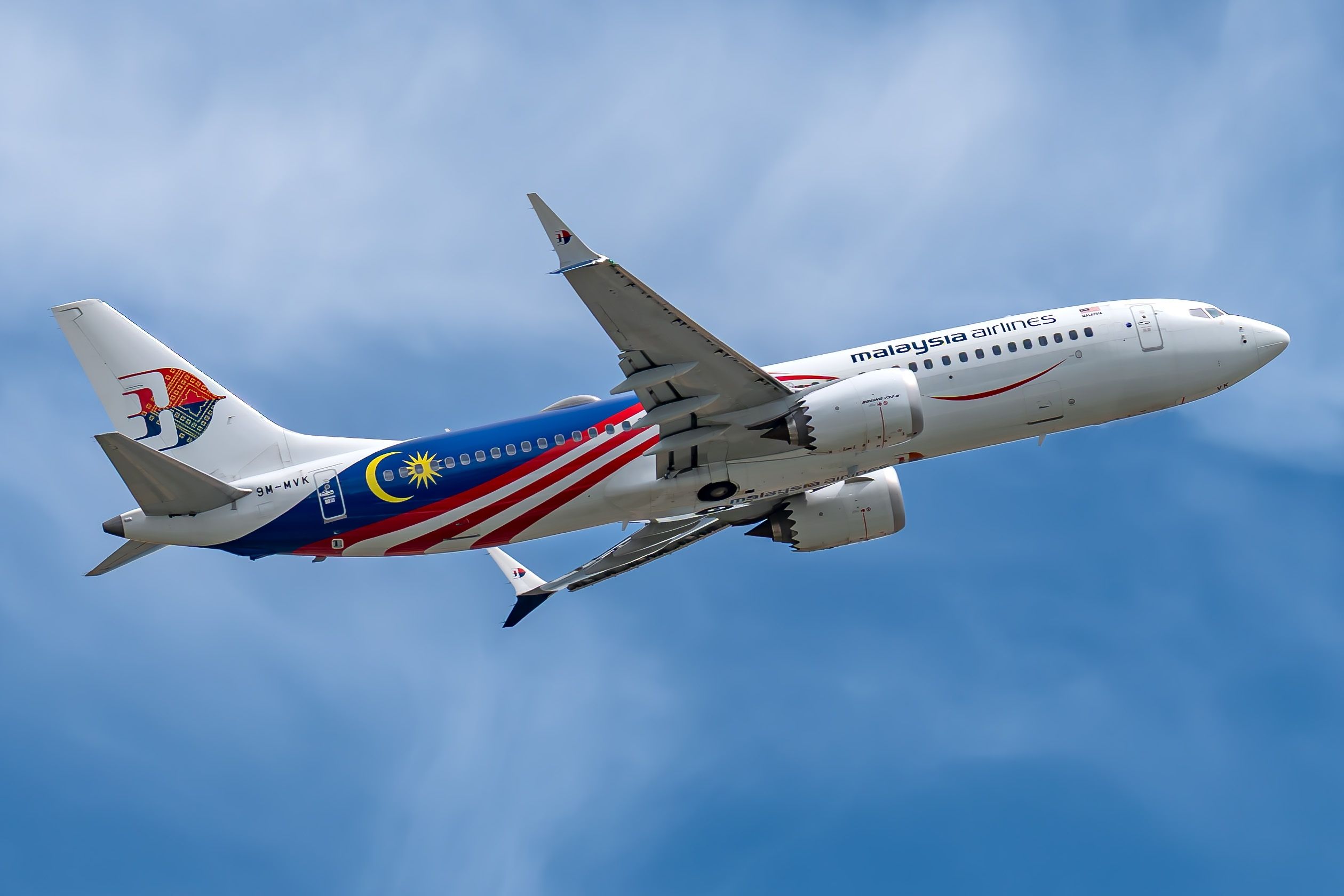
The 737 MAX is certified as stable under normal flight conditions with the Maneuvering Characteristics Augmentation System (MCAS) system operating. The forward-mounted engine nacelles at high angles of attack create lift ahead of the wings, which pushes the nose up further. Per Forbes, R. John Hansman, a Professor of Aeronautics at MIT, explains:
“At high angles of attack, the nacelles create aerodynamic lift. Because the engines are further forward, the lift tends to push the nose up, causing the angle of attack to increase further. This reinforces itself and results in a pitch-up tendency which if not corrected can result in a stall.
This is called an unstable or divergent condition. It should be noted that many high performance aircraft have this tendency but it is not acceptable in transport category aircraft where there is a requirement that the aircraft is stable and returns to a steady condition if no forces are applied to the controls.”
The MCAS was specifically designed to mask this inherently unstable tendency and make the aircraft feel and perform like older, naturally stable 737 models during certification, thus avoiding extra pilot training requirements. It was also designed to automatically push the aircraft’s nose down when it detected a high Angle of Attack (AoA).

The engines on the 737 MAX are mounted further forward and higher up on the wing compared to the previous 737NG model to ensure sufficient ground clearance for their larger diameter fans. The forward positioning and large size of the 737 MAX’s engine nacelles create a pitch-up moment at an AoA due to an aerodynamic effect where the nacelle itself generates lift ahead of the aircraft’s center of gravity.
The upward lift from the nacelle pushes the nose up, which increases the aircraft’s Angle of Attack even further. This generates even more lift from the nacelle, reinforcing the original upward pitch. If not corrected, this would continue to increase the Angle of Attack, potentially leading to an aerodynamic stall.
At the Angle of Attack during cruise, this effect is minimal. At a high Angle of Attack, such as during takeoff, a steep turn, or when approaching a stall, the air flowing around the large, tube-shaped engine nacelle and its pylon behaves like a wing. The airflow hits the underside of the large nacelle, generating an upward force, or lift. Thus, it effectively becomes a wing in that moment.
Because the lift generated by the engine nacelles occurs ahead of the aircraft’s center of gravity, it acts like a force on one end of a see-saw, pushing the nose upward. This handling characteristic is unacceptable for commercial transport aircraft, which are required by regulation to have natural stability, or a tendency to return to a steady state.

How Boeing 737 MAX Fuselages Differ From Its Predecessors
There are several subtle differences in the fuselage of Boeing’s latest narrowbody aircraft.
Enough Power For Any Mission

The Boeing 737 MAX has a highly competitive climb rate within the narrow-body commercial market, generally considered to have a slight edge in initial climb performance compared to its main rival, the Airbus A320neo family. The primary reason for the 737 MAX’s improved performance, including climb rate, is the incorporation of the new CFM LEAP-1B engines.
The new engines are also much more fuel-efficient, with larger fans designed to bypass more air, which improves overall performance, including fuel burn and thrust efficiency. This efficiency translates into better climb performance and range. The 737 MAX’s performance, especially its climb rate, makes it very reliable at airports with shorter runways or those at high altitudes, or hot climates, with higher passenger and cargo payloads.
The new engines have a larger fan diameter at 69.4 inches versus the 737 Next Generation’s 61 inches, with a higher bypass ratio of 9:1 compared to the NG’s 5.1:1 ratio. The 737 MAX also has a 15 to 20% faster initial climb rate than the 737NG family. The Max gets higher faster, which improves flight efficiency and allows for more robust operations in challenging airport environments.

This Is How Powerful The Boeing 737 MAX Is
Like most A320neos, the MAX is powered by the CFM International LEAP engines and enjoys high flying sales.
Sky-High Cruise Efficiency

The 737 MAX is well-liked for its ability to climb to cruise altitude very quickly, which saves airlines money on fuel and means passengers can relax sooner during the flight. It offers a compelling balance of carrying capacity and distance for many mission profiles. It introduced new advanced technology split-tip winglets, which further reduce drag and enhance lift, contributing to overall better performance during all phases of flight, including the climb.
Most weather phenomena that cause turbulence, such as storms and cloud layers, occur at lower altitudes, which are typically below 30,000 feet. The 737 MAX’s stronger climb performance allows it to ascend through these turbulent layers faster and reach the stable air found in the upper atmosphere, or ‘the sweet spot,’ more quickly.
The single biggest comfort improvement related to altitude is the ability to avoid turbulence. The entire 737NG and MAX family is certified for a maximum altitude of 41,000 feet, which is slightly higher than the A320 family’s typical ceiling of around 39,800 feet. This higher ceiling allows for more operational flexibility in finding optimal cruising altitudes to avoid weather or strong headwinds.
Sipping Gas At Full Throttle

The 737 MAX achieves approximately 14-20% better fuel efficiency than its predecessor thanks to its new engines and advanced winglets. The improved efficiency translates into an extended operational range. The 737 MAX 8, for example, has a range of approximately 3,550 nautical miles (6,570 km), an increase of over 500 nautical miles compared to the 737-800’s typical range of around 3,010 nautical miles.
|
Specifications |
Boeing 737 MAX 8 |
Boeing 737 MAX 9 |
|---|---|---|
|
Seats (two-class) |
162 – 178 |
178 – 193 |
|
Maximum seats |
210 |
220 |
|
Range: nautical miles (kilometers) |
3,500 (6,480) |
3,300 (6,110) |
|
Length: meters (feet-inches) |
39.52 (129 ft 8 in) |
42.16 (138 ft 4 in) |
|
Wingspan: meters (feet-inches) |
35.9 (117 ft 10 in) |
35.9 (117 ft 10 in) |
|
Engine |
LEAP-1B from CFM International |
“ |
The range capabilities allow airlines to fly more direct routes, which can slightly reduce total flight time. And by achieving a stable, high cruising altitude and staying there longer on its longer range routes, the aircraft maintains a consistent, pressurized cabin environment for a greater portion of the flight time. The overall efficiency helps optimize the entire flight profile for smoothness and speed.

All The Airlines Waiting For Boeing To Certify The 737 MAX 10
With regulatory obstacles pending and airlines awaiting final approval, all eyes are on Boeing’s largest single-aisle aircraft, the 737 MAX 10.
The Tragic Story Behind MCAS

Boeing did not disclose the existence of the MCAS to pilots in flight manuals or require simulator training for the system’s potential malfunctions, assuming pilots could handle the event with existing runaway trim procedures. The MCAS relied on input from only a single Angle of Attack sensor. If that sensor failed and provided erroneous data, the system would repeatedly and aggressively force the aircraft’s nose down.
The initial MCAS design had significant authority to move the horizontal stabilizer and could repeatedly activate, making it difficult for pilots to counteract the system’s erroneous inputs, even with manual controls. Investigations revealed weak oversight from the FAA, which allowed Boeing engineers to perform much of the certification work and did not thoroughly scrutinize the changes to the MCAS.
These factors combined led to the tragic crashes of Lion Air flight 610 in October 2018 and Ethiopian Airlines flight 302 in March 2019, killing a total of 346 people and leading to a worldwide grounding of the 737 MAX fleet. Production delays following the renewed safety certification have allowed Airbus to surpass Boeing with its A320 family, claiming the crown for the most produced jetliner in history. However, the race is far from over, and the two models are neck and neck to this day.