dailynewsnblog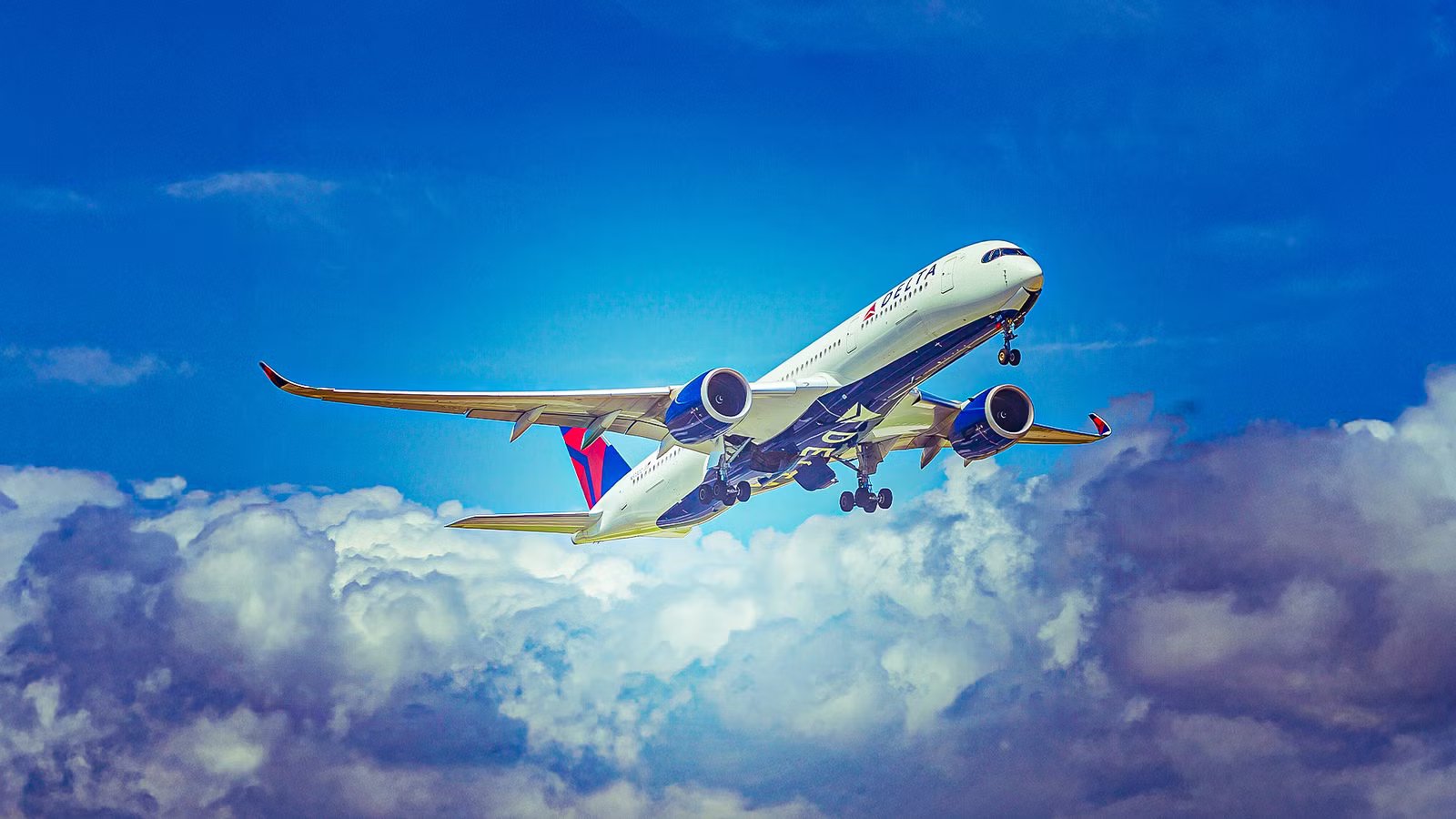
The Airbus A350 and Boeing 787 are broadly comparable aircraft, with the A350 being the larger of the two. They each have advantages and disadvantages over the other. One of the most notable differences for passengers is the use of extra-large, automatically dimming windows in the Dreamliner. One distinction between the two that mostly goes unnoticed by passengers is that the A350 requires a shorter runway than the Boeing 787 when adjusted for the aircraft’s maximum takeoff weight.
There are plenty of factors that influence an aircraft’s takeoff roll. Factors on the aircraft include engine thrust, aircraft weight, and wing surface area. External factors include the density of the air, whether conditions are wet or dry, and other factors. Here is what to know about the runway requirements for takeoff for the A350 and the 787.
The Airbus A350 & Its Trent XWB Turbofans

The Airbus A350 is the world’s newest clean-sheet widebody aircraft, having entered service in 2015, four years after the Boeing 787 Dreamliner. Following the termination of the A380 program in 2021, the A350 is the flagship commercial aircraft offered by Airbus. The aircraft comes in two variants, the popular Airbus A350-900 and the stretched A350-1000. Additionally, the A350-900 has a specially made A350-900ULR version for Singapore Airlines, which increases the range from 8,500 to 9,700 nautical miles.
For an aircraft of its size, the Airbus A350 is notable for having a short takeoff roll, at least when compared with the Boeing 787 Dreamliner. The Airbus A350 is exclusively powered by the Rolls-Royce Trent XWB turbofans. These Trent XWB turbofans come in two variants. The A350-900 is powered by the XWB-84, providing 84,000 lbf, while the A350-1000 is powered by the XWB-97, which supplies 97,000 lbf of thrust.
The fan diameter of these engines measures 118 inches, and they come with a bypass ratio of 9.6:1. The XWB-84 weighs 16,043 lbs, while the more powerful XWB-97 is slightly heavier at 16,640 lbs. Airbus’ other widebody, the A330neo, is exclusively powered by the Rolls-Royce Trent 7000. Boeing has two passenger widebody commercial passenger aircraft on the market. The upcoming Boeing 777X is to be exclusively powered by the GE Aerospace GE9X, while the Boeing 787 is alternatively powered by the GEnx and Trent 1000.
Takeoff Rolls Are Complicated: TOFL Is A Better Measure

When discussing how much distance aircraft need to take off, it is important to note the difference between takeoff roll and TOFL. The takeoff roll refers to the distance from when the pilot releases the brakes to rotation speed (Vr). However, aircraft manufacturers typically publish TOFL (takeoff field length). TOFL includes a safety margin to clear a 35-foot obstacle. It is also difficult to list an exact takeoff roll distance as they are rarely listed as a specific unit in official documents.
The distances discussed here assume the aircraft is operating at sea level, there is no wind, and the runway is dry. As elevation increases, the air thins out and aircraft require longer takeoff rolls and more runway. This is why some of the world’s highest airports have exceptionally long runways.
Other factors include how heavy the aircraft is, namely whether it is being operated at its maximum takeoff weight (MTOW). If so, it will require an increased runway. Again, this article will focus on aircraft operating at MTOW. The numbers below are also for the TOFL, as that is what is provided in official documentation, and also assumes the temperature is 59°F (15°C). In the case of the Boeing 787 Dreamliner, the engine type may also affect its takeoff roll.

Is An Airbus A350 Bigger Than A Boeing 777?
While the 777-300ER is a physically bigger aircraft, the A350-1000 feels more spacious onboard.
TOFL: Airbus A350

The Airbus A350’s characteristics can be found in the Airbus Aircraft Characteristics – Airport and Maintenance Planning document. As the Airbus A350-1000 is heavier than the A350-900, it requires a slightly longer runway than the A350-900. It is important to note that while single figures are listed here, there is often a distance range: the numbers given are within the range.
The A350-900 requires a takeoff distance of around 8,530 feet (2,600 meters) when operating under standard conditions at its MTOW (283 tonnes). The A350-1000 requires around 9,186 feet (2,800 meters) when taking off under standard conditions loaded to its MTOW of 319 tonnes, which was updated to 322 tonnes in its 2023 certification. These figures are for TOFL, and the actual takeoff roll for Vr is shorter, but it is difficult to calculate.
|
Aircraft |
Required TOFL |
MTOW (tonnes) |
|---|---|---|
|
Airbus A350-900 |
8,530 feet (2,600 meters) |
283 |
|
Airbus A350-1000 |
9,186 feet (2,800 meters) |
322 |
|
Boeing 787-8 |
8,500 feet (2,590 meters) |
227.9 |
|
Boeing 787-9 |
9,186 feet (2,800 meters) |
254.5 |
|
Boeing 787-10 |
10,300 feet (3,100 meters) |
254.5 |
Compared to the Boeing 787 Dreamliner, the A350 has more powerful engines and larger wings. These seem to help the aircraft get airborne around 600 feet before the Dreamliner. The combined thrust of the A350 is 168,000 lbf for the A350-900 and 194,000 lbf for the A350-1000. Meanwhile, the combined thrust of the Dreamliner is 152,000 lbf for all three variants.
TOFL: Boeing 787 Dreamliner

The Boeing 787 comes in three variants. The original variant was the 787-8, which was stretched to the popular 787-9, before being further stretched to the 787-10. Information for the characteristics of the Boeing 787, including required runway lengths, is found in the Boeing 787 Airplane Characteristics for Airport Planning. The 787-8 requires around 8,500 feet (2,590 meters) when operating at MOTW (227.9 tonnes). This holds for both the GEnx-1B and RR Trent 1000 engines.
Meanwhile, the 787-9 requires around 9,186 feet (2,800 meters) when operating at its 254.5-tonne MTOW. This means the distance required for the Boeing 787-9 is the same as the A350-1000, even though the latter is a much larger aircraft with a 64.5 tonne greater MTOW. The longer 787-10 needs 10,300 feet (3,100 meters) when taking off at its MTOW of 254.5 tonnes. The 787-10 is also certified with a high-thrust option of 9,678 feet (2,950 meters), but 10,300 feet using standard engines.
|
Aircraft |
Typical seating |
Range (nautical miles) |
|---|---|---|
|
Airbus A350-900 |
332-352 (3-class) |
8,500 |
|
Airbus A350-1000 |
375 to 400 (3-class) |
9,000 |
|
Boeing 787-8 |
248 (2-class) |
7,305 |
|
Boeing 787-9 |
298 (2-class) |
7,565 |
|
Boeing 787-10 |
336 (2-class) |
6,330 |
For reference, the A330-800 needs around 8,136 feet (2,480 meters) at 251 tonnes (MTOW), and its A330-900 counterpart needs around 9,088 feet (2,770 meters) at 251 tonnes. The Boeing 777X has not yet entered service, but, looking at previous generation Triple-Sevens, the 777-200LR needs around 9,810 feet (2,990 meters) at 347.5 tonnes, and the 777-300ER requires 10,500 feet (3,200 meters) at 351.5 tonnes. This is when the aircraft are equipped with GE90-110B1/115B and GE90-115B turbofans, respectively.

Why The Boeing 737 MAX 9 Has Such A Long Takeoff Roll
The 737 MAX 9’s weight and length cause its long takeoff roll. These issues were also experienced by the 737-900ER.
Wings: Airbus A350 Vs Boeing 787

Wings are an important feature of any aircraft. The wings on both the A350-900 and A350-1000 variants span 212.4 feet, although the wing area of the A350-1000 is slightly larger (4,994 ft² vs 4,768 ft²) on account of its extended fuselage and the type’s greater MTOW. They also come with a 31.9-degree sweep angle at the leading edge. Notably, lightweight composite materials make up around 50% of these wings’ structure.
According to the Boeing 787 Airplane Characteristics for Airport Planning document, all three  Boeing 787 variants have the same wingspan (197.3 feet) and the same surface area (4,058 ft²). These are also designed with a 32.2-degree sweep angle at the leading edge. Like the A350, around 50% of the structure of the wings is made up of lightweight composite materials.
The longer wingspans and larger wing areas of the A350 reflect the fact that those wings are designed for a larger aircraft with greater MTOWs. Wings are typically optimized for specific variants of a family of jets. For example, the Boeing 787’s wings are better optimized for the 787-9, which helps explain the lower sales of the 787-10. Meanwhile, the overly large wings on the Airbus A380 were optimized for an envisioned stretched ex-Superjumbo dubbed the A380-900 that never came.
The Airbus A350’s Short Takeoff Roll

TOFL distances for today’s widebody aircraft (including the 777 and excluding the 777X) range from 8,136 feet (2,480 meters) with the A330-800neo to 10,500 feet (3,200 meters) for the Boeing 777-300ER. Compared with the Boeing 787, the Airbus A350 requires a short runway for takeoff. This may come down partly to the aircraft having more powerful engines and larger wings, although other factors may also be in play.
The A350-900’s requirement is similar to the 787-8, while the A350-1000’s requirement is similar to the 787-9. This is even though the A350s are much larger and have significantly greater maximum take-off weights. Even the Airbus A330-800 requires less runway to take off than its Dreamliner counterparts when considering its MTOW. However, the stretched A330-900’s 9,088 feet (2,770 meters) at 251 tonnes is similar to the 787-9, which requires around 9,186 feet (2,800 meters) at 254.5 tonnes.
The Airbus A350 is the larger counterpart to the Boeing 787 Dreamliner. Both are some of the newest and most efficient widebody aircraft on the market. These aircraft replaced older aircraft like the Boeing 767 and helped doom larger aircraft like the Airbus A380 thanks to their comparatively low operating cost, ultra-long ranges, and extensive use of composite materials.