dailynewsnblog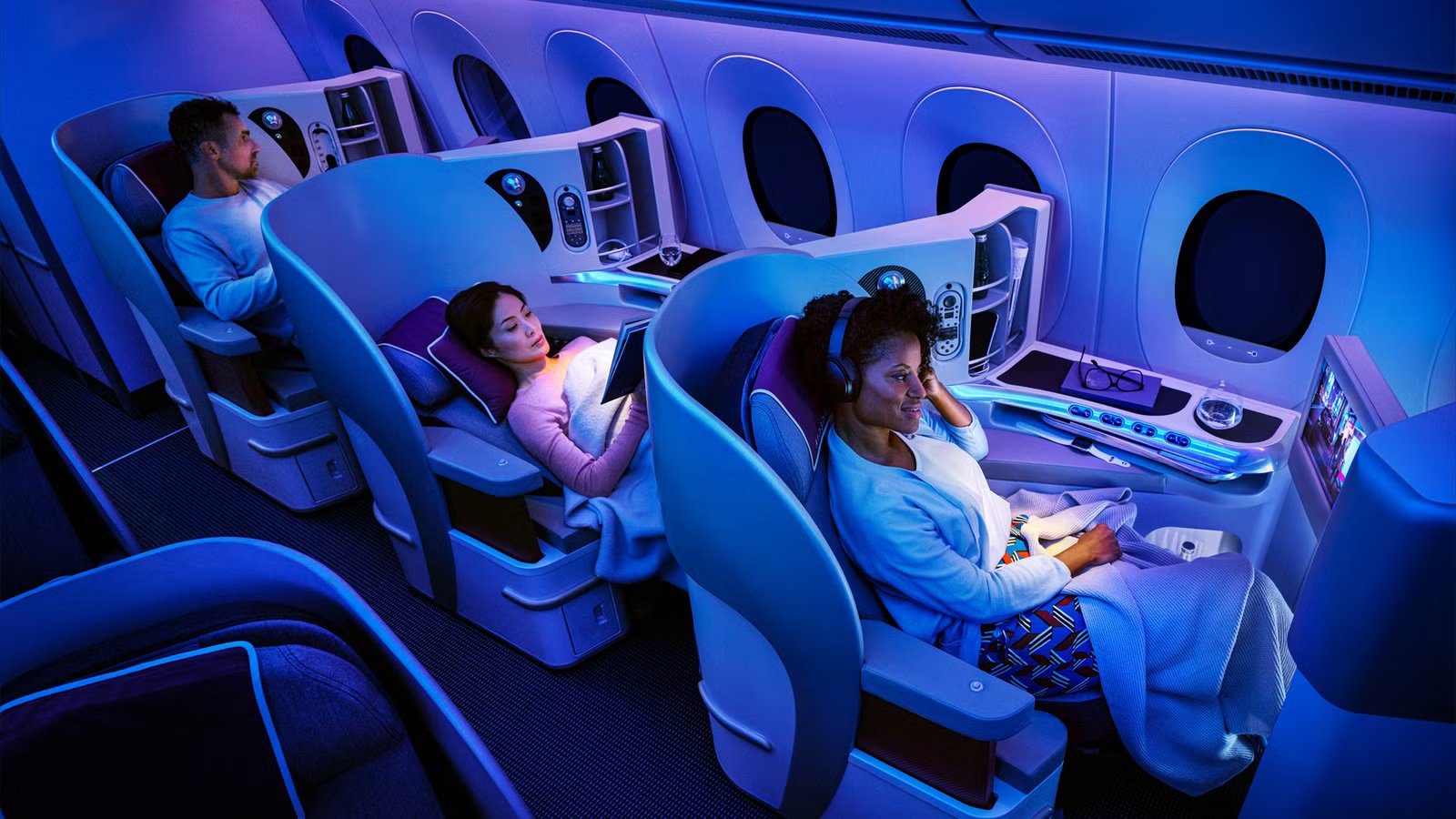
Passenger aircraft cruise above 30,000 feet, and at this altitude, the air is too thin for people to breathe. Aircraft are not pressurized to sea level altitude (0 feet) equivalent, as that would put too much strain on the fuselage and accelerate its fatigue. Previously, the compromise for widebody aircraft was being pressurized to the equivalent of around 8,000 feet. However, new aircraft like the Airbus A350 are able to increase the cabin pressure to around 6,000 feet.
While the Airbus A350 may lack the large windows of the Boeing 787, it is a marvel of engineering. According to Airbus, it is the quietest aircraft in its category, and cabin space is greater thanks to its near-vertical sidewalls, partly thanks to its extensive use of carbon-fibre fuselage construction.
Higher Cabin Pressure Means Greater Comfort

Commercial aircraft cruise at well above the “death zone” for mountaineers at 26,000 feet. That is the point where it is not possible to get enough oxygen over extended periods of time. Older aircraft like the Boeing 777-300ER and Airbus A330 are pressurized to around 8,000 feet, which is the equivalent of Aspen in Colorado. This is typically fine for most people, and many will not notice the change in cabin pressure as they climb to cruising altitude.
Still, 8,000 feet has some issues for passengers. The change in pressure can increase fatigue symptoms associated with jet lag and increase bloating in people’s digestive tracts, resulting in flatulence. Jet lag is more than just the change in time zones; it can be aggravated by changes in blood oxygen levels that contribute to fatigue and mild headaches. On rare occasions, it can even cause pain for passengers with issues like a faulty tooth filling where the dentist has accidentally left an air pocket.
Some people may feel pressure and discomfort in their ears as the aircraft climbs or descends with the corresponding change in cabin pressure. Blocked ears from rapid changes in pressure are technically known as ear barotrauma, and while it is not a big issue for most, there are a few people who can experience significant discomfort. Other passengers with respiratory or cardiovascular conditions can also experience general discomfort from rapidly changing pressure from sea level to 8,000 feet equivalent.
The Airbus A350’s Greater Cabin Pressure

The Airbus A350 is the world’s newest clean-sheet widebody aircraft and first entered service in 2015. It offers a range of improvements for both airlines (e.g., significant fuel savings) and for passengers (e.g., quieter and higher cabin pressure). The Airbus A350 is typically pressurized to around 6,000 feet equivalent, and the increased cabin pressure helps alleviate passenger discomfort mentioned above (e.g., flatulence, fatigue, blocked ears). While Airbus says the A350’s cabin pressure is 6,000 feet, some report the aircraft is pressurized to 5,500 feet.
Around 53% of the structural weight of the Airbus A350 is composite materials, primarily carbon-fiber reinforced plastic (CFRP). Another 14% of its structural weight is composed of titanium, which is a much higher percentage than older aircraft. These advanced materials enable the aircraft to be more pressurized compared with aluminum aircraft.
|
Airbus A350 |
|
|---|---|
|
Cabin pressure |
6,000 feet |
|
Cabin humidity |
20-23% |
|
Composite materials (structural weight) |
53% |
|
Titanium (structural weight) |
14% |
|
Total advanced materials (structural weight) |
70% |
In all, Airbus says that the A350-900 comprises 70% advanced materials. The use of these materials not only means a more comfortable environment for passengers, but also comes with benefits for the airline. The airline benefits from decreased maintenance costs and lower aircraft weight. The lower weight translates into fuel savings.

What Is The Lifetime Of An Airbus A350?
Do you ever wonder how an Airbus jet can fly for decades? Discover the reasons for remarkable operating lives.
The A350’s Increased Humidity

Another improvement for passenger comfort with the Airbus A350 is increased cabin humidity levels. Passengers flying on long-haul flights may notice that on some flights, the air is dry, causing dry noses, fatigue, and other discomforts. The A350 addresses this by maintaining high humidity levels compared with older aircraft.
The humidity on aircraft is typically very low, ranging from 5 to 20%. This is due to the cold, dry air found at cruising altitudes. The air is brought into the cabin and warmed, but becomes even drier, which can lead to dehydration and even impact passengers’ perception of taste and smell. The Inflight Humidification (IFH) system on the Airbus A350 increases relative humidity from the typical 3-8% found on standard aircraft to around 20-23%.
CTT Systems is a market-leading provider of humidity control products in aircraft and says that while modern aircraft have made big improvements in reducing noise, reducing vibrations, creating multiple temperature zones, and increasing cabin pressure, more work is to be done on increasing their humidity. CTT System’s humidifiers are found on both modern Airbus and Boeing widebody aircraft.
Incrementally Improving The A350

In 2022, Airbus unveiled a new production standard for the A350 that includes weight savings, improved take-off performance, and an increased Maximum Take-off Weight (MTOW) of three tonnes. It increased the use of advanced materials like carbon fiber, allowing the aircraft to shed more weight. The new standard also included improvements in the cabin, like more space, a new large forward lavatory, and the option for the latest third-generation of electro-dimmable windows.
Airbus is continuing to improve the design of its A350 with recent modifications allowing the internal cabin width to be four inches wider and enabling the aircraft to carry another 30 seats. The internal width of the cabin has been extended from 221 inches to 225 inches. While this may seem small, in the airline industry, it’s often a game of inches. These four extra inches allow aircraft to use the full 17-inch wide industry standard economy seats in a 3-4-3 or 10-abreast configuration.
Another area of improvement includes enhanced take-off performance when operating at high altitudes, on short runways, in hot weather, and in other challenging conditions. This was achieved by implementing faster landing gear retraction cycles and introducing updated software. Airbus claims the new dimmable windows block 99.999% of visible light as well as infrared energy from the sun, allowing the cabin interior to be cooler. It provides passengers with more comfort in adjusting their windows.

How The Boeing 777X Will Change The Passenger Experience On Long-Haul Flights
The new Boeing 777X will enhance passengers’ experience and will make the 777 family more like that of the 787 Dreamliner.
Other Widebody Aircraft Cabin Pressure

The Boeing 787 Dreamliner was the first to introduce increased cabin pressure equivalent to 6,000 feet in 2011. This has now become the industry standard for widebody aircraft. Counting the upcoming Boeing 777X, only four families of widebody passenger aircraft are in production today, namely the 787, 777X, A330neo, and A350. The older Boeing 777 and 767 remain in production, but as freighters.
Like the Boeing 787, the new Boeing 777X will also have a cabin pressure of 6,000 feet, while also increasing humidity, decreasing noise and vibrations, and other improvements for passenger comfort. Meanwhile, the Airbus A330neo appears to be pressurized between 7,000 and 8,000 feet. The A330neo is an efficient, ultra-long-range aircraft, but it is still based on an older design. Of the four widebody types, it has the smallest orderbook with only around 289 examples on order.
|
Cabin pressure of modern widebody aircraft |
|
|---|---|
|
Airbus A330neo |
7,000-8,000 feet |
|
Airbus A350 |
6,000 feet |
|
Boeing 777X |
6,000 feet |
|
Boeing 787 |
6,000 feet |
Time will tell if the trend toward high cabin pressure continues. For example, JetZero is building a new blended-wing-body aircraft that it hopes will revolutionize the industry and slash fuel consumption by as much as 50%. However, the irregular shape presents engineering challenges in maintaining a consistent cabin pressure, unlike traditional tube-and-wing aircraft. JetZero claims to have developed solutions, although it remains unclear if it will be able to pressurize it at 6,000 feet or if it will need to have a lower pressure equivalent to 8,000 feet or something.
Increased Passenger Comfort Is The New Standard

In short, higher cabin pressure of around 6,000 feet and high humidity are becoming the new standard as A350s, 787s, and soon 777Xs replace older generations of aircraft. Many of the breakthroughs in increased cabin pressure and humidity are thanks to the extensive use of composite materials in the A350’s fuselage. These are more resistant to fatigue from repeated pressurizations, allowing the aircraft to have a higher cabin pressure. Meanwhile, composite materials are less susceptible to corrosion from increased humidity.
The Airbus A350 is undoubtedly one of the most comfortable aircraft flying today. Readers may have their own opinions on whether the Airbus A350 or Boeing 787 Dreamliner is more comfortable. Starting in 2026, passengers may also be able to compare the cabin experience with Boeing’s new 777X. It is unclear how much future aircraft will improve on cabin pressurization. The latest production standard for the A350 did not increase the cabin pressure.
The use of advanced materials in widebody aircraft has been a win-win for both airlines and passengers. For airlines, the lightweight materials translate into greater efficiency and more durable fuselages, and for passengers, it translates to increased comfort and lower fares. A total of 1,429 Airbus A350s have been ordered, of which 663 have been delivered and 766 remain on order. For comparison, a total of 2,199 Boeing 787s have been ordered, of which 1,198 have been delivered and 1,001 remain on order.