dailynewsnblog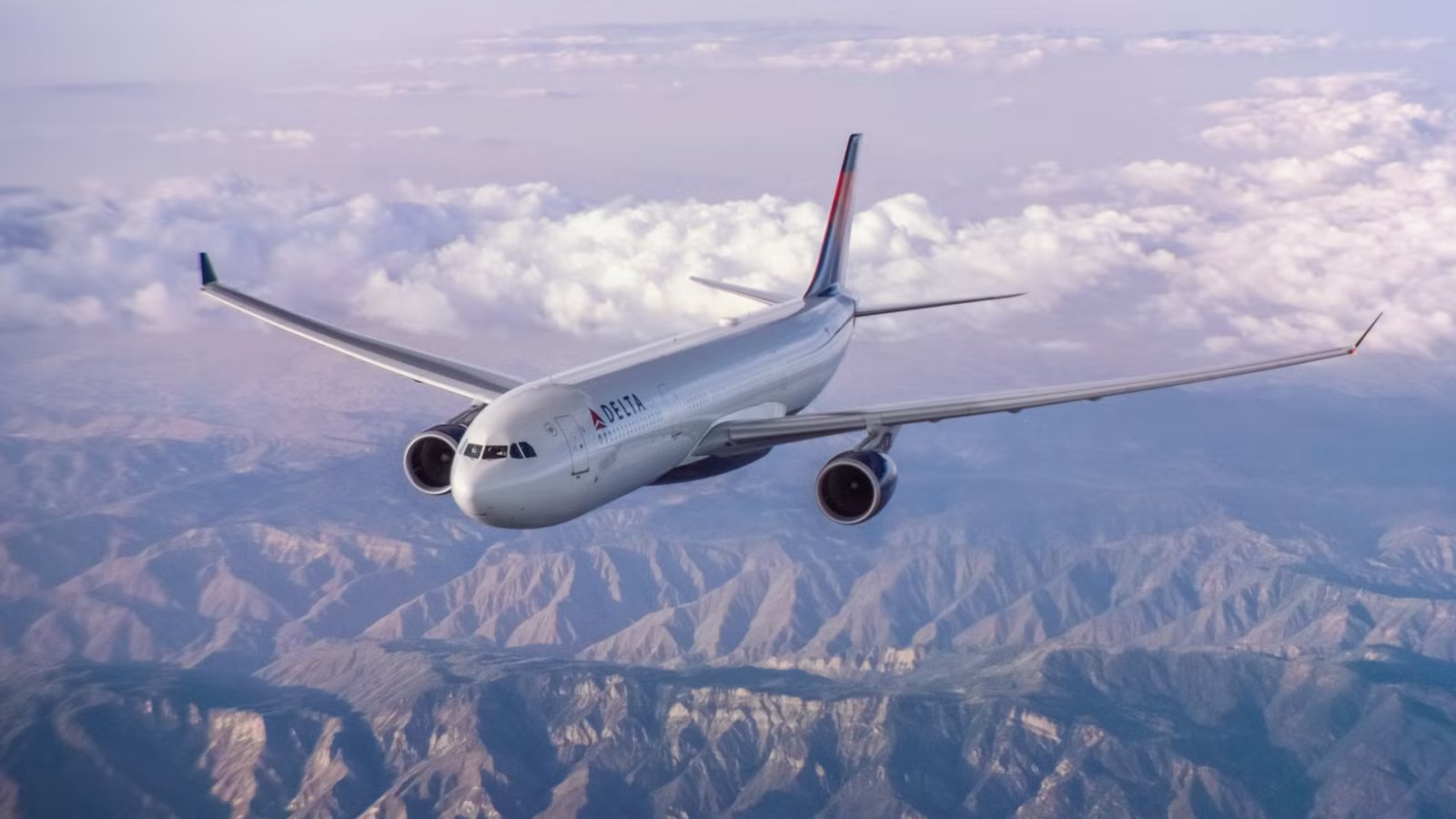
 Delta Air Lines is unique among American carriers for its choice of widebody aircraft. The iconic US airline has broken with the broader trend in the country by ordering Airbus A350 and A330 next-generation twin-aisle jets to modernize its fleet. Although Delta did finally place an order for Boeing 787 Dreamliners early this year, more notably, its already Airbus-dominated fleet will be further bolstered by the arrival of the A350-1000 in 2026. Delta will be the first US carrier to fly the stretched A350, cementing its relationship with the iconic European planemaker. The A350-900, A350-1000, and A330-900 (or A330neo) form a perfect trifecta of Airbus widebodies in Delta livery. While the A330 is a less advanced airframe, each of these jets shares a great deal of technology and features from the cockpit to the seats in coach.
Delta is pushing to expand its network internationally and improve premium cabin products to meet customer demand in the post-COVID-19 travel era. These advanced widebody jets have both the performance and ‘creature comforts’ aboard to empower the airline’s new ventures, like more routes to the Middle East, Europe, and Asia. Flyer satisfaction has been soaring in recent years with the introduction of the new ‘big wing’ jets, driving Delta’s growth.
The Airbus Advantage

Unlike its rivals, Delta famously canceled its inherited Boeing 787 orders in 2016 and has avoided the upcoming Boeing 777X, favoring the proven reliability and efficiency of Airbus widebodies for its long-haul expansion. Currently, Delta is the only US airline operating both the A330-900neo and the A350-900. United Airlines will eventually receive some A350s sometime after 2030, but it and American Airlines remain heavily Boeing-dependent for long-haul operations.
Pilots can transition between the A330 and A350 families with minimal training thanks to virtually identical flight decks. Likewise, the systems that ground techs have to maintain share the vast majority of their design and parts in common. By consolidating around Airbus, Delta’s in-house maintenance division, known as TechOps, is able to streamline its supply chain for Rolls-Royce Trent engines, which power both families.
Looking past the nuts and bolts, cabin crew and travelers can expect each jet to be the same experience every time they fly, thanks to the ‘Airspace’ cabin design. Using a unified Airbus widebody platform allows Delta to standardize its high-end Delta One Suites more uniformly than competitors with mixed-age Boeing fleets. Delta has even increased its long-haul Airbus fleet with orders for 31 more widebodies in early 2026, bringing its total expected fleet to 79 A350s and 55 A330neos.
Why Not Boeing?

The Delta Air Lines fleet modernization program coincided with both the largest commercial aircraft grounding in history, the 737 Max disaster, and the worldwide air travel lockdown that resulted from the COVID-19 pandemic. Amid these two unprecedented global air travel disruptions, Delta found that Airbus offered a high-quality aircraft but, more importantly, a more stable manufacturer support base to keep planes flying over the lifetime of each airframe.
Despite the fact that Airbus has also suffered major supply chain issues over the past few years, such as a widespread power plant deficiency caused by Pratt and Whitney GTF turbofans, the maker has proven adaptable and able to overcome issues better than Boeing. Not only did the 737 Max grounding last 20 months after the crash of Lion Air and Ethiopian Airlines Max 8 jets, which killed nearly 350 people, but more than five years later, the other two variants of the 737 Max family remain uncertified for production.
Looking over to the Boeing 777X Next Generation widebody, we find an even greater mismatch between the requirements of a US carrier like Delta and the specifications of the enormous twin jet. Further exacerbating the lack of desirability is the inability of Boeing to certify its colossal new airliner, with the jet’s launch more than 5 years behind schedule.
To Boeing’s credit, the 787 Dreamliner has proven to be an incredibly robust and reliable airplane, providing a stable anchor product amid the turbulent years of the 2020s. Delta has finally chosen to purchase this successful aircraft, after famously canceling its inherited 787-8 orders in 2016. Its first order came just this year, over a decade since the 787 launched.
The New Delta

From a customer standpoint, Delta’s strategy is driving a premium-first modernization that replaces aging aircraft with a standardized, high-tech experience across more global destinations. Customers can expect Delta One Suites (with privacy doors) and Delta Premium Select across the majority of the long-haul fleet, a major upgrade from the inconsistent layouts of older Boeing 767s.
These aircraft feature the Airspace cabin, which offers larger overhead bins, customizable LED mood lighting, and quieter interiors designed to reduce jet lag. In addition to more ‘elbow room’ and better technology, the actual environment inside the new Airbus twin-aisles has been improved with a lower pressure altitude and a higher humidity system.
Bringing the cabin altitude down to 6000 feet from 8,000 feet on legacy airframes significantly reduces fatigue for long-haul travelers on transcontinental or transoceanic routes. New widebodies are also being delivered with free high-speed Wi-Fi, 4K seatback screens, and Bluetooth connectivity for personal headphones. Both Airbus aircraft now feature Delta’s Sync on seatback screens, allowing you to log in with your SkyMiles account to continue watching curated content.
The superior range and fuel efficiency of these planes also allow Delta to fly passengers nonstop to distant markets that were previously unreachable or uneconomical. Launching in early 2027, Delta’s A350-1000 will serve as the ultimate flagship. For customers, this means even more premium seating availability on the world’s longest routes.

What Are The Best Seats In Each Class Of Delta Air Lines’ Airbus A330-900neos In 2025?
These aircraft bring a lot to the table.
More Destinations Than Ever Before

The introduction of new Airbus widebodies has progressed in lockstep with the steady growth of international service by Delta Air Lines, with even more plans for this year and beyond. The exceptional fuel efficiency and long range of the A350-900, in particular, have been a vital tool for the airline to launch new services. A perfect example is the new nonstop route from Atlanta (ATL) to Riyadh (RUH), Saudi Arabia, that will launch in October 2026.
For summer 2026, Delta will operate its largest-ever transatlantic schedule, including nearly 30 European destinations. New destinations include the Mediterranean islands of Malta (MLA) and Olbia, Sardinia (OLB), as well as the beach city of Nice (NCE) on the French Riviera.
Other expanded service options made possible by new Airbus A350 and A330neo jets include new daily service to Madrid (MAD) from Boston (BOS) and daily flights to Rome (FCO) and Barcelona (BCN) from Seattle (SEA). Seattle will also gain a new daily service to Philadelphia (PHL) this May and weekend flights for leisure travelers to Caribbean destinations like Grenada (GND), St. Vincent (SVD), and Aruba (AUA).
Delta is also launching its largest-ever seasonal Hawaii schedule for the winter 2026 season. The airline will begin brand new nonstop service from Minneapolis St. Paul (MSP) to Maui (OGG) in December of this year. There will also be renewed nonstop flights available from Boston to Honolulu (HNL) in time for the Christmas travel surge.

Why The Airbus A330neo Is A Backbone In Long-Haul Travel
The aircraft plays a major role in many carriers’ long-haul fleets.
Delta Branches Out

Delta has used the A350 and A330neo to rapidly expand its presence in high-demand international markets, particularly across the Pacific and into the Mediterranean. Delta is expecting to transition all of its long-haul transpacific flights to A350 service by the end of March this year. The airline is aiming to consolidate its image in Asia and Australia as a definitive first-class operation.
The new A350-1000s are expected to be a major element of Delta’s growth in the Pacific market. For Delta, the widebody choice isn’t just about brand loyalty; it’s about the math of the Pacific. The A350-900 is currently one of the longest-range widebody aircraft in the world. Singapore Airlines uses a specially modified Ultra long-range (ULR) model to fly the longest scheduled service in the world between Singapore and New York. The -1000 is also being developed by Qantas to fly from Australia to the United Kingdom, under ‘Project Sunrise.’

Why Don’t Any US Airlines Operate The Airbus A350-1000?
The absence will not last much longer.
Scaling Up And Out

Not only does the sheer range of these aircraft make them the best fit for missions across the Pacific, but specifically, the fatigue-reducing features for travelers significantly improve the experience over legacy airframes. While the A350 goes the distance, the A330neo handles the medium-length Pacific routes. This includes the massive Hawaii expansion in late 2026, where the A330neo will bring a more modern widebody experience to routes.
Delta’s international expansion in 2026 and 2027 is a ‘pivot to the Pacific,’ strategically moving long-haul growth away from saturated European markets toward high-demand hubs in Asia and Australia. This summer, there will be resumed service from Los Angeles International (LAX) to Hong Kong (HKG) as well as year-round flights between Seattle and Taipei (TPE). The LAX to Melbourne (MEL) route, which launched in late 2025, will also be scaled up to daily service by December 22, 2026, following strong initial demand.
The A350-1000 will be the primary tool for opening new nonstop routes to Southeast Asia, with Singapore and Manila currently at the top of Delta’s expansion list. These aircraft will feature an even higher percentage of Delta One Suites and Premium Select seats than current models, specifically designed for flights exceeding 15 hours.