dailynewsnblog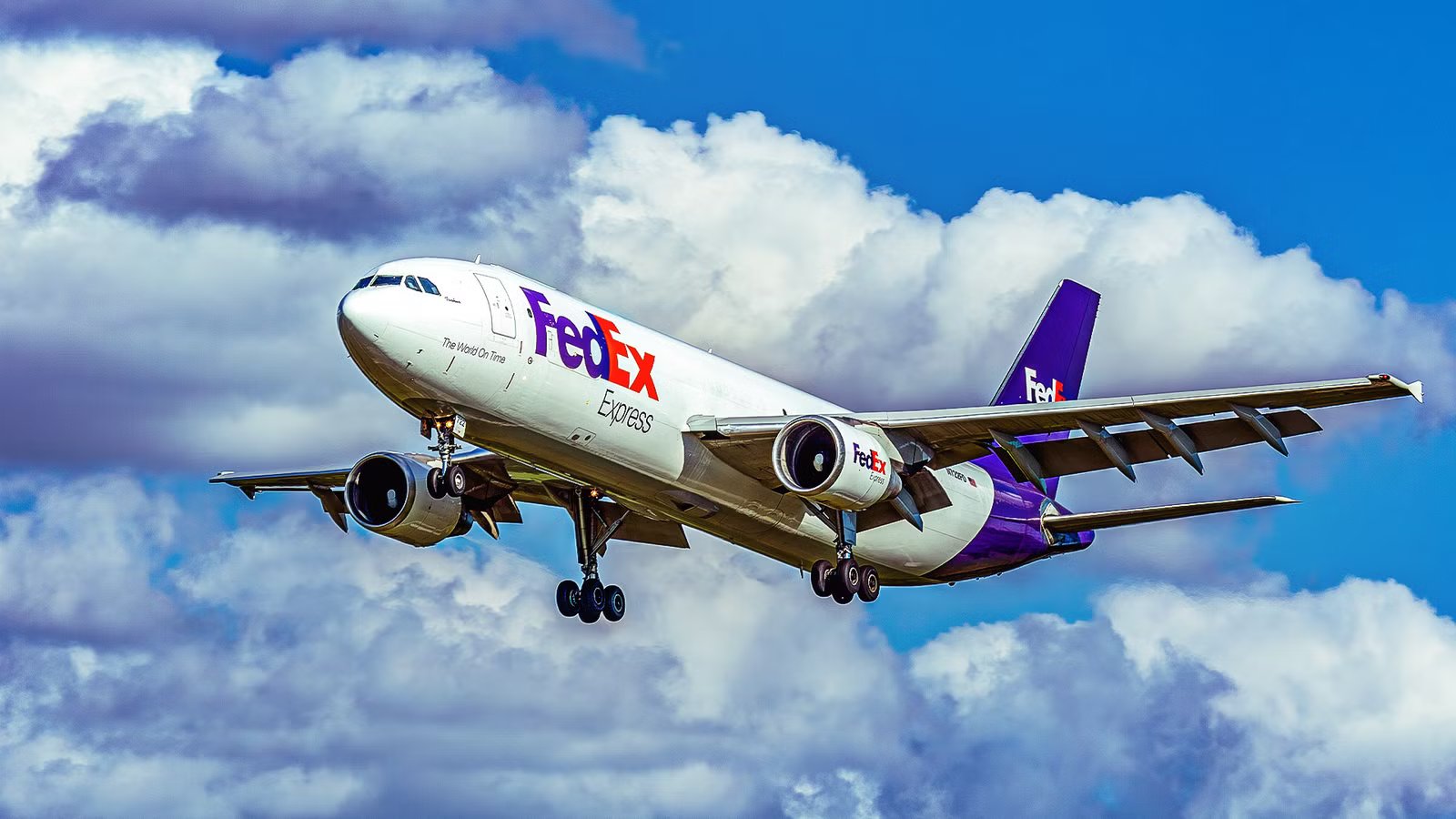
In 1974, the Airbus A300 entered service with Air France. This was the jet that would propel the new company, Airbus, which had been formed from a series of mergers, into becoming the largest airplane manufacturer on earth. Almost a decade later, in 1983, a newer and modernized counterpart, the A310, entered service with Swissair. These played a large role in replacing trijets and opening up longer-haul routes with longer ranges and ETOPS ratings.
However, despite the A310 being a more modern aircraft, legacy A300s are more popular today than the A310, although the A310 was important in the context of the formative years of Airbus, unlike the later poorly-selling A380 and A330-800. Let’s examine why the A300 outlived the A310, and why airlines preferred the larger, but older A300.
Airbus’ Revolutionary A300/A310 Airliners

The Airbus A300 was a big deal. When it was introduced, three engines were considered the minimum for a widebody aircraft. Airbus made the bold decision to build a twin-engined widebody airliner with a smaller, lighter, and more economical airframe than its tri-engined counterparts. Airbus says that “Not only did the A300B variant become the world’s first twin-engine widebody jetliner, it also featured the pioneering use of high-tech composite materials on a passenger aircraft.”
Airbus was soon able to convince airlines that it had created a real competitor to aircraft offered by the likes of Boeing and McDonnell Douglas, and the orders started to roll in. Airbus would go on to develop the A310 with the direct consultation of airlines. The A310 came with a shorter fuselage, but longer range than the A300, while also featuring a greater use of composite materials. It preserved the same 222-inch (5.8 meter) fuselage cross-section.
The A310 was also developed with what has become a cornerstone of Airbus’ success: maximum commonality. It retained the common parts and cockpit layouts, making it much easier for airlines to maintain and train crews. However, the A300 remained more popular, attracting double the orders and remaining in production for much longer than the A310.
The A300’s Larger Orderbook & Production Run

The A300 remained in production from when the prototype was built in 1971 until 2007, for a period of 36 years. Over that time, Airbus delivered a total of 561 A300s. Meanwhile, the A310’s production run lasted from when the prototype was built in 1978 to 1998: at 20 years, this was only around half that of the A300.
A total of 255 A300s were delivered, close to how many A380s Airbus would go on to deliver (251). The older A300 had three-crew cockpits, requiring a flight engineer, although this was later reduced to two. The A310 was designed without the need for a flight engineer, and this role has now almost completely disappeared in civil aviation.
|
Airbus A300/A310/A330 in numbers (per Airbus) |
|
|---|---|
|
Number of A300s delivered |
561 |
|
Years A300s produced |
1971 to 2007 |
|
Number of A310s delivered |
255 |
|
Years A310s produced |
1978 to 1998 |
|
Number of A330s delivered |
1,650+ |
|
Years A330s delivered |
1992 to present |
The A330, including its less popular quad-engined A340 counterpart , was later built to succeed the A300/A310. As of 2025, the A330 has received a total of around 1,950 orders, of which over 1,650 have been delivered, with most remaining in service. The A330neo entered service in 2018 and, until the 777X enters service in 2027, is the world’s newest widebody, although, like the 777X, it is not a clean-sheet aircraft like the A350 or 787.

Why Did Airbus Build The A380 With 4 Engines?
Here’s why this modern double-decker has an outdated configuration and why it failed.
Why The A300 Was More Popular

The A300 was designed with a capacity of around 250 passengers to serve medium to long-haul routes, while the A310 was a shorter version with a redesigned wing built to carry around 220 passengers and have a greater range than the older A300. The reason why the A310 was less popular was that it was a comparatively niche aircraft, as demand for medium-capacity widebody aircraft was limited compared with larger jets.
This has been seen time and again in other areas of the airline industry. For instance, the entire Embraer E-Jet family has attracted only 2,328 orders, with just 437 still on order today, while the Airbus A320 family has seen 19,282 orders, with 7,185 still on order. This is because the regional aircraft market is much more limited than the narrowbody market in which the A320 operates. The same is true of the 777, as the 777-300ER is more popular than tthe more niche 777-200LR.
Another issue for the A310 was the A330. The A330 was built as a more modern, fuel-efficient, and larger replacement for both the A300 and A310, and its capacity eclipsed that of the A310, while erasing the latter’s range benefits. For a time, many airlines preferred either the larger capacity A300 or the modern A330, which left little room for the A310 to compete.
The A310 Was Still A Success

While the success of the A300 is unassailable as the aircraft that made Airbus, the success of the A310 is more measured. It is better seen as a stepping stone for Airbus. By developing the A310 after the A300, Airbus demonstrated it could build a family of aircraft that would cater to airlines’ specific needs. When it comes to sales, 255 aircraft represented a disappointing total, but it wasn’t the financial loss that selling only 251 cleansheet A380s would later turn out to be.
It is hard to estimate whether Airbus recouped the costs of developing the A310, but it certainly wasn’t the cash cow the A330 turned out to be. Airbus has not published a definitive break-even figure for the A310, but analysts generally agree that the A310 did break even and may even have returned a small profit. The costs of the A310 were comparatively low thanks to the jet being a derivative and not a clean-sheet aircraft.
The A310 was a strategic success and helped propel Airbus to become one of the two main widebody commercial aircraft manufacturers, but the same can’t be said of one A330neo model. The A330neo was developed with two variants, the A330-800 and A330-900, and the A330-800 just hasn’t sold. Most of its orders ended up cancelled, leaving only around eight orders, of which seven have been delivered. By contrast, the A330-900 has accrued 433 orders, of which 155 have been delivered.

Airbus A390: What We Know So Far
What will the European planemaker’s next clean-sheet aircraft design entail?
The Airbus A300 Continues To Fly Today

Both aircraft remain in use today, although with far more A300s. The final scheduled commercial passenger A310 was withdrawn by Air Transat in March 2020, and the final passenger A300 was retired in sanctioned Iran in 2025. Only a few dozen A310s remain in civil operation, with a handful of examples operated by cargo airlines and militaries. While the A300 is the older type, its longer production run means that its newest airframes are newer than the newest A310 airframes.
When it comes to operators, Planespotters.net lists Al-Atheer Aviation, Ariana Afghan Airlines, Ava Airlines, the Spanish Air Force, Iran Air, Iran Airtour, Mahan Air, Novespace, the Royal Canadian Air Force, Taban Airlines, ULS Airlines Cargo, and Yazd Airways as having A310s in service. They collectively operate a total of 23 aircraft, or around 9% of the number produced, and 10 of these are found in Iran. Around 170 A300s remain in service around the world, and three freighter companies claim the lion’s share.
FedEx has 65 in inventory, UPS has 52, and DHL (European Air Transport Leipzig) has another 24 examples in its fleet. These three cargo airlines account for almost 150 A300s, or over 85% of the total number remaining. The A300 may no longer be a commercial passenger aircraft, but it continues to fly as a freighter workhorse, particularly in the United States.
End Of Life As Freighters

The comparative success of the A300 is driven by many factors, with the A310’s niche working against it. As a legacy and out-of-production aircraft, the A300’s longer production run means its A300-600R and A300-600F airframes are often newer than A310 airframes. Another factor is that success breeds success, as the fact that more A300s were ordered means there are more replacement parts from cannibalized aircraft to keep the shrinking pool of aircraft flying.
The remaining A300s and A310s are overwhelmingly freighters. This is a common end for commercial passenger aircraft types. The same commercial passenger to freighter cycle has been seen with the Boeing 767 (which remains in production as the 767-300F), Boeing 747, the 757 to some degree, the MD-11, and others. That said, not all aircraft are feasible as freighters, with the one-trick pony, A380 Superjumbo, being a notable example.
FedEx operates the last Airbus A300 ever built (registered N692FE). It is the largest operator of the type, although it plans to replace its older A300s with Boeing 767-300Fs. The 767 is itself an old aircraft and is coming to the end of its production run, but it is well-suited to its role as a freighter, even if the successor 787 is much more fuel-efficient. Freighters do not value fuel efficiency to the extent of passenger airlines, with robustness and lower capital costs being comparatively more important.