dailynewsnblog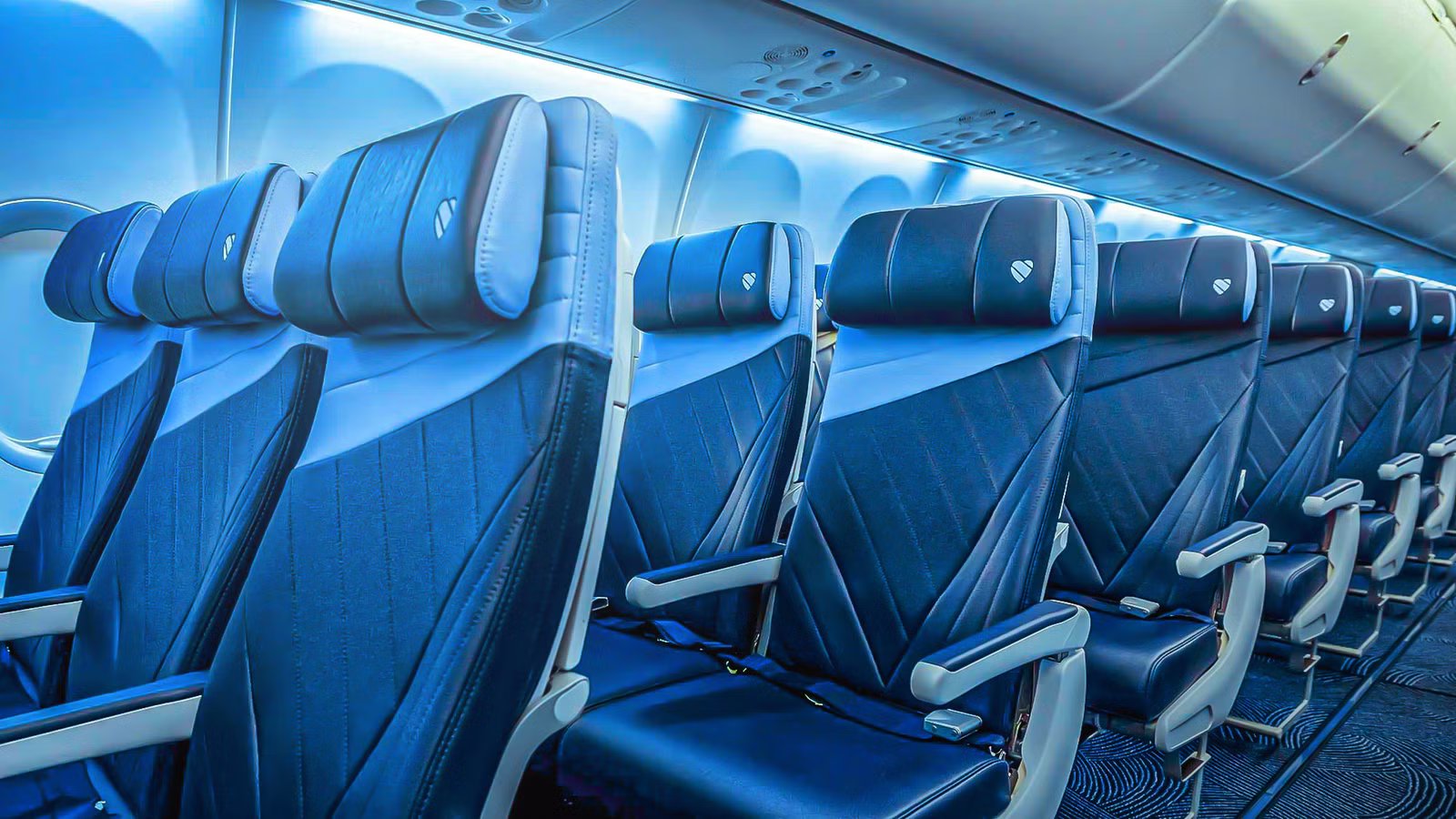
In 2012,  Southwest Airlines made a very airline-industry choice to cram another row into its aircraft. The airline moved to thinner, lighter seats and gave up quite a bit of comfort as a result, with recline being trimmed and pitch being tightened slightly. This, however, allowed the airline to boost its Boeing 737-700s from having 137 seats to 143. Southwest put a price tag on that project back in the day as well, with the airline choosing to invest $60 million in these seats, a figure that was offset by an estimated $10 million a year in extra ticket revenue from those added seats. 14 years later, the carrier is choosing to undo this decision on purpose. As Southwest is now assigning seats and introducing an extra-legroom product, it has modified its 737-700 fleet by removing a row of seats.
This effectively takes the jet back to 137 seats, so that there is room up front and around the exits for higher-yield extra-legroom rows. Retrofits that were part of this program began in May 2025 as part of a broader cabin refresh effort. On the surface, this looks like a carrier voluntarily shrinking capacity in an era when every seat matters. The real question, and the one that this story answers, is why Southwest now believes that fewer seats can make more money, as the airline looks to bet on pricing power, customer preference, and premium upsells outweighing the simple math of overall cabin density.
What Led Southwest To Make This Decision In The First Place?

In 2012, Southwest was in the middle of a broader cabin refresh. The airline’s “Evolve” interior, which was introduced during this time period, aimed at squeezing more revenue and efficiency out of the same aircraft. By installing slimmer, lighter seats and tweaking the layout, the carrier added an entire row to its  Boeing 737-700 models, lifting capacity from 137 to 143 seats, highlighting a roughly 4% bump without the purchase of additional jets.
The economics of all this is fairly straightforward. Southwest estimated the retrofit would cost around $60 million, but the extra six seats across the fleet would drive roughly $10 million in incremental annual ticket revenue, according to reports from the Los Angeles Times. Just as important for a low-fare airline, the new seats were lighter, with around six pounds of overall weight per seat (2.7 kg). This cuts the total aircraft’s weight quite significantly, a maneuver that can reduce fuel burn over time, especially in lighter aircraft.
Southwest’s one-cabin, low-fare model left fewer ways to lift revenue per flight, so adding seats was a clean way to spread trip costs out over a larger number of passengers. To make the row fit, Southwest accepted small comfort tradeoffs, with seat pitch notably being reduced and recline being squeezed, both of which reduce the overall effort of passenger comfort. In other words, this 2012 decision was a classic density and efficiency move that aimed to tighten unit economics on all flights.
What Did Southwest Airlines Have To Do To Put Together This Cabin?

Southwest implemented its 2012 densification through a fleetwide interior retrofit on its 737-700 aircraft, a move that seemed roughly standard for the industry at the time. The idea of improving capacity through more efficient onboard products (specifically, the construction of its seats) was not inherently difficult to sell to shareholders. What was more difficult to communicate, however, was the investment and execution logic behind the decision. The airline answered the execution question clearly when it explained that modifications across the fleet could be completed efficiently within around 10 months, slotting aircraft into the work during planned maintenance.
This strategy calmed investors and the airline’s board of directors, primarily because it kept aircraft downtime manageable. It also kept costs down by reusing existing seat frames on most 737-700 models, a design choice that avoided roughly $50 million of extra spending and put the total retrofit bill for the project at around $60 million. Southwest did not need a special financing package. At the time, it had billions in unrestricted cash and short-term investments and described operating cash flow as its primary funding source for aircraft-related capital spending.
The airline’s revolving credit facility also provided backstop liquidity, making this a fairly low-risk venture. Shareholders thus largely viewed this as a classic low-cost-carrier move, with a small capital investment being rewarded with the potential for higher revenue opportunity and lower weight-driven operating costs. Management quantified the upside, projecting about $10 million a year from the extra seats on their own.

Southwest Airlines Will Begin Premium Cabin Retrofits “Mid-Year”
The airline will begin installing the new interiors on its Boeing 737-800s once the modifications have been approved by the FAA.
A Key Piece Of Southwest’s Growth

Between 2012 and the onset of the COVID-19 pandemic, Southwest Airlines thrived by doubling down on what the carrier does best, by offering a simple product, a point-to-point network that kept aircraft utilization high, and a low cost base that was anchored by a single-family Boeing 737. It expanded steadily across the United States in the years following the complete integration of AirTran into its network, and the airline increased its relevance in large business markets without abandoning its brand differentiator, which included two free checked bags, no change fees, and relatively transparent pricing.
Behind the scenes, the airline modernized its fleet with larger 737-800 jets and new-generation aircraft, invested in operational reliability capabilities, and upgraded its revenue management systems to match those of better-equipped competitors. The airline also hired expert commodities traders to help it hedge fuel risk, something which allowed it to use lower fuel prices in the mid-2010s to its advantage. The airline later began to expand its higher-margin auxiliary revenue streams, especially with the growth of its co-branded credit card programs.
With consistently strong cash generation and a conservative balance sheet, the airline could keep ordering aircraft, weather irregular operations, and still provide strong capital returns to shareholders. The result was a long profitability run, the continued growth of brand loyalty, and the expansion of operations.
Everything Changed For Southwest Post-Pandemic

Everything changed for Southwest in the years following the pandemic, with the carrier that once looked like the industry’s most obvious outperformer beginning to lag on costs, reliability, and customer confidence. This emerged most vividly in December 2022 when the airline encountered its now-notorious holiday breakdown, when the carrier’s network and crew-rescheduling systems collapsed and triggered around 16,900 cancellations and stranded more than two million travelers across the country. Regulators later imposed a record $140 million civil penalty and noted that Southwest was forced to pay more than $600 million in refunds and reimbursements.
This episode certainly harmed Southwest’s brand, forcing heavy spending on operational fixes, and it collided with an industry that was increasingly monetizing premium seating and other upsells, all areas where Southwest had fewer levers. As margins and stock prices lagged, activist Elliott Investment Management decided to disclose a roughly $1.9 billion position in the carrier, one of the hedge fund’s largest ever. The investor controlled roughly 11% of the carrier, and it quickly launched a campaign to reshape the board and push for faster strategic changes.
The fight ended in an October 2024 settlement, with Southwest adding five Elliott nominees to its board alongside an additional independent director, and Executive Chairman Gary Kelly agreed to step down earlier than had originally been planned. CEO Bob Jordan kept his job, but the activist investor successfully pushed the airline to accelerate its revenue and cost initiatives, including moves away from open seating towards premium, extra-legroom options to rebuild performance credibility.

This Is How Short Southwest Airlines’ Turnarounds Used To Be
Southwest Airlines once pulled off the impossible, using an ambitious strategy to save the company.

Southwest’s decision to remove the extra row on its 737-700 jets is a pure reversal of its 2012 cabin densification efforts. The airline is deciding to trade raw seat count for higher-yield space. The 737-700’s shorter cabin leaves little room to carve out a meaningful extra legroom zone while keeping standard pitch competitive.
Therefore, the airline decided to pull one six-seat row from its cabins, taking the jet back from 143 seats to the earlier number of just 137. This freed up more than enough real estate to introduce a block of premium, extra-pitch seats that can be sold at a surcharge once assigned seating rolls out, a shift designed to lift unit revenue and better match what customers increasingly expect on longer domestic flights.
This work was executed as part of a focused modification program across roughly 300 aircraft, and it was timed around maintenance and, interestingly, completed ahead of schedule. This allowed Southwest to launch its new product without further disruption to its network. The objective was to have a cabin with fewer seats but better pricing power per seat.