dailynewsnblog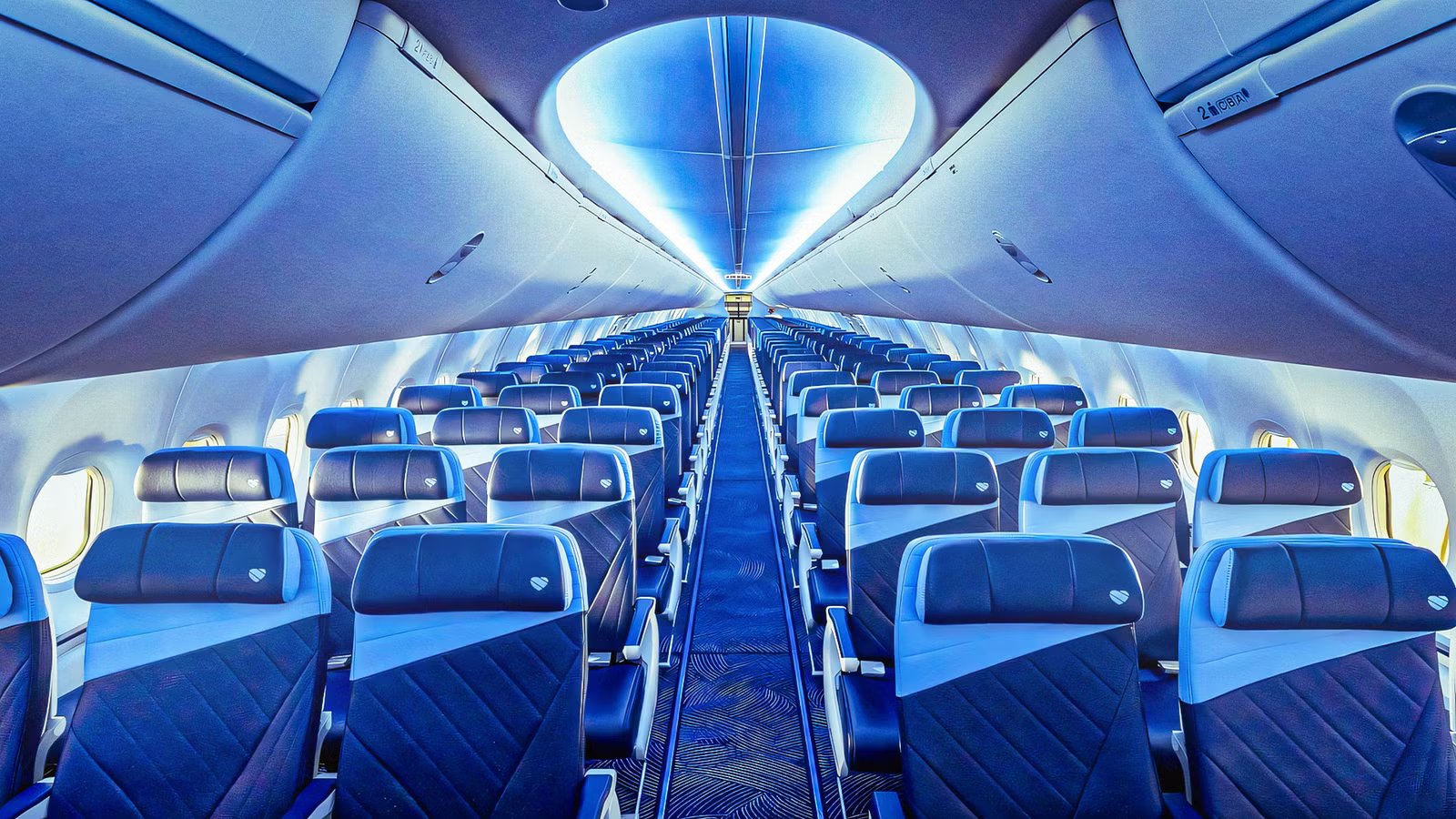
 Southwest Airlines has recently completed the fleet-wide reconfiguration of its cabins to add extra legroom seating. The 737 MAX 8s and 737-800s left the shop essentially the same as when they entered, but with the seat pitch adjusted to add the extra legroom section, while the 737-700s have lost one row to make room for the extra legroom seats. The project was massive in scope, but the work itself was light and was even completed a week ahead of schedule in January 2026.
The reconfigurations represent the start of a new era at Southwest, in which the famous “open seating” policy has been discontinued, there are now premium seating options, and passengers are paying to select specific seats online. The final Southwest flight with open seating, operating from Honolulu to Los Angeles, departed on January 26, and when it arrived the following morning, Southwest was officially just like everyone else. But now, the carrier may send its 737s back into the shop for another interior modification.
The Latest Changes To Southwest’s 737s

Southwest has recently changed the LOPA (Layout of Passenger Accommodations) of its entire 800+ Boeing 737 fleet. The primary change was to adjust the seat pitches of each aircraft to create a dedicated section of extra legroom seats. While the newest Boeing 737 MAX 8 deliveries feature Recaro R2 seats with special seat covers to denote that they offer added space, these seats will be largely indistinguishable on most aircraft. This is because special seat covers have not been applied to the Collins Meridian or Innovator II seats found on older aircraft.
The 737-800s and 737 MAX 8s are maintaining their maximum capacity of 175 seats, but 45 of these seats now feature 36 inches (91.44 centimeters) of legroom, as per aeroLOPA. The 737-700s, previously configured with 143 seats, will now feature 137 seats, as the thickness of the older Innovator II seats meant that a row had to be sacrificed to make room for the extra legroom seats. 40 of these are extra legroom seats, boasting an exceptional seat pitch of 38 inches (96.52 centimeters).
Currently, only new 737 MAX 8s, along with some reconfigured 737-800s, feature the Recaro R2 seats. The rest of the 737 MAX 8 fleet and most of the 737-800 fleet are equipped with the Collins Meridian. Meanwhile, some 737-800s, along with all 737-700s, are equipped with the B/E Aerospace (now part of Collins) Innovator II. Some 737-700s will be retrofitted with Collins Meridian seats, and all 737-800s with the Innovator II seats will receive the Recaro R2. All planes with the R2 feature in-seat power, and all aircraft with the Collins Meridian will be retrofitted with in-seat power.
What’s Next For Southwest Airlines?

Southwest’s CEO Bob Jordan has confirmed that his company is seriously looking into adding a first class cabin onto its planes. No official announcement has been made since Jordan commented on this idea in January, and looking into a new cabin is hardly the same as a confirmation. But in the current state of the US market, as well as Southwest’s trajectory, Jordan’s comments are essentially a confirmation. A first class cabin on Southwest is a matter of when, not if.
Naturally, any details as to what this could look like are pure speculation. The company is partnering with Recaro for its newest economy seats, so the Recaro R4 or R5 would be the frontrunners. Southwest is retrofitting its aircraft with in-seat power as well as Wi-Fi, so you can expect these amenities, but seatback entertainment is extremely unlikely. The carrier’s pitch for extra legroom seats is among the best in the industry, so some inches would likely be taken out to make room for first class seats.
|
Product |
Seat Pitch |
|---|---|
|
Southwest extra legroom seats |
36 to 38 inches (91.44 to 96.52 centimeters) |
|
JetBlue Even More Space |
35 inches (88.9 centimeters) |
|
American Main Cabin Extra Delta Comfort United Economy Plus |
33 to 34 inches (83.82 to 86.36 centimeters) |
Southwest Airlines traditionally positioned itself as a hybrid carrier, blurring the lines between a low-cost carrier and a legacy airline. But today, the budget airlines are increasingly moving upmarket as that’s where the money is. Spirit Airlines has long offered a stripped-down first class product called “Big Front Seat”, but Frontier is now also preparing to debut a new first class product. JetBlue, meanwhile, is working on a domestic first class product titled “Mini Mint”. For Southwest, this decision is simply moving with the times.

This Is How Short Southwest Airlines’ Turnarounds Used To Be
Southwest Airlines once pulled off the impossible, using an ambitious strategy to save the company.
Why Southwest Airlines Needs First Class

In any industry, premium products generally sell for high margins, but of course, face a smaller market than mainstream products. In the US airline industry, however, the market for premium seating has increased dramatically. As such, Delta Air Lines, United Airlines, and Alaska Airlines have been making all of the money, while the rest (including  American Airlines, which strategically moved downmarket before COVID) have been left behind. This includes essentially all of the budget airlines, as well as Southwest.
This is tied with the increasing importance of loyalty programs, which are the primary profit centers at Delta, United, and Alaska. Customers want to earn miles and use airline-sponsored credit cards so that they can then fly in Delta One, travel to Cape Town with United, or book an award ticket with an Alaska Atmos partner. Earning Southwest Rapid Rewards points for redemptions in economy within the US simply doesn’t have the same appeal, and so consumers are moving to the legacies.
Adding a first class product increases the appeal of Southwest’s Rapid Rewards program and gives potential loyalists more incentive to build status with the carrier. First class seats are also higher-margin products than economy seats as a whole. Being cheap no longer sells, which is why the ultra-low-cost carriers are adding premium products, and Southwest’s previous brand image of being a quirky airline with a uniform onboard product at largely affordable prices also doesn’t cut it today. At least, according to Elliott Investment.
Southwest’s Alignment With The Industry

Elliott Investment has been selling off its shares in Southwest, and its two appointed members of the board are set to leave on February 23. However, there can be no denying that ever since Elliott first boarded the airline in June 2024, it has fundamentally changed Southwest’s business model. Before Elliott, Southwest did not offer premium seating, it gave two checked bags for free, there were no airline partnerships, bookings could only be made on Southwest’s website, there were no assigned seats, and no redeye flights. Elliott aggressively argued that this needed to change.
It is true that Southwest’s finances greatly lagged behind industry leaders coming out of the COVID-19 pandemic, and the carrier had also been suffering from antiquated systems as well as outdated practices. Southwest’s operational and sales changes, as such, have been a net positive. But many of the customer-facing changes have been controversial, to say the least. Southwest is now charging for previously complimentary services like checked bags, and it now assigns seats to passengers.
Under Elliott, Southwest has been chasing ancillary revenue and attempting to move up-market with its premium seating options. But before the COVID-19 pandemic, Southwest had recorded nearly half a century of straight profits. This was possible because Southwest’s unique attributes, such as open seating and two free checked bags, garnered it a cult following. This customer base kept Southwest in the green during previous downturns, but Southwest, under Elliott, has decided to shun its most loyal followers in favor of following industry trends.

Lounges & Widebodies? Southwest Airlines At “Beginning” Stages Of Potential Long-Haul Strategy
Here’s the latest in a long series of changes aimed at transforming Southwest into an entirely new, more profitable airline.
First Class Will Be Coming To Southwest

The work is done. Southwest is just like every other airline in the United States, and the former loyalists now have no reason to stick with the carrier. Instead, the carrier is targeting a wider audience and offering an increasingly diverse selection of seating options to cater to a more premium clientele. It’s competing mainly on price, schedule, and network, and while boosting ancillary revenue has increased the carrier’s short-term financials, it’s not sustainable to rely on this long-term.
Without Southwest’s former cult following, the carrier has to commit fully to its premium shift, even once Elliott Investment has left the company. First class is as popular with travelers as ever, and delaying Southwest’s entry into this market space simply leaves money on the table. Furthermore, the presence and availability of the product will make Rapid Rewards a more desirable loyalty program, a goal that Southwest has already been working towards with its foreign airline partnerships and changes to its credit cards.
|
Southwest Airlines Interline Partners |
|---|
|
Icelandair |
|
China Airlines |
|
EVA Air |
|
Philippine Airlines |
|
Condor |
|
Turkish Airlines |
While it’s unclear when Southwest will commit to this move or how the product will look, the US airline industry is shifting towards one dominated by premium products and loyalty programs. Southwest, looking to emulate the profits made by the nation’s most successful airlines, is adapting to emulate their business models. First class is the next logical step.