dailynewsnblog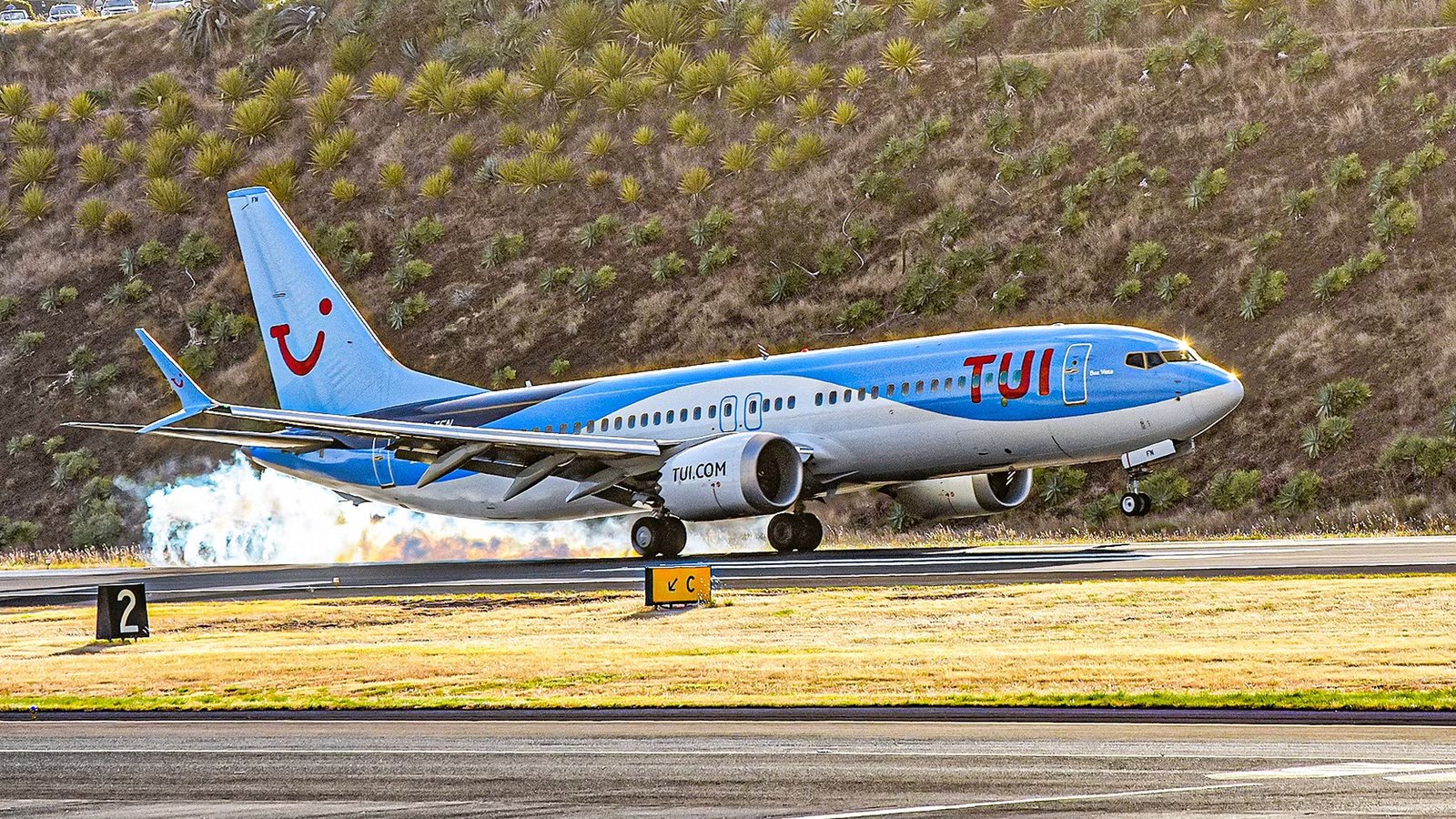
For many passengers, the ideal landing is the one they barely feel. A soft touchdown feels polished, controlled, and reassuring, which is why “butter landings” have become such a popular shorthand for good flying. But in airline operations, the smoothest landing is not always the best one. In some situations, airline pilots are not trying to produce a graceful, barely noticeable arrival at all. They are deliberately aiming for a firmer touchdown because that is the safer way to get the airplane on the runway, in the right place, with enough room left to stop.
That may sound counter-intuitive from the cabin, but it makes perfect sense from the flight deck. Pilots are not judged on how elegant the touchdown feels in row 24. They are judged on whether the aircraft crosses the threshold correctly, touches down in the intended zone, stays aligned with the runway, and begins decelerating promptly. On short runways, wet runways, or windy days, trying too hard to grease the airplane onto the pavement can actually increase risk. A more positive touchdown can help ensure faster wheel contact, spoiler deployment, braking effectiveness, and better directional control.
The Best Landing Is Not Always The Softest One

The biggest misconception about landings is that softness equals quality. Passengers tend to think that way because they feel only the touchdown itself. Pilots do not. In airline flying, the real objective is precision. The airplane must cross the threshold at the right speed, on the right path, and touch down where it is supposed to. A landing that feels silky but floats well beyond the intended touchdown point is usually less desirable than one that feels firmer but puts the aircraft exactly where it needs to be.
There are multiple reasons why you might experience a hard landing, but in practical terms, three primary factors explain most of the firmer landings that passengers would notice:
- Runway length: Shorter runways leave less room for float.
- Runway contamination: Rain, standing water, slush, snow, or ice make it more important to get the wheels planted and deceleration started quickly.
- Wind: Especially gusty crosswinds, where control matters more than elegance.
That is why a hard-feeling landing is not automatically a bad one. Sometimes it is exactly what the crew intended. A firm touchdown can be the sign of disciplined flying: the aircraft is on the runway in the right place, braking can begin, and the landing roll is being managed with safety margins in mind. In airline operations, that is what counts.
How A Small Float Can Become A Big Problem

One reason pilots land firmly on purpose is that runway margin disappears faster than many passengers realize. Small deviations in flare height or touchdown point can have a very meaningful effect on stopping distance. On a long dry runway at  Denver International Airport, that may not matter much. On a shorter runway, such as London City Airport, or one that is wet or sloping downhill, it matters a great deal.
The FAA notes that every 10 feet flown above the standard 50-foot threshold, crossing height adds roughly 200 feet to landing distance, while each 1% of downhill runway slope can increase landing distance by about 10%. That is why pilots are trained not to chase the smoothest possible touchdown. They are trained to make the right one. The aircraft needs to touch down in the target zone, not float halfway down the runway while everyone in the cabin admires how gentle it feels.
|
Factor |
FAA guidance |
Why it matters |
|---|---|---|
|
Target touchdown point |
~1,000 feet beyond threshold |
Landing long quickly reduces stopping margin. |
|
Touchdown zone |
500–3,000 feet beyond the threshold, but not beyond the first third of the runway |
Crews have a window, but not unlimited room |
|
High threshold crossing height |
+10 feet can add ~200 feet in stopping distance. |
A slightly high approach can have a large runway penalty. |
|
Downhill runway slope |
1% downhill can add ~10% landing distance. |
Even a modest slope reduces available margin. |
Until the airplane is on the ground, braking is not fully effective, and the landing roll has not really begun in earnest. This is the heart of the issue. A firmer touchdown is often not about rough handling. It is about avoiding a long landing. The sooner the airplane is solidly on the runway, the sooner the braking, spoilers, and reverse thrust can do their job.

Worst Boeing 747 Landing Ever? Why Some People Think So
Cathay Pacific Cargo flight CX97 performed a hard landing in Guadalajara on March 7.
John Wayne Airport Is A Perfect Case Study

If one US airport illustrates why pilots sometimes “plant it on,” it is John Wayne Airport-Orange County Airport (SNA), just outside of Los Angeles. The airport’s main runway is just 5,700 feet long, which is short for an airport handling regular commercial service with mainline narrowbodies like Boeing 737s and Airbus A320-family jets that typically require 5,500-6,500 feet.
As a result, the runway length shapes landing technique, as pilots want the aircraft down firmly in the touchdown zone, with braking available early and no unnecessary runway wasted in the flare. SNA is also famous for its operational sensitivity to surrounding neighborhoods and noise rules, resulting in steeper approaches, which adds to its reputation as an airport where procedures matter and margins are taken seriously.
But SNA is not alone. Here are the US airports with the shortest runways that have mainline jet service (i.e., not just regional jets):
|
Rank |
Airport |
Code |
Runway Length |
|---|---|---|---|
|
1 |
Key West |
EYW |
5,076 ft / 1,547 m |
|
2 |
Martha’s Vineyard |
MVY |
5,504 ft / 1,676 m |
|
3 |
John Wayne-Orange County |
SNA |
5,700 ft / 1,737 m |
|
4 |
Jackson Hole |
JAC |
6,300 ft / 1,920 m |
|
5 |
Nantucket |
ACK |
6,303 ft / 1,921 m |
|
6 |
Chicago Midway |
MDW |
6,522 ft / 1,988 m |
|
7 |
Westchester County |
HPN |
6,549 ft / 1,996 m |
|
8 |
Hollywood Burbank |
BUR |
6,886 ft / 2,099 m |
|
9 |
LaGuardia |
LGA |
7,003 ft / 2,135 m |
|
10 |
Washington National |
DCA |
7,169 ft / 2,185 m |
The commercial airport with the shortest runway that has regularly scheduled commercial jet service is Hilton Head Island Airport (HHH) in South Carolina. Until recently, it had a 4,300-foot runway, but this was extended to 5,000 feet to accommodate regional jets, such as the five-times-daily  American Airlines shuttle to
  Charlotte Douglas International Airport with an Embraer 175. However, the runway length still falls short of requirements for mainline narrowbody aircraft.
Why Rain, Slush, And Snow Change Everything

Wet or contaminated runways are another major reason landings can feel firm. When the runway is slippery, the priority changes immediately. The goal is not to make the touchdown feel delicate, but rather to get the wheels on the ground promptly, so weight comes onto the gear, spoilers deploy, braking starts effectively, and hydroplaning risk is minimized. That is why a rainy-day arrival almost always feels more assertive.
Wet runways are what passengers are likely to encounter most frequently, but depending on where you’re flying, your chances of a rain-induced firm landing might be considerably higher. Here are some commercial airports (min. one million annual passengers) that get a significantly higher than average number of rainy days:
|
Airport |
Country |
Annual Wet Days |
Annual Passengers |
|---|---|---|---|
|
Medellin (MDE) |
Colombia |
264 |
11.8 million |
|
Bogota (BOG) |
Colombia |
244 |
45.8 million |
|
Bergen (BGO) |
Norway |
234 |
6.7 million |
|
Vancouver (YVR) |
Canada |
173 |
26.2 million |
|
Penang (PEN) |
Malaysia |
169 |
7.6 million |
|
Stavanger (SVG) |
Norway |
167 |
4.0 million |
|
Jakarta (CGK) |
Indonesia |
166 |
54.8 million |
|
Singapore (SIN) |
Singapore |
157 |
70.0 million |
|
Glasgow (GLA) |
United Kingdom |
156 |
8.0 million |
|
Phuket (HKT) |
Thailand |
155 |
17.2 million |
Of course, it’s not just the number of rainy days, but also the intensity of the rain. Airports in tropical climates might get less frequent rain than coastal Norway, but at a much higher intensity, such as during the monsoon season. Large airports such as  Singapore Changi Airport (SIN),
  Kuala Lumpur International Airport (KUL),
  Hong Kong International Airport (HKG), and
  Mumbai Airport (BOM) all get more than 100 inches (2,500 mm) of rain annually.
Snow- and ice-covered runways are more serious because the issue is no longer just water on the surface, but a contaminant that can sharply reduce both braking action and directional control. That is why airports and crews use the FAA’s Runway Condition Assessment Matrix, or RCAM, which is specifically designed to assess contaminants, assign runway condition codes, and pass those conditions to pilots and operators in a standardized way.
The key point is simple: wet or contaminated runways reward a more positive touchdown. What feels like a thump in the cabin can be the correct technique for slippery pavement.

Why The McDonnell Douglas MD-11 Is Notorious For Such Challenging High-Speed Landings
The aircraft is one of the most iconic in commercial aviation history.
Gusty Crosswinds Make Butter Landings Much Less Important

Wind is the third big reason some landings feel firm. Crosswinds and gusts complicate the last few seconds of flight because the aircraft must touch down aligned with the runway, under control, and ready for rollout, even while the atmosphere is trying to push it sideways or change its rate of descent. In those conditions, softness becomes a secondary concern. Control is the priority.
 Dublin Airport (DUB) is a good example because the airport explicitly identifies Runway 16/34 as its crosswind runway, used when conditions and operational needs require it. That is a reminder that wind is not some abstract nuisance; it is important enough that airports build procedures and infrastructure around it. Wellington Airport (WLG) is even more dramatic. The airport warns that severe wind can regularly cause flight cancellations, which tells you just how central wind is to safe operations there.
Madeira Airport (FNC) belongs in this conversation as well. Funchal is one of Europe’s best-known wind-sensitive airports, and a favorite with planespotters looking to capture rough landings and last-minute go-arounds. The reason is the turbulent wind conditions caused by the airport’s location between steep mountains and the ocean. Pilots frequently encounter significant, low-altitude, north-northeast gusts exceeding 40 knots, dangerous wind shear, and strong tailwinds.
Specialized pilot training is mandatory for landing at FNC, and a hard landing is almost guaranteed. Not because pilots land hard there for the sake of it. It is that a more assertive touchdown is the safest way to get the airplane onto the runway, keep it aligned, and start the rollout cleanly. So, next time you have a lively touchdown at  Chicago O’Hare International Airport (ORD), remember that it’s called the Windy City for a reason, and your pilots are choosing control over cosmetics.
The Safer Landing Often Feels Harder

Runway length, contamination, and wind explain most firmer landings, but they are not the only reasons one can feel more abrupt than expected. Aviation is full of edge cases and local procedures that shape technique. Other factors that can contribute to a firmer landing include:
- Steep approaches because of terrain, obstacles, or noise rules. London City is the classic example, with its 5.5-degree approach angle compared with the more typical 3 degrees.
- Turboprop handling characteristics, since some can feel more nose-low or more direct in the touchdown transition.
- The need to clear the runway efficiently at busy airports, where a prompt touchdown and deceleration can help traffic flow.
- Runway slope, especially downhill runways, which materially increase landing distance.
(And yes, because this is likely to be raised in the comments: if your pilot is an ex-Air Force officer, you are also probably more likely to get a “butter landing” than a pilot who is ex-Navy, and more accustomed to slamming the aircraft down on a carrier deck.)
The easiest way to understand the subject is to separate the passenger’s view from the pilot’s view. Passengers experience the touchdown as a single moment. Pilots experience it as one part of a sequence that includes approach stability, touchdown-zone accuracy, deceleration, and rollout control. A smooth touchdown is nice. But it is not the main objective.
That is why pilots sometimes land hard on purpose. Because with short runways, contaminated surfaces, gusty approaches, or operationally constrained airports, the best landing is not always the prettiest one. Quite often, it is simply the safest one.