dailynewsnblog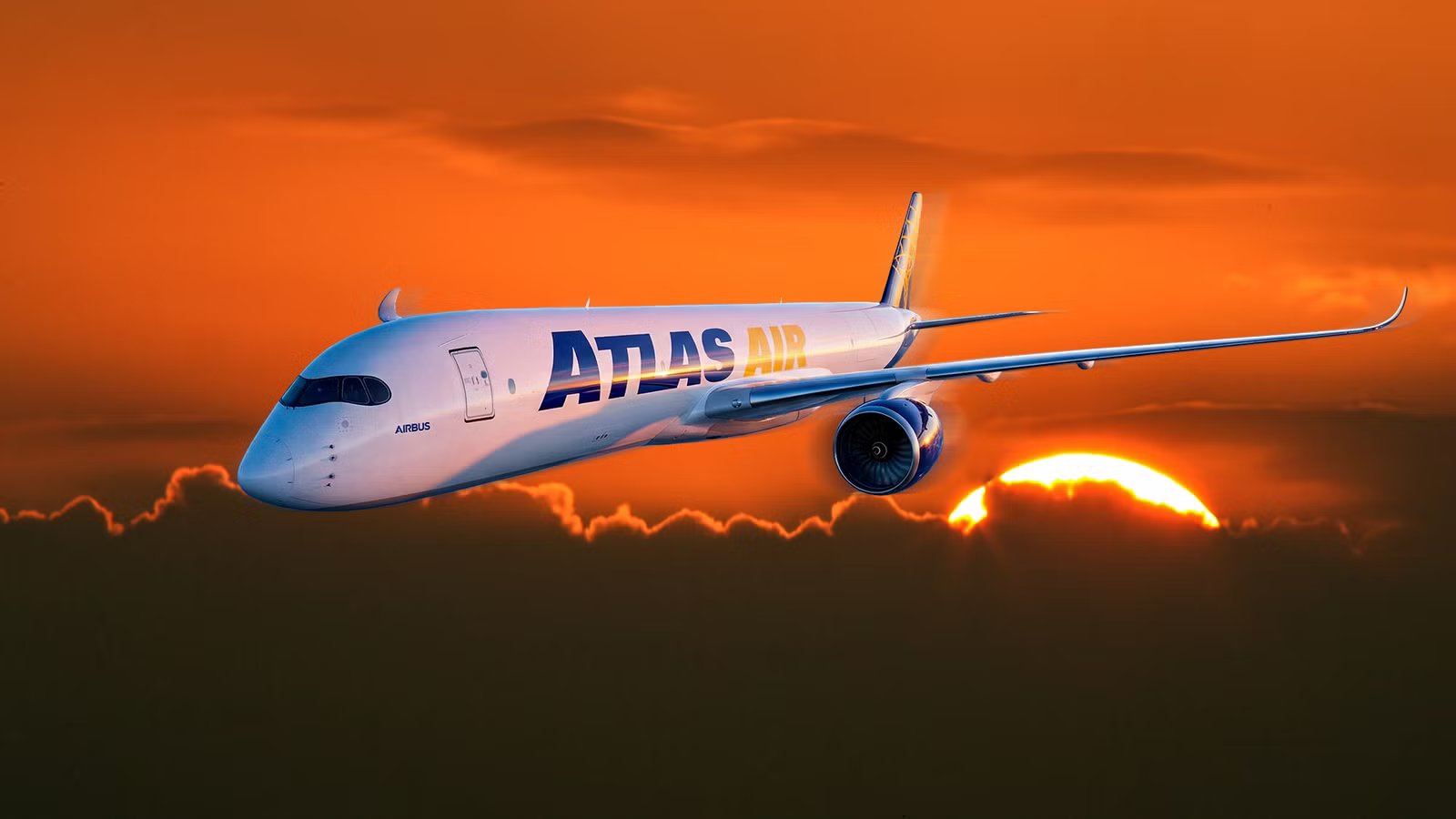
Atlas Air Worldwide is breaking its all-Boeing strategy because Boeing’s delayed Boeing 777-8F, now expected around 2028, can’t meet its fleet replacement timeline, while Airbus can. Backed by fleet and manufacturer data, Atlas has placed a firm order for 20 Airbus A350Fs (plus 20 options), with deliveries scheduled from 2029 to 2034, giving it a clear path to replace aging 747 freighters and maintain global capacity.
This matters beyond one airline. Atlas operates over 110 Boeing aircraft, including a large fleet of Boeing 747 freighters that are becoming less efficient and harder to keep compliant with emissions rules. Its decision signals a broader shift in the cargo market, including for US logistics networks and partners, where timing, efficiency, and regulatory compliance now outweigh brand loyalty. This analysis breaks down six key factors driving the move: Boeing delays, fleet aging, emissions pressure, efficiency gains, supplier diversification, and long-term growth strategy.
An Aging Boeing Fleet Facing A Turning Point

The backbone of Atlas’ operations has long been the Boeing 747, supported by 777 and 767 freighters. This fleet mix helped the airline grow into the world’s largest widebody cargo operator, enabling high-capacity, long-haul logistics across global markets. However, many of these aircraft, particularly the 747-400 freighters, are now reaching the later stages of their operational life, bringing rising maintenance costs and reduced efficiency.
The 747 freighter, once unmatched in payload capability, is becoming increasingly difficult to justify in today’s operating environment. It consumes more fuel than newer-generation aircraft and faces mounting pressure from stricter emissions standards introduced by regulators such as the International Civil Aviation Organization (ICAO). With production of the 747 now ended and no direct, in-service replacement currently available from Boeing, Atlas is left managing a gradual but unavoidable phase-out of one of its most important fleet types.
This creates a pivotal transition moment for the airline. Without a next-generation Boeing freighter arriving in time to smoothly replace retiring aircraft, Atlas must find ways to bridge the gap between old and new capacity. That challenge, balancing fleet renewal with the need to maintain its global scale, is ultimately what is pushing the company to look beyond its traditional supplier and adopt a more diversified fleet strategy.
Boeing’s Delays Are Reshaping Atlas Air’s Fleet Plans

For Atlas, a decades-long reliance on Boeing is now being tested by persistent program delays, particularly with the Boeing 777-8F. Once expected to anchor the next generation of long-haul freighters, the aircraft’s entry into service has slipped to around 2028, creating uncertainty for operators that depend on precise, long-term fleet planning. In the cargo industry, where capacity must align closely with global demand cycles, such delays can disrupt expansion plans and force airlines to rethink their timelines.
Atlas Air’s fleet structure amplifies this challenge. With more than 110 aircraft, all Boeing-built, including 747, 777, and 767 freighters, the airline has historically benefited from a unified fleet for training, maintenance, and operations. However, that same uniformity creates vulnerability: any disruption in Boeing’s production or certification pipeline directly impacts Atlas’ ability to modernize. At the same time, many of its 747-400 freighters are aging out, becoming less efficient and more expensive to operate, while also facing increasing environmental pressure.
As these delays persist, Atlas is being forced to rethink how it replaces older aircraft while maintaining its global capacity and roughly 13% share of the widebody freighter market. The order for the Airbus A350F is not a rejection of Boeing, but a strategic adaptation. By securing earlier delivery slots and diversifying its supplier base, Atlas is reducing risk and ensuring continuity. In effect, Airbus is filling a timing gap, giving Atlas the flexibility it needs while Boeing works to bring its next-generation freighter to market.

Meet The New King Of Cargo: Atlas Air Orders 20 Airbus A350Fs
Well, it looks like in a few years’ time, the United States will have ANOTHER A350-operator alongside Delta… but it won’t be flying passengers! That’s because Airbus announced on March 16th that Atlas Air Worldwide has placed a firm order for 20 Airbus A350F freighters, making it the largest customer for the new cargo aircraft and the first US operator to select the type.
A Bet On Future Emissions Compliance

A major driver behind the shift is environmental pressure and, more recently, the rising cost of jet fuel. Fuel represents one of the largest operating expenses in aviation, and its volatility has pushed airlines to prioritize more efficient aircraft and operations. At the same time, there is increasing pressure to reduce overall emissions, particularly CO₂, as the industry works to limit its environmental impact. Together, higher fuel costs and the need to cut emissions are reshaping fleet planning across the cargo sector, encouraging the adoption of newer, more fuel-efficient aircraft and more sustainable operating practices.
The Airbus A350F has been engineered with these requirements in mind, giving it a clear advantage as a next-generation freighter. Built with advanced materials and significantly improved fuel efficiency, it meets the upcoming emissions standards without requiring retrofits. In contrast, older aircraft like the Boeing 747 freighter, still a core part of Atlas’ fleet, will find compliance increasingly difficult, often requiring costly upgrades or facing operational limitations that reduce their economic viability.
For Atlas Air Worldwide, this order is about more than fleet renewal; it’s about long-term survival in a tightening regulatory landscape. Aligning with a compliant, future-ready platform ensures the airline can continue operating globally without disruption. In that context, choosing Airbus is less about preference and more about positioning the company ahead of regulatory change rather than reacting to it later at higher cost.
Efficiency Gains That Are Hard To Ignore

The Airbus A350F represents a major step forward in efficiency compared to older freighters and even some newer rivals. Built on a modern, clean-sheet design, it uses a lightweight composite structure that significantly reduces overall weight while maintaining structural strength. This translates directly into lower fuel burn, longer range, and improved payload capability, with the A350F expected to carry around 245,000 lbs (107,000 kg) of payload over distances of up to 4,700 nautical miles (8,700 km), making it ideal for long-haul cargo missions.
With around 70% of its airframe constructed from advanced materials, the aircraft is optimized for lower lifecycle costs. Fuel remains one of the largest expenses in air cargo, and even small percentage improvements can deliver major savings across a global network. Compared to legacy aircraft like the Boeing 747, the A350F offers significantly lower fuel consumption and emissions, while also benefiting from reduced maintenance requirements thanks to newer systems and materials.
|
Category |
Data (Airbus) |
|---|---|
|
Entry into service |
2027 (target) |
|
Range |
4,700 nautical miles (8,700 km) |
|
Maximum payload |
111 tonnes (≈ 245,000 lbs) |
|
Main deck capacity |
30 containers |
|
Lower deck capacity |
Up to 40 LD3 containers |
|
Overall length |
232 feet (70.8 meters) |
|
Wingspan |
212 feet (64.75 meters) |
|
Cargo door width (cut-out) |
175 inches (4.45 meters) |
|
Cargo door clear opening |
169.5 inches (4.30 meters) |
|
Fuel burn & CO₂ |
Up to 40% lower vs older freighters |
|
Airframe composition |
70% advanced materials (composites & titanium) |
|
Reliability target |
99.5% operational reliability |
Beyond efficiency, the aircraft enhances operational flexibility. It features a large main-deck cargo door and a spacious fuselage designed to accommodate standard industry pallets more efficiently. For operators like Atlas Air, this means the ability to carry a broader mix of cargo, including oversized and high-value freight, while maintaining long-range capability, making it a highly versatile asset in a competitive global logistics market.

A Look At Atlas Air’s Business Model
The carrier has a unique operational model.
Breaking The All-Boeing Strategy

For decades, Atlas operated an all-Boeing fleet, making its order from Airbus especially significant. This is not just the addition of a new aircraft type; it represents a structural shift in how the airline approaches fleet planning and procurement after years of single-manufacturer dependence.
An all-Boeing fleet brought clear operational advantages. Commonality across aircraft like the Boeing 747, 777, and 767 simplified pilot training, maintenance procedures, spare parts logistics, and overall operational efficiency. However, that same uniformity came with trade-offs. When Boeing faced delays, particularly with new programs, Atlas had limited alternatives, weakening its negotiating position and exposing it to supply chain and development risks.
By introducing Airbus aircraft, Atlas gains much-needed flexibility. The addition of the Airbus A350F allows the airline to diversify its supplier base, balance future orders between manufacturers, and reduce reliance on a single pipeline. In a market where timing, cost control, and adaptability are critical, this shift gives Atlas stronger leverage and a more resilient long-term strategy.
Positioning For Long-Term Growth

Atlas Air’s order signals strong confidence in long-term air cargo demand and its own role within that market. The company has committed to 20 firm orders for the Airbus A350F, with options for 20 more, making it the largest customer for the type. Deliveries are scheduled to begin in 2029 and run through 2034, giving Atlas a clear and structured timeline for fleet renewal while maintaining its position as a leading global operator.
Becoming the major United States launch customer for the A350F places Atlas at the forefront of next-generation cargo operations. The order also pushes the A350F program’s total backlog beyond 100 aircraft, reinforcing industry confidence in the platform. As a key early operator, Atlas will play an important role in shaping how the aircraft performs in real-world logistics networks, influencing everything from route planning to cargo handling efficiency.
Ultimately, this move goes far beyond simply replacing older aircraft. It reflects a broader strategy to modernize and diversify the fleet while scaling operations to meet rising demand driven by e-commerce and global supply chains. By locking in deliveries well into the next decade, Atlas is positioning itself to remain competitive and adaptable in a rapidly evolving air cargo market.