dailynewsnblog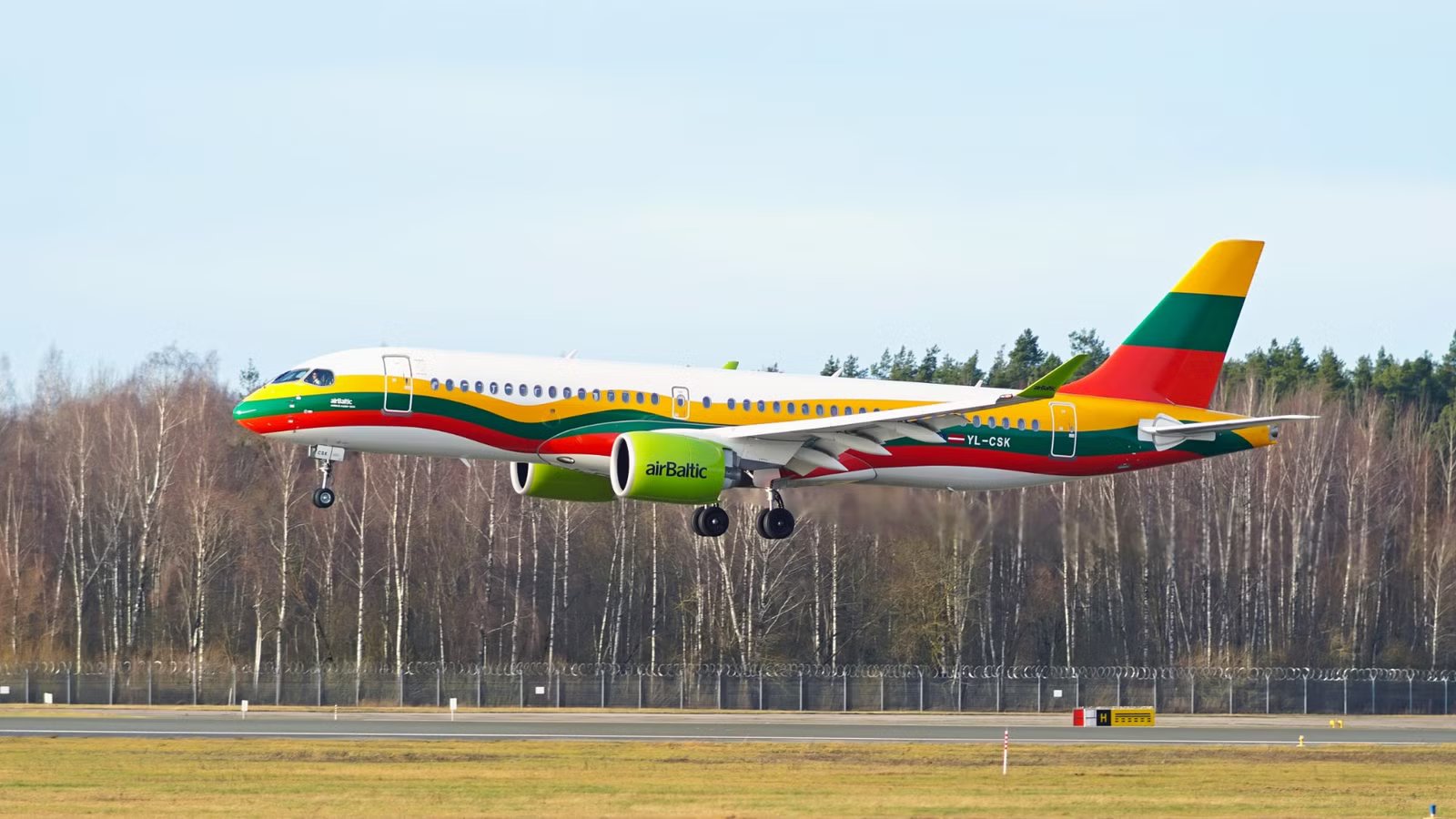
 Boeing has reasons to be concerned over the next decade for a number of reasons, and Airbus’ new narrowbody, the A220, won’t be helping its concerns. After all, the type is a clean-sheet design set to outperform its rivals in a number of metrics.
In this article, we will examine how Airbus is engineering the A220 to dominate its competition. We will also take a look at the challenges it faces and how the aircraft will continue to develop in the future.
The Three Ways That The A220 Could Win

With this aircraft, Airbus has outlined three ways it believes it can win with the A220 in competition with Boeing’s narrowbody planes. Firstly, the type is a clean-sheet aircraft, and marks a notable departure from the 737 MAX and A320neo variants, all of which are built upon pre-existing aircraft. A clean-sheet design allows all new innovations in aerodynamics, materials, and avionics to be integrated into a single aircraft.
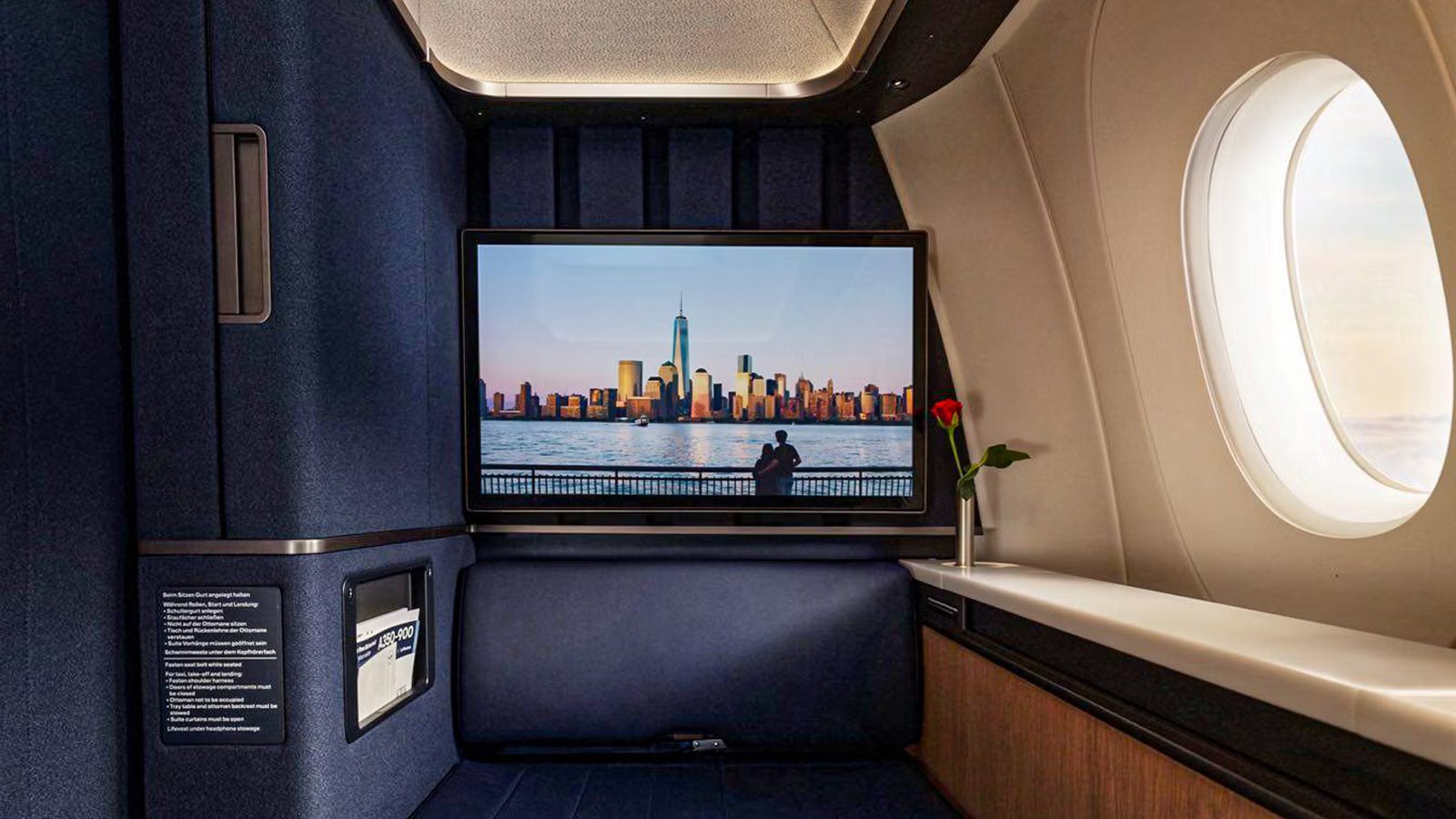
The target in doing so is to build a low-noise and environmentally friendly aircraft that can outperform its rivals with minimal impact on those on the ground. This makes the jet ideal for urban operations, particularly at night. On board, passengers can enjoy wider seats, panoramic windows, and overhead bins that beat any other aircraft in its class. Of course, Airbus can’t control all of these factors, as some are within the control of the airlines. As always, comfort aboard the aircraft will still depend on the airline operating it.
Meanwhile, such a commitment to a small jet aircraft indicates a belief that airlines will continue moving towards high-frequency rather than high-capacity services. Finally, the Airbus A220 is built for versatility and efficiency. These characteristics open up more opportunities for airlines, allowing them to increase their revenues. Moreover, Airbus says this jet will have 25% lower operating costs per seat compared to previous-generation planes. These factors combine to mean better profit margins.
An Overview Of The Airbus A220

In 2018, Airbus took over the Bombardier CSeries family (launched in 2012). The jet became known as the A220 after Airbus purchased a majority stake in the joint venture to manufacture the aircraft. It is Airbus’s most advanced clean-sheet design narrowbody, utilizing PW1500G geared turbofans from Pratt & Whitney, fly-by-wire controls, carbon composite wings, and an aluminum-lithium fuselage.
Airbus has committed to this jet to challenge the Boeing 737 MAX 7 and four-abreast Embraer E-jets, although it has somewhat cannibalized the A319neo. Even so, it has allowed Airbus to gain a 55% market share in the small jet airliner category. The table below outlines the key specifications of both variants of the A220: the A220-100 and the A220-300.
|
Characteristics (Per Airbus) |
A220-100 |
A220-300 |
|---|---|---|
|
Max seating |
135 |
160 |
|
Wingspan |
115 ft 2 in |
115 ft 2 in |
|
Maximum takeoff weight |
139,000 lbs |
156,000 lbs |
|
Maximum payload |
77,650 lbs |
81,750 lbs |
|
Range |
3,600 nautical miles |
3,400 nautical miles |
|
Cruising speed |
Mach 0.78 typical, Mach 0.82 at 27,500 ft |
Mach 0.78 typical, Mach 0.82 at 27,500 ft |
|
Powerplant |
2× Pratt & Whitney PW1500G producing 20,000-24,400 lbf |
2× Pratt & Whitney PW1500G producing 22,000-24,400 lbf |
The A220 has already gathered modest success. Delta Air Lines is the largest operator, with 45 A220-100s and 36 A220-300s, and a further 64 A220-300s on order. This is unsurprising, given that it is also the largest operator of the Airbus A330 and Boeing 717, 757, and 767. In total, airlines have ordered 949 A220s, with 493 delivered to date. Those in service, spread between 24 operators, have completed over 1.5 million flights and 2.7 million block hours.
The A220’s Variants

Airbus currently has two variants of the A220: A220-100 and A220-300. The A220-100 is currently Airbus’ smallest jetliner, and its unit price is $81 million. This is substantially higher than Embraer’s E-190 E2 and E-195 E2, which are priced between $61 million and $69 million. However, airlines placing bulk orders will receive the jets for less than this. 74 A220-100s are currently in service, with  Delta Air Lines leading the pack.
Airbus’ marketing of the A220-100 is angled towards its capabilities as a “route opener” and the “lowest risk solution.” It hopes airlines will utilize it to operate in short-haul and small markets. The greatly decreased operating cost per seat and low capacity could make previously impractical routes profitable, but its range also allows for some medium-haul routes to be operated. For example, Airbus states that, from Paris, the jet can reach African, Asian, and Middle Eastern destinations, like Islamabad, Muscat, Addis Ababa, and Entebbe.
The larger variant is the A220-300. This jet was first delivered as the CS300 to airBaltic following its maiden flight in February 2015. It is a slightly more affordable aircraft ($91.5 million) than the A319neo ($101.5 million). There are currently 419 A220-300s in service, and JetBlue is the model’s largest operator with 56 aircraft. Airbus hopes airlines will use this aircraft as a ‘network builder’ due to its combination of lean efficiency and greater capacity. Its range and versatility allow for both regional and intercontinental routes.
The A220 & Sustainable Aviation Fuel

Alongside its high-tech construction, the A220 is also part of Airbus’ efforts to transition to sustainable aviation fuel (SAF), with a goal of 100% SAF by 2030. It made headlines last year for flying from Mirabel in Canada to Paris using a 50% SAF mixture. All Airbus aircraft are certified to fly with a 50% SAF blend, and the company delivered 78% of its aircraft using this blend in 2025.
Meanwhile, 75% of its aircraft deliveries in 2024 used a SAF blend. The 50% flight was carried out to deliver a new A220 to Air France, and Airbus claims this is the first time that its Canadian site has issued sustainability credentials to a customer. Blaise Brigaud, the SVP of Group Sustainability at Air France-KLM, said that:
“Fleet renewal and the use of sustainable aviation fuel are the two main levers of the decarbonization of aviation. Combining the two is only logical, and Air France-KLM is proud to participate in this Airbus milestone with the delivery flight of one of our A220s.”
The next step is to collaborate with airlines to increase the frequency of SAF blends appearing on commercial flights, and Airbus is currently forming partnerships to make this possible. For example, it conducted an operational trial with Charleroi Airport (Brussels) and Wizz Air, involving 50 commercial flights using a SAF blend.

Continuing To Build On A Clean Sheet Design: Improvements Coming To A220 Family
Airbus is investing in the A220 to make it even more competitive. Here’s what’s new and what’s coming in the future for the smallest Airbus.
What Challenges Could The A220 Face?

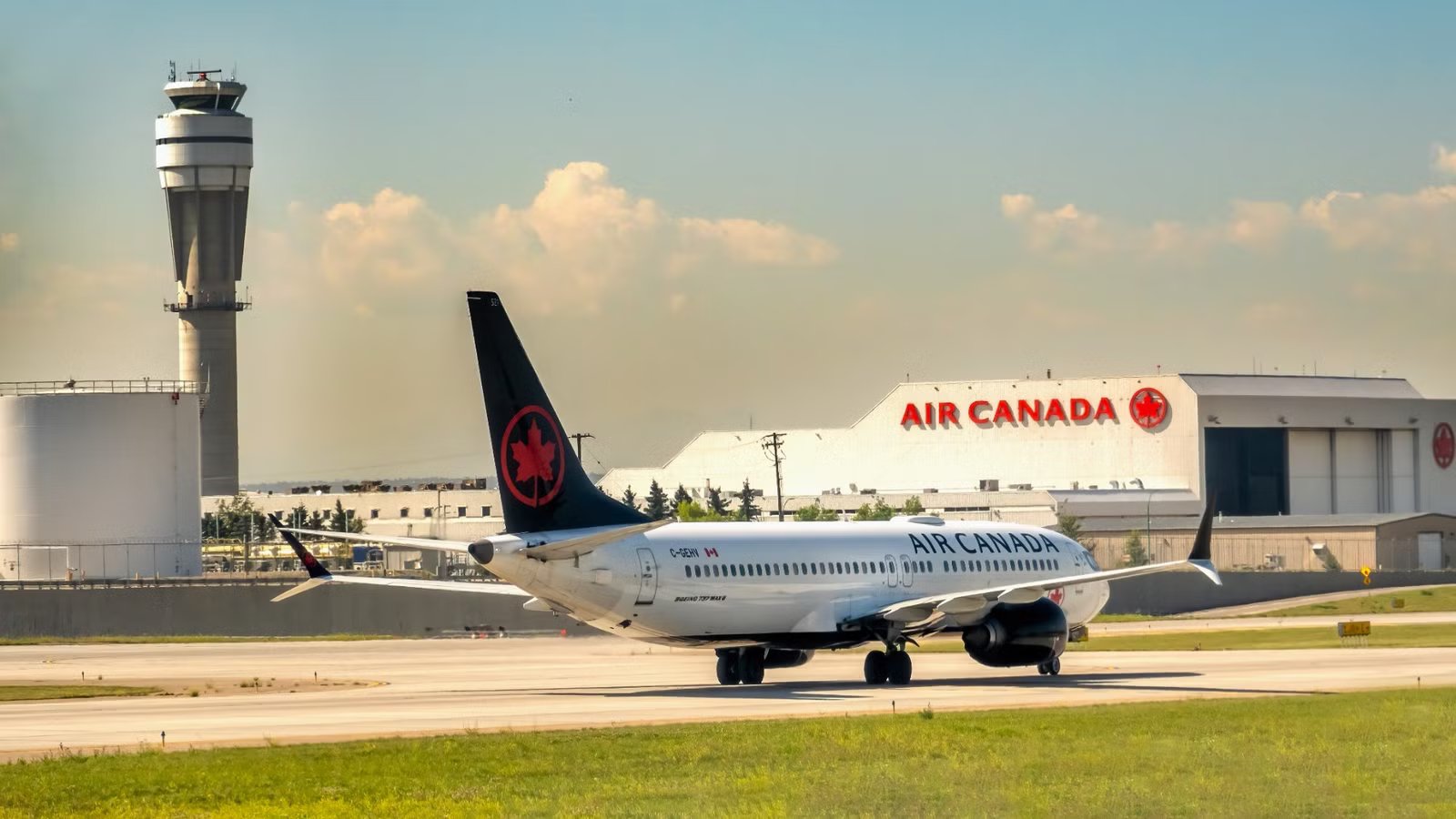
With Boeing becoming an increasingly unreliable manufacturer in recent years, it appears that ensuring aircraft reliability is maintained and production targets are met are easy wins for Airbus and others. The A220 has been largely without major issues, with a handful of notable exceptions. In January 2025, Air Canada flight AC609 (operated by an A220-300) suffered a pressurization issue, forcing the aircraft to return to base. However, the cause was swiftly identified as the shearing off of an aft cargo vent flap idler bearing.
More concerning was SWISS’s 2019 grounding of its entire A220 fleet after issues involving the Pratt & Whitney engines in October 2019. SWISS told Simple Flying at the time that “only following a faultless inspection will these aircraft be returned to regular flight duties. This will put substantial restrictions on SWISS’s flight operations, as numerous flights will have to be cancelled.” However, the airline successfully returned its entire A220 fleet to the skies less than a week later.
The A220’s only ‘accident’ has also occurred with a SWISS aircraft. Flight 1885, from Henri Coanda International Airport to Zurich Airport, diverted to Graz Airport after engine issues caused smoke to fill the cabin and cockpit during cruise. All 79 people on board were successfully evacuated after landing, but 17 people had to be rushed to the hospital. One member of the cabin crew died a week later.

The Airbus A220-500 Is Coming: A Masterstroke Or A Threat To The A320neo?
A new addition to the lineup is in the works.
What’s Next For The A220?

The main development expected from the A220 in the coming years will be the A220-500, a stretched version of the aircraft set to enter service in the early 2030s. A number of airlines are already interested in a higher-capacity A220, but some doubts still remain about whether this jet is guaranteed to come into existence, as a longer A220 was also on the cards back when it was the Bombardier CSeries, but never came to pass. However, this jet has strong commercial reasoning, as it could function as a direct competitor to the 737-800 and 737 MAX 8.
Successfully rolling out this variant will require ongoing A220 production issues to be fixed. After all, during a June 2025 Airbus Business Update, Florent Massou dit Labaquère, the EVP of Operations of Airbus Commercial Aircraft, referred to issues with plants constructing A220 pylons, systems, strut-to-wing hardware, aft fairings, wings, control surfaces, and the mid-fuselage sections.