dailynewsnblog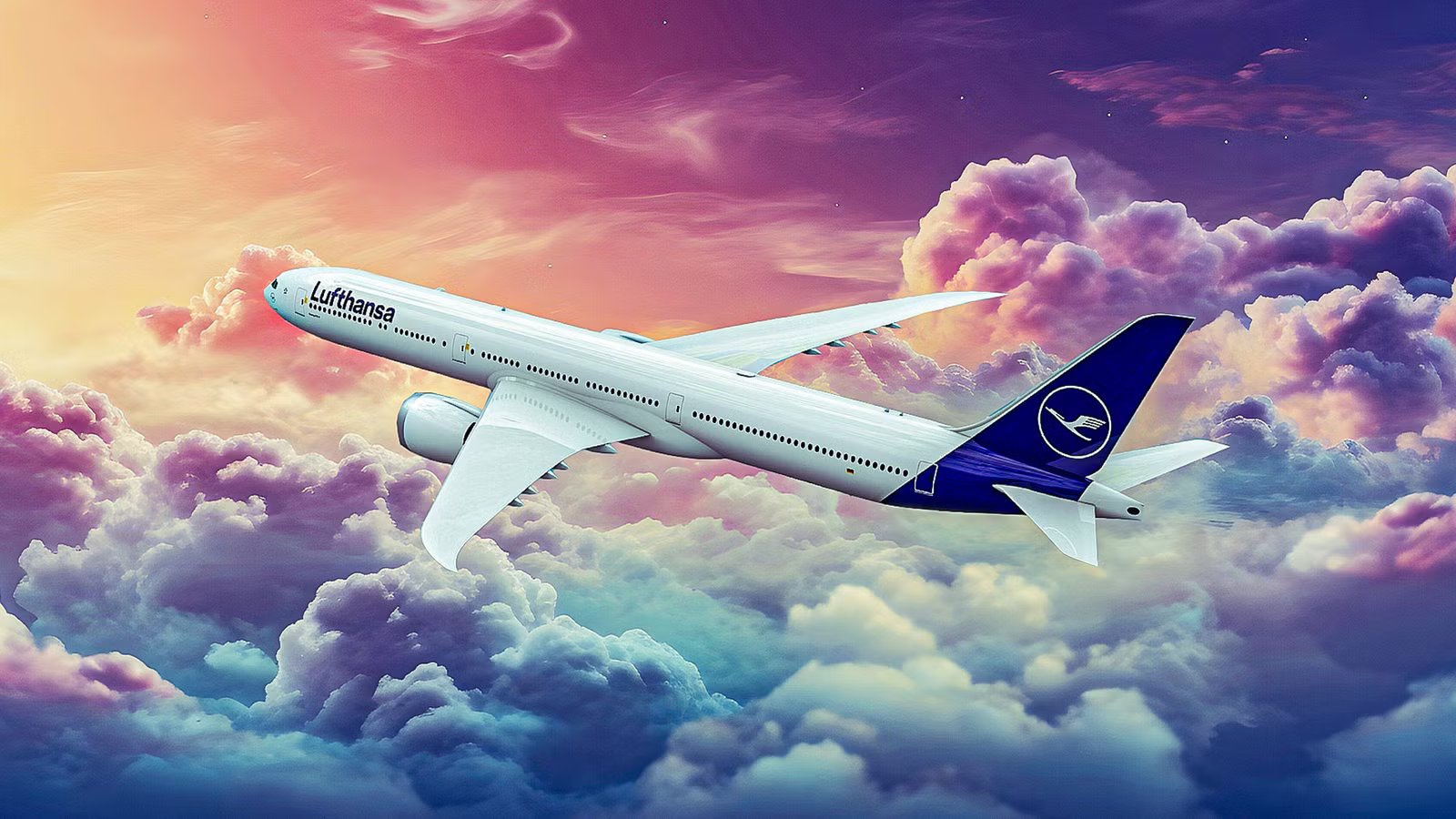
For decades,  Lufthansa had never really had a reason to add the Boeing 777 to its passenger fleet. Many global network carriers have begun the acquisition of Boeing 777 jets in order to capitalize on the jet’s impressive combination of range and fuel economy. Lufthansa, however, was not interested at all. The airline has already operated the ultimate high-capacity flagship, the Boeing 747, and used it to concentrate demand through major slot-constrained hubs.
That logic held out even as other airlines slowly began to standardize on large twin-engine aircraft. However, Lufthansa’s fleet is now entering a transition phase, with four-engine widebodies being phased out in favor of newer, more efficient twin-engine aircraft, including the Boeing 787 and the Airbus A350. All the while, the Boeing 747-400 explicitly remains among the types that the Lufthansa Group currently operates but has well-defined plans to retire over time.
That shift creates a capacity gap at the top end of the fleet, which is exactly where the Boeing 777-9 is designed to sit. Boeing has publicly identified Lufthansa as the Boeing 777-9’s launch operator, all while noting that Lufthansa’s new Allegris cabin rollout has added seat and monument certification complexity to the broader Boeing 777-9 program. Lufthansa has also positioned itself to serve as the launch operator for the  Boeing 777X’s passenger variants, with many firm orders already in place.
What Is Lufthansa’s Long-Haul Network Strategy?

Lufthansa’s long-haul network strategy has been built around its classic hub-and-spoke model, which is optimized for high-frequency feed and premium demand rather than just pure point-to-point flying. Frankfurt remains the historic centerpiece of the airline’s network. Lufthansa itself frames it as the carrier’s principal European hub, supported by a large short-haul feeder network that funnels passengers into a broader set of long-haul departures.
Munich plays the complementary role for the carrier, giving its redundancy, schedule breadth, and differentiated coverage all across the European continent. The connectivity-first approach has been amplified by alliance economics. Lufthansa is a core  Star Alliance carrier and leans heavily on immunized joint ventures, most importantly across the North Atlantic.
After all, this is a market where schedules and commercial decision-making are coordinated with partners to broaden the effective network and smooth demand across multiple hubs and gateways. The Lufthansa Group’s Atlantic joint venture materials emphasize the overall scale benefits. There are numerous hubs on both sides of the ocean and a large set of transatlantic gateways marketed as a single, integrated network for global business travel, which is, at its heart, the airline’s core business.
The practical upshot here is that Lufthansa often prefers aircraft choices that match banked hub waves, moving large volumes at specific times while still offering enough overall gauge flexibility to right-size routes as demand continues to shift, and this is exactly where having both mid-size and very large long-haul aircraft historically mattered for an airline that operated with a full-service network carrier model.
Lufthansa’s Widebody Fleet Today

Lufthansa’s mainline widebody fleet mix remains unusually diverse, especially by the standards of today’s fuel-conscious legacy carriers. This reflects both its hub-heavy network and the delayed arrival of next-generation replacement models. Lufthansa’s long-haul fleet includes both massive models like the Airbus A380-800, which still serves in many ways as the premium flagship of the airline’s fleet, and smaller-midsize widebodies like the Boeing 787-9 and Airbus A330-300. The following table details the carrier’s widebody fleet, according to data from ch-aviation.
|
Widebody Aircraft Type |
Number In The Lufthansa Fleet |
|---|---|
|
Airbus A380-800 |
8 |
|
Boeing 747-8 |
19 |
|
Boeing 747-400 |
8 |
|
Airbus A340-600 |
5 |
|
Airbus A350-900 |
31 |
|
Boeing 787-9 |
13 |
|
Airbus A340-300 |
14 |
|
Airbus A330-300 |
7 |
This lineup tells us that Lufthansa operates a diverse set of missions. The Airbus A350-900 and Boeing 787-9 are tasked with covering the core of long-haul flying, as they offer the lowest trip costs, the best long-range economics, and the flexibility to open or defend thinner markets. At the top end, the Boeing 747-8 and the Airbus A380 still provide peak capacity for trunk routes where Lufthansa can reliably fill large cabins with a mix of premium passengers and connections.
Lufthansa has been willing to keep older, high-capacity aircraft relevant in its fleet through extensive cabin investment while waiting for delayed deliveries of newer models. It does not look like it is in a rush to get rid of its Airbus A380s, with a new business-class cabin set to be installed and the type continuing to fly into the early 2030s, explicitly in the context of the 777X and other widebody delays. This bridge strategy helps explain why the airline postponed a 777 acquisition for so long.

Why Is Lufthansa Still Flying Two Different Boeing 747 Variants?
The Queen of the Skies lives on: Lufthansa’s unique reasons for keeping both the 747-400 and 747-8 in its fleet.
Why Didn’t Lufthansa Need The Boeing 777 Previously?

For the majority of the last two decades, the passenger Boeing 777 would have been more redundant than revolutionary for Lufthansa, as the airline already covered the upper end of demand with the Boeing 747. It later covered the large-but-not-jumbo segment with Airbus widebodies like the A340-600, an aircraft that, in practice, sat in the same general mission space that many carriers used the Boeing 777-300ER for.
With this set of fleet anchors, Lufthansa could scale capacity up or down without the need for a 777 purchase. There is also a key historical nuance that Boeing itself has acknowledged in recent commentary. While Lufthansa was not a 777 operator, Lufthansa Group carriers did like the type, with SWISS most notably ordering and operating the 777-300ER. As such, the organization did know how to handle the type, but it did not need the jet in order to execute its network plan.
The only major thing that has changed here is the retirement curve, as the Lufthansa Group has been explicit that it is replacing less fuel-efficient four-engine long-haul aircraft with new-generation twin-engine aircraft. The Boeing 747-400 is directly in those crosshairs, and, once you remove those legacy pillars, the Boeing 777-9 becomes the clean, modern substitute for high-density hub routes. This finally makes a passenger 777 not just logical but also necessary for the carrier.
A Look At The Lufthansa Group’s Boeing 777X Order

The Lufthansa Group’s Boeing 777X commitment comprises two linked and connected bets. The first is Lufthansa’s passenger flagship, and the second is the renewal of Lufthansa Cargo’s freighter fleet. Boeing says that the group is the launch customer for the passenger 777X, with 20 firm orders. It also ordered seven Boeing 777X freighters.
Lufthansa has also been confirmed as the Boeing 777-9 launch operator, but the schedule itself has slipped again, with expectations centering on first deliveries in 2027, according to FlightGlobal. Boeing is currently planning test flights of production 777X jets in April, and it is using a Lufthansa-bound jet to support FAA certification work.
Strategically, the Boeing 777-9 restores the top-end hub gauge that Lufthansa historically covered with the Boeing 747, as well as high-capacity, long-range lift for Frankfurt Airport (FRA) and Munich Airport (MUC) departures, but with twin-engine economics. This makes the aircraft exceptionally useful on slot-constrained trunk routes.
The Boeing 777-8F order is the cargo-side mirror of that logic, but the freighter program’s timeline has also drifted. One complicating factor is the plane’s interior complexity, as Boeing has cited Lufthansa’s certification challenges as a broader consideration as the 777-9 nears entry into service.

Why Doesn’t Lufthansa Fly The Boeing 747 On Short-Haul Flights?
The airline only deploys this aircraft on long-haul sectors.
Where Is Lufthansa Going To Fly The Boeing 777X?

Lufthansa has not publicly published a definitive launch network for its Boeing 777-9 jets yet, and the exact early deployment of the type will likely stay fluid until delivery and certification timing for the type can be confirmed. What we can do, however, is triangulate where the model makes the most sense. Lufthansa historically assigns its biggest aircraft to core and high-demand trunk routes, often premium-heavy or slot-constrained services.
In summer 2026, for example, the airline’s Airbus A380s from Munich are scheduled primarily on high-volume US and India markets, including cities like Los Angeles, Boston, Delhi, Denver, Washington DC, and some routes to San Francisco. Meanwhile, its Boeing 747s from Frankfurt concentrate on major long-haul trunk routes across the US, Latin America, and Asia.
This pattern can give us some ideas as to where the Boeing 777-9 will end up being a key piece, as you would expect that the aircraft will enter service on big hub departures where Lufthansa is in search of maximum seats and belly cargo capabilities. The airline is also looking to roll out its most premium cabins on routes to cities like San Francisco, Beijing, and New York.
The Bottom Line

At the end of the day, Lufthansa has always been a relative outlier in terms of overall fleet strategy. The carrier has long operated aircraft types that most of its peers retired years or even decades prior, and the best example of this is likely the Airbus A340-600, which has been absent from most airline fleets for years now.
Following from this, it is not surprising that Lufthansa has historically been interested in not operating the Boeing 777. With capable long-haul instruments already under its ownership, there was no real need to book a very expensive order for the 777, a model for which the manufacturer was charging a premium.
However, times are changing, especially for Lufthansa. The airline is looking for the flagship of the future, and Boeing is the manufacturer with the largest product currently on the market. As an airline that really does look to prioritize capacity, it is not surprising that Lufthansa has elected to lean into these kinds of services.