dailynewsnblog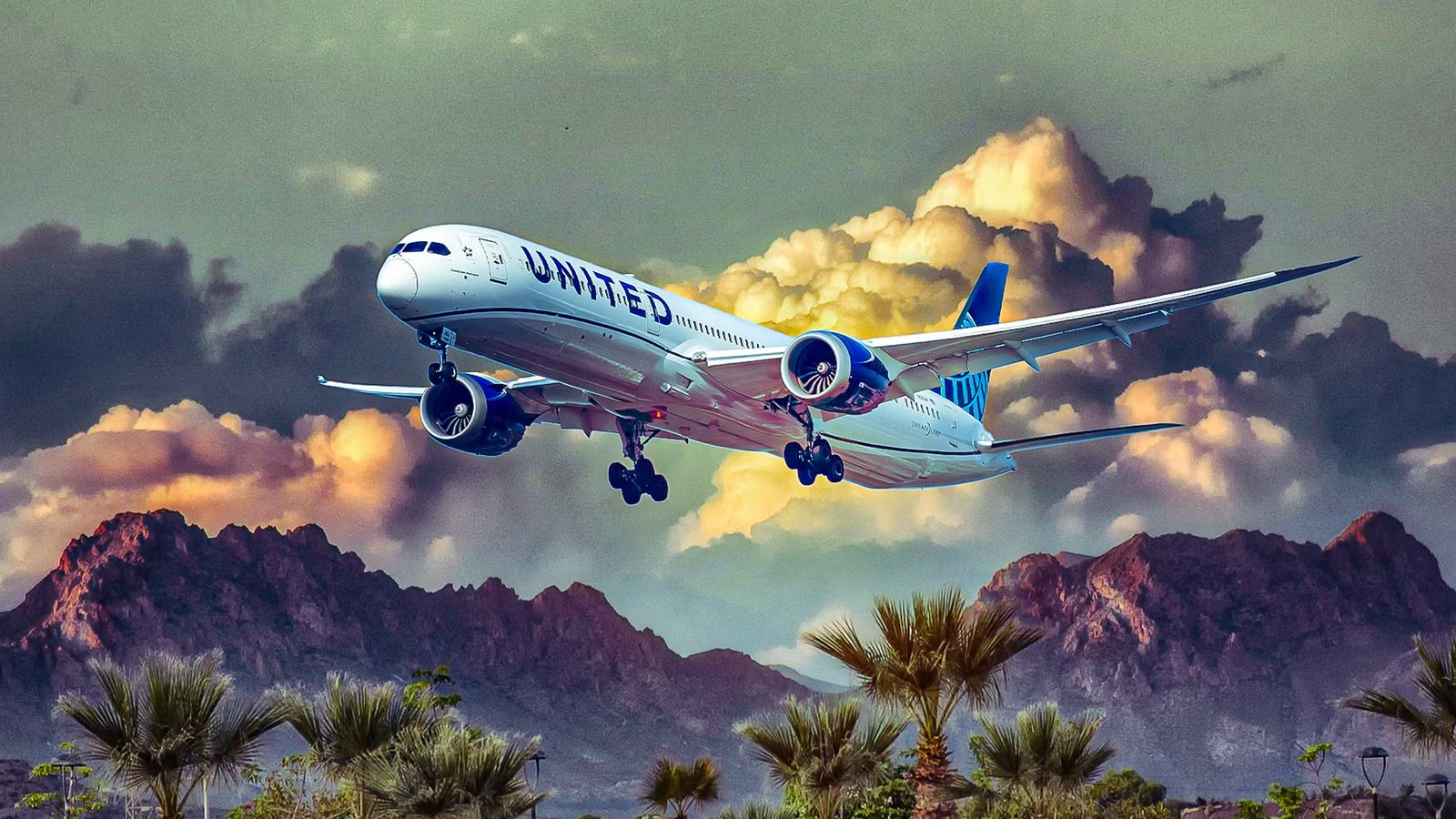
There are two main reasons that  United Airlines operates a fleet of 12
  Boeing 787-8s, 48 787-9s, and 21 787-10s rather than jets from the rival Airbus A350 series. Firstly, the airline inherited a sizable Dreamliner order when it merged with Continental Airlines in 2010, which it decided to fulfill through delivery and subsequently placed a further 787-9 order. Secondly, it doesn’t have any A350s, because the carrier has not yet received its order for 45 A350-900s.
Instead, United strategically decided to delay its reception of A350s until 2030 or later so that the aircraft can replace its aging 777-200ERs. However, recent developments have cast doubt over this order. In this article, we will look at the 787s that United operates, including its unique ownership of 787-10s within the US market. We will also explore the significance that the A350 order would have for its widebody fleet, as well as in establishing a foothold for Airbus within the US widebody market.
How Did United Get Its 787s?

The Dreamliners that are currently in United Airlines’ fleet can mostly be traced back to 2004, when Continental Airlines became the first airline in the Americas to order the Dreamliner. It made history again in 2007 by becoming the first American airline to order the 787-9. Ray Conner, Boeing Commercial Airplanes’ Vice president of Sales in the Americas, said at the time that “the 787 will enhance Continental’s fleet with both its unmatched fuel efficiency and its flexibility for both regional and long-haul operations.”
In 2010, Continental Airlines and United agreed upon a merger. As part of this deal, United Airlines received its new partner’s envisioned Boeing 787fleet. This included firm commitments for 11 787-8s and 14 787-9s that the newly merged airline decided to honor. Glenn Tilton, who went on to serve as the Non-Executive Chair of the combined company, said at the time that:
“Today is a great day for our customers, our employees, our shareholders, and our communities as we bring together our two companies in a merger of equals to create a world-class and truly global airline with an unparalleled network serving communities worldwide with outstanding customer service. Building on our Star Alliance partnership, we are creating a stronger, more efficient airline, both operationally and financially, better positioned to succeed in a dynamic and highly competitive global aviation industry.”
Alongside the 787s that United acquired through its merger with Continental Airlines, the carrier has also placed a significant order for the 787-9s, of which it currently has 84 (as well as 56 787-10s) on order. It plans to use these to replace its aging 767-300ER and 767-400ER jets by 2030, as part of a broader strategy to retire old mainline jets and 200 of its single-class regional jets.

The Dreamliner Shakeup: Why United Is Trading Range For Revenue
The US carrier is trading off longer range for increased capacity.
The Battle Of The Flagship Widebody Clean-sheet Aircraft

Both the Dreamliner and A350 act as the flagships in their respective manufacturers’ widebody aircraft fleets. These aircraft are notable for being clean-sheet designs and are in direct competition with each other. As 21st-century aircraft, they both have substantial operating costs and environmental impact improvements when compared to older jets.
The table below compares the 787-10 and the A350-900, two aircraft with comparable capacity. The A350-900 can fit 332-352 passengers in two-class seating, while the 787-10 can accommodate 336 passengers across two classes.
|
Characteristics |
A350-900 |
787-10 |
|---|---|---|
|
Range |
8,500 nautical miles |
6,330 nautical miles |
|
Cruising speed |
Mach 0.85 |
Mach 0.85 |
|
Maximum takeoff weight |
624,000 lbs |
560,000 lbs |
|
Wingspan |
64.75 m |
60.12 m |
|
Fuel capacity |
42,000 US gal (168,000 L) |
33,399 US gal (126,429 L) |
The 787 currently appears to be winning the battle of the flagships despite the ongoing difficulties that the manufacturer is experiencing. American Airlines, Hawaiian Airlines, and United Airlines all operate the aircraft, alongside the majority of global carriers with modern long-haul fleets. Meanwhile, Delta is the notable exception, and, for a while, it was the only US-based carrier to have orders for the Airbus A350.
United Is Unique Among US Operators In Flying The 787-10 (For Now)

Three US-based airlines operate the 787: United Airlines, Hawaiian Airlines, and  American Airlines. Going forward, Alaska Airlines will also launch flights with the type this year. However, only United operates the 787-10, although Delta did recently place an order for the type. This larger variant is rarer, having sold 1,000 fewer 787-10s than 797-9s. United has 21 787-10s, while operating 48 787-9s.
United operates its 787-10s from all of its hubs, except for Guam. Although it uses the aircraft to serve some transpacific routes, the majority are used for transatlantic routes. The jet’s greater size allows it to offer more capacity to these routes, therefore pulling in more revenue. It also allows certain routes to be operated without needing to reposition one of its Boeing 777-200ERs.

Delta Adds 30 Boeing 787-10 Dreamliners To Order Book
The carrier also has options for another 30 of the jets.
Other US Carriers Have Opted For Airbus

As noted by Simple Flying’s Aaron Spray, some prominent US carriers have opted for the Airbus A350 over the Dreamliner, including Delta Air Lines. Such was Delta’s previous dislike of the Dreamliner that it canceled Northwest Airlines’ 18 787 orders when it merged with the carrier, although, as mentioned, it has since bought the 787-10. Still, there are likely a number of reasons that Delta Air Lines initially opted for the A350 rather than the Dreamliner.
A key factor is that Boeing has been experiencing a decline in industry confidence, which may have led Delta to believe that Boeing could not be a reliable partner. Since Boeing’s merger with McDonnell Douglas, many in the industry are skeptical about the quality of the manufacturer’s engineering. Still, the carrier is expected to retire its aging fleet of 767-300ERs by 2030, and the 787s from the new order will likely play a role in replacing this widebody capacity.
A United 787 Ran Into Trouble Last Year

United’s 787s have been loyal servants for the carrier for quite some time. However, the return of two 787s to Tokyo Haneda shortly after takeoff in September 2025 made headlines around the world, as reported by Simple Flying’s Jake Hardiman. A United Airlines 787-10 had to return to Tokyo during its flight to Chicago due to a mechanical issue that meant the impacted engine had to be shut down.
A spokesperson told Simple Flying that “the flight landed safely, and passengers deplaned normally at the gate. We worked to get our customers to their destinations as soon as possible.” An All Nippon Airlines 787 also had to return to Tokyo Haneda during its flight to Paris. Similar engine troubles forced the pilots to end the climb at 6,000 ft and return to the airport.
Both aircraft thankfully landed safely without any casualties, and diversions back to the point of origin are not rare occurrences in the commercial aviation industry, so it would be unwise to read too much into this occurrence. However, the fact that two aircraft of the same family faced similar issues after taking off from the same airport is notable, and could imply there is more to this than meets the eye.

United Airlines Wouldn’t Be A Major Boeing 787 Operator If It Weren’t For This Airline
How the carrier became the biggest customer for the Boeing 787 Dreamliner, and why the 787 works so well.
United’s A350 Order Is In Doubt

United Airlines did have 45 A350-900s on order, with deliveries expected in 2030, after the carrier initially placed an order for the widebody aircraft in 2010. It was thought at the time that this showed an intention to replace aging 777s with the A350. Jeff Smisek, the United Airlines CEO, explained the importance of the A350 to the airline in a 2013 press release, saying that:
“We look forward to taking delivery of the A350. This is a modern, fuel-efficient, and advanced-technology aircraft that our customers and co-workers will enjoy flying. It will be a great addition to our fleet, and will allow us to meet demand on larger, long-haul markets in our world-leading network.”
The reason this commitment to the A350 is so important to Airbus, despite United simultaneously showing favor to the 787 Dreamliner, is that it is often challenging for Airbus to convince US legacy carriers to purchase their aircraft over Boeing jets. Amid American Airlines canceling its A350 order, the United order presented a fantastic opportunity for Airbus to establish a stronger foothold in the US widebody market.
However, recent developments suggest that United may not take delivery of its A350s after all, with the carrier removing the type from its fleet plans in February 2026 amid a dispute with Rolls-Royce. It will certainly be interesting to see how this story continues to pan out in the near future.