dailynewsnblog
Although it’s named after the last frontier,  Alaska Airlines is based in Seattle, and it’s the largest carrier serving the Pacific Northwest. In addition to its hub in Seattle Tacoma International Airport, Alaska Airlines maintains a significant presence in Alaska via its hub in Anchorage Ted Stevens International Airport, and its PNW operations are supported by a reliever hub in Portland International Airport. Furthermore, Alaska operates hubs in San Diego, San Francisco, and Los Angeles.
As a whole, Alaska Airlines is very West Coast-oriented, a network strategy that’s only become stronger with its recent acquisition of Hawaiian Airlines. However, among its new seasonal routes added for the 2025 winter season was, among other unusual adds, a flight to Puerto Vallarta from St Louis Lambert International Airport. St Louis is, of course, the former home of TWA, and currently dominated by Southwest Airlines, but more strikingly, it is not on the US West Coast.
Alaska Airlines’ 2025 Winter Additions

January 2025 saw Alaska Airlines commence 10 new seasonal routes. Many of these were logical adds, such as a new route from New Orleans to Portland, or from Orlando to Boise, a focus city for the carrier. Alaska also started several routes out of Sacramento, a secondary city in California. Elsewhere, however, the carrier added a new route from Kansas City to Cancun, as well as routes to Puerto Vallarta from Kansas City, New York JFK, St Louis, and Sacramento.
The route from Kansas City to Puerto Vallarta did not return for the 2026 winter season, but Alaska has resumed the New York JFK and St Louis to Puerto Vallarta routes, along with the route from Kansas City to Cancun. Cancun is the largest tourist destination in Mexico and extremely popular with Americans, but Puerto Vallarta is a secondary city. Kansas City and St Louis are dominated by Southwest Airlines, and are secondary cities themselves where Alaska has no feed on either end.
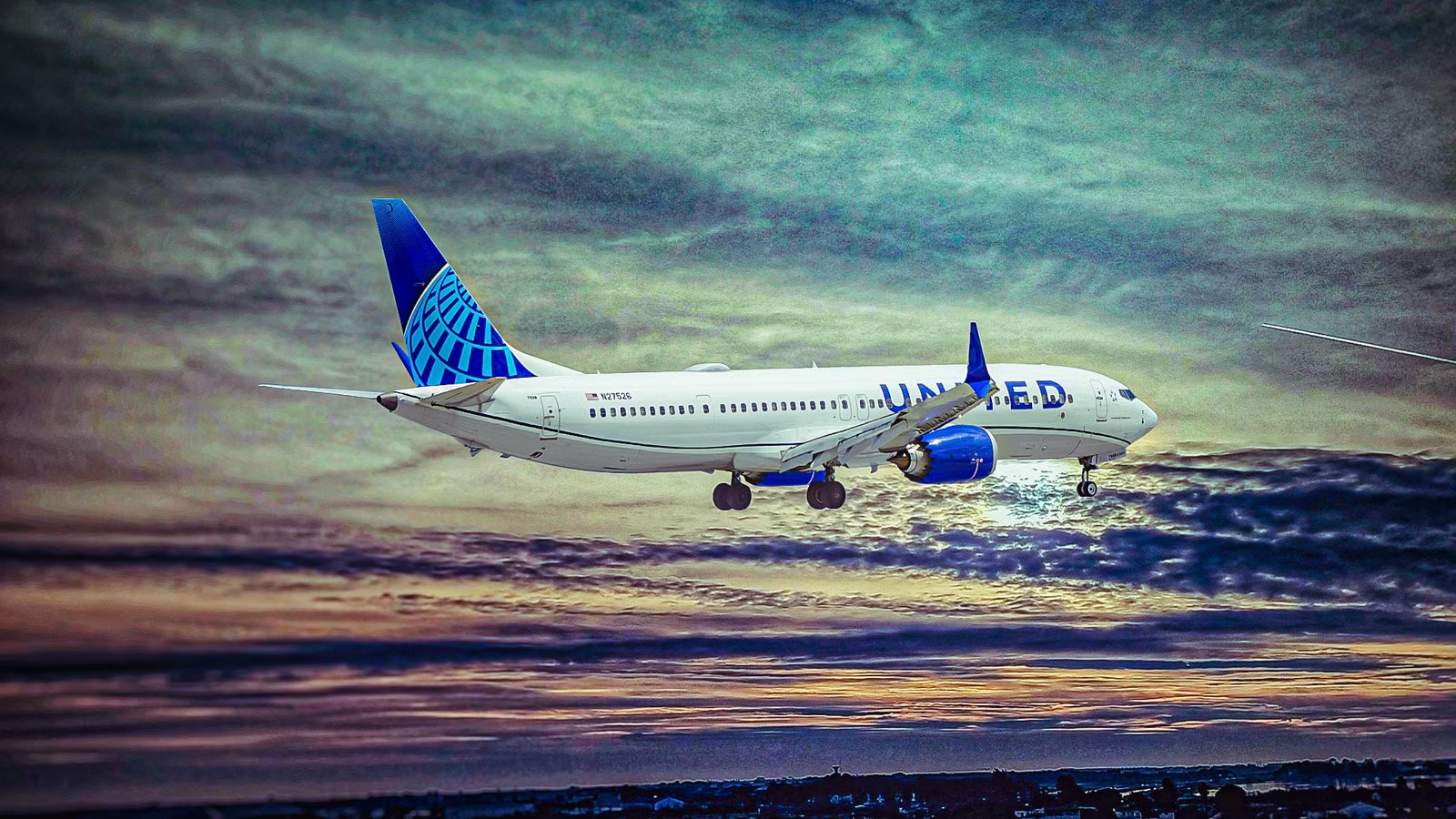
Alaska Airlines is operating the Kansas City to Cancun and St Louis to Puerto Vallarta routes on Saturdays only, using the Boeing 737 MAX 9. The 737 MAX 9 is its largest aircraft, but these routes are overall low-risk given that they’re only operating once per week. This schedule appears odd as it’s less common for a full-service carrier to operate low-frequency routes connecting smaller cities.
The Reasoning Behind This Route

The reason Alaska Airlines is launching relatively unusual routes is due to the seasonality of airline demand. For many places, demand drops during the winter season and peaks in the summer, while remaining constant or increasing in select markets. For the Pacific Northwest and Alaska, demand is much lower during winter, meaning that Alaska Airlines faces demand issues during the winter in its core markets.
The solution is a mix of accepting lower load factors, reducing aircraft utilization, and flying winter seasonal routes. Latin America is a region with high travel demand from the US during the winter months, so airlines increase capacity during these months. In addition, Alaska Airlines is smaller than American, Delta, or United, and demand to Latin America from its hubs is generally lower than the hubs operated by the ‘big three.’
Therefore, Alaska Airlines operates routes to vacation destinations from non-hub cities. This includes St Louis, but also Las Vegas, Sacramento, Kansas City, San Jose, and New York JFK. As for the St Louis flight specifically, Alaska Airlines reportedly partners with Apple Vacations for this route: on every flight, the travel company books a large block of seats, and this is enough for the flight to be profitable.
Alaska Airlines does retain some seats to sell on its own, but this is largely just gravy. The same is true for the carrier’s route from Kansas City to Cancun. It’s guaranteed money for the airline, and although it may not be the best use of the carrier’s resources if demand were high, it’s perfect during the slow winter season.

Only 26% Full: The US’s 10 Emptiest International Routes Revealed
The US’s international aviation landscape is riddled with underperforming routes, although reasons exist for some of them…
The Competition In St Louis

Apart from the route to Puerto Vallarta, Alaska Airlines’ presence in St Louis is minimal. The carrier otherwise only serves Seattle and Portland from St Louis, with Seattle being the carrier’s only year-round destination.  Southwest Airlines is the dominant airline in St Louis, and the carrier operates an extensive domestic network. In addition, Southwest connects St Louis to numerous Latin American destinations, competing with Alaska Airlines on the route to Puerto Vallarta for part of the year.
The legacy carriers generally only fly to their hub airports from St Louis, but American Airlines is unique in connecting St Louis with Cancun, while also operating American Eagle services between St Louis and Boston. In addition, St Louis is well served by Frontier Airlines, which operates to six domestic destinations with a seventh set to commence in March. In addition, Frontier connects St Louis with Cancun and Punta Cana.
|
Airline |
St Louis Market Share (Department of Transport) |
|---|---|
|
Southwest Airlines |
65% |
|
American Airlines |
9% |
|
Delta Air Lines |
8% |
|
United Airlines |
4% |
|
Republic Airlines |
2% |
St Louis notably receives year-round service from Frankfurt by Lufthansa, and will begin receiving service from British Airways to London in April. St Louis, as a city, has been struggling with population loss, but Lambert International Airport has been growing its network, and passenger numbers have exceeded 2019 figures. While Alaska Airlines is unlikely to materially grow its presence here, the airport as a whole is expanding, and officials are continuing to pursue new route opportunities.
Alaska Airlines’ Strategy With These Routes

Airlines only have a limited number of aircraft, which means that they need to decide what could be the most profitable use of an aircraft. During the low season, however, utilization is lower, and arrangements like those with Apple Vacations provide steady cash when new profitable routes can be otherwise difficult to find. Combine this with relatively low competition, and you have a low-risk way to make extra money.
The route from New York JFK to Puerto Vallarta is more confusing. This route has low competition, as the only other flight connecting the two cities is  United Airlines’ service from Newark, but Alaska Airlines has comparatively low brand recognition on the East Coast. In addition, it does not partner with Apple Vacations for this flight, and New York is a wealthy city where many airline customers are active members of a loyalty program.
However, its advantage in this market is its close relationship with fellow oneworld member American Airlines. While AA is the number four airline in the New York area, it still maintains a large AAdvantage customer base that can be directed to book with Alaska Airlines if traveling to Puerto Vallarta, which gives the carrier additional feed in New York. While JFK is far from familiar territory for Alaska Airlines, the route returned for 2026 and is bookable for the 2027 winter season.

Alaska Unveils Giant Fleet Expansion: 110 New Jets On The Horizon
Alaska Airlines has placed a landmark order for more Boeing 737-10s and 787-10s.
What To Expect Onboard Alaska Airlines

Alaska Airlines relies exclusively on the Boeing 737 for short-haul flying, and the majority of its fleet consists of 737-900ERs and 737 MAX 9s. Data from aeroLOPA shows that Alaska Airlines has 16 first class seats and 162 economy seats on both aircraft, including 30 extra-legroom seats. In addition, the carrier also flies the 737-700, the 737-800, and the 737 MAX 8, although these aircraft types are less common. The 737-700s, along with some 737-800s and 737 MAX 8s, have 12 first class seats.
The three legacy carriers typically install 16 first class seats and anywhere from 144 to 156 economy seats on the 737-800/737 MAX 8, while a standard layout for a 737-900ER/737 MAX 9 features 20 first class seats along with 159 or 160 economy seats. Alaska Airlines’ layouts differ as it offers more legroom in first class: its first class seats offer the most amount of space out of any first class seat on a US airline, with pitch ranging from 40 inches (101.6 cm) to 41 inches (104.14 cm).
|
Airline |
Aircraft |
First Class |
Economy |
Total Seats |
|---|---|---|---|---|
|
Alaska Airlines |
737-700 |
12 |
112 |
124 |
|
United Airlines |
737-700 |
12 |
114 |
126 |
|
Alaska Airlines |
737-800 737 MAX 8 |
12 or 16 |
147 or 145 |
159 or 161 |
|
American Airlines |
737-800 737 MAX 8 |
16 |
156 |
172 |
|
Delta Air Lines |
737-800 |
16 |
144 |
160 |
|
United Airlines |
737-800 737 MAX 8 |
16 |
150 |
166 |
|
Alaska Airlines |
737-900ER 737 MAX 9 |
16 |
162 |
178 |
|
Delta Air Lines |
737-900ER |
20 |
160 |
180 |
|
United Airlines |
737-900ER 737 MAX 9 |
20 |
159 |
179 |
Alaska Airlines doesn’t offer seatback entertainment, but passengers do have access to personal device streaming. In addition, the vast majority of Alaska’s fleet offers Wi-Fi, and the carrier is transitioning to Starlink. Although Alaska Airlines’s planes are light on physical amenities, it’s known for attentive onboard service and solid meal options, making it one of the nation’s best-regarded airlines for short-haul travel.