dailynewsnblog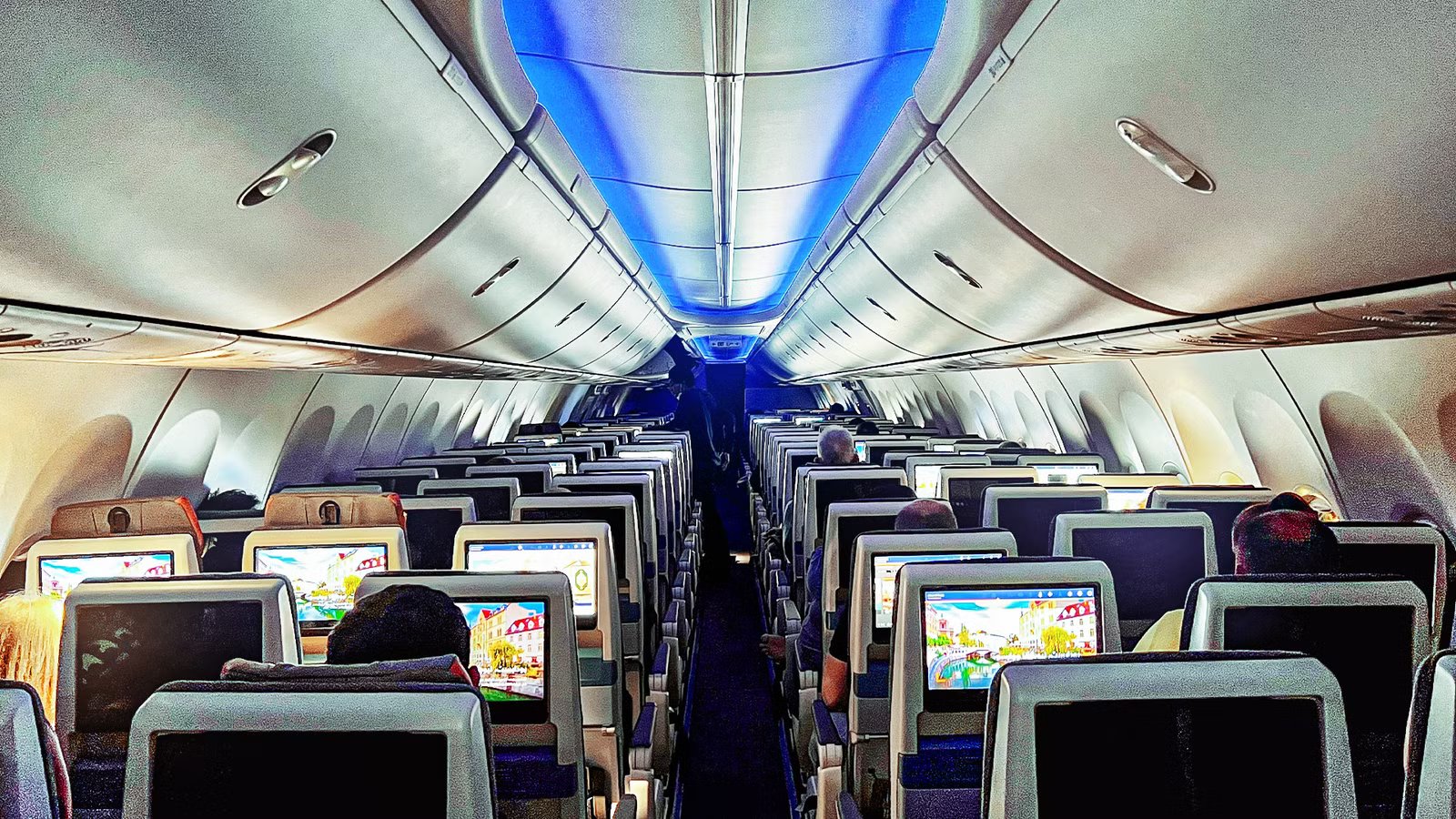
For flight attendants, one of the common problems during boarding is when a passenger wants to move seats. It may be that they did not get their seat preference, or that their family has been split up or is not sitting with their companion. What can a passenger do, and what is the correct etiquette to use? Do you need permission to move, and can you ask another passenger to move from their seat to help you out?
When a flight is not completely full, passengers often move to an empty row, especially on long-haul flights, to spread out and sleep. Sometimes, people purposely book seats at the rear of the aircraft on the aisle and window and hope that the middle seat doesn’t get occupied, so there is more space. Is there any problem with doing this? This guide takes a deep dive into seat swapping and seat movement, why it happens, and the risks involved at the personal and operational levels.
The Psychology Behind It

People often ask what is the best seat or the safest seat on a commercial aircraft. This is a subject that is very diverse and subjective. The best seat is a matter of personal choice and individual needs. There is no safest seat as such, as the circumstances of any incident or accident depend on many factors. For many passengers, there is a favorite seat, especially for frequent travelers, who try to book the same seat on every flight.
Research has shown that passengers have a strong psychological attachment to their assigned seats, with the vast majority believing they should keep their assigned spots unless there is a compelling reason, according to PhotoAiD. The same study showed that 58% of passengers prefer the window seat, and perhaps surprisingly, 28% prefer the middle seat, whereas only 12% prefer the aisle seat. Just 2% of passengers say that they have no preference. This shows that passengers are taking their seat choices seriously.
Indeed, their research shows that 95.4% of travelers consider seat preference a top booking priority, and 88.7% believe passengers should keep their assigned seats when asked to move to another seat. Passengers choose their preferred seat for comfort, convenience, and peace of mind. It may be as simple as being seated where there is extra legroom, next to the window for the view and a surface to lean on, or close to the lavatories.
The Reasons For Seat Swaps

Common reasons for changing seats include helping families sit together or allowing companions to travel together. Another reason may be to seat a person more comfortably if they are injured, have a special need, or are a nervous flyer. The three most common reasons for seat swaps are switching to a preferred seat type, being asked to do so by a flight attendant, or to seat a family together.
Information fromTravel Tomorrow shows that seat-swapping requests are incredibly common, often driven by families separated by airline seat-selection fees. Some airlines charge families extra to have guaranteed seats together. There is no legal requirement forcing airlines to guarantee seats together, so some airlines do profit from this. However, the UK’s Civil Aviation Authority says that children should be seated next to, or at least in the same row as, their family members because split-up families may delay an emergency evacuation.
|
EasyJet |
No |
Seated close to an adult |
|---|---|---|
|
Ryanair |
No |
Seated with an accompanying adult |
|
British Airways |
No |
Seated with an accompanying adult |
|
Emirates |
No |
Seated with an accompanying adult |
|
KLM |
No |
Next to an adult or as close as possible |
|
Virgin Atlantic |
No |
As close as possible |
|
TUI Airways |
No |
Seated with an accompanying adult |
|
Jet2.com |
No |
As close as possible |
|
American Airlines |
No |
Seated with an accompanying adult |
|
Etihad Airways |
No |
Next to an adult or as close as possible |
Data: Travel Tomorrow
Backed up by this, 91.8% of people would gladly swap seats to let families sit together, a situation exacerbated by airlines charging up to $160 (£120) for family seating. Most passengers who are asked to swap seats agree and rarely refuse, with mostly women and Generation Z being the most accommodating. Research at photoaid.com showed that 91.7% of respondents have been asked to swap seats in the past 24 months.

Window Or Aisle: What Are the Most Comfortable Airline Seats For Long Flights?
Which seat should you choose for your next long-haul flight?
Potential Issues

With seat swaps becoming more common and more passengers choosing their preferred seats for that peace of mind, being asked to move to another seat can cause conflicting emotions. When a passenger is asked to move seats, they may feel sympathy, confusion, resentment, guilt, or annoyance, though some report feeling indifferent.
When another passenger asks a passenger to swap seats, the passenger who is asked to move feels pressured, especially when the interaction is negative. If the request is unjustified, demanding, rude, or domineering, more pressure to move is felt, which can make the rest of the flight unpleasant for both parties. When a male asks a female to move, she often feels more pressure to move her seat.
Passengers will often swap if it is a polite interaction and is a reasonable request. This can be determined as being asked to move due to a family seated together, two companions wishing to sit together, or medical needs. Passengers are more likely to move if they receive a better or more comfortable seat that suits their preferences, especially on short flights.
Operational Issues

It is very important that aircraft are loaded correctly and that crew, passengers, baggage, cargo, fuel, and catering weights are distributed evenly for weight and balance. This is called ‘trim’. It is part of the flight crew’s takeoff and landing calculations and the aircraft’s center of gravity. Where passengers are seated onboard is part of that equation. Load planners and dispatchers log the trim data onto a load sheet, which is then checked by the ground staff and the captain. Seat swaps can be an issue when an aircraft is less than 80% full. Flight attendants can also move passengers due to trim issues.
From a flight crew perspective, unauthorized seat swaps are a major operational hazard as they disrupt weight and balance calculations, according to independent.co.uk. For flight attendants, passengers moving seats can complicate emergency evacuation procedures and disrupt inflight service, such as the delivery of special meals, which delays service and complicates communication if a passenger has a change to their schedule.
On a serious note, if something serious were to occur, such as a death onboard or an accident, the crew and the airline would rely on the passenger information list. Therefore, if passengers have changed seats and not told the flight attendant, delays in identifying passengers and being wrongly identified would be very traumatic. In addition, airlines explicitly state in their conditions of carriage that passengers must remain in assigned seats, and moving without permission can constitute non-compliance with crew instructions, according to Aerospace Global News.

The Safest Seats On A Plane To Survive A Deadly Crash
Experts have analyzed whether seats such as the exit row, the aisle, the middle, and the window have higher survivability rates.
Etiquette Of Seat Swaps

In a FOX News report, etiquette experts and airline policies agree that passengers have no obligation to give up a seat they paid for, and any swaps should only be done with a flight attendant’s permission after boarding is complete. Passengers should never move to an empty seat in a higher class or demand a free upgrade. These can sometimes be arranged prior to the flight at a reduced rate, though availability is limited. A passenger who has paid extra for their seat should never be expected to swap seats.
Research at photoaid.com showed that a significant majority of passengers who agree to swap seats later regret it, usually because they felt pressured or obligated in the moment. 84% of passengers who agree to swap seats later regret it, with 25.5% citing feeling pressured. If a passenger is asked to move seats because a seat is broken or the inflight entertainment system is inoperable, this is acceptable.
If a passenger moves to an empty seat, for example, they should ask a flight attendant for permission. They could be crew rest seats or be inoperable, so it is better to check. If permission is given, flight attendants will ask the passenger to remain in their allocated seat for takeoff and landing, and to move to the new seat only once the seatbelt sign has been switched off. Some airlines do not allow passengers to move seats at all, citing weight-and-balance concerns.
Key Takeaways

If passengers want to choose a preferred seat, they should book in advance. If an overwing exit or bulkhead seat is required for extra space, passengers must meet the requirements and pay the additional fee as needed. If there is a seating issue for a family traveling together, the flight attendants may try to help, but are limited to what they can do once seats are assigned. It may be possible to arrange another seating area at check-in, but it may come at an extra cost.
It is important to note that weight and balance are crucial to aircraft safety, so passengers should always ask before moving seats. On a larger widebody aircraft, this is unlikely to have a serious effect, but on a smaller aircraft like a turboprop or regional jet, the difference in weight and balance can be critical. If a passenger moves seats, the weight and balance may need to be recalculated.
Seat assignment is data and vital to emergency response teams and investigations. Authorities also use this data to examine passenger injuries and survival rates by seat location. From this, they can understand more about an accident and what went wrong. If the data is skewed because passengers moved seats, this can affect subsequent investigation and corrective measures. At the end of the day, moving seats without permission can violate airline policy and be considered noncompliance with crew instructions. Each seat has a name attached, and the safest seat is the one assigned to you.